Gordon’s recurring worldview, as reflected in the transcript excerpts, is broadly market- and policy-aware and centered on how resource assets fit into shifting supply-security…
Preview how this speaker shows up across market transcripts. Unlock the full archive, AI chat, and the version personalized to your watchlist, followed channels, and favorite speakers.
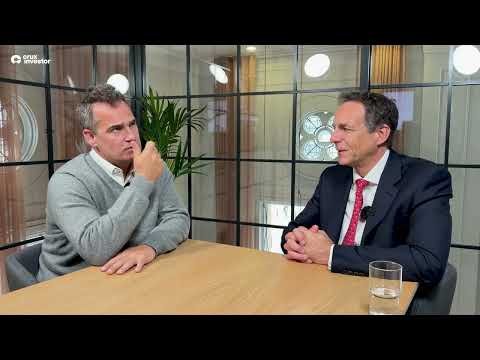
Matthew Gordon is an interview host and market commentator who focuses on mining, commodities, and resource-sector investment themes. In the supplied transcript context, he appears primarily as the interviewer rather than a subject-matter CEO, so the evidence points to a role centered on probing project economics, execution risk, and macro/sector drivers across metals and energy. The strongest identity link is the resolved X handle @MoshiGordon, with the speaker identity otherwise verified.
Gordon’s recurring worldview, as reflected in the transcript excerpts, is broadly market- and policy-aware and centered on how resource assets fit into shifting supply-security regimes. He repeatedly emphasizes jurisdiction, commodity scarcity, infrastructure constraints, and the operational mechanics that determine whether a project can move from development to cash flow. The conversation style suggests a practical, execution-oriented lens: he asks about grades, recoveries, throughput, permitting, funding, and timing, and he frames commodity markets in terms of structural constraints, state policy, and strategic importance rather than purely speculative price moves. Evidence is thin on his own authored theses, so this is best read as an inferred research style rather than a fully established personal doctrine.
Every analyzed appearance we have for this speaker, newest first. Open any transcript preview to read the underlying transcript.
Preview:Interview with Keith Bowes, MD of Future Metals (ASX:FME), discussing the Panton PGM project in Western Australia. The company is pursuing a staged, low-capex development strategy leveraging the nearby Savannah processing plant (owned by major shareholder Zeta Resources). A scoping study due late 2026 will compare greenfield vs. Savannah restart options. Bowes sees a structural PGM supply gap emerging as South African production declines, with Panton's high-platinum mix and chromite-hosted geology positioning it as a rare first-world PGM developer. Key catalysts: scoping study, Zeta acquisition framework agreement, and potential government funding.
Preview:Shane Williams, CEO of West Red Lake Gold Mines (TSXV:WRLG), presents Q2 2025 results showing a significant operational step-up: gold production up ~50%, tonnes mined up ~50%, grade up ~30% quarter-over-quarter. The company is in a staged ramp-up toward steady state, expected by Q3. Underground mining rates are now consistently ~1,000 tpd against mill capacity of ~800 tpd, creating a surface stockpile. Key technical risk — model reconciliation — is resolving well. H2 2025 guidance points to 25,000–30,000 ounces, and the company is now cash-flow positive and building cash on the balance sheet while servicing debt.
Preview:Cobra Resources CEO Rupert Verco (addressed as "Rick" in the transcript — likely a transcription error or nickname) provides a drill update on the Manna Hill copper project. The company drilled ~1,500m instead of the planned 1,800m, redirecting one hole from the Black Rock target to go deeper at existing skarn holes. Key highlight: hole 2 intersected bornite (60%+ copper mineral) within a potassic alteration halo around a monzogranite/diorite intrusion — a classic porphyry system indicator. Sulfide mineralization now extends to 300m depth. Copper oxides were unexpectedly hit south of the known skarn footprint. Assays expected August 2026. Chairman added £40k in shares. Boland rare earth project progressing toward resource estimate and scoping/PFS studies.
Preview:Michael Gentile says the gold and junior-mining pullback is a contrarian buying opportunity, not a broken thesis. He argues the real bull case is still intact because rising debt, deficits, and eventual policy suppression of rates will support gold over time, while quality juniors remain deeply under-owned and mispriced.
Preview:Hayden Locke, CEO of Marimaca Copper, presents the investment case that Marimaca is undervalued because investors are getting the permitted, financeable MOD (Marimaca Oxide Deposit) at roughly fair value while paying nothing for the Pampa Medina discovery — which he frames as a potentially tier-one sediment-hosted copper system comparable to Kamoa-Kakula. He walks through why juniors trade at discounts, argues Marimaca ticks none of those boxes, and details the Pampa Medina drilling results showing stacked high-grade horizons with grades and thicknesses rivaling the Kakula selective mining zone.
Preview:Cartier Resources (TSXV:ECR) President & CEO Philippe Trutsea walks through a transformational year for the Cadillac project in Quebec's Abitibi belt. The company has made multiple new discoveries (Contact Zone, Portal area, a large system south of Chimo reminiscent of Canadian Malartic) that have forced a complete redesign of their 100,000m drill program. A forthcoming PEA (targeting September 2026) will update 2023 metrics using US$4,000+ gold, a larger 3.2Moz resource base, 97% metallurgical recoveries, and toll-milling scenarios that dramatically reduce CAPEX. Trutsea signals the most likely exit is attracting a strategic buyer/developer post-PEA, with Agnico Eagle already holding 27% of Cartier. The core thesis: Cartier has consolidated a 20km stretch of the Cadillac fault and is proving out an entire mining camp, not just a single deposit.
Preview:Interview with ATHA Energy CEO Troy Buswell discussing the company's 2026 drill program at the Angilak project in the Athabasca Basin. ATHA has made a 4-km step-out at Lock 50 that hit 11m of mineralization, expanding the known trend to ~21 km. At Rib North, a hole returned 37m of composite mineralization (radiometric). The strategy is to define district-scale continuity with widely spaced drilling in 2026, aiming for delineation in 2027. Buswell emphasizes working "outside-in" to understand the full system before narrowing, and highlights the company's $63M balance sheet providing a 24-month runway.
Preview:Chris Frostad (Purepoint Uranium) and host Matt discuss uranium's third pullback since 2021. Frostad argues the structural supply deficit is real but the market only reacts to visible transactions, not narratives. Equities are down 40-50% from highs, explorers near 52-week lows, and the pullback is ~9 months in — inline with prior cycles that lasted 12-18 months. The next catalyst: recent RFP activity from utilities may convert to contracts by fall 2026. He highlights Purepoint's model of using partner-funded drilling (ISO Energy, Cameco) to advance projects in a down market without dilutive raises.
Preview:Cabral Gold CEO Alan Carter gives a construction/commissioning update: the company is ~85% complete on its phase-one gold mine in Brazil, has started mining and stacking ore as part of dry-circuit commissioning, and expects commercial gold production in Q4 2026. Key remaining steps include assembling the ADR plant (shipped from Perth, arriving end of month) and commissioning the wet circuit. The company is running six drill rigs, modeling six gold deposits for an updated resource estimate due end-2026, and signals potential near-term guidance on upsizing phase-one production. Carter argues the company deserves a re-rate once commercial production is achieved.
Preview:Fox Tungsten CEO Steve Gray presents the Fox project in southern BC — claiming the world's highest-grade tungsten deposit at ~1% WO₃ (equivalent to ~20 g/t gold or 25% copper). The company is executing a 20,000m drill program aiming to double the resource to ~3Mt, which would support a PEA and eventually a small (~1,000 tpd), low-capex underground mine. He argues the recent ~10x tungsten price surge is driven by both China export restrictions and a genuine global supply deficit. Fully funded with ~$15M working capital, the company sees the PEA as the catalyst that unlocks government funding, strategic interest, and a re-rating.
Preview:Paul, Managing Director of Flagship Minerals (ASX:FLG), presents the company's dual strategy: advancing the Isidora gold project in Chile toward near-term oxide production, while adding the Whipsaw copper porphyry in BC, Canada as a significant copper optionality play. The gold thesis mirrors Rio2's Fenix dump-leach model — targeting 8-10 years of oxide production at sub-$200M capex for ~100koz/year. The Whipsaw acquisition gives exposure to a large-scale copper porphyry adjacent to Copper Mountain, with a potential spin-out to unlock value. Paul argues FLG is severely undervalued at ~$24/oz EV/resource versus a peer average of ~$176/oz.
Preview:Craig Hallworth, CEO of Gunnison Copper, says the company has moved from cleanup and restart work into a more credible development story. He highlights a producing Johnson Camp mine, debt reduction, DOE tax-credit validation, and a large Arizona flagship project that he says could reach a construction decision by mid-2028.
Preview:A panel of three mining executives argues that Brazil has shifted from a discounted jurisdiction to a ‘Brazil premium’ as infrastructure, permitting pathways, and capital access have improved. The discussion is mostly upbeat and company-specific: Brazil is presented as a place where serious companies can build mines, advance discoveries year-round, and increasingly attract institutional and retail financing.
Preview:This is a company-site interview with Silver One Resources about the Candelaria silver project in Nevada. The core message is that the team believes historic pits, heap-leach material, and deeper extensions can support a much larger silver operation, with the near-term goal of a PFS by year-end and a path to restart production first from the heap pads, then from fresh material.
Preview:Crux Investor visits Blossom Gold’s Rosebud project in Nevada, where management argues a large, previously mined historic district can be re-optimized as an open-pit/heap-leach project with an existing underground component that speeds drilling and permitting. The core message is de-risking: validate metallurgy, expand the resource, reopen the underground for infill and access, then move toward feasibility and, eventually, a construction decision.
Preview:A Crux Investor site visit to Scorpio Gold's Manhattan project in Nevada. Geologists Teddy and Lucas walk through the consolidated district-scale opportunity: a 740,000 oz current resource at 1.26 g/t, targeting 2M oz by end-2025/early-2026 via a fully-funded 50,000m drill program. They highlight high-grade intercepts (400+ g/t), historic workings on-trend at Keystone (12 g/t, ~100koz historic), near-surface oxide gold, 92-93% metallurgical recoveries, and a legacy tailings/stockpile re-processing opportunity. Three drills are turning 24/7 on the main resource area; satellite targets including Black Mammoth and Keystone get rigs soon.
Preview:Crux Investor visits P2 Gold's (TSXV:PGLD) Gabbs copper-gold porphyry project in Nevada. CEO Ken McNorton (actually CXO — Chief Exploration Officer) walks through the scale, infrastructure, and timeline: a 12 Mt/year heap-leach-to-sulfide operation targeting 150+ koz Au/year, feasibility study by end-2026, and construction targeting first production ~2029. The site sits on a highway with grid power and water rights already secured. Recent infill drilling at Lucky Strike hit a bonanza-grade intercept (183 g/t Au over 5 ft), and the team believes Lucky Strike could eclipse Sullivan in tonnage. Historical data removed discovery risk; the team is now expanding and de-risking toward production.
Preview:Interview with Mont Royal Resources (ASX:MRZ) Managing Director Nick Cotesworth discussing the recently released PEA for the Ashram rare earths project in northern Quebec. The PEA delivered a C$2B post-tax NPV and 22% IRR with capex reduced to C$1.2B. The conversation centers on the staged development strategy, the critical road access catalyst, engagement with the Naskapi Nation, and the project's unique advantages in metallurgy, scale, and strategic positioning within North America's rare earth supply chain.
Preview:Nolan Peterson, CEO of Atlas Salt (TSXV:SALT), provides a construction and permitting update on the Great Atlantic Salt Project in Newfoundland. Early works are underway — site clearing, earthworks, subgrade prep — funded by working capital raised last fall and a recent financing. Ground conditions are coming in better than expected (drier). The town has moved from piecemeal permits to a streamlined bundled approach, which Peterson frames as a strong endorsement and a schedule accelerator. The company is building its on-site team, including veteran engineers, with Hatch as the integrated project delivery partner. No new financing details were discussed; the focus is on de-risking execution ahead of the main capital raise.
Preview:Darren Bowen, CEO of Metals Exploration, says the company’s two main projects are both progressing: Nicaragua is on track for construction and commissioning, while a new Philippine copper-gold project at Batang Buhi offers potentially larger long-term optionality. He emphasizes de-risked power infrastructure in Nicaragua, a $175m capex budget, a 2027 ramp to 100,000 ounces, and a longer-term target of 150,000 ounces, while framing Batang Buhi as a state-backed, community-partnered project that could support a major copper business if drilling confirms scale.
Preview:Blaine Monahan, President and CEO of Pacific Ridge Exploration (TSXV:PEX), sits down with Matt from Crux Investor to discuss the company's recently closed $8.5M financing, which includes a strategic investment from Peruvian miner Minsur that now holds ~14% of the company. The funds will be split approximately evenly between drilling at the high-grade RDP copper-gold porphyry project and the flagship Kliyul (CLA) project in British Columbia. Drilling begins end of July, starting at RDP. Minsur secured technical access and a right of first refusal on RDP. Monahan argues the market is rewarding new porphyry discoveries in BC and that finding a second deposit at Kliyul could significantly re-rate the stock.
Preview:Mark Selby (Canada Nickel) discusses the recent nickel price drift, attributing it to seasonal maximum Philippine ore availability combined with Chinese pressure on Indonesia for more quotas. He argues this is short-term noise — ore supply will decline into year-end, NPI inventories are tight, and EV nickel demand is surging (+37% YTD). He remains bullish, targeting $20,000/ton. Canada Nickel signed an MOU with RWE for low-carbon steel products; Magna Mining secured a $140M investment from Alpana; and Sherritt's Cuba situation is evolving under Trump-linked PE control.
Preview:New Found Gold VP Keith Boyle addresses the environmental preview report (EPR) process for the Queensway project, assuring that it was expected and that no aspect of engineering, procurement, or construction has been held up. The critical path — converting and expanding the Pine Cove Mill — remains on track with construction underway, and first ore from Queensway is still targeted for Q4 2027. The EPR timeline is estimated at roughly 5-6 months, with Boyle suggesting a conservative 6-9 month window wouldn't be concerning. Key catalysts ahead: the EPR decision, updated technical report with new resource and mine designs, and commercial production at Hammerdown.
Preview:Matt Manson, CEO of Radisson Mining, says the O’Brien gold project is growing rapidly on the back of a very large drill program, with results continuing to extend mineralization deeper and into previously unmodeled gaps. He frames Radisson as a mining-focused company, not a pure explorer, but says the current job is still to keep enlarging the resource toward a 3–4+ million ounce system before deciding on standalone development versus regional processing integration.
Preview:First Mining Gold CEO Dan Wilton discusses the federal environmental assessment approval for the Springpole gold project in Ontario — an 8.5-year permitting milestone. The provincial EA decision is expected by end of summer 2026. With community term sheets signed, the company now shifts focus toward feasibility study (mid-2027), detailed engineering, and project financing for a ~$1B+ CAPEX open-pit mine. Wilton argues the stock trades at a steep discount (~$60/oz) vs. advanced developer peers ($300-400/oz) and positions Springpole as one of the few 5M-oz, tier-one jurisdiction projects that could be shovel-ready before 2030.
Preview:Carolina Rush CEO Layton Blake discusses the first-ever deep drill holes at the Brewer gold-copper project in South Carolina. The company confirmed a copper-gold porphyry system below the lithocap, intersecting increasing copper-gold grades in potassic alteration — the key host rock for porphyry deposits. The system appears tilted at 20-30 degrees, meaning the target lies laterally rather than directly below. Dr. Richard Sillitoe, a leading porphyry expert, advises that the next steps are two additional step-out holes to the northwest. A third hole (39) results are pending. OceanaGold is funding the earn-in (US$8M for 50%), and the near-surface half-million-ounce gold resource remains a strategic asset 15 minutes from OceanaGold's Haile mine.
Preview:Bill Williams, CEO of IsoEnergy, frames the Toro acquisition as a strategic, underpriced addition that gives IsoEnergy a more diversified uranium portfolio and a credible path to growth beyond a single flagship asset. He says the company is now sequencing three projects across Canada, the U.S., and Australia, with Tony M as the likely near-term production candidate, Toro/Watuna as a medium-term development project, and Hurricane/Lorac as a long-dated exploration upside story.
Preview:Colin Murray, President & CEO of Selkirk Copper Mines (TSXV:SCMI), presents the company as a copper-gold-silver restart story targeting mid-2028 production. The company has completed 52,000m of phase-one drilling with an 87% hit rate, and a preliminary economic assessment plus updated mineral resource estimate are due within a month. A second 50,000m drill program is underway ahead of a feasibility study expected by mid-2027. The thesis rests on existing infrastructure (mill, power, camp), a 12–15 year integrated open-pit/underground mine plan, historically high-quality concentrate (~39% Cu), and a cleaner financing approach avoiding the over-leverage and permitting mistakes of the prior operator.
Preview:Luke Norman, Executive Chairman of US Gold Corp (NASDAQ: USAU), argues the company is deeply undervalued. With only 16M shares outstanding and a ~$260M market cap despite a fully-permitted, shovel-ready gold-copper project in Wyoming with a post-tax NPV of $630M (at $3,250/oz base case), Norman contends the market misunderstands the company's value. Key catalysts: project financing expected within 3 months, a drill program to expand the 1.6M oz AuEq reserve, and potential upside from copper price strength, waste rock sales, and tailings gold recovery.
Preview:Kurt Budge, CEO of Leading Edge Materials (TSXV:LEM), announces the granting of a 25-year mining lease for the Norra Kärr heavy rare earth element project in Sweden — a milestone he calls "transformational." The conversation covers what the lease actually confers (rights to mine; environmental permitting still ahead), how it changes commercial conversations with offtake partners, the bifurcation in heavy rare earth pricing (domestic China vs. ex-China), and Europe's lagging risk-capital posture vs. US-backed consolidation in the rare earth supply chain. Near-term catalysts include binding offtake agreements, an updated prefeasibility study, and potential EU strategic project designation.
Preview:Drew Clark, CEO of Summit Royalties, says the company is moving from startup mode to scaled royalty-platform mode after closing the Star transaction. His core message is that Summit now has a larger market cap, more cash-flowing assets coming online, and a clearer path to grow revenue per share and NAV per share through disciplined acquisitions rather than aggressive deal-making.
Preview:George Salamis says Integra Resources’ Florida Canyon feasibility study materially improves the asset: a $601 million NPV5, about 8 years of mine life, and close to $800 million of after-tax free cash flow. He frames Florida Canyon as a self-funding cash engine that can support Delamar, Nevada North, fleet replacement, and other growth without a large equity raise, while acknowledging the next two quarters are still burdened by stripping and that costs will not be a sub-$2,000/oz story.
Preview:John de Luise, founder and CEO of Abitibi Metals, presents a comprehensive corporate update on the B26 polymetallic (copper-gold-zinc-silver) deposit in Quebec. The company has accelerated its seven-year option agreement with SOQUEM (Quebec government) to acquire 100% of B26 in just 2.5 years. With ~$45M cash, no warrants, and 80,000m of drilling underway, de Luise argues the deposit is approaching critical mass (~2.6M oz AuEq, 25M tonnes at 2.15% CuEq) ahead of a Q1 2027 PEA. He frames B26 as a rare high-grade Canadian polymetallic opportunity with infrastructure advantages, institutional backing (Discovery Silver, Beedie, CDPQ), and structural M&A tailwinds from producers needing to replenish depleting project pipelines.
Preview:Interview with Empire Metals (LON:EEE) Managing Director Shaun Bunn. The company's Pitfield titanium discovery in Western Australia has advanced rapidly in three years from discovery to flow-sheet development. Bunn outlines the process design, discusses market positioning targeting premium pigment users, reveals a co-product alumina opportunity that recovers acid, and maps the path toward guidance in early 2027. Key near-term catalysts include a substantial resource upgrade in Q3, continuous pilot plant runs later this year, and ongoing off-take discussions.
Preview:Raymond Ashley, president and COO of F3 Uranium, argues the company’s key breakthrough is geological: the Tetra discovery showed high-grade uranium can exist in the Clearwater Domain without the graphite/sulfide conductors explorers have traditionally relied on. He says Tetra and JR appear to be part of the same hydrothermal system, which expands the prospectivity of the broader Patterson Lake North land package and supports a new targeting approach using geophysics, alteration, mineralogy, age dating, and now resistivity rather than only EM conductors.
Preview:Bart Jaworski, CEO of Group Eleven Resources (TSXV:ZNG), updates on the Ballywire zinc-silver-copper discovery in Ireland. Five drill rigs are turning — four at Ballywire, one at Stone Park. A high-grade copper-silver feeder system beneath the flat-lying zinc mineralization has now been confirmed across three drill fences spanning 430m of strike. The company closed a C$12M bought deal (treasury of C$18M), appointed Barry O'Shea to the board, and is targeting a maiden MRE within 12-18 months. A 15,000m drill program at Stone Park is planned for late 2026. The broader Irish zinc district is seeing renewed M&A interest.
Preview:Nolan Peterson, CEO of Atlas Salt, presents the Great Atlantic Salt project as a nearly derisked, permitted, lowest-cost producer of road salt serving a structurally undersupplied North American market. The conversation centers on the recent $15M equity raise (adding to $25M total raised in the past year), the ~$590M capex stack strategy (~60% senior secured debt, subordinated debt, government export credit agencies, and a minimized equity plug), and how the $15M allows early works — site prep, geotechnical, grid tie-ins — to be pulled forward ahead of main project financing. Peterson frames this as an infrastructure-like asset with multi-decade sticky cash flows, unique among miners in that it doesn't face reserve-replacement treadmill pressure, and argues the salt industry's 10,000-customer tender-based model makes traditional off-take agreements less relevant. The tone is confident, execution-focused, with a nod toward eventual capital returns.
Preview:Brian Savage, CEO of Electric Metals (TSXV:EML), lays out the company's strategy to build an integrated US manganese supply chain. The core asset is the Emily deposit in Minnesota — the highest-grade manganese deposit in North America — but the value proposition is downstream: producing high-purity manganese sulfate monohydrate (HPMSM) for EV batteries, electrolytic manganese metal (EMM) for defense/steel, and electrolytic manganese dioxide (EMD) for alkaline batteries. The US currently imports 100% of its manganese and HPMSM from China, creating a national-security opening. Savage pegs HPMSM production cost at ~$825/ton (PEA-level, ±50%), which he argues can compete with China without relying on tariffs. A processing-plant PEA including an EMM circuit is due late July/early August. The mine requires ~$150M capex and ~$10M more drilling, with permitting expected on the easier "ferrous" track since Emily is an oxide deposit with no sulfides.
Preview:Max Porterfield says Visionary Copper and Gold’s near-term focus is resource growth at its flagship Point Leamington project in Newfoundland. He argues the company already has a substantial 20 million ton, 43-101 compliant VMS resource, but the bigger upside is an adjacent new discovery called Kraken and multiple regional targets that could expand the camp beyond the current resource footprint.
Preview:Elaine Ellingham, CEO of Omai Gold Mines (TSXV:OMG), argues the company remains deeply undervalued despite doubling its resource to 8 million oz in under two years. She contends the market hasn't priced in the full resource, with an imminent PEA (4-6 weeks out) serving as a key catalyst that should support a larger production profile, lower strip ratios than analyst consensus expects, and a significant re-rating toward peer valuations.
Preview:Barry O'Shea, CEO of Highland Copper, argues copper has transitioned from a cyclical commodity to a strategic lifeline driven by US national security concerns, grid modernization, AI data centers, and electrification. He contends that supply is severely constrained — the best part of 20 years from discovery to production — and that even $6 copper may be mispriced relative to the structural deficit. Highland's fully permitted Copperwood project in Michigan is positioned to benefit from government capital support and a rising long-term consensus price (~$5), with a construction decision expected Q1 2027.
Preview:Keith, CEO of New Found Gold, discusses with Crux Investor the company's transition from discovery to production. Key topics: AGM resolutions passed, a successful analyst/investor site visit, the EA (Environmental Assessment) decision expected by early July, Hammerdown nearing commercial production (20-25k oz/year), the Pine Cove mill expansion to accept Queensway ore by late next year, a fully-funded $220M raise, and an expanded 90,000-metre drill program with 45% focused on new discoveries. The company targets 100,000+ oz/year in the near term and ~200,000 oz/year by ~2031.
Preview:Alex Albourne (nickel market analyst) discusses the nickel market with Matthew Gordon on Crux Investor. Nickel has fallen below $17,000 alongside broad commodity weakness driven by USD strength, but Albourne argues fundamentals remain robust — this is peak ore availability season (Q2 Philippines), NPI and stainless prices are holding near yearly highs, and the structural deficit outlook is intact. He sees the dip as a buying opportunity and expects prices to push above $20,000/ton by Q4 when ore supply tightens. Key themes: Indonesia's resource nationalism transferring value from Chinese processors to Indonesian miners, Chinese government pushback, rising analyst consensus on nickel deficits, EV battery demand growing at high single digits, and US government backing for critical minerals projects. Company updates cover Canada Nickel's ITC bridge facility with SP1 Markets, Sherritt/Giga Capital developments, Nickel 28 as an undervalued play, First Atlantic Nickel's underwhelming met work, and Premium Nickel Resources' updated resource at Selebi.
Preview:Nine Mile Metals CEO Patrick discusses the company's current 10,000m drill program at the Wedge Mine in the Bathurst Mining Camp, New Brunswick. Two holes have intersected significant visual copper mineralization: 234.15m (WD-26-02) and 129m (WD-26-01), including a previously unknown VMS lens at depth. XRF readings confirm copper presence; assays are pending at ALS Global. The company is also advancing West Wedge and Tribag targets, with a second rig arriving in early July and a third in September. An updated NI 43-101 resource estimate including all historical and new data is being prepared by Apex Geoscience, expected by fall 2026.
Preview:Jonathan Agnew says Axo Metals is rapidly advancing its San Antonio gold project in Sonora, Mexico toward a September PEA and a possible near-term production decision. He emphasizes that drilling is outperforming the old model, especially in the Sapuchi starter pit, where infill holes are improving the block model and sometimes finding mineralization in areas previously modeled as waste, which could help strip ratio and economics.
Preview:Craig Lindsay, CEO of US operations for Resolution Minerals, pitches RML as a US critical-minerals and gold story built around high-grade antimony, tungsten, and a sizeable gold system in Idaho. The core thesis is that near-surface grade, historic workings, FAST-41 permitting support, and a move toward NASDAQ can drive a re-rating, with drill results and Washington traction as the next catalysts.
Preview:The interview argues Cobra Resources’ South Australian rare-earth project is unusually attractive because it combines scale, heavy-rare-earth concentration, and in-situ recovery (ISR) suitability. The speaker says today’s drilling confirms broad mineralization across multiple prospects, enough to support a maiden resource, and emphasizes that permeability, acid generation, and hydrology may matter as much as grade in defining the economics.
Preview:The discussion argues that uranium explorers are not priced mainly by the spot uranium move, but by the timing of discovery, resource definition, and capital structure. The guest says their analysis of 40 uranium companies and ~650 press releases shows the market is surprisingly efficient over a few days: news creates volume, first-day excitement often fades, and by about day five the market has usually digested the release and priced it more rationally. The broader uranium point is that rising commodity prices help producers first, but explorers often see their real value only much later, after money has been spent and a discovery is turned into a resource.
Preview:Farhad Abasov says Millennial Potash is moving from exploration into development on its large Gabon potash project, with feasibility and environmental studies underway, DFC-backed financing in progress, and a targeted construction start by end-2027. The interview centers on project scale, solution-mining economics, infrastructure buildout, off-take strategy, and the possibility that the project could either be financed through to production or become an M&A/JV target.
Preview:Eric Zaunscherb, chair of Critical Elements Lithium, argues CRE is undervalued because it combines a fully permitted, road-accessible Quebec lithium project with a conservative share structure and meaningful embedded optionality. He says the market is still focused on lithium’s prior downturn and financing risk, while ignoring that spodumene prices have rebounded, EV demand remains strong globally, and CRE already has a feasibility study, Cree agreement, and environmental permits in place.
Preview:Tim Harrison says Ionic Rare Earths is moving from demo-stage validation toward commercialization of its Belfast magnet-recycling plant, with a FID target in September and a 12m pound UK grant helping fill the 85m pound capex stack. The core thesis is that heavy rare earth supply outside China is now tight enough — with prices surging and Western governments and OEMs seeking sovereign supply chains — that Ionic’s validated recycling tech, IP, and partner network can become a repeatable modular platform in the UK, US, and potentially elsewhere.
Preview:This interview is a company update on Halo Minerals’ Playa Verde tailings project in Chile. CEO Andrew Dennan says the asset is now de-risked by EIA approval, has strong economics on current studies, and is moving toward updated BFS work, partner selection, financing, and a possible FID in Q4, with first production targeted for H2 2028.
Preview:Cabral Gold says its phase-one heap leach project in northern Brazil is still on budget and on schedule, with commissioning expected in Q3 and commercial production targeted for Q4 2026. The company highlighted strong infill drilling results, some grades above reserve assumptions, and said higher early grades could support better-than-PFS economics and cash generation as it moves toward self-funding phase two exploration.
Preview:Lon Shaver argues Silvercorp Metals looks undervalued because higher silver prices are now feeding through to strong profits and free cash flow, while the company is also expanding its production base and adding a growth pipeline. The core pitch is that the market is still pricing it like a single-asset, single-jurisdiction China miner, even though the business is becoming more diversified through Ecuador projects, Kyrgyzstan gold assets, and a planned Hong Kong listing.
Preview:Gavin Ferrar of Central Asia Metals says the proposed all-share acquisition of Cygnus Metals is designed to fill the gap between exploration and operations in CAML’s portfolio. He frames Chibougamau as a brownfield, copper-gold development asset with existing infrastructure, a bigger resource after Cygnus’s drilling, and a clear path from PEA to feasibility, construction, and eventually production.
Preview:David Cole argues Elemental Royalty is transitioning into a larger, more liquid royalty company with multiple near-term catalysts, but without changing its core business model. He emphasizes rising scale, strong cash flow, and a pipeline of royalty generation, acquisitions, and royalty financings, while saying Tether is a capital partner rather than a strategic customer for physical metal.
Preview:Kyle Floyd, CEO of Vox Royalty, argues the company is still undervalued despite a strong quarter because the market is not fully pricing in its high-quality royalty portfolio, record Q1 results, and a clearer 2030 growth outlook. He emphasizes disciplined capital deployment, a large pipeline of legacy royalty opportunities, and upside from portfolio assets extending mine lives and producing more GEOs over time.
Preview:Thomas Lamb argues Myriad Uranium is undervalued because it controls three U.S.-based uranium projects, led by Copper Mountain in Wyoming, which has historical drilling, a large DOE/Bendix exploration target, and encouraging phase-one drill results. The interview centers on how phase-two drilling, a merger that gives Myriad 100% control of Copper Mountain, and a planned U.S. listing could re-rate the company.
Preview:Keith Boyle says New Found Gold is transitioning from a pure explorer into an operating gold producer. He frames Hammerdown as a near-term cash generator that will fund overhead and exploration, while Queensway remains the main long-term value driver and is targeted for production by the end of 2027.
Preview:Brad Langille, CEO of GoGold Resources, says the company has secured the permit for Los Ricos South and is now moving from planning into construction with full funding already in hand. He emphasizes that GoGold’s operating Parral mine continues to generate strong free cash flow, which allowed the company to wait out the permitting process without dilutive financing. The interview also frames Los Ricos North as the next district project, with more drilling and permitting work to follow once South advances.
Preview:Alex Walker, CEO of East Star Resources, argues the company has evolved from a self-funded explorer into a Kazakhstan-focused project generator that uses partnerships to de-risk capital-intensive assets while preserving upside. The centerpiece is a JV on Vuba/Vekuba copper with Shinghai that could take East Star to production with zero shareholder dilution, plus an Endeavor Mining-funded gold exploration alliance that could materially grow the company if it can deliver a pre-feasibility-stage discovery.
Preview:The interview argues that Australia’s fuel insecurity, higher rates, and punitive tax policy are combining into a weak investment environment, but that the same policy and energy stress are strengthening the medium-term case for uranium and potentially nuclear. The guest says the immediate market backdrop is messy and risk-off, yet uranium policy, exploration activity, and foreign interest are all improving.
Preview:Silver Tiger Metals says construction of its El Tigre heap-leach project is underway, with first gold pour targeted for December 2027. Management is also advancing a separate underground plan and early drilling on northern veins outside the current mine plan, arguing the combined project can grow materially from here.
Preview:Santacruz Silver’s CEO Arturo Prestamo says Q1 was strong, with higher revenue, improving silver output, and better margins as Bolivar recovery progresses. The company’s near-term focus is dewatering Bolivar, stabilizing operations despite Bolivia’s political disruption, and preparing for TSX uplisting and a possible buyback once the market better recognizes the balance sheet and growth story.
Preview:Mark Selby argues the nickel market is tightening in a new way: Indonesia’s ore grades are falling, quotas remain a supply-management lever, and rising input costs are setting up a firmer price floor. He also sees increased corporate activity and niche US/technical projects, but he is skeptical of hype-heavy names that lack real metallurgical work or resource definition.
Preview:This is a company interview with Pulsar Helium CEO Thomas Abraham James making the case that Topaz in Minnesota could become a strategic domestic U.S. helium source. He argues helium supply is tight, global disruptions have worsened pricing, and Pulsar’s high-concentration discovery plus recent drilling, state regulatory support, and a Chart Industries partnership move the project toward production.
Preview:This interview centers on Marimaca Copper’s ongoing drilling at Pampa Medina, where the CEO argues the discovery is evolving from a narrow high-grade zone into a much larger, coherent underground copper system. The main message is that multiple holes are confirming continuity, thickness, and scale, which could support a bulk mechanized mining approach and potentially a tier-one asset.
Preview:Impact Minerals’ managing director, Dr. Mike Jones, framed the company as increasingly a materials/technology business rather than a pure junior miner. The core story is its HPA platform: the Alumina’s pilot plant has been upgraded and, after an impeller change, management says throughput improved by roughly 10x versus design assumptions, which they present as a major scalability breakthrough. Lake Hope remains the flagship raw-material project, but the interview emphasized that value is increasingly expected to come from the processing technology, modular plant rollout, and potential licensing model. Potash and hydrochloric acid are presented as valuable byproducts, while Commonwealth is treated as optionality via a farm-out and free-carried interest.
Preview:Fred Earnest says Vista Gold has shifted from asking whether Mt Todd can be financed to whether it can be executed. The company’s current focus is on three workstreams — permitting, people, and engineering — while it advances permit modifications for the resized 15,000 tpd project, hires a development team, and runs optimization studies that could improve the mine plan and economics.
Preview:Peter Akerley says Erdene Resource Development has transitioned from explorer to cash-generating producer, with Bayan Khundii now in commercial production and the market still not fully valuing the district-scale upside. He argues the company is undervalued because investors are only partly pricing the operating mine, while assigning little or no value to expansion at Bayan Khundii, the nearby Altan Nar gold-polymetallic deposit, and especially the Zuun Mod molybdenum-copper project.
Preview:Rudy Dil, MD CEO of West Wits Mining, says the Qala Shallows underground build has reached an important inflection point: the first decline is complete, access to the first reef drive is open, and the mine can now shift from dilution-heavy development ore toward higher-grade stoping ore. He argues this should improve grades, recoveries, flexibility, and unit economics as the operation ramps toward steady-state production.
Preview:The CEO argues that Koryx Copper’s Haib project in Namibia has been materially upgraded by flow-sheet changes, especially coarse particle flotation, which should lift grade, cut stripping, and improve economics without taking on much extra technical risk. He frames the project as a very large, long-life open pit that likely needs a bigger strategic partner to finance and build, while Namibia’s permitting and infrastructure are presented as supportive.
Preview:Melissa Render presents New Found Gold’s 2026 Queensway program as a fully funded, $44 million campaign with about 90,000 meters planned. The plan is split roughly half between exploration/growth drilling and project-focused de-risking work as the company moves toward production near the end of 2027.
Preview:Janet Lee Sheriff, CEO of Verdera Energy, argues that New Mexico is the missing link in the U.S. uranium revival because it holds very large historic resources, strong ISR potential, and growing federal, utility, and community support. The company’s near-term focus is permitting and technical work at West Largo while building social license through tribal and community engagement.
Preview:This interview argues that Revival Gold is a rare U.S.-based gold developer with two large projects—Mercur in Utah and Beartrack-Arnett in Idaho—backed by infrastructure, permitting progress, and a large NAV versus current market cap discount. The speakers frame Mercur as the nearer-term engine, with a phased, capital-efficient path to production and major upside if gold stays strong and permitting remains constructive.
Preview:Bill Sheriff pitches Manhattan Metals as a Nevada-focused gold/silver explorer-developer built around a central mill and a roll-up of overlooked small deposits. The core idea is to buy, stake, or toll-mill small or orphaned high-grade properties, validate them quickly with in-house drilling, and feed them into a 400 tpd gravity/flotation mill plus a smaller 20–25 tpd circuit.
Preview:This is an interview about Heliostar Metals’ operating progress, balance sheet strength, and growth path from a multi-asset gold producer toward 300,000 oz/year by decade-end. The CEO highlights strong Q1 cash flow, low costs, mine-life extensions at St. Augustine, a production bridge at La Colorada, and a permitting/development path for Ana Paula.
Preview:This is a preview interview about the Mining Investment Event 2026 in Quebec City. Joanne Jobin says the event is sold out, has become more international, and is designed as an investor-focused mining conference rather than a trade show. She emphasizes the event’s one-on-one meetings, speakers, networking, and government/institutional presence as the core value proposition.
Preview:Patrick Cruickshank and Gary present Thistle Resources (TSXV:TRCG) as a fully funded junior explorer with three priority projects in Bathurst, New Brunswick: Middle River Gold, Brunswick antimony, and a VMS target. The pitch rests on cheap access, strong geophysical targeting, and the idea that the company is sitting on multiple catalysts with no need to raise capital for the next two years.
Preview:Alan Sabat, CEO of Mogotes Metals, argues the company has just made a meaningful second discovery at Filo Sur: a shallow, high-grade copper-gold-silver-molybdenum intercept that he says materially strengthens the case that Mogotes is sitting in the same fertile Vicuña/Filo trend as nearby major discoveries. He frames the result as an early but important step toward finding the center of a larger porphyry system, not as a finished resource.
Preview:This is a bullish company interview about Marimaca Copper’s shift from an oxide story to a potentially district-scale sulfide discovery at Pampa Medina, while also advancing the MOD project toward construction and FID. The CEO argues the market is underappreciating the combined value: MOD alone can justify much of the current valuation, and Pampa Medina adds free upside if drilling confirms continuity and scale.
Preview:Keith Boyle says New Found Gold is now financially de-risked for Queensway after a $220m financing package, with $185m already in hand and the project fully funded to production. He lays out a fairly clear build path: early works permits, detailed engineering, long-lead procurement, power-line relocation, and a targeted start-up toward late 2027, while also expecting Hammerdown to reach commercial production in the second half of this year.
Preview:Paul Clark, CEO of CanCambria Energy, pitches a Hungary-focused natural gas and liquids opportunity built around a 750 Bcf contingent resource and two parallel development tracks: a deep tight-gas play and a shallower oil play. The interview centers on subsurface confidence, economics, Hungarian/EU gas demand, and the main near-term catalyst: securing a strategic JV partner to fund the first wells.
Preview:Atomic Eagle’s CEO Phil Hoskins presents the company as a Zambian uranium developer with a near-term exploration-led growth story, anchored by the Muntanga project and optional upside from the expropriated Makuju River/Madawela asset in Niger. His core argument is that uranium supply is structurally short, Zambia is a stable and mine-friendly jurisdiction, and the project’s simple heap-leach metallurgy and infrastructure can support a much larger, financeable mine if resource growth continues.
Preview:Phil Hoskins, CEO of Atomic Eagle, pitches AEU as an undervalued ASX uranium developer with a large Zambian resource, imminent permitting milestones, and major upside from resource growth plus optionality around a disputed Niger asset. The core bull case is that uranium supply is structurally tightening into the end of the decade, while Atomic Eagle has a drill-ready, permitted-near-term project in Zambia and a low-cost, scalable technical profile.
Preview:Flagship Minerals’ Paul Lockach argues the Isidora gold project in Chile has been materially de-risked by a resource update to 2.1 million ounces and could support a 100,000+ ounce-per-year, long-life heap-leach operation. The interview focuses on why the company thinks a relatively low-grade, surface oxide/mixed system can still be economic: conservative recoveries, peer comparisons to Rio2’s Fenix project, nearby district scale, and a phased plan that starts with faster cash-flowing oxide material before moving into sulfides.
Preview:The discussion centers on why precious-metals royalties are attracting capital while battery-metals royalties remain much harder to fund. The guest argues the sector’s biggest recent catalyst is Lunar Royalties’ $670 million silver stream tied to Lundin Gold’s Fruta del Norte, and he sees it as a landmark deal that could be highly cash-generative and difficult to replicate. He also points to Evolve Royalties’ tin royalty and a broader pickup in mining finance as evidence that royalty capital is still active, but mostly in gold and silver.
Preview:Greg Martyr, executive chairman of Capital Metals, says the company is advancing its Sri Lanka mineral sands project, Tepprabane, amid a government policy reset that is making mining more investable. The near-term focus is getting a final mining licence, finalizing the standard operating procedure, and securing a funding package to start stage-one wet concentration production.
Preview:This is an in-person interview on The Nickel Show with Mark Selby arguing that nickel’s long-term bull case is strengthening because supply is being constrained while demand is still growing. He says Indonesia and the Philippines are coordinating more tightly on supply, Western new supply is scarce, and the market is starting to believe the higher-price regime is durable.
Preview:Oliver Turner, EVP of corporate development at Americas Gold & Silver, argues the stock should rerate as the company executes a major operational turnaround at its Galena silver mine in Idaho. He says silver demand is being pulled by solar, AI/data centers, batteries, and strategic stockpiling, while supply is structurally constrained, making primary silver producers more valuable. The near-term focus is on hitting guidance, modernizing the mine, and converting hoisting/mining methods into materially higher throughput and lower unit costs.
Preview:An interview with Cascadia Minerals CEO Graham Downs about the company’s Yukon copper-gold strategy, centered on the Carmacks/Granite Creek asset and a new Agnico Eagle strategic alliance. Downs argues the company now has a road-accessible, near-grid, higher-grade deposit that can be systematically expanded with drilling rather than chased as a greenfield discovery.
Preview:This is a bullish interview with Revival Gold CEO Hugh Agro on the company’s path from explorer/developer to near-term producer. The core pitch is that Merker in Utah is now funded to a 2028 construction decision, with production targeted for 2029 and potential free cash flow of $300M–$350M a year at current gold prices, while Beartrack-Arnett in Idaho provides longer-term upside and blue-sky resource growth.
Preview:Ian Graham of Oroco Resources argues Santo Tomas is now more than a single copper project: the PEA showed robust economics, the PFS is aimed at upgrading South Zone resources and improving metallurgy, and a new southern target could help frame the asset as a district. He says the company is now back on the ground, has financing support, and expects the project to be transaction-ready next year, with permitting progress in Mexico and stronger community backing as key supports.
Preview:Mark Selby says Canada Nickel is near the finish line on Crawford’s federal permitting, with an impact assessment report issued and only final permit conditions and ministerial sign-off left. He frames the project as technically de-risked, with financing now the main remaining hurdle, while nickel prices and renewed sector interest have improved funding sentiment.
Preview:Standard Uranium’s CEO says the company is back to drilling Davidson River with a fully funded 6,000m summer program, using new gravity plus passive seismic data, historical drill results, and AI-assisted targeting to improve its odds of a discovery. The pitch is classic uranium explorer torque: low market cap, high upside if they hit, and the next few months are positioned as the key catalyst window.
Preview:This interview is a bullish but disciplined pitch on Wallbridge Mining’s Fenelon and Martiniere gold projects in Quebec. CEO Brian Penny argues the market is still under-valuing the company relative to Fenelon’s PEA economics and that the next re-rating should come from de-risking work, especially metallurgical testing, drill results at Martiniere, and eventually a pre-feasibility study.
Preview:Mike Hodgson, CEO of Serabi Gold, says the company has moved into a strong financial position after producing 44,000 ounces in 2025, generating about $30 million in cash, ending the year with $50 million, and reaching roughly $65 million by Q1 while paying off all debt. His core message is that this cash flow should fund a 20% cash-flow dividend, ongoing exploration, and a staged expansion at Karinga/Palito once the resource base is better defined and the Karinga permit is secured.
Preview:Keith Henderson, president and CEO of Latin Metals, argues the company is a pure prospect generator: it spends little, does not drill itself, and instead options projects to better-funded partners while keeping minority exposure and eventual NSR upside. The interview centers on why Argentina and Peru are the core jurisdictions, how the model reduces shareholder dilution, and why a wave of renewed exploration demand could make the current project pipeline a potentially transformational year for the company.
Preview:Selkirk Copper CEO Colin Judge argues the Yukon restart story is unusually attractive because the asset combines very high copper grade, existing infrastructure, and a materially cleaner capital structure after bankruptcy. He says the company is targeting a mid-2028 production restart, with a PEA due mid-2026 and a feasibility study/decision path around mid-2027.
Preview:Daniel Lanoue, CEO of Mineros S.A., argues the company is already delivering a turnaround, not just promising one: record Q1 production, strong margins, growing recoveries, and a very low valuation despite cash generation. He frames Mineros as an undervalued gold producer/developer/explorer with multiple near-term catalysts in Nicaragua, Porvenir, and exploration, plus capital returns via dividends and buybacks.
Preview:Maple Gold CEO Kieran Patankar argues the company’s new 5.2Moz resource is a step-change that improves scale more than it hurts grade, and that the next phase is a fully funded, aggressive drill-and-engineering push to grow and de-risk both Dway and Jutel. He repeatedly frames the story as about unlocking a district-scale, infrastructure-backed Quebec gold system rather than simply reacting to gold price strength.
Preview:Sean Whiteford, CEO of NexMetals Mining, argues the company has materially de-risked its Botswana copper-nickel-PGM assets by proving a lower-capex path to production: separate saleable copper and nickel concentrates instead of rebuilding a smelter. He says recent metallurgical work and drilling have improved the investment case, especially at Selkirk and Selebi, but the market has not yet fully recognized the progress.
Preview:This is a Crux Investor interview with Astra Exploration CEO Brian Miller about a recent $15M financing and the company’s La Manchuria gold-silver project in southern Argentina. Miller argues the raise validates the geological thesis and gives Astra room to drill aggressively over the next 12–18 months, with a near-term focus on testing a shallow bulk-tonnage footprint and a deeper high-grade feeder zone that could materially change the project’s scale.
Preview:Thomas Lamb, CEO of Myriad Uranium, argues that Copper Mountain is transitioning from a historical-data story into a drill-confirmed resource story. He says phase 2 drilling will first twin and confirm known historical deposits, then test peripheral prospects and geophysical targets, with the goal of upgrading historical pounds into current 43-101 categories and expanding beyond them.
Preview:Michael Gentile argues that recent junior-gold M&A marks a real repricing of quality junior assets, especially where deposits are infrastructure-rich, near existing mills, and can be integrated with major operators. He frames the G Mining/G2 and Agnico/Rupert deals as early evidence that well-located ounces with synergies can command far higher per-ounce values than the broader junior market still implies.
Preview:Arturo Préstamo, chairman and CEO of Santacruz Silver Mining, argues the stock is materially undervalued on current fundamentals rather than because of any single headline issue. He says the gap reflects temporary factors: a short trading history on NASDAQ, the pending Toronto Stock Exchange uplisting, the Bolivar dewatering recovery, and Bolivia’s evolving jurisdiction profile.
Preview:This interview is a presentation of Titiminas Silver’s plan to restart and fast-track a high-grade polymetallic silver mine in Peru. CEO Luis Goyzueta argues the project is de-risked by past production, existing social license, proximity to infrastructure, and extensive historical work, and says the company will re-drill the historical resource, complete metallurgy and engineering, then move toward a PEA and FID over the next 18 months. He also says the company wants silver to remain at least 50% of revenue and is already thinking beyond this asset via M&A and a possible northern molybdenum asset.
Preview:This interview is a bullish case for Newfoundland as an emerging mining jurisdiction, using two companies as examples: New Found Gold in gold and Firefly Metals in copper-gold. The speakers argue that Newfoundland offers unusually fast permitting, supportive government/community relations, available skilled labor, and existing infrastructure that materially lowers time, capital intensity, and execution risk versus many other mining regions.
Preview:Mont Royal Resources says the Ashram PEA is close to completion and will show a materially lower-capex, more financeable project. The company’s main added angle is fluorspar: it argues fluorspar is already part of the resource, can be recovered from the tailings stream, and could create an extra revenue stream even though rare earths remain the core driver. Management also emphasizes a simpler southern logistics route, offsite hydromet at Saguenay, and a move toward a pre-feasibility study within the next year.
Preview:Abitibi Metals CEO John Deloo says the Discovery Silver 9.9% investment is a validation of B26’s scale, growth potential, and development optionality. He argues the company is now better funded, better partnered, and set up to drill aggressively while advancing an updated resource and a PEA.
Preview:GR Silver Mining’s interim CEO Eric Zoner says the company is focused on expanding the San Marcial resource and advancing Plomosas toward a lower-capex, earlier-cash-flow pathway. He highlighted early drill results from a 20,000 m program, emphasized that mineralization appears continuous and still open at depth, and pointed to a planned bulk-sample / pilot plant study as a key catalyst for permitting and valuation.
Preview:Robert Ricken, CEO of Nordic Resources, argues that the company’s Finland gold projects are more valuable than the market is giving them credit for because they combine near-surface ounces, growth potential, and unusual infrastructure optionality. He frames the recent Agnico Eagle-Rupert/Orion consolidation as proof that district-scale gold assets in tier-one Finland can command major premiums, and says Nordic’s Copsa project could become a similar strategic asset if drilling keeps expanding the resource.
Preview:Kodiak Copper’s CEO Claudia Tornquist and founder/chairman Chris Taylor discuss a proposed transaction to spin out a new US copper explorer, K Copper, combining Kodiak’s Mojave project in Arizona with Teck’s Copper Hill project. The pitch is that both assets are underappreciated dormant porphyry systems in a strong US domestic copper market, with Teck taking a large equity stake, off-take rights, and the new vehicle starting with roughly $5 million and near-term drill targets.
Preview:This is a bullish interview on ATHA Energy’s 2026 uranium drill program at the Angilak basin. The CEO argues the company has moved past basic discovery risk after multiple successful drilling seasons, has strong balance sheet support after a total $63 million raised, and is now stepping up from two drills to three to test continuity and resource growth across multiple mineralized corridors.
Preview:This is an interview with Axo Metals CEO John Eaglo about the company’s recently acquired San Antonio brownfield gold project in Sonora, Mexico. His core message is that San Antonio is a de-risked restart with existing infrastructure, low capex, and a clear path toward permitting, construction, and eventual cash flow, while La Huerta remains the exploration upside.
Preview:Matthew Gilli says Ur-Energy has just crossed a major operational milestone at Shirley Basin, which he frames as the second step in a U.S.-focused growth plan built around ISR uranium mining in Wyoming. He argues the company is now one of the few meaningful U.S. producers, with scaling production, licensing, and hub-and-spoke processing creating leverage to higher margins and greater strategic relevance.
Preview:The discussion argues that nickel has moved into a structurally tighter regime, driven mainly by Indonesia’s quota controls, declining inventories, higher ore and sulfur costs, and firmer stainless/NPI pricing. The speaker says this is not just a temporary squeeze but the start of a “new normal” in which Indonesia can actively manage supply and keep prices in a roughly $20,000-$21,000/t band, with upside if the Strait of Hormuz disruption persists.
Preview:Elaine Nellingham, CEO of Omai Gold Mines, says the company’s 8Moz gold resource in Guyana is advancing quickly toward a PEA and then feasibility, with a large drill program focused on converting inferred ounces to indicated and tightening the mine plan. The interview emphasizes strong grades, a compact deposit geometry, improving infrastructure in Guyana, and a path to de-risking through metallurgy, pit design, and permitting.
Preview:This interview is about Group Eleven Resources’ Ballywire discovery in Ireland and the company’s pitch that it is evolving from a zinc-lead-silver discovery into a larger polymetallic system with copper-silver roots. The CEO says the recent financing lifted the drill budget to roughly 70,000 meters, which should let the company test multiple gravity targets, parallel trends, and deeper copper zones over the next 12 months to two years.
Preview:This interview argues that the uranium market’s real supply-demand pinch is nearer than official forecasts imply, but the timing is obscured by bad framing, opaque inventories, and delayed market recognition. The speaker’s core message is that investors should stop treating uranium as a simple “hockey stick” story and instead watch a sequence of confirming signals: sustained term-price strength, falling inventories, and repeated project delays into 2027 and beyond.
Preview:This interview frames Camino Minerals as transitioning from explorer to near-term copper producer, with its Chilean Puquios project moving toward construction once project finance closes. The speaker says the financing process is advanced with a Japanese lender, permits are in place, detailed engineering is underway, and first construction could begin as early as July 2026.
Preview:White Gold Corp President Donovan Pollitt discusses the company's upcoming 2025 exploration program — the largest ever at ~20,000m of drilling — on its 3Moz at 1.4 g/t gold resource in the Yukon. A PEA is due by end of Q2 2025. With gold near $5,000/oz, improved market conditions, Agnico Eagle as a 19% shareholder, and ~$20M in the treasury, Pollitt argues the company has multiple value-creation levers. He emphasizes capital discipline, tight share structure, and the district's improving perception following Fuerte's acquisition of the Coffee project.
Preview:Joseph Ovsenek, CEO of Tudor Gold, argues the market is undervaluing Tudor because it is ignoring the scale and grade of Treaty Creek, the potential to resolve the Seabridge tunnel conflict, and several near-term catalysts. He repeatedly frames the stock as a comparison case versus peers like Seabridge, Freegold, Banyan, and International Tower Hill, saying Tudor’s market cap does not reflect its ounces, higher-grade core, or mine-building track record.
Preview:Joseph Ovsenek, CEO of P2 Gold, argues P2 is materially undervalued versus Western U.S. gold developers because Gabbs combines a robust gold-copper resource, strong projected economics, no royalty burden, and a near-term path to feasibility and production. He repeatedly frames the current market cap as too low relative to peers such as Roxgold, US Gold, Liberty Gold, and Dakota Gold, and says upcoming drilling, resource growth, feasibility work, and permitting are the key catalysts.
Preview:This is a bullish but execution-focused interview with Highland Copper CEO Dario Shea. He argues Copperwood is now moving from geology/de-risking into a financing-and-build story: the project is fully permitted, engineering is advancing to 40%, a non-binding U.S. Export-Import Bank LOI could become a binding debt package, and Copper price upside materially improves project economics. The main tension is that the market still seems to treat it like an early-stage developer rather than a near-build asset.
Preview:Mark Mihalj, CEO of Eagle Nuclear Energy (NASDAQ: NUCL), pitches the company as a fully funded uranium developer with the largest minable measured-and-indicated uranium resource in the U.S. and an adjacent, early-stage SMR technology effort. The interview centers on the Aurora asset in southeastern Oregon, the upcoming summer drill program, and how that work will feed a PFS by end-2027.
Preview:K2 Gold’s CEO Anthony Margarith says the company has cleared a major permitting hurdle at Mojave, is fully funded, and is about to begin a new drill campaign across several gold and copper targets. He argues the project is broader than a single high-grade hole: the East Side trend appears to be a 500-meter-wide, oxide, structurally controlled system with multiple stacked structures and additional untested targets nearby.
Preview:Sam Lee argues NorthIsle Copper & Gold is both a de-risking value story and a district-scale growth call option. He says the market has already re-rated the company to a reasonable NAV band after BC government priority status, a $150M financing, and stronger execution, while new discoveries, better metallurgy, and faster permitting could still expand the project’s value materially.
Preview:Bruce Lane, CEO and Executive Director of American Uranium, says Lo Herma in Wyoming’s Powder River Basin is being advanced toward a Q3 scoping study after a resource update lifted the project to 9.45 million pounds at 43% indicated and improved grade to 720 ppm. The core message is that the asset is being de-risked toward a standalone, financeable ISR project in a US uranium market that he thinks increasingly favors near-development pounds over purely speculative resources.
Preview:Philippe Cloutier, CEO of Cartier Resources, argues the company is not simply an “undervalued” Abitibi junior but an under-recognized camp-scale gold story along a highly productive stretch of the Cadillac fault. He says Cartier’s land consolidation, large historical database, multiple mineralization styles, and proximity to infrastructure and mills create optionality for exploration, development, toll milling, or M&A. Near term, he points to continued drill results, an updated scoping/PEA framework using a modern gold price, and strategic readiness as the key catalysts.
Preview:Mark Major, CEO of Krakatoa Resources, argues the market is still pricing the company as a speculative explorer even though drilling last year validated the high-grade Sepitau antimony-gold system in Georgia and the project is moving toward development. He says the main near-term work is converting historical Soviet-era data into a JORC resource, completing underground drilling and development, and advancing a staged mine plan that could start with lump ore antimony production before moving to processing and then gold.
Preview:Pacific Ridge CEO Blaine Monahan argues the company is trying to build a large enough copper-gold resource in British Columbia to attract M&A, with Clio already at 334 million tons at 0.33% copper equivalent and room to grow toward 500 million tons or more. He says the 2026 plan splits between resource expansion at Clio and testing untested porphyry targets at both Clio and RDP, with the thesis that new discoveries could improve both tonnage and grade.
Preview:Oliver Turner says Americas Gold & Silver spent 2025 diagnosing operational problems, redesigning the growth plan, and is now in execution mode for 2026. His core pitch is that Galena has become a higher-confidence, higher-grade, longer-life silver asset, and that productivity gains, shaft upgrades, longhole stoping, and the Crescent acquisition should materially lower costs and lift throughput; he also argues the antimony JV could add meaningful margin expansion that the market is underappreciating.
Preview:A conversation between Crux Investor's Matthew Gordon and Purepoint Uranium CEO Chris Berry about the uranium exploration space. Berry argues that exploration is fundamentally a game of patience and time — deposits take decades to find, and most junior companies won't survive long enough. He advises investors to back teams with proven geological expertise, strategic partner backing (like Cameco/Orano), methodical approaches, and assets near known uranium. He believes the uranium market is poised to surge in 6-8 months on structural supply deficits and won't come back down. The discussion emphasizes de-risking entry points, avoiding "first dollar in" risk, and the importance of capital discipline.
Preview:This is an interview with Trillion Energy president Scott Lauer about the company’s pivot away from its troubled offshore SASB project and toward a newly identified onshore oil opportunity in southeast Turkey. Lauer argues the new block is operationally cleaner, better aligned with partners, and potentially much faster to monetize, with a recent independent resource report estimating 27 million barrels net to Turkey and 80% chance of commerciality.
Preview:This interview presents Bayan Mining and Minerals as a US-focused rare earth explorer with a near-term drill catalyst at Desert Star, backed by surface samples, geophysics, and a geology team that believes the project could resemble Mountain Pass. The guest also pitches a second leg in gold-silver at Banyan Springs and a technology/IP angle tied to Colorado School of Mines, but the immediate emphasis is on a June RC drill program and July/August assays.
Preview:This is an interview with Super Copper founder/CEO Zac Duleski about the company’s Atacama copper exploration story. His core pitch is that the northern Cordillera project has a large, shallow, chargeability-driven copper target with historic drilling, surface samples, and magnetics all lining up, and the company is now funded to drill it soon. He also says the southern Castilla project may add a second IOCG-style shot on goal.
Preview:New Found Gold CEO Keith Boyle discusses the company's $205M financing package — a combination of US$75M debt and C$130M in equity (priced at market, no discount) — that replaces a prior US$75M debt term sheet. The package fully funds Queensway's Phase I development (PEA capex of C$155M plus overrun buffer) targeting first production by end-2027. Boyle emphasizes the financing was opportunistic, driven by inbound institutional interest, and does not change the timeline or strategy. Hammerdown is ramping toward commercial production in H2 2025, generating cash flow ahead of Queensway. Key catalysts: environmental assessment submission imminently, Pine Cove mill expansion permits within ~6 weeks, construction start this summer, and a stated path to a re-rate as the company transitions from explorer to producer.
Preview:Mike Henry argues Indonesia’s new nickel pricing formula is a major structural win for nickel prices and for a small set of advanced projects outside Indonesia. He says the policy effectively raises the floor for ore and nickel prices, squeezes marginal producers, and should support a move toward $20,000/ton over the next month or so.
Preview:Luke Norman, chairman of US Gold Corp, argues the company’s CK Gold project in Wyoming is substantially undervalued after its new DFS: after-tax NPV rises to about $635M at the base case and he says it could reach $1.4B at $4,500 gold. He emphasizes the project is fully permitted, relatively simple to build, and has additional upside from better recoveries, tailings gold, and monetizing waste rock/aggregate.
Preview:Arturo Prestamo, executive chairman and CEO of Santacruz Silver, said 2025 was a record year with revenue of $326 million, EBITDA of $104 million, and about $70 million of cash. He framed 2026 as a growth year driven by Bolivar dewatering, improving recoveries at Zimapan, and a small contribution from Caballo Blanco and Soracaya, while keeping a conservative balance-sheet approach and preserving optionality for buybacks, TSX graduation, and selective M&A.
Preview:Dan Sutton, CEO and co-founder of Syntholene Energy, argues the company is commercializing a synthetic-fuel process that can eventually produce drop-in sustainable aviation fuel at fossil-fuel-competitive cost. The key claim is that the company’s lab-proven integration of electrolysis, captured CO2, and thermal inputs from geothermal or nuclear can be scaled from a small Iceland demo plant into commercial synthetic SAF, with economics driven mainly by lower hydrogen cost and modular replication.
Preview:Darren Campbell, CEO of Namibia Critical Metals, argues that the Lofdal heavy rare earth project is unusually de-risked, permitted, and strategically important because it sits outside China and has Japanese backing through JOGMEC and Toyota Tsusho. He says the project is already benefiting from bifurcated heavy rare earth pricing, especially for dysprosium, terbium, and yttrium, and that current contracted prices are already stronger than the PFS assumptions. The near-term focus is DFS work, additional drilling, metallurgy optimization, and preparing for an FID path in 2027.
Preview:This is a company-focused interview about Golden Cross Resources’ Aurora/Welcome gold targets in Eastern Victoria. The guest, Ian Neilson, argues the latest four-hole program is encouraging because it is starting to validate a structural model built from mapping, underground access, historical workings, geochemistry, geophysics, and lidar, with the aim of de-risking future drilling and finding higher-grade shoots sooner and shallower.
Preview:Victor Cantore, CEO of Amex Exploration, says the company’s new feasibility study on its Quebec gold project is “spectacular,” with high IRRs, fast payback, and low AISC, driven by a phased development plan that starts with a bulk sample and moves into phase-one production. The interview emphasizes that the first five years are intentionally designed to pull cash flow forward, reduce financing risk, and speed up production versus a full-build approach.
Preview:G Mining Ventures says its acquisition of G2 Goldfields is meant to create a single, highly synergetic Guyana gold hub rather than a distant bolt-on. Management argues the deposits are effectively part of the same ore body, so the combination should unlock infrastructure, permitting, and operating synergies while supporting a larger integrated mine plan that could reach 500 koz/year or more.
Preview:Terry Lynch, CEO of Power Metallic, argues the company is deeply undervalued because Nisk is a rare, ultra-high-grade copper-PGE-nickel discovery in Quebec with strong metallurgy, expanding land position, and multiple near-term catalysts. He says the market has ignored the improvement in the asset and commodity backdrop, so the company is accelerating its PEA, resource update, and broader listing strategy to force a re-rating.
Preview:Formation Metals CEO Deepak Varshney argues the N2 gold project in Quebec’s Abitibi is materially undervalued because the market is still treating it like an old historical resource rather than a de-risked, shallow open-pit asset with expanding continuity. He says the company is fully funded for 30,000m of drilling, expects a maiden resource in Q3, and believes the story can re-rate as results confirm that the historic 870,000 oz base could grow toward 2Moz+ and potentially beyond.
Preview:Nolan Peterson argues Atlas Salt is materially undervalued because the Great Atlantic Salt Project is already de-risked on the geology/metallurgy/permitting side but still priced like a generic mining project. He frames salt more like a long-life infrastructure or annuity asset than a typical volatile mine, and says the main work now is educating the market, securing financing, and advancing construction.
Preview:Crux Investor interviews Gavin Ferrar, CEO of Central Asia Metals, about a year of strong cash generation, a 7% dividend yield, and the company’s two core mines plus exploration and M&A plans. The tone is constructive but cautious: Kazakhstan remains the cash engine, Sasa is a turnaround story, and the company is using its balance sheet and dividends as both shareholder returns and a signal of M&A optionality.
Preview:Peter Seka says Canyon Resources is close to first production at its Minim Martap bauxite project in Cameroon, with trial mining due in the next few weeks and first shipment targeted for late September or early October. He frames the story as a logistics-and-execution build rather than a classic mining story, with the key upside coming from premium 51% alumina / 2% silica material and a rail/port system that is being expanded toward much larger volumes.
Preview:Tara Christie, CEO of Banyan Gold, presents the investment case arguing the company is significantly undervalued relative to peers. She attributes the discount to a cleared legacy overhang from Victoria Gold's receivership, lingering low-grade perception, and Yukon jurisdiction concerns. Key catalysts: a Q2 2026 resource update, a maiden PEA in H2, an active 50,000m drill program, and Franco-Nevada's $52.2M royalty purchase validating the project's value.
Preview:ICG Silver & Gold (CSE:ICG) CEO Steven Sarvabian presents the newly listed company as a spinout from American Pacific Mining, holding a 10,000-acre consolidated land package in Nevada's Tuscarora district at the intersection of the Independence and Carlin Trends. The company is fully funded for a 3,000–6,000m Phase 1 RC drill program starting June 2026, targeting both known zones (South Navajo, Modoc) and blue-sky targets (East Pediment, Grand Prize, King's Vein). The thesis rests on two overlapping epithermal systems — gold-dominant and silver-dominant — that the speaker argues have been overlooked as a combined district-scale opportunity. Rock samples up to ~38,000 g/t silver and past intercepts of ~4m at 127 g/t gold support the exploration case, but the project remains pre-resource with substantial metallurgical and continuity questions unanswered.
Preview:Jeff Wilson, CEO of Precipitate Gold (TSXV:PRG), presents his company as an undervalued junior explorer in the Dominican Republic. With ~$9M in working capital after a $6.5M raise led by Dominican institutional investors, the company plans up to 10,000m of discovery drilling in 2026 across its two flagship projects — Wanda Herrera (adjacent to GoldQuest's 3.5M oz Romero deposit) and Pueblo Grande (adjacent to Barrick's Pueblo Viejo mine). Wilson argues PRG is poised at the same inflection point GoldQuest was in 2012 before its 100x re-rating, but in a now-improved jurisdiction and stronger gold market. The core thesis hinges on geophysical chargeability analogs and surface geochemistry that mirror known neighboring deposits.
Preview:ATEX Resources interim CEO Chris Beer presents the Valeriano copper-gold project in Chile: a 2-billion-ton porphyry system at ~0.85% CuEq with a high-grade breccia cap (~50Mt at 1.5%+ CuEq) sitting above it. The company has ~$150M cash, runs 5-6 rigs on a 30,000m Phase 6 drill program, and is expanding the B2B breccia laterally while testing multiple nearby porphyry targets. Agnico Eagle holds ~15%. Strategy is discovery-driven — finding the "next Valeriano" — with 2.5-3 years of funded drilling, leaving development to a future partner or acquirer.
Preview:Colin Padet, CEO of Founders Metals (TSXV:FDR), presents the Antino gold project in Suriname — a 100,000+ hectare land package on the Guiana Shield. The company has made five new discoveries in 18 months beyond the flagship Upper Antino high-grade shear-hosted deposit (~15m of 30 g/t range). A 70,000m drill program is underway, split 50/50 between advancing known targets and grassroots exploration. The register includes BlackRock, Dynamic Funds/1832, and a strategic investment from Gold Fields. Management holds ~7.5%. Padet emphasizes discovery-driven value creation over rushing to a resource, though infill drilling toward a maiden resource is progressing in parallel with environmental and metallurgical work. He frames Antino as a district-scale gold camp with both high-grade underground and bulk-tonnage open-pit potential.
Preview:Interview with West Wits Mining (ASX:WWI) MD/CEO Rudi Dussel discussing the company's transition to gold production at the Qala Shallows project in South Africa. The company recently poured first gold and is ramping toward a 70,000 oz/year steady state, with a longer-term expansion target of 200,000 oz/year. Key topics: toll treatment via Sibanye, diesel dependency vs. grid power timeline (Q4 2026), hydropower as a cost/carbon advantage, a A$33M unsolicited raise providing full funding through steady state, and better-than-DFS grades and recoveries observed in early mining.
Preview:Nick Smart, CEO of ValOre Metals, lays out the case that his company is undervalued relative to PGE developer peers. He highlights structural supply constraints (declining South African production, geopolitical concentration), recent metallurgical breakthroughs at Pedra Branca (70%+ recoveries via leaching), and a low-cost open-pit development path. The key catalyst is a PEA due by year-end 2026. He attributes the valuation gap to market unawareness and ValOre's historical uranium baggage, now shed.
Preview:This is a nickel market update centered on rising Indonesian nickel costs, a firmer cost floor, and what that means for nickel prices and equities. Mark Soldi argues that war-driven energy, sulfur, coal, and ore input inflation has pushed the whole nickel chain up the cost curve even though headline nickel prices have not fully caught up, making the sector constructive into the rest of 2026.
Preview:Justin Reid, CEO of Troilus Gold (TSX:TLG), sits with Crux Investor to make the case that Troilus is rapidly approaching a full construction decision, likely by early 2027. The company has largely de-risked financing with $1B in debt backstopped by European export credit agencies, completed basic engineering with BBA, and is advancing permitting on a brownfield site in Quebec. Early-works are already underway — camp expansion, road relocation, mobile crushers for aggregate — while a 40,000m drill program targets grade optimization near existing reserves. Reid frames the recent gold pullback as healthy and emphasizes that at current prices the project's economics are "silly." The remaining catalysts are the stream/royalty piece, final detailed engineering, and the ultimate construction permit.
Preview:Dan Wilton, CEO of First Mining Gold, argues the company is deeply undervalued (~0.15x NAV) primarily due to historical permitting perception issues at its flagship Springpole project in Ontario. After an 8-year environmental assessment process, he expects key catalysts within "the next couple of months" that should close the valuation gap. He also discusses the geopolitical-driven gold selloff as a buying opportunity, and highlights the company's second major asset, Duparquet, as an underappreciated growth option. The interview covers the developer discount, M&A potential, project economics at various gold prices, and the structural case for gold.
Preview:Michael Gentile argues the pullback in gold and miners is a reset within an early-stage bull market, not the end of it. His core macro thesis is that high debt, rising deficits, war-driven fiscal strain, and likely Fed intervention will push real rates lower over time and support gold, gold equities, and hard assets.
Preview:Interview with Cabral Gold CEO Alan Carter discussing the company's two-phase development strategy in northern Brazil. Phase one — a near-surface oxide heap-leach operation — is ~60% built, on budget and on schedule for commercial production in Q4 2026. The company just announced a C$20M bought-deal financing to accelerate exploration drilling, particularly at the high-grade Jerimum Sema discovery (9.5m at 87.4 g/t Au). Carter argues the company remains undervalued despite a ~200% share price run over the past 10 months, citing: the transition to junior producer status (trading below 7x cash flow multiples typical for junior producers), an outdated 2022 resource estimate of 1.2M oz that precedes 35,000m of drilling and four new discoveries, and the recently granted full mining license.
Preview:Ardea Resources CEO Andrew Penkethman discusses the Kalgoorlie Nickel Project, highlighting ~A$1 billion in letters of support from Export Finance Australia (A$500M) and US EXIM Bank (US$350M/~A$500M) secured before DFS completion. The DFS is due June quarter 2026. Japanese JV partners Sumitomo and Mitsubishi hold 75% offtake. Penkethman frames this as an industry first — indicative ECA support pre-DFS — and argues the geopolitical alignment between Australia, Japan, and the US makes this the best time ever for the project. The 2023 PFS capex was A$3.1B and is expected to rise. He points to green shoots in nickel since December 2025, Indonesian supply risks, and contrarian cyclical positioning as the investment case.
Preview:Vista Gold CEO Frederick H. Earnest argues Mount Todd is undervalued because the market still prices it like a legacy development problem, while the company has reworked it into a smaller, financeable gold project. He points to a 2025 feasibility study, a major capex cut to $425 million, and a clear list of near-term catalysts: permitting, financing, and team buildout.
Preview:Victor Cantore, CEO of Amex Exploration, argues AMX is materially undervalued versus peers because it combines high grade, existing infrastructure, and a phased path to production that reduces capex and execution risk. The near-term focus is the bulk sample permit and the start of test mining, which he says should generate cash and de-risk the project before phase one production in 2028.
Preview:Peter Dembicki, President & CEO of Tier One Silver (TSXV:TSLV), presents the Curibaya silver project in southern Peru. The company has discovered exceptional surface silver grades (up to ~300,000 g/t) and gold (up to ~1 kg/t) across a 5 sq km footprint. Two phases of drilling (~6,200m total) suggest they are at the bottom of the precious metals window at surface, with the thesis that higher elevations to the north hold the intact mineralized zone. The project also shows signs of a potential porphyry copper system at depth. Key challenges: raising capital for more drilling, narrow vein widths (2-10m), and the need for volume to complement grade. The company sees another ~10,000m of drilling before a resource can be discussed. Dembicki frames silver price momentum as a tailwind but emphasizes geology will drive the story.
Preview:Greenheart Gold (TSXV:GHRT) CEO Justin Vantor walks through the company's 2026 drill-heavy exploration strategy across Guyana and Surinam. With three projects advancing simultaneously — Murdom (RC drilling), EGAP (diamond drilling starting April), and Tulsa Creek (drilling later Q2) — and the early-stage Gold Hill in Guyana, the company aims to deliver meaningful drill intercepts throughout the year. Vantor emphasizes disciplined capital allocation, the team's Guiana Shield discovery track record (Reunion Gold), and the strategy of early-stage aggressive exploration with willingness to drop non-performing projects.
Preview:Atomic Eagle CEO Phil Hoskins argues Mantunga in Zambia is already technically de-risked, but too small to work economically at the prior plan, so the company’s main job is to grow the resource toward a larger production scale. He says the team has uranium experience, the asset has a feasibility-study baseline, and the 2026 drill program is meant to expand inferred pounds and improve future mine economics before an updated study later on.
Preview:Merlin Marr-Johnson and Matthew Gordon discuss uranium market dynamics in 2026. They retract a prior claim about physical uranium being lent/borrowed from Sprott and Cameco warehouses — the companies explicitly denied it. The core thesis: uranium producers have already rerated ahead of spot price, and capital is expected to flow next into developers then explorers. The structural supply deficit, country-level fuel security deals, and African supply tilting east toward China are key themes. The conversation emphasizes that retail investors receive "soft signals" and must do company-level due diligence rather than buying the sector blindly.
Preview:Diane Garrett, CEO of Hycroft Mining (HYMC), explains how the company eliminated all debt, raised $200M in cash from institutional investors (now 85% ownership), and pivoted strategy to prioritize high-grade silver discoveries at Brimstone and Vortex. The focus is on expanding these high-grade systems through a ~24,000m drill program in 2026, with a goal of delivering a mine plan and PEA on the high-grade underground opportunity by early 2027. Garrett argues the high-grade silver component — previously unknown at Hycroft — is a "gamechanger" that transforms the asset from a low-grade, multi-decade bulk operation into a higher-margin starter mine that can capture today's elevated metals prices.
Preview:Colin Smith of Two Good Gold says Quinland in Newfoundland is a real but still early gold discovery: 30/30 holes hit the dyke, strike and down-dip extent expanded, and the system remains open. He argues the bigger near-term opportunity may be Table Mountain in Nevada, a very early-stage, apparently untouched alteration-cell target with surface gold and a path to Q3 drilling if mapping, soils, geophysics, and validation all line up.
Preview:Investigator Silver’s managing director Michael Wallace says the company is transitioning from study work to financing and execution at its Paris silver project in South Australia. The core pitch is that Paris is a simple, shallow, high-margin pure-play silver development with strong DFS economics, a large stockpile-enabled cash profile, and multiple near-term de-risking steps that should improve lender confidence and eventually close the valuation gap to project value.
Preview:Pacific Lime & Cement (ASX:PLA) founder and MD Paul Mulder makes the case that the company is deeply undervalued as a pure-play building materials company, not a junior resource stock. PLA is building PNG's first vertically integrated lime and cement facility, with first production targeted for February 2027. Key advantages include a coastal limestone resource 700m from a private wharf, 10-year tax-free SEZ status, no debt, government equity partnership, and a cornerstone offtake with Newmont. Mulder argues comparable Australian building materials firms trade at 11-15x EBITDA while PLA's market cap of ~A$250M sits at roughly 1x projected forward EBITDA.
Preview:Marco Roque, CEO of Cassiar Gold (TSXV:GLDC), argues the company is materially undervalued at an ~C$80M market cap given its 2.3M oz near-surface gold resource, fully permitted mine and mill infrastructure, paved-road access, grid power, and high-grade vein optionality (10-20 g/t). He attributes the discount to low visibility, the market overlooking infrastructure value, and investors fixating on the inferred resource ratio. Key catalysts include upgrading inferred ounces, advancing the south high-grade veins toward near-term production (via DSO or mill restart), and continued resource expansion at Taurus and satellite targets like New Coast toward a 5M oz corporate objective.
Preview:Trifecta Gold’s CEO Richard Drexler pitches the company as a Yukon exploration story aimed at finding a multi-million-ounce gold deposit in the Tombstone Belt. He argues the company is early in the value-creation curve, has strong insider/cornerstone alignment, and is now using drill results, geochemistry, and structural interpretation to vector into higher-grade parts of the system.
Preview:Interview with Marvel Biosciences (TSXV:MRVL) CEO Rod Matheson and President/CSO Mark Williams discussing their lead compound MB204 — a novel treatment for social withdrawal in autism, depression, and Alzheimer's. The drug is based on an approved Parkinson's medication, has shown rapid behavioral reversal in animal models (within one hour of oral dosing), and is ready to enter Phase 1 trials in Australia. Management argues the company is undervalued at ~C$9M market cap versus comparable biotechs north of C$80M, and sees the pre-Phase-2 neuroscience window as a likely deal sweet spot for pharma partnerships or acquisition.
Preview:Gunnison Copper CEO Steven Tyold presents an updated PEA for the Gunnison open-pit copper project in Arizona, showing a ~$2B after-tax NPV at 8% discount — a $700M improvement over the prior PEA in ~12 months. Key drivers include adding the high-grade Strong & Harris satellite deposit (0.8% Cu), steepening pit-wall angles with new geotechnical data, incorporating an on-site acid plant for supply independence, and optical mineral sorting to upgrade head grade. Capex is ~$1.5B. The company plans to complete a PFS with full permits in 18–24 months and signals a likely M&A exit at that point, noting the stock trades at roughly one-third the valuation of Arizona peers.
Preview:Oliver Turner argues Americas Gold & Silver is undervalued on both NAV and cash-flow metrics, with the stock trading below comparable silver producers despite a larger growth story. He says the company has stabilized operations at Galena, is investing in underground modernization, and has multiple catalysts from high-grade drilling, antimony monetization, and the Crescent acquisition.
Preview:Alan Carter, CEO of Cabral Gold, says the company is shifting from a long-dated exploration story to a two-stage district development plan in northern Brazil: a small, low-cost 3,000 tpd heap leach starter mine first, then a much larger hard-rock district operation funded by that cash flow. He highlights construction at 54% complete, a granted full mining license (LP), and a very high-grade drill hit at Jerimoon Sema as the main recent catalysts behind the share-price move.
Preview:Lafleur Minerals CEO Paul Ténière discusses the company's PEA for the Swanson gold deposit and the recommissioning of the Beacon Mill near Val-d'Or, Québec. The PEA uses a $2,750/oz gold base case, showing a $101M NPV and 65% IRR with AISC of $1,569/oz. The company aims to reach production by end-2026, initially via a bulk sample program, targeting ~30M CAD in initial capex. The long-term strategy is a hub-and-spoke model: bring Swanson into production, expand the mill from 750 to 1,250 tpd (and potentially 3,000-4,000 tpd), acquire additional projects, and pursue custom milling opportunities. Financing options under discussion include offtake, equity, and potential M&A.
Preview:Nolan Peterson, CEO of Atlas Salt, says the Great Atlantic Salt Project has moved from permitting and feasibility into early construction, with financing now the key next step. He argues the project is advantaged by scale, approvals in hand, a stable de-icing salt market, and strong interest from lenders and strategic partners as salt shortages and winter conditions highlight demand.
Preview:Derek Iwanaka, new CEO of Prince Silver Corp (CSE:PRNC), discusses the company's Nevada silver project — a historic mine that produced from 1912–1949. The company is drilling below past workings and has unexpectedly hit gold. With $8M in the bank and 130 historical drill holes as a foundation, they're targeting a 100M oz silver-equivalent resource estimate by Q3–Q4 2026. Key risks include the challenging silver-manganese metallurgy and the need to verify historical data via twin drilling. The company trades at a sub-$40M market cap, which Iwanaka frames as a disconnect versus peers with similar resource sizes.
Preview:Globex Mining (TSX:GMX) president David Christie presents the company as a royalty generator with 270 mineral assets, ~107 royalties, and $40M+ in cash/investments. The thesis is a transition from project generator to meaningful royalty company, driven by multiple projects nearing production across gold, iron ore, manganese, antimony, and base metals. Key near-term catalysts include Bell Mountain gold (production late 2026/early 2027), Mount Sorcier iron ore (feasibility study summer 2026), and the O'Brien and Cartier Cadillac gold projects. The company generates ~$5M/year from option payments and advances, has never done a rollback or significant dilution, and retains optionality to be either an acquirer or an acquisition target.
Preview:Capitan Silver CEO Alberto Rosco outlines the company's aggressive 2026 60,000m drill program at the Cruz de Plata project in Durango, Mexico. After a deliberate dormancy period, 2025 saw a pivotal financing from Jupiter Gold & Silver Fund at a 30% premium, a critical land consolidation from Fresnillo that tripled known high-grade silver strike from 7 km to over 21 km, and drill results confirming continuity plus new high-grade zones. Rosco frames the project as evolving from a silver vein → trend → full mineral system containing both silver and disseminated gold. The 2026 program aims to demonstrate scale with deeper drilling and geophysics, backed by a mine-building team that previously delivered three mines on time and on budget at Argonaut Gold.
Preview:Mogotes Metals CEO Alan Sabat discusses the company's copper-gold exploration at the Filo Sur project in the Vicuña district (Argentina-Chile), adjacent to the giant Filo del Sol deposit. With ~C$55M in cash, three rigs turning (targeting 6,000-8,000m this season, results May-June 2026), and two major strategic investors onboard (Bronfman family/CD Capital), the company is fully funded for its maiden drill campaign. Sabat also reveals a newly optioned advanced copper-gold asset in Kazakhstan as a year-round complement, with a mining license application planned within six months.
Preview:Jean Paul Stos, CEO of Chesapeake Gold, argues the company has two main value drivers: its massive Matates gold-silver deposit in Mexico and a proprietary oxidation/leach technology that can make refractory material economically recoverable. The interview focuses on how recent metallurgical improvements and third-party validation could de-risk Matates, lower capex versus the old autoclave plan, and create licensing/royalty upside from other projects using the same process.
Preview:Cobra Resources (LSE:COBR) MD Robert Vero reports first batch of Manna Hill copper project drill results: 74m at >1% Cu + 0.25 g/t Au and 84m at 0.6% Cu + 0.14 g/t Au, both near surface. Vero frames these as validating a porphyry-skarn system with ~70m inferred true width, standalone molybdenum intercepts (10-12m at 0.1% Mo) as fertility indicators, and district-scale multi-million-tonne copper potential across multiple untested targets. Rare earths update is brief — optimized flowsheet, resource drilling imminent at Boland.
Preview:Max Porterfield, President & CEO of Visionary Copper and Gold (TSXV:VCG), outlines the company's strategy at the Point Leamington VMS deposit in Newfoundland — a 20M-ton polymetallic resource (Au, Cu, Zn, Ag) that hasn't seen exploration since 2004. Phase 1 drilling has confirmed a new copper-rich footwall zone ("Kraken") with a 76m intercept at ~0.45% Cu, and extended the strike to over 1 km. The plan is to upgrade the resource and deliver a PEA in 2026. The interview also covers the company's broader portfolio, including the Pine Bay project in Manitoba, and the favorable macro backdrop for gold and copper.
Preview:Dr. Rebecca Hunter, CEO of Geiger Energy (TSXV:BEEP), lays out the company's strategy to make a district-scale, first-mover uranium discovery in Nunavut's Thelon Basin. With ~C$7M in the bank, the company is drilling two rigs at the Hook project in Saskatchewan (seeking additional pounds near known mineralization) and plans a 10,000m summer program at the flagship Aberdeen project, following up the Loki target where intense bleaching and uranium at the unconformity were identified. Hunter emphasizes her long tenure in the Thelon, the need for geological experience in uranium exploration, and the challenge of funding high-risk, high-reward basin exploration when majors remain risk-averse.
Preview:Astra Exploration CEO Brian Miller discusses the company's drilling progress at the La Manur project in Argentina (Santa Cruz), a low-sulfidation epithermal gold-silver system. The company has completed 7,500m of drilling across two programs, with 12 more hole results pending. A third 5,000m program is set to begin in about a month, funded by ~$4M remaining cash. Miller highlights high-grade near-surface discoveries, a two-part deposit model (high-grade feeder system + expanding disseminated bulk tonnage), and a favorable operating environment under Argentina's Milei administration. Two Chilean projects (Pampa Paciencia and a Maricunga-belt target) are on the back burner but retain strategic optionality. The interview covers investor reception at PDAC 2026, the team's local expertise, and the plan to raise additional capital later in the year to accelerate drilling.
Preview:ValOre Metals CEO Nick Smart outlines the path to a Preliminary Economic Assessment (PEA) for the Pedra Branca PGE project in Brazil by end of 2026. The 2.2Moz inferred resource (60% palladium, 40% platinum) is a near-surface deposit with weathered and fresh ore zones. A novel bio-leaching process developed jointly with University of Cape Town targets the weathered material with high recoveries (~high 70s%) at low cost, while the fresh ore uses conventional flotation. ValOre holds exclusive global IP rights. The company is also spinning out legacy uranium assets to Future Fuels and actively evaluating additional Brazilian opportunities.
Preview:i-80 Gold COO Paul Chron provides an update on the company's fully-funded development plan following a major capital raise. The Lone Tree autoclave refurbishment (Capex ~$430M) is now under full construction with Hatch Engineering, targeting first gold pour by end-December 2027 and ramp-up in Q1 2028. An $80M drilling program is underway across Ruby, Mineral Point, and Granite Creek to convert resources and accelerate permitting. The company aims to reach 500-600k oz/year production across its Nevada assets, positioning as a mid-tier producer.
Preview:Crux Investor interviews Alkane Resources CEO Nick — about M&A, cash generation, and the company’s next growth leg. The core message is that Alkane has moved from a risky small-cap story to a cash-generating producer with multiple options: organic mine-life extension, disciplined M&A, and the long-dated Boda-Kaiser project.
Preview:Amex Exploration CEO Victor Cantore outlines the company's accelerated path toward gold production at its high-grade Quebec project. With a bulk sample permit expected in March 2026, Amex is targeting Q3 2027 for first gold output (20-23k oz), followed by Phase 1 commercial production in 2028 at 100k+ oz/year at ~$1,165/oz AISC. The company holds ~$30M in cash, recently raised $37.4M, and estimates $40M for the bulk sample. Cantore also highlights exploration upside in Ontario, where an agreement with First Nations was just signed, and signals openness to M&A while emphasizing shareholder value maximization.
Preview:Kuya Silver CEO David Stein discusses the company's transition from exploration to production at the Bethnia silver mine in Peru. The key catalyst is the acquisition of the Camila mill (closing March 2026), which eliminates toll-milling fees and gives operational control. With ~$27M in cash and a burn rate approaching zero, the company is fully funded to ramp production toward 350 tpd, expand exploration across six identified vein systems, and target a 100Moz silver resource within 3 years. Stein sees a potential rerating once profitable quarters are reported in the next 1-2 quarters.
Preview:Pascal Hamlin, President & CEO of Abcourt Mines (TSXV:ABI), discusses the company's transition to gold production at the 100%-owned Sleeping Giant mine and mill in Quebec. After starting production in August 2025 and posting a profitable Q4 2025 (~835 oz), the company is scaling throughput from ~3,000 tons/month toward 10,000 tons/month. A sleep camp expansion (phases 1-3) and miner training program are the operational backbone. A $30M loan from Glencore refinanced higher-cost debt at ~7% interest and provides a gold/silver offtake partner with right of first participation on future funding. Hamlin targets 30,000 oz/year ("phase one") by late-2026/early-2027, with an ultimate goal of 50,000+ oz/year via 800 tons/day mill throughput. The company also holds 14 other properties with base metal potential (zinc, copper, cobalt) in historical tailings and deposits.
Preview:Interview with Purepoint Uranium CEO Chris Rostad at PDAC 2026. Rostad explains Purepoint's joint venture model — partnering with Cameco, Orano, and IsoEnergy to explore Saskatchewan's Athabasca Basin while earning operator fees. Key discussion points: western utilities' slow contracting vs. eastern activity, concerns about physical uranium inventory lending, the company's 2026 drilling plans at the Dorado/IsoEnergy project and Hook Lake, and the thesis that uranium is no longer a cycle but a secular "get-rich-slow" story. Rostad emphasizes systematic exploration over headline-chasing and signals growing urgency from major partners.
Preview:Mark Chalmers, CEO of Energy Fuels (NYSE:UUUU), discusses the company's evolution from a uranium producer into an integrated critical minerals hub spanning uranium, rare earths (light and heavy), and heavy mineral sands. The company now commands a ~$5B market cap and is targeting $10B+. Key developments include a pending final investment decision on the Donald project in Australia, Phase 2 plant expansion toward Lynas-scale rare earth oxide production, and a scheme of arrangement with ASM to reach alloys. Chalmers highlights strong capital access (including a Goldman Sachs convertible note at 0.75%), ~$1B in deployable capital, potential government support, and a CEO succession plan where Ross Papu takes over April 15th with Chalmers staying as a consultant.
Preview:Leighton Croft, CEO of Carolina Rush (TSXV:RUSH), outlines the company's exploration of the past-producing Brewer gold mine in South Carolina. The thesis is a two-pronged opportunity: a near-surface oxide gold resource (0.5Moz maiden, with potential to 1-2Moz) and a deeper copper-gold porphyry target being tested via an earn-in JV with OceanaGold. The first three deep drill holes are underway; assay results are pending. Croft frames the southeastern US as underexplored, with the company holding a proprietary regional database that could support a project-generator model if Brewer is derisked.
Preview:Michael Walsh, CEO of Metallium, argues the company is moving from technology development into a commercial scale-up story centered on e-waste and critical-metals recovery. The near-term focus is commissioning the Houston demo plant, locking in PCB feedstock and offtake agreements, and proving margins and scale; longer term, he frames Metallium as a U.S.-aligned processor for gold, copper, tin, gallium, germanium, and rare earths with possible NASDAQ listing upside.
Preview:Summit Royalties’ CEO Drew Clark pitches the company as a fast-built, cash-flow-positive precious-metals royalty platform that has assembled 47 assets in roughly four months and is still early in the public market. The core bull case is that the portfolio already produces cash, has multiple expanding assets, and can keep compounding through accretive M&A in a sub-$1B market-cap gap the CEO thinks is underfilled.
Preview:Dev Randhawa, founder/CEO of F3 Uranium, sits down at PDAC to discuss the company's maiden resource (~11M lbs at 12% U3O8), a fully-funded 2025 drill program at the Tetra target chasing high-grade "pearls on a string," and active M&A conversations with multiple groups. He argues consolidation is inevitable in the Athabasca Basin — small explorers are starved of capital while the big three (Denison/NexGen/ISO) get all the love — and floats the possibility of F3 being a buyer, a seller, or listing in another jurisdiction. Macro tailwinds (AI data centers, big tech entering nuclear, energy security) support the uranium thesis, but near-term attention has shifted to gold and silver.
Preview:Brandon Urick, CEO of Electric Royalties (TSXV:ELEC), presents his company's portfolio of 43 critical-metals royalties focused on copper, zinc, tin, graphite, manganese, and lithium. The company currently has one producing royalty (~$0.5M-$1M annually, roughly covering G&A) with a dozen more expected to enter production over the next 2-6 years. Trading below C$20M market cap, Urick argues the discount to mid-tier royalty peers is extreme and that the next few years represent the payoff window after years of early-stage positioning. Strategic M&A, tightly-held share structure (~50% insider), and specialty private equity interest are flagged as potential catalysts.
Preview:Matt Manson, CEO of Radisson Mining, presents the first resource update from a 140,000m drill program at the O'Brien Gold Project in Quebec. Only 25% complete, it has already delivered an 82% increase in inferred resources to 2.3M oz, tracking toward a 3–4M oz target. The strategy uses big step-out drilling rather than infill to prove scale. Manson discusses a dual-audience strategy (market + potential acquirers), regional toll-milling optionality via existing Abitibi infrastructure, and the potential to rehabilitate the old kilometer-deep shaft for bottom-up mine development. The board has nine collective mine-builds and sees a mine, not just an exploration target.
Preview:Revival Gold CEO Hugh Agro discusses the company's high-grade discovery at the South Mercur area (4+ g/t Au over 25m), the path toward 2029 production at the Mercur project in Utah, and ongoing drilling at the Beartrack-Arnett project. The interview covers the consolidation advantage that enabled the discovery, de-risking milestones for 2026, project economics ($750M NPV at $3,000 gold, ~100k oz/year), and the scarcity value of advanced North American gold developers in the current market.
Preview:New Found Gold CEO Keith Boyle announces a signed term sheet for up to US$75 million in debt financing — a key piece of the project funding needed to fast-track the Queensway Gold project in Newfoundland toward production by end of 2027. The PEA calls for ~69,000 oz/year average (closer to 100,000 oz in early high-grade years) at AISC of $1,300, implying ~C$400M annual free cash flow at current gold prices. The debt is a two-year facility; the company plans to refinance with cheaper bank debt once in production. The EA permit submission is targeted for April, with Newfoundland's government framed as supportive.
Preview:Fred Ernest, CEO of Vista Gold, says the company has moved Mount Todd from study mode into execution mode after finishing the feasibility study, cutting capital by 59%, and raising $39M in an oversubscribed financing. The near-term focus is permits, a Perth-based development team, and follow-on engineering and metallurgy/geotech work needed to get to detailed engineering in 2027 and ultimately first construction.
Preview:Wes Hansen, President and CEO of Thunder Gold Corp (TSXV:TGOL), presents the Tower Mountain gold project in Ontario — a 3.5Moz resource (mostly inferred) that he describes as a "unicorn" intrusion-related deposit with remarkable grade homogeneity (~0.3–0.37 g/t across 180 of 190 drill holes from collar to bottom). The near-term plan: spend $5M treasury to convert inferred to indicated ounces, grow the resource to ~5Moz, and deliver a PEA by year-end 2025. Hansen argues the market undervalues the company (targeting 4-5x re-rating to ~$120M market cap) and positions it as an acquisition target for mid-tier producers flush with cash at $5,000/oz gold.
Preview:Steve Letwin, Chairman of Cassiar Gold and former CEO of Iamgold, makes a bullish case for Cassiar Gold (TSXV:GLDC). He draws parallels to his Côté Gold success at Iamgold, arguing Cassiar has similar infrastructure advantages: a permitted mine site with a mill, tailings pond, roads, and camp all in place. The near-term plan is to refurbish the mill, process high-grade ore from Cassiar South (15-20 g/t), and generate cash flow that self-funds further exploration. A PEA is due August 2026. Letwin says the company is actively seeking a strategic partner (à la Sumitomo at Côté) and claims there is significant interest. He emphasizes his personal alignment: he's the largest independent shareholder at ~7M shares and has never sold.
Preview:This is a bullish-but-disciplined interview about Kodiak Copper’s MPD copper project in southern British Columbia. Claudia Torquist and Chris Taylor say the company’s maiden resource is only a starting point, and the main goal for 2026 is to grow scale through infill and step-out drilling while still preserving exploration upside at additional targets. They frame recent copper M&A—especially Hudbay’s acquisition of Arizona Sonoran—as supportive of valuations for non-producing copper developers, but emphasize Kodiak is not yet at the stage where an offer would be appropriate.
Preview:Grid Metals CEO Robin Dunar presents the company's cesium project in Manitoba, Canada. Cesium is an ultra-rare alkaline metal with a ~$400M annual market, 85% controlled by China. Grid Metals has drilled ~100 holes and aims to deliver a maiden resource by Q3 2026, with permitting targeted by 2027. The company sees a 5–7 year window before competitor Power Metals (PMAT) brings large-scale supply online. The shallow open-pit, simple crush-and-sort processing, and proximity to Tanko's chemical plant could enable near-term, high-margin production, generating $30–$100M in cash flow to fund Grid's broader lithium and base metals portfolio.
Preview:This interview is a bullish, early-stage exploration pitch for Dryden Gold. The CEO says the company’s Gold Rock target has expanded from three to 15 mineralized structures, with good continuity, deeper intercepts, and a growing footprint that could support a larger district-scale discovery rather than a quick resource.
Preview:Heliostar Metals’ IR/development lead says the company is a self-funded growth story built around Anapola and existing Mexican production. The pitch is that cash flow from current operations plus project finance, not dilution, should fund a path from 50,000 ounces this year to 300,000 ounces by decade-end.
Preview:Maple Gold Mines CEO Kieran Patankar discusses the company's fully-funded 30,000-meter drill program across the Douay and Joutel gold projects in Québec, with ~$30M cash balance funding ~18 months of exploration. Key catalysts include a resource update (last done in 2022 at $1,800 gold), an initial scoping/economic study, and a steady pipeline of drill results. The company aims to demonstrate scale—only ~275k meters drilled historically vs. 2M+ at comparable Abitibi deposits—and show a credible, realistic development path (starter pit scenario) rather than an aspirational mega-project. The interview also covers team additions, site visit impressions, and the strategic partnership with Agnico Eagle.
Preview:First Mining Gold CEO Dan Wilton discusses the company's two flagship Canadian gold projects — Springpole (Ontario) and Duparquet (Quebec) — with a focus on the near-term EA (Environmental Assessment) decision expected in Q2 2026. Wilton frames the EA as the pivotal derisking catalyst that could unlock institutional investment and partnership discussions. The conversation covers the shift in gold sentiment at PDAC, the company's share register evolution, project financing realities, and the strategic optionality around building versus partnering on Springpole. Margin expansion at current gold prices (~$5,400/oz) is a recurring theme reinforcing the economics.
Preview:Thomas Lamb, CEO of Myriad Uranium (CSE:M), outlines a multi-track strategy at Copper Mountain, Wyoming: bringing historic Union Pacific resources current (15–30M lbs, potentially much higher due to assay upgrades), exploring newly identified radiometric anomalies east of a major N-S structure, and chasing high-grade historic intercepts outside prior resource estimates. The company is positioning itself as the largest potential US uranium project, leveraging government interest in domestic supply, data centre demand, and existing infrastructure. ~$8.4M CAD in treasury with drilling starting in ~2 months.
Preview:Precipitate Gold CEO Jeff Wilson discusses raising $6.5M from influential Dominican family offices, an unexpected chargeability anomaly discovery at their Pueblo Grande project adjacent to Barrick's Pueblo Viejo mine, and imminent drilling plans. A binary ~2,000m drill program starts March 2026 at Pueblo Grande, while the more advanced Wanda Herrera project (adjacent to GoldQuest's Romero) will see a ~10,000m multi-target program beginning mid-year. The narrative centers on jurisdiction turning favorable, "smart money" validation from in-country wealth, and a dual-project catalyst runway through 2026.
Preview:Koryx Copper CEO Hayodon recounts how he and his team took over a troubled Namibia copper project (Haib), scrapped the non-viable bioleaching plan, and reintroduced conventional milling/flotation. A credible PEA at $4.30/lb copper showed strong economics. A PFS is due by year-end 2026. The company recently raised $50M from institutional and strategic (Middle Eastern/Chinese) investors. Haib is a ~100ktpa Cu opportunity with $1.5-2B capex — too large for a junior to build alone, so a future strategic partner or JV is likely. The CEO emphasizes Namibian stability, low operating costs, and his track record of advancing projects to construction.
Preview:Mark Selby, CEO of Canada Nickel (TSXV:CNC), outlines a catalyst-dense path to a construction decision by end-of-year for the Crawford nickel sulfide project. He argues the nickel market is undergoing a sustained fundamental shift as Indonesia transitions from maximizing volume to maximizing value — evidenced by tiered royalties, ore quota tightening, and 25-40% moves in physical prices. Crawford benefits from both federal and provincial 1P1P endorsement, refundable tax credits (~$600M of ~$1B equity stack), a $100M Samsung SDI commitment, and multiple government funding pools (provincial critical minerals fund, federal $2B sovereign fund, G7 partnerships). Beyond Crawford's 40-year mine life and ~50ktpa nickel, Selby highlights a district-scale pipeline — Reid, Midlothian, Mann West — that could ultimately support 250-300ktpa nickel output. The interview is a straightforward corporate update with a clear bullish thesis on nickel prices and CNC's positioning.
Preview:Interview with Cartier Resources (TSXV:ECR) CEO at PDAC 2026. He outlines a disciplined, camp-scale exploration strategy across 10 targets on one fault corridor in the Val-d'Or-Malartic stretch, backed by 100,000m of historic drilling. Key 2026 catalysts: continued drilling, metallurgical results, updated PEA (from $1,750 gold), and potential resource upgrade. He frames Cartier as the last junior standing in a stretch flanked by Agnico, Westdome, El Dorado, and Fresnillo — with M&A interest already active but on the majors' timeline, not his.
Preview:George Bee, President and CEO of US Gold Corp (NASDAQ: USAU), sits down at PDAC 2026 to discuss the imminent feasibility study for the fully permitted CK Gold project in Wyoming. The project aims to produce ~110,000 gold-equivalent ounces annually over 10-11 years from a simple open-pit copper-gold-silver operation. With $30M cash on hand, a low capital cost historically pegged at $277M, and an 18-24 month build timeline targeting late 2027/2028 production, Bee argues the company is uniquely positioned among permitted developers. He also teases the Keystone project in Nevada as a potential "company maker" — located just 11 miles from Nevada Gold Mines' Four Mile project — and mentions the Idaho Chalice deposit as a third leg of an exploration pipeline that CK cash flows will eventually fund.
Preview:Keith Bole, CEO of New Found Gold (NFG) for one year, outlines the company's strategic pivot from pure exploration to near-term cash flow. The plan centers on using the acquired Pine Cove Mill and Nugget Pond Gold Circuit to process high-grade Queensway ore, avoiding the 2-3 year delay of building an on-site mill. Phase 1 targets 700 tpd at 9-10 g/t, trucking 270 km to Pine Cove with projected AISC of $1,300/oz and ~$250M free cash flow over four years — financing the eventual on-site mill. Recent 5x5m grade-control drilling is demonstrating better gold continuity than the "nuggety" reputation suggested, with visible gold flakes distributed throughout the veins, right at surface.
Preview:Phil Williams of IsoEnergy says the uranium sector has improved materially versus 2024, with stronger investor interest, more capital available, and a clearer split between higher-quality names and weaker juniors. He frames IsoEnergy as a portfolio builder across Canada, the U.S., and Australia, using its recent financing to advance Tony M in Utah, continue Abitibi exploration, and add ounces at Hurricane in the Athabasca Basin.
Preview:Wesley Wyark, CEO of Inventus Mining (TSXV:IVS), presents the company's self-funding gold development strategy in Ontario. The key differentiator: a shallow, flat-lying paleoplacer gold deposit that can be bulk-sampled without major capital, using cash flow from pre-sold gold to fund drilling. Backed by Rob McEwen (17%) and Eric Sprott (16%), the company is working toward a maiden resource estimate (Q3 2026 target) and a production permit for off-site processing. Ore-sorting and heap-leaching optionality could unlock lower-grade adjacent layers. The near-term catalyst path includes completing the bulk sample, delivering a resource, and submitting a production permit — with minimal dilution relative to peers.
Preview:Tara Christie says Banyan Gold is entering a catalyst-rich 2026 with a fully funded drill program, a resource update, and a maiden PEA expected in the second half of the year. Her core pitch is that ORMAC is a large, infrastructure-backed Yukon gold system that is still open in all directions and at depth, while a recent Franco-Nevada purchase of a nearby/related royalty is presented as strong external validation of the project’s value.
Preview:Joe Oleneck, President and CEO of P2 Gold, lays out the company's 2026 execution roadmap for the Gabbs project in Nevada: a 25,000–30,000m drill program feeding a resource update by end of summer, followed by a year-end feasibility study. Permitting is underway in parallel with baseline studies front-run to save time. The target is a mine producing ~110,000–150,000 oz gold and ~33–50M lb copper annually over a 14-year mine life, with potential ground-breaking in late 2027. Oleneck sees a path from the current ~CAD$225M market cap toward CAD$1B or US$1B as the feasibility study de-risks the project.
Preview:Interview with Colin Healey, CEO of Premier American Uranium (TSXV:PUR). Healey argues the uranium equity sweet spot is now, with the URNM ETF overhang cleared and a high-leverage catalyst ahead: spending ~$1M on metallurgical test work at the Sebetta project to potentially lift recovery from 80% to 90%, which could increase after-tax NPV from $84M to $159M. The company plans aggressive drilling at both Sebetta (New Mexico) and the KC project (Wyoming) in 2026. Healey says PUR deserves a top-tier peer valuation but trades at a discount due to past overhangs now removed. M&A is on hold until the share price better reflects asset value.
Preview:Chuck Downey, President and CEO of Eagle Plains Resources (TSXV:EPL), presents the company's five-pillar project generator model: mineral exploration, project generation, corporate incubation (spinouts), geological contracting (Terralogic Exploration), and royalty generation. With ~$8M cash, ~$2.1M in shares of other companies, and a 30+ year track record as the oldest TSXV company never rolled back, EPL plans 29 projects and 7 drill programs in 2026 (~$13M expenditures). The investment thesis is built around spinout dividends — shareholders have received ~$115M from three prior spinout sales (Copper Canyon to NovaGold, Taiga Gold to SSR, Eagle Royalties to Summit) while retaining their original EPL shares. Downey emphasizes the company is market-independent, doesn't need to dilute, and is bullish on uranium with drilling starting at the Dufferin/Dufferin West project.
Preview:William Sheriff, founder and Executive Chairman of enCore Energy (NASDAQ: EU), announces his transition to a senior advisory role and the position of Executive Chairman at Verdera Energy, a spin-off from enCore. Sheriff explains the rationale: he is a company builder, not a day-to-day producer, and his skills in M&A, corporate finance, and corporate development are better deployed building Verdera's ~80M lb uranium resource base in New Mexico. enCore shareholders will receive Verdera shares via a spin-off upon US registration. Sheriff also flags imminent consolidation in the junior uranium space, predicting tender offers will replace slow, board-negotiated mergers. The conversation is brief and lacks depth on production numbers, timelines, or permitting specifics.
Preview:A Crux Investor interview with Mineros/Minto SA CEO Daniel frames 2025 as a transformational year and 2026 as a Nicaragua-led execution year. He says the company beat guidance, produced 227,000 ounces of gold equivalent, generated $800M of revenue and $360M of adjusted EBITDA, and is now using that cash flow to expand throughput, improve recoveries, and drill aggressively while still paying dividends.
Preview:Keith Bole, CEO of New Found Gold, explains the strategic rationale behind the recent PEA and mineral resource estimate for the Hammerdown gold project. The core thesis: Hammerdown itself is a small operation, but its real value is the permitted Pine Cove mill and tailings, which accelerate Queensway's path to production by ~3 years and avoid massive dilution. Bole outlines the phased approach — ramping Hammerdown now, expanding Pine Cove mill to 1,400 tons/day, and trucking 700 tons/day of 9-10 g/t Queensway ore by end of 2027, generating ~$200M/year in free cash flow at current gold prices.
Preview:Alex Walcott, the new president and CEO of Evergold, says the company is being refocused around its Golden Lion project in the Toodoggone, with a 2026 plan centered on systematic drilling, updated geophysics, and building a clearer high-grade target model. He argues the asset was previously underdrilled and misoriented, and that better data, infrastructure, and an experienced in-house team now make the next program more efficient and more compelling.
Preview:Verdera Energy (TSXV:V) CEO Janet Lee Sheriff discusses the company's recent $20M raise at C$1/share, its ~88M lbs of known/historic uranium resources across ~400 square miles of patented private mineral rights in New Mexico, and the plan to advance Crown Point (phase one drilling), West Largo (drill permit, modernized technical report on ~16M lbs), and Ambrosia Lake (baseline water sampling). A key differentiator is the proprietary Kerr-McGee and URI databases, including 120,000 drill hole logs, which Sheriff argues will save millions on resource modernization. The ISR-focused portfolio targets a 5-year permitting-to-production timeline. Near-term catalysts include PDAC presentations, community outreach, and drill permitting at West Largo.
Preview:The video is a bullish nickel market update focused on tightening physical supply, Indonesian quota cuts, and a coordinated regional supply effort with the Philippines. The speaker argues the recent price rebound is being driven by fundamentals rather than speculation, with near-term upside tied to seasonal tightness and continued follow-through in physical markets.
Preview:The discussion argues that uranium is no longer best understood as a short, mean-reverting cycle. Instead, the speaker says the market has a structural supply deficit that cannot be repaired quickly by higher prices because mines take years to develop, current production is depleting, and most announced projects will not close the gap in the contracting window.
Preview:Integra Resources (TSXV:ITR) CEO George Salamus presents 2026 as a "peak investment year" — high strip ratios and AISC of $2,750-$2,950/oz — to unlock 80-90K oz/year production in 2027-2028 at Florida Canyon. A recent $60M equity raise (despite $110M+ treasury) funds Delamar early works to avoid stressing the single producing asset. A $12.5M ranch purchase derisks Delamar via water rights and wetland mitigation. The upcoming feasibility study is expected to extend mine life beyond 5 years. The core pitch: strip now, produce later, build the Delamar equity contribution with free cash flow and minimize future dilution.
Preview:Charlie Greig, CEO of Metal Energy, argues NIV is a high-quality copper-gold porphyry target in BC’s Toodoggone district because multiple datasets line up: soil geochemistry, IP chargeability, resistivity, and geology. He says the project is materially de-risked by nearby discoveries and strategic backing from Teck and Centerra, and that 2026 will mostly be about systematic drilling to test the best coincident anomalies.
Preview:Joe Olenik, President and CEO of P2 Gold, presents the Gabs project in Nevada — a gold-copper-silver deposit advancing through feasibility with a target of first gold pour by late 2028. At spot gold (~$4,900/oz), the PEA shows 108% IRR and ~$1.5B NPV(15%). The team is evaluating an accelerated mill build (year 3 vs year 6) and a throughput increase from 9Mtpa to 12Mtpa. Current cash position (~$10M+) plus expiring warrants are expected to fund through feasibility completion by year-end 2026.
Preview:Tudor Gold CEO Joe Osenik presents the updated Treaty Creek resource (24.9M oz Au indicated, 4M oz inferred, plus copper and silver) in BC's Golden Triangle. The core thesis is pivoting from the bulk-tonnage scenario (requiring a major partner and ~$10B capex) toward a higher-grade underground starter mine targeting ~3 g/t Au material, ~8–10k tpd, ~$1–1.5B capex, with a Preliminary Economic Assessment targeted for summer 2026.
Preview:Luke Norman, Executive Chairman of US Gold Corp (NASDAQ: USAU), sits with Crux Investor to discuss his background in junior mining finance, the company's CK Gold project in Wyoming, and the deliberate capital structure strategy behind a tight 16M-share float designed for US exchange investors. The conversation centers on CK Gold having achieved full permitting as a shovel-ready copper-gold project on state land — a rare status that Norman argues positions USAU uniquely amid a wave of interested capital, offtakers, and potential federal critical-mineral support. He emphasizes shareholder alignment, iterative ESG compliance, and managing competing stakeholder demands as the company transitions from pre-feasibility to a definitive feasibility study, now a couple of months delayed.
Preview:Standard Uranium CEO John Bay presents the company's project generator model: 13 Athabasca Basin uranium projects, with flagship Davidson River drilled in-house and multiple JV partner-funded programs providing non-dilutive exploration. The thesis is shots-on-goal discovery optionality — multiple drills turning across projects funded by partners, with the company retaining 25% carried interest and operator fees covering G&A. Bay highlights 2026 as a breakout year with 3-4 drill programs, strong uranium macro tailwinds (spot ~$89-90, nuclear buildout, AI data center demand), and Davidson River's location adjacent to NexGen Energy's Rook One project as the primary upside catalyst.
Preview:Diane Garrett, CEO of Hycroft Mining, discusses the company's 55% resource growth — gold M&I up to 16M+ oz, silver nearing 600M oz — driven by high-grade discoveries at Brimstone and Vortex. She highlights a fortress balance sheet (~$200M cash, debt-free since October), expanding drill programs, and optionality to start with underground high-grade mining for better early cash flows. On silver macro, she views the recent pullback as a healthy consolidation within a structural bull market supported by industrial demand and supply deficits.
Preview:Matt interviews Brandon about the mining royalty sector’s 2025 performance, the surge in metal prices, and a wave of M&A that has reshaped the space. Brandon argues that royalties are benefiting from a structural shift in commodity pricing and remain attractive because of diversification, low overhead, and the ability to earn gross-revenue streams without operating risk.
Preview:John Cattanach (Cauldron Energy) discusses the Australian uranium sector with an unnamed Crux Investor host. He covers policy headwinds from state-level mining bans, the Albanese government's reluctance to include uranium on the critical minerals list, and the political disarray on Australia's right that has boosted pro-uranium One Nation to 28% polling. He critiques SPRUT's spot market mechanics — the ~9M lb annual cap creates a predictable ceiling utilities can exploit — and dismisses the NextGen short thesis as fragile because any production shortfall tightens the uranium market. Cauldron specifics: three discoveries in two years, resource update imminent, heritage clearance for May 2026 drilling, A$70M market cap now attracting institutional interest.
Preview:Hugh Agro, CEO of Revival Gold (TSXV:RGV), pitches the company as a deeply undervalued gold developer with 6M oz of resources at two past-producing US brownfield sites. He argues the gold discovery gap (120M oz/yr production vs 20M oz/yr discovery) supports the gold price, and that developers trading at ~0.5x NAV offer exceptional value — with Revival at just ~0.1x NAV. The company targets 160k oz/yr initial production, a production decision on Mercur in ~2 years, and has $13M cash with no debt.
Preview:i-80 Gold CEO Richard Young announces a $500M non-dilutive recapitalization package — half from Franco-Nevada (royalty), half from National Bank and Macquarie (prepaid gold facility) — that fully funds the company's three-phase Nevada development plan. The deal removes the financing overhang, provides operational covenant flexibility won through competitive bank bidding, and shifts focus to execution: Lone Tree refurbishment (pouring gold by end-2027), feasibility studies for underground mines, and an accelerated $50M drill/engineering program at the flagship Mineral Point project.
Preview:Two gold producers discuss the hard part of mining: ramping up consistently after first production. Alex Black of Rio2 and Shane Williams of West Red Lake Gold stress that feasibility studies rarely reflect operational reality, so execution, patience, and strong teams matter more than paper models. Both argue that in a high gold-price environment, producers have more room for startup bumps, but they still need to prove reliable month-by-month delivery before the market will fully re-rate them.
Preview:Interview with Arturo Préstamo, Executive Chairman and CEO of Santacruz Silver (TSXV:SCZ), discussing the company's 2025 cleanup year and 2026 growth outlook. After paying off $70M in obligations (Glencore stream payments and tax installments) and still ending 2025 with ~$80M in treasury, the company is debt-free with no streams or royalties. A NASDAQ listing (January 21, 2026) aims to broaden US institutional access. 2026 growth comes from three pillars: operational efficiencies (5-7% production increase), organic growth (Esparanza mine at Caballo Blanco reaching commercial production, Soracaya mine in Bolivia permitted and producing by Q4), plus disciplined M&A. The speaker emphasizes cost-per-ton discipline, long-term mine planning, and boots-on-the-ground management culture. Bolivia's political shift to a center-right government under President Rodrigo Paz is framed as increasingly mining-friendly.
Preview:Interview with Maura Kolb, President of Dryden Gold (TSXV:DRY), discussing the company's $11M exploration budget for 2026 funding 32,000m of drilling across their 70,000-hectare district in NW Ontario. The strategy is twofold: expanding the flagship Gold Rock high-grade shear-hosted gold target (drawing parallels to Red Lake's 28M oz deposits) and pursuing new discoveries at the intrusion-related Hinman target (first drill results due late March) and the Sheridan target. With ~$11M in hand after major warrant exercises by Delbrook Capital, Europac Gold Fund, and Santara Gold, the company aims to demonstrate a path to multi-million ounces across multiple deposit styles.
Preview:Nolan Peterson, CEO of Atlas Salt, argues that salt is a large but underappreciated regional infrastructure commodity, with North American deicing supply structurally short and logistics more important than geology in determining economics. He positions Atlas Salt’s Great Atlantic Salt Project as a shallow, low-complexity, port-adjacent mine that can compete on delivered cost and eventually displace imported salt and some legacy local production.
Preview:Clinton Booth, CEO of GCM Corporation, explains the company's pivot from graphite explorer to thermal-management manufacturer built around VHD (Vertical Heat Dissipation) technology. VHD offers thermal conductivity superior to copper at a fraction of the weight. GCM is now in the final prototyping stage with multiple customers across electronics, renewables, and data-center liquid cooling, and expects first revenue in H1 CY2026. The electronics/DC-DC converter vertical is the shortest path to a first purchase order; data-center qualification cycles are much longer. GCM's modular, low-capex production approach scales from ~hundreds of units/month to 100x within 12-15 months. Margin details remain undefined. A key milestone is the first commercial sales agreement, which Booth frames as the watershed that will unlock further customer adoption and capacity expansion.
Preview:Dean Hannish, CEO of Focus Graphite, argues the company is a late-stage, government-backed Western graphite developer with unusually high-grade deposits, low-cost Quebec power, and a downstream purification path that could make it a strategic supplier outside China. The pitch centers on 15% grade, $14.1M of non-dilutive government funding, $18M cash, and a planned thermal-fluidized-bed plant aimed at military, defense, aerospace, and dual-use applications.
Preview:Crux Investor interviews Kincora Copper CEO Sam Spring about a hybrid prospect-generator model: partner-funded drilling, selective self-funded work, and a growing portfolio of eight copper-gold projects. The main emphasis is on the AngloGold Ashanti joint ventures in the McQuarie Arc, where Kincora believes it may be vectoring toward a new province-scale discovery while keeping shareholders exposed to upside and limiting dilution.
Preview:Americas Gold & Silver CEO Paul Huitt discusses a newly formed 51/49 JV with US Antimony to build an antimony leaching/refining facility on company land in Idaho. The JV will capture full market value for antimony (currently sold as concentrate at a discount), leverage US Antimony's existing DoD supply relationships and $245M in contracts, and qualify for government critical-mineral stockpile funding. Huitt frames it as "1+1=3" — a partnership that gives the combined entity instant credibility with Washington and positions it ahead of competitors for domestic antimony supply.
Preview:Ur-Energy’s Matt Gilly says the company is in a strong operational transition: Lost Creek is ramping steadily, Shirley Basin is in construction with first uranium solution expected in Q1 and yellowcake in Q2, and Lost Soldier is being de-risked for a future ISR development decision. He frames the bigger backdrop as surging U.S. nuclear interest, tight domestic uranium supply, and a contracting market that now blends fixed and market-linked pricing.
Preview:Kiran Patankar (CEO of Maple Gold Mines) makes a structured case that TSXV:MGM is deeply undervalued relative to its Canadian junior explorer-developer peer group. He argues the company has clawed back value lost to poor historical execution, trades at US$29/oz versus a peer average of US$50/oz and transaction multiples near US$80/oz, and has fully funded catalysts (30,000m drill program, resource update, scoping study) that could close the valuation gap. The implied share price using peer-average multiples is C$3.56 vs. C$2.29 trading.
Preview:An introductory interview with Hashim Ahmed, the newly appointed CFO of New Found Gold (TSXV: NFG). Ahmed outlines his 20-year mining finance background, the three factors that attracted him to NFG (jurisdiction, multi-generational asset prospectivity, and financial discipline), and his philosophy for transitioning the company from exploration through development to production via a phased approach. The discussion centers on operational readiness, capital allocation discipline, team-building, and risk management in a high-gold-price environment.
Preview:Interview with ValOre Metals CEO Nick Smart discussing the company's Pedra Branca PGE project in Brazil (2.2M oz palladium/platinum). Smart outlines a transition from exploration to development, targeting a Preliminary Economic Assessment by end-2026, metallurgical test work underway at University of Cape Town, and plans to pursue a trial mining license in Ceará state. He argues the asset is undervalued, supply-constrained PGM markets support the thesis, and his Anglo American/De Beers operational experience positions the team to execute.
Preview:John Deloo, CEO/founder of Abitibi Metals, says the company has materially expanded the B26 copper-gold VMS resource, with more growth likely from stepouts, model refinement, and first regional targets. He frames the story as a Quebec junior built for scale and eventual strategic interest, but says near-term capital will be split between expansion drilling, some conversion work, and early permitting/development.
Preview:Li-FT Power CEO Francis McDonald discusses the company's consolidation of the Adina lithium project via the Winsome transaction, its positioning as the second-largest hard-rock lithium resource holder in North America, and the thesis that lithium is in the early innings of a new bull cycle after a 2.5-year bear market. He outlines the 2026 drill program, the path to a feasibility study in 2027, and the strategic rationale for scale, low-cost production, and survival through cycles.
Preview:Serabi Gold CEO Mike Hodgson (addressed as Mike Ojenir in transcript) presents a bullish organic growth thesis: the company generated record 44koz production in 2025 and $34M in free cash, ending with $54M cash and no debt. With gold above $5,000/oz, the plan is to self-fund plant expansion (adding a fourth ball mill at Palito) and mechanize Coringa to reach 54-57koz in 2026, then 70-80koz by 2027, potentially 100koz by 2028. A shareholder return of ~25% of free cash flow is planned. Key de-risking catalyst: Coringa permitting milestones expected in 2026. He acknowledges two recent mine fatalities and M&A distractions but argues the organic path is fully funded and high-conviction.
Preview:A Crux Investor interview focused on nickel’s January volatility and the case for prices moving back toward $20,000/ton, driven by tighter Indonesian ore discipline, supportive stainless/NPI pricing, and stronger EV/battery demand. The guest argues analysts remain behind the move and says the market will need hard production data before it fully reprices the story.
Preview:The video is a short interview about Integra Resources’ $55m financing and why the company raised capital now. The CEO argues the raise is not a distress signal or a sign of M&A, but a deliberate move to fund early works at Delamar after a faster-than-expected BLM/Fast 41 permitting timeline, while Florida Canyon continues to generate cash and support the rest of the business.
Preview:Patrick Krookshank, CEO and director of Nine Mile Metals, says the company is using geophysics, drilling, and target filtering to prove up a district-scale VMS copper-zinc-gold-silver portfolio in the Bathurst Mining Camp, with wedge and Nine Mile Brook as the core priorities. He emphasizes record grades, a recent $5.5M raise, and a 2026 work plan centered on assays, a bulk-sample update, and renewed drilling.
Preview:Metals Exploration CEO Darren Bowen says the company is building La India in Nicaragua on schedule and slightly ahead of schedule, with the major capex already bought and the main remaining critical-path risk being a government-related electrical transmission connection. He argues the project can more than double production to just over 100,000 ounces and then 140,000 ounces, while keeping costs under control and avoiding large dilution.
Preview:Crux Investor speaks with Robert Verko, managing director of Cobra Resources, about Cobra’s rare earths and copper strategy in South Australia. The core pitch is that Cobra thinks it can build a low-cost, strategic rare earth business using in-situ recovery (ISR), while also advancing a separate copper-molybdenum-gold opportunity. Verko spends a lot of time on Australian critical minerals policy, arguing for a production-support framework rather than a simple stockpile or floor price, and says Cobra wants policy that supports supply security without giving unfair price advantages.
Preview:Two nickel developers argue the market is turning after years of oversupply driven by Indonesian expansion and weak consensus forecasting. The discussion centers on Australia’s DA Resources and Canada Nickel as strategic, long-life projects that could benefit from tighter supply, government support, and broader demand beyond EVs.
Preview:Mark Chalmers, CEO of Energy Fuels (NYSE: UUUU), discusses the company's acquisition of ASX-listed Australian Strategic Materials (ASM) via a scheme of arrangement, expected to close around late June 2026. ASM brings metals and alloys capability — an existing plant in South Korea (1,300 tpa NdFeB alloy, expanding to 5,600 tpa) and plans for a US plant — plus the Dubbo rare earth project in New South Wales. Chalmers frames the deal as an integration play: moving from oxides to alloys captures margin the Chinese enjoy by owning the full chain, improves Energy Fuels' margins by up to 20%, and accelerates speed-to-market for Western customers seeking ex-China supply. Uranium at $101/lb is noted but deliberately set aside; the conversation stays on rare earths.
Preview:Mark Smith says NioCorp has materially de-risked its Nebraska critical-minerals project after raising over $370 million in 2025, and now expects full project financing in H1 2026, ideally before end-Q2. He argues that government support, especially from the US Export-Import Bank and the Department of War, combined with rare-earth price strength and existing offtake, could materially improve the project economics and speed construction.
Preview:Keith Bole, CEO of New Found Gold (TSXV:NFG), presents the company's pivot from explorer to emerging gold producer. The Queensway project — a phased open-pit/underground operation targeting 172,000 oz/year at sub-$1,100/oz AISC — is the flagship, complemented by the recently acquired Hammerdown mine, Pine Cove mill, and Nugget Pond plant. Combined production targets ~100,000 oz in the first four years, rising to 200,000+ oz thereafter. The company is well-funded with ~$87M in treasury, a new management team and board installed since late 2024, and a $155M capex ask for Queensway project financing now being shopped to advisors. The pitch leans heavily on jurisdiction (top-10 Fraser Institute), high margins at current gold prices, and the torque to gold from low-cost production.
Preview:This is an interview-style update on New Found Gold’s Queensway buildout and related operations leadership. Robert Assabgui frames his role as bringing 36 years of mining experience to a phased, fast-track development plan that aims to get Pine Cove/Hammerdown running first and then receive Queensway in 2027.
Preview:Terry Lynch says Power Metallic’s 2025 was a foundational year: the company expanded its land position around NISK, raised cash, and materially de-risked the story with a metallurgy study showing 95% recoveries versus an 80% assumption. He argues the current market still underestimates how large and economic the system could become, while Chile and Saudi Arabia add optionality and low-cost exploration upside.
Preview:Interview with Pulsar Helium (TSXV:PLSR) CEO Thomas Abraham-James covering the company's 2025 progress and 2026 catalysts at the Topaz helium project in Minnesota. Key highlights: five successful wells drilled with increasing bottom-hole pressure, discovery of helium-3 (valued at ~$18.5M/kg), two strategic land acquisitions, and a resource update expected by mid-2026. The thesis rests on primary helium supply (not a natural gas byproduct), US supply security, and the premium US market.
Preview:This is a bullish, uranium-sector-specific interview focused on how much drilling is happening, where the capital is going, and why this cycle looks more disciplined than the last one. Chris Frostad argues that higher uranium prices, scarcity, and major-producer backing are driving smarter exploration programs, especially in Canada’s Athabasca Basin.
Preview:Tudor Gold released an updated mineral resource estimate for its Goldstorm deposit at Treaty Creek, BC's Golden Triangle. President & CEO Joe Olsen highlights the move to higher-grade sensitivities (NSR cutoffs at $125 and $175/tonne), showing 5.8 Moz indicated at the $125 level and 3.4 Moz at $175 — with grades reaching 2.33 g/t Au (indicated) and 4.02 g/t Au (inferred). Olsen frames the high-grade component as "tier one" and outlines a dual-track strategy: advancing mine planning toward a PEA (targeting Q3 2026) while simultaneously drilling peripheral targets (Perfect Storm, CBS, Eureka) aiming for an initial 5 Moz target beyond Goldstorm. An underground ramp permit is in progress. With gold near $5,000/oz, financing interest is strong.
Preview:New Found Gold CEO Keith Bole announces the award of the Phase 1 EPCM contract to WSP Canada for the Queensway gold project, targeting first production in late 2027. The interview covers the phased development approach, mill expansion plans at Pine Cove (from 700 to 1,400 tpd), the EPCM vs EPC rationale, and the three parallel workstreams: engineering (WSP), permitting (Stantec), and project financing (Cutfield Freeman).
Preview:Jeff Wilson, CEO of Precipitate Gold, says 2026 is a pivotal year: the company has ~C$9.5M in treasury, has just raised C$6.5M, and plans to deploy most of that into drilling and exploration in the Dominican Republic. He argues the jurisdiction is now better validated by GoldQuest’s progress and Dominican investor support, which helps Precipitate both with financing and with confidence that projects can advance.
Preview:Laramide Resources CEO Mark Henderson explains the company's exit from Kazakhstan after legislative changes effectively nationalized uranium exploration, making new joint ventures commercially unviable (75–90% state take). He refocuses the thesis on US ISR assets (Church Rock, targeting Q2 2027 permitting) and the long-optionality Australian project (Westmoreland), while framing the macro setup as an undersupplied uranium market heading into structural deficit — 180M lbs demand today growing to 400M lbs by 2040, with insufficient greenfield exploration and production to meet it.
Preview:Oliver Turner, EVP of corporate development at Americas Gold and Silver, says the company is in an execution-led growth phase, with 2025 production at 2.65 million ounces, up 52% year over year. He highlights Crescent’s restart, Galena’s high-grade upside, heavy 2026 drilling, and growing antimony/copper byproduct value.
Preview:Meredith Eids, president and CEO of EraNova Metals, presents a dual-path value creation story: advancing the 433Mlb Ruby Creek molybdenum deposit (with ~$30M in sunk infrastructure and a market cap of only ~$10M) toward a PEA, while simultaneously developing high-grade silver/gold/copper discovery targets across a 30,000-hectare land package. A mini bulk sample from the Silver Surprise zone yielded a 14.3oz silver bar via simple crushing and gravity separation, with 95% recoveries and grades of 4,200 g/t Ag. The company is exploring potential DSO/revenue-generating options to fund exploration anti-dilutively, and Eids hints at third-party interest in the molybdenum asset.
Preview:Janet Lee Sher, CEO of Verdera Energy Corp, presents the company's upcoming go-public transaction (RTO via POCML 7 on TSXV, symbol V), a $20M brokered financing, and its ~88M lbs historic uranium portfolio across 400 sq miles in New Mexico — the largest mineral rights holding in the state. All projects are ISR-amenable, with Crown Point/Hosta (~28M lbs 43-101) as the qualifying transaction and West Largo (highest-grade ISR project in the US at ~3.3 grade). Encore Energy is a strategic partner and ~14% shareholder. The interview covers the data legacy, permitting pathway (FAST-41), community engagement via the Clean Energy Association of New Mexico, and the phased plan to modernize historic resources into current compliant estimates over the next year.
Preview:Brian Miller, CEO and co-founder of Astra Exploration (TSXV:ASTR), reviews the company's 2025 achievements and 2026 plans for the flagship La Manuria high-grade gold-silver project in Argentina. The key message: the mineralized system is opening in multiple dimensions — along strike, at parallel zones, and at depth — far beyond the previously constrained interpretation. Phase 2 drilling (10,000m) is underway with the first half completed and assays pending. Miller emphasizes demonstrating scale and size over rushing to a resource estimate, and flags improving sentiment toward Argentina as a mining jurisdiction. The interview is optimistic but notably cautious on specifics, with limited data shared to support the "multi-million ounce" thesis.
Preview:Alberto Rosco, CEO of Capitan Silver, outlines a transformative 2026 drill program at the Cruz de Plata project in Durango, Mexico. With C$29M raised and a newly consolidated land package that expanded vein targets from 7 km to 20 km, the company is launching a 60,000m drill campaign — a major step up from the 15,000m completed in 2025. The strategy combines resource infill and depth extension at the flagship Jesus Maria silver trend with rapid, shallow RC scout drilling on newly identified targets to the west, north, and within the intrusive. A concurrently held oxide gold deposit at Capitan Hill (525,000 oz Au inferred) provides optionality but is not the near-term focus. The conversation is a detailed operational and strategic walkthrough, not a macro call.
Preview:Hawk Resources’ Scott Caes says the company is funded, drilling has started at the Cactus copper-gold project in Utah, and the current work is aimed at proving up high-grade copper targets with some gold upside. He also argues the newly acquired Western Australia scandium project could be a company-making optionality play if the soil anomaly is verified and later advanced quickly.
Preview:Alex Dorsch, CEO of Chalice Mining, argues that the Gonneville project is unusually well placed to benefit from the recent palladium rebound because it is a rare near-term, open-pit PGM development in a supply-constrained market. He says Chalice has simplified the flow sheet, de-risked metallurgy, and positioned the project for a staged build with strong early cash flow and optionality as prices move.
Preview:Max Porterfield, CEO of Visionary Copper and Gold (TSXV:VCG), presents the company's 2026 exploration plans centered on the Point Leamington polymetallic deposit in Newfoundland. The deposit hosts a substantial in-pit resource (indicated + inferred) containing gold, copper, zinc, and silver, and hasn't seen drill testing in over 20 years. Phase 1 drilling aims to extend the deposit along strike and test a copper-rich footwall zone analogous to the nearby Ming deposit. Manitoba high-grade copper assets remain in permitting. Tight share structure (22.5M shares) with significant management ownership.
Preview:Cartier Resources’ CEO Philip describes 2026 as a major scaling year: the company has moved from a 100,000m plan to a 250,000m drill campaign, funded by a $12M raise and supported by a stronger share price and shareholder base. The core thesis is that Cadillac is not just a single deposit but potentially a mining camp with multiple discoveries across a 15km corridor, and that ongoing drilling, metallurgical work, baseline studies, and AI-assisted targeting should de-risk and expand the resource.
Preview:Chris Frostad argues that uranium's supply squeeze has shifted from theoretical to observable reality, pointing to three converging signals: producers doubling in price over the past 6-8 months, the long-term uranium price ticking up from $80 to $86, and Japan taking its first delivery after 11 years. He sees capital rotating next into developers with near-term production paths, then into explorers with torque. The structural deficit has no near-term replacement supply, and he expects a dramatic price reset within 6-18 months. The conversation is peppered with warnings about marketing-driven pumps and the importance of management durability.
Preview:Luke Norman, Executive Chairman of US Gold Corp, discusses the company's ~$31.2M financing raise completed before Christmas 2025, which brought in institutional validation (McKenzie, Libra). He highlights that US Gold is one of the few junior miners with a fully permitted, shovel-ready project in North America. The Definitive Feasibility Study is imminent (late January/early February 2026), which will kick off project finance immediately. Key figures: 1.7M oz gold reserve, $330M market cap, ~16.5M shares outstanding, first-year production forecast of 130k oz gold and 24M lbs copper. Luke emphasizes debt financing to preserve the tight share structure and notes potential for another 1M oz below the existing reserve. He argues the stock still has significant untapped value despite already being up ~4x in 2025.
Preview:Kiran Patankar argues that Maple Gold’s recent outperformance comes from fixing the basics: rebuilding the team, tightening governance, improving capital discipline, and using a more data-driven exploration process at Douay-Joutel. He frames the company as a disciplined junior miner with a long-term partnership model alongside Agnico, not a “drill baby drill” story.
Preview:Ian Cunningham-Dunlop, VP Technical Services and acting VP Exploration at Maple Gold Mines, presents the company's thesis: a large 3M-ounce intrusive-related gold system at Douay/Joutel in Quebec that remains underappreciated due to widely spaced drilling and misunderstood structural controls. The company is executing its largest-ever 30,000m drill program to connect high-grade zones, convert inferred resources (~83% of Douay) to indicated, and deliver a first-time Joutel resource. Key catalysts: Q1 2022 resource update including maiden Joutel resource, ongoing metallurgical and development studies, and a methodical structural reinterpretation of the deposit.
Preview:Interview with Atlas Salt CEO Nolan Peterson detailing the Great Atlantic Salt project in Newfoundland. The company is advancing a de-icing road salt mine with an approved environmental assessment, an updated feasibility study showing NPV of C$920M and 21.3% IRR after-tax, and a C$600M capex requirement. The thesis centers on a 30-40% North American salt supply deficit currently met by imports from Egypt and Chile, with Atlas Salt's proximity to Eastern Canada and US Northeast markets providing a significant logistics cost advantage. Construction (site prep) begins imminently, with financing targeted for summer 2026 (60-80% debt).
Preview:i-80 Gold CEO Richard Young outlines the company's three-phase plan to grow production from under 50,000 oz/year to over 600,000 oz/year within six years, all from Nevada. Key 2026 catalysts: completing the ~$900M–$1B recapitalization (royalty sale + senior debt) by late Q1/early Q2, delivering feasibility studies for two underground projects, advancing the $30M Archimedes drill program, and greenlighting the $430M Lone Tree autoclave refurbishment (completion end-2027). Young emphasizes the balance sheet fix as the critical unlock for investor focus to shift to asset quality. At current gold prices, the five-project NAV is estimated at $8–10B vs. a ~$1.3B fully diluted market cap.
Preview:Mark Chalmers, CEO of Energy Fuels, argues the company has moved from a uranium producer story into a broader U.S. critical minerals platform built around White Mesa, rare earth processing, and heavy mineral sands. He emphasizes that 2025 validated the model: Energy Fuels was the best uranium stock on a YTD return basis, production and cash flow are ramping, and the company now has enough scale, balance sheet strength, and government attention to execute multiple value-creation paths at once.
Preview:This interview is a bullish, execution-focused update on Equinox Gold from EVP Capital Markets Ryan King. He says 2025 was a record operational year, but the bigger story is portfolio simplification, Canadian ramp-up, and a balance-sheet reset via Brazil asset sales that should leave the company with lower debt and better optionality for growth and shareholder returns.
Preview:Phil Williams, CEO of IsoEnergy, sits down with Crux Investor host Matt for a wide-ranging interview. Williams details IsoEnergy's restart of mining at the Tony M uranium mine in Utah via a 2,000-ton bulk sample, its toll-milling arrangement with White Mesa, and the ongoing winter drill program at the high-grade Hurricane deposit in the Athabasca Basin. He frames IsoEnergy as a mid-tier, multi-jurisdictional uranium platform positioned between the premium-valued large caps and the deeply discounted small caps, with near-term US production, Canadian exploration upside, pending closure of the Toro Energy acquisition in Australia, and a ~$60M equity basket in junior uranium companies. Williams expects 2026 to be a big year for M&A and sees uranium price momentum building, with a catalyst needed to trigger the next contracting cycle from utilities.
Preview:Mark Selby says Canada Nickel’s Crawford project moved materially in 2025 and is now positioned for federal and provincial fast-tracking, with a target of construction/FID by year-end 2026. The core bullish case is government alignment, permitting progress, strong strategic investors, and a district-scale nickel asset that he believes can be expanded beyond Crawford into a larger Timmins nickel complex.
Preview:Mark Selby of Canada Nickel discusses the recent nickel price surge (~$16,500–$18,600/ton) driven by Indonesian mining permit restrictions and Vale's halted operations. He sees prices settling in a $16,500–$18,000 range near-term, with potential to reach $20,000 through Q1. The Philippines' seasonal low output amplifies Indonesia's supply squeeze. Selby highlights Canada Nickel's recent federal/provincial endorsement under Canada's accelerated permitting process, with government funding announcements expected in Q1 and construction targeted by year-end. He also discusses Nickel 28's buyback, Sphere Group's acquisitive moves, and broader critical minerals financing dynamics.
Preview:Clean Air Metals CEO Mike Garbett presents the Thunder Bay North platinum-palladium-copper project in Ontario. The thesis rests on a growing platinum supply deficit (~1M oz/year), strong industrial demand (hybrids, hydrogen, chemical), and platinum's emerging role as a store of value. The 2025 PEA shows an 11-year mine life with C$219M NPV (post-tax) at 39% IRR using study prices — roughly doubling to ~C$700M NPV and ~100% IRR at spot. The company pursues dual-track: toll milling for early cash flow, while studying a standalone mill option. With ~C$1M cash, a raise and strategic partner discussions are underway. Garbett emphasizes exploration upside (2.5 km strike, recent 50m intercept at Escape down-plunge) and Ontario's jurisdictional advantage.
Preview:Magna Mining CEO Jason Jessup says 2025 was a transformational year: Magna moved from explorer-developer to producer, integrated a large acquisition package, and set up multiple Sudbury assets for restart or expansion. The core near-term story is McCready West turning the corner into cash flow positivity, with optionality to add nickel back if prices stay firm, while LVAC, Crane Hill, and Podolski advance through studies, dewatering, and technical work.
Preview:Integra Resources President/CEO George Salamus explains the significance of the DeLamar gold-silver project receiving FAST-41 permitting status — a federal designation that puts the project on a publicly accountable 15-month timeline with quarterly reporting to Congress. He walks through what the NEPA process entails, how interagency coordination works, the critical Q2-Q3 2027 record-of-decision target, and caveats about public consultation feedback. The conversation is a permitting explainer, not a market call.
Preview:A Crux Investor interview argues that uranium’s market is misunderstood: reactor demand is highly stable and long-dated, while the real driver of price is fragile supply, slow restarts, long development timelines, and limited accessible inventory. The speaker’s core message is that higher prices will not quickly summon meaningful new uranium supply, so scarcity and contracting pressure are likely to matter before the market visibly runs out of inventory.
Preview:Shane Williams says West Red Lake Gold has achieved commercial production at Madsen as of January 1, framing it as a major operational milestone and the start of free cash flow generation. The interview centers on ramp-up progress, ore grade sequencing, reconciliation to the model, and the company’s confidence that throughput and grades should improve through Q1 and Q2 2026.
Preview:Crux Investor interviews Peter, CEO of Erdene Resource Development, about turning first gold production at Bayan Khundii into a broader Mongolian multi-mine district strategy. The near-term emphasis is on stabilizing the new gold operation, paying down debt, and using higher gold prices to improve margins while exploration results and reserve updates roll in.
Preview:Crux Investor interviews Gerald Panneton, Chairman and CEO of Gold Terra Resources (TSXV:YGT), a junior explorer aiming to acquire and restart Newmont's former Con Mine in Yellowknife. At $4,400/oz gold, Panneton argues the economics have transformed: lower cutoff grades (2.5g/t vs 3.5g/t) turn ~500k oz into ~700k oz at the Yellowrex zone alone, and a million ounces at 5-7g/t between surface and 1,000m is sufficient to justify a new 2,000tpd mill producing ~140k oz/year. The 2026 plan: 15,000m of drilling, an updated MRE, and a PEA by year-end — targeting production by 2029. Major backers include Eric Sprott and David Erfle. Current valuation is ~$30/oz in-situ.
Preview:Hayden Locke, CEO of Marimaca Copper, reviews a transformative 2025 (DFS completed, permits secured, $80M financing raised) and lays out the 2026 plan: build the execution team, advance detailed engineering, target construction-ready by end-2026, and continue delineating the Pampa Medina discovery, which could add 25k+ tonnes/year of copper cathode production to the base-case 50k tonnes/year. He emphasizes capital discipline, operability over engineering elegance, and a deliberate pace to avoid first-time-builder mistakes.
Preview:A three-way discussion on platinum and palladium's investment case in 2026. Nick Smart (Valvor Metals CEO) lays out the supply-demand fundamentals: years of underinvestment, declining South African output, and a demand inflection driven by hybrids and jewelry substitution. Stefan Gleason (Money Metals Exchange) adds the retail-investor and physical-market perspective, highlighting financing dislocations, a shortage in London, and China's new hedging market. Both see a structural deficit that is hard to close, with very limited above-ground inventory. The main risk cited is a severe recession, which would hit palladium harder than platinum.
Preview:CEO Joe Ovsenek outlines Tudor Gold's 2026 plan to advance the 21.66Moz Treaty Creek (Goldstorm) deposit toward production. The focus is on defining high-grade structural corridors (>2 g/t, targeting 5Moz+ at higher grade), delivering a new resource estimate by end-January, a PEA by mid-2026, and drilling the nearby Perfect Storm target for a potential 5–10Moz discovery. An underground exploration ramp permit is in process. The company has ~$26M in recent financings. The interview is a straightforward corporate update — low on specifics about capex, opex, or permitting timelines — with the CEO framing Treaty Creek as a "tier one" 250–300Koz/year potential producer in BC's Golden Triangle.
Preview:P2 Gold CEO Joe Olsen outlines a clear path to first gold pour by 2028 at the GABS project in Nevada. The company is in feasibility study, completing 15,000m of infill drilling by April 2026, with an updated resource estimate and optimized mine plan targeting potentially 150,000 oz Au/year. Key overhangs eliminated: Waterton sold its 23M-share block and a convertible debenture will be resolved by end of January 2026. The management team has a track record of taking Preium Resources from discovery to production in under 8 years. At spot metal prices, initial capex could be paid back in 5-6 months, potentially accelerating the mill build and improving economics.
Preview:Diane Garrett, CEO of Hycroft Mining (HYMC), explains how the company eliminated inherited debt in 2025, transforming its shareholder base to 80%+ blue-chip institutions. Two new high-grade silver discoveries (Brimstone and Vortex) plus strong gold/silver prices have driven a market cap above $2B. With ~$200M cash and no need to raise, 2026 priorities are: releasing a resource update and engineering/economic studies in Q1, drilling with four rigs to expand the high-grade systems, and evaluating a potential heap-leach restart for near-term cash flow within six months. The long-term vision is a staged build: start with a smaller high-grade underground mine, use cash flow to scale into the full 50-60k ton/day milling operation, with process choice between pressure oxidation and roasting (the latter adds a sulfuric acid revenue stream).
Preview:Keith Bole, CEO of New Found Gold, reviews the company's 2025 strategic transformation from a pure exploration company to an emerging gold producer and outlines a catalyst-rich 2026. Key 2025 moves included a full board and management overhaul, the acquisition of Maritime Resources (bringing the Hammerdown mine and milling facilities), an $87M capital raise, and a 70,000m drill campaign. For 2026, Hammerdown is ramping toward steady-state production in H1, Queensway permitting and project financing are advancing in parallel, and an updated technical report is due in Q1. Bole emphasizes a prudent capital approach and points investors to a dense catalyst calendar: remaining drill results, Hammerdown technical report, Queensway EA submission, project financing, and potential early works at Queensway later in the year.
Preview:G2 Goldfields CEO Dan Noone discusses the maiden PEA for the Oko Gold Project in Guyana, reporting a $2.6B NPV at $3,000 gold, 39% IRR, and 2.6-year payback. The conversation covers the rationale for releasing the PEA now (to advance permitting and shorten the timeline to production), the key assumptions behind the study, the drilling and conversion strategy between PEA and PFS, permitting timelines in Guyana, and how the company is evolving from explorer to developer. Noone frames G2's ~0.5x NAV valuation as a discount attributable to perceived risk that can close to ~1x NAV over ~12 months as permitting, metallurgy, and resource conversion milestones de-risk the asset.
Preview:Ajax Resources’ CEO says the company buys overlooked historic mining assets in South America, drills them to prove up resources, and may then monetize or develop them. The immediate focus is Eureka’s first-ever drilling, with Leon and the newly acquired Brazilian gold project as additional optionality.
Preview:White Gold Corp (TSXV:WGO) VP Exploration Dylan Langel outlines a 25,000–30,000m 2026 drill campaign targeting resource growth across four deposits in the Klondike district. The flagship Golden Saddle deposit holds 2.1 Moz of the 3.0 Moz resource base, with a high-grade core (1.1 Moz at 3 g/t). Langel, formerly of Great Bear (Kinross acquisition), argues the deposits are underexplored — 90,000m total drilling to date — with open strike and plunge. A maiden PEA is due H1 2026. The company raised $23M and also holds critical minerals targets near Western Copper & Gold's Casino deposit. Forté's Coffee deposit road development could unlock district-scale optionality.
Preview:Tim Crosley, managing director of Adyton Resources, argues the company is transitioning from pure exploration into a partner-funded development story in Papua New Guinea. The near-term focus is restarting the previously producing Wowo/Walo-style asset via a JV-funded pathway, while continuing to drill Fenny Island to grow the resource base without heavy corporate dilution.
Preview:This is an interview about uranium investing in 2026, centered on Chris Frostad’s view that uranium is moving toward a structural reset rather than just another boom-bust cycle. He argues the market has been distorted by opaque inventories, utility lag, and a flood of overconfident price calls, so investors should focus less on headline spot targets and more on company quality, jurisdiction, and execution.
Preview:Diane Garrett, CEO of Hycroft Mining (NASDAQ: HYMC), presents the company's investment thesis: one of the world's largest precious metals deposits in Nevada with 10M+ oz gold and 361M oz silver (M&I), two recent high-grade silver-dominant discoveries, $175M+ cash, strong institutional backing (Eric Sprott ~35%, BlackRock ~10%), and multiple 2026 catalysts including an updated resource estimate in Q1 and a technical report with economics.
Preview:George Salamus, CEO of Integra Resources, reviews a transformative 2025 where the company transitioned from developer to producer, delivering 400% adjusted cash flow growth at Florida Canyon. He lays out a catalyst-heavy 2026: a feasibility study for Florida Canyon expansion/life extension, NEPA permitting for the high-return Delamar project ($775M NPV base case), and advancement of Nevada North. The core thesis is that Florida Canyon is not a tired asset but one with significant runway, while Delamar becomes increasingly believable as a near-term producer.
Preview:Terra Christie says Banyan Gold is transitioning from exploration to development, with a 7.6Moz Yukon resource, strong infrastructure, and a newly refined geological model that improved confidence in high-grade domains. The key 2026 catalyst is a first PEA in the second half of 2026, alongside ongoing drilling, a 2026 resource update including silver, and continued derisking of metallurgy, permitting, and pit design.
Preview:Mark Selby argues nickel has finally turned after a long period of artificial price suppression, with Indonesia now explicitly moving to constrain supply, raise royalties, and force more value capture from its ore. He says the market has already started repricing, but the move will likely consolidate near current levels before further legs higher as EV and stainless demand stay resilient and investor attention returns to the sector.
Preview:Steven Suk, VP of IR and Development at Heliostar Metals, lays out the company's self-funded path from ~40K oz gold production in 2025 to 300K oz by end of decade. The core thesis: cash flow from restarted mines (La Colorada, San Agustín) funds growth to Ana Paula (100K oz/yr, first pour H2 2028), then Sanadel Gayo (~85K oz/yr), without equity dilution. The 2024 PEA shows Ana Paula at $300M capex, ~$1,000/oz AISC, 5.5 g/t head grade. San Agustín's 2026 cash flow (~$65M) is the bridge. Suk argues the stock still trades at only ~0.28x spot P/NAV, with multiple catalysts through 2027 including drill results, feasibility study, and permitting milestones.
Preview:Rio2 Limited Executive Chairman Alex Black discusses the company's dual-asset transition: the Phoenix gold heap-leach project in Chile approaching first gold pour in January 2026, and the recently acquired Condestable underground copper mine in Peru. Black frames Phoenix as a simple, low-capex build (~$150-160M) ramping to ~100koz/year by 2027, with a 5Moz resource providing organic growth via a Phase 2 expansion. Condestable (acquired off-market in December) brings 10 years of reserves, immediate free cash flow of ~$100M/year post-tax, and its own expansion path. He positions the combined entity as a multi-asset, multi-jurisdiction platform that could follow a G Mining trajectory toward $8B+ valuation, while acknowledging the company is ultimately built to be acquired. Key risks flagged: heap-leach kinetics uncertainty, water logistics ramp, and fragmentation optimization.
Preview:Tudor Gold CEO Joel Olsen presents the Treaty Creek project in BC's Golden Triangle — a 21.6 Moz indicated / 4.88 Moz inferred gold deposit. The near-term catalyst is a January 2026 updated resource estimate focused on higher-grade (2-3 g/t) gold within the bulk-tonnage deposit, which if ≥5 Moz at ~2 g/t would trigger a PEA by mid-2026. Additional plans include a development permit for an underground ramp (mid-2026 start) and summer 2026 drilling at the Perfect Storm target, which geologists believe could be larger and higher grade than the main Goldstorm deposit.
Preview:Joe Olsen, CEO of P2 Gold, presents the Gabbs gold-copper project in Nevada. The project has 3.45M oz AuEq in total resources (1.16M indicated, 2.29M inferred). The key technical unlock is the SART process, which solves the historical problem of copper interfering with gold recovery via cyanide leaching. A PEA shows strong economics: ~34% IRR at conservative base-case prices ($2,350 Au) and a 93% IRR at spot prices. At a $75M market cap, Olsen argues there's massive upside as the project moves toward a feasibility study (late 2026) and targeted production in 2028. An updated resource estimate is due mid-2026.
Preview:Jeremy Gillis, Director of Capital Markets at Sendero Resources (TSXV:SEND), presents a restructured gold-copper exploration story in Argentina's Vicuña district. After a financial and management reboot backed by mining heavyweights Peter Moroni and Eduardo Ellstein, the company has built a new geological model from reprocessed historical data. A 3,600m, six-hole drill program begins Q1 2026, targeting a "mother lode" along a structural corridor adjacent to the Filo del Sol / Josemaría discoveries. With a tight 24M-share structure, 60-70% insider ownership, and a ~C$30M market cap, Gillis argues the setup offers asymmetric upside if the drill bit delivers.
Preview:Kodiak Copper has delivered its maiden resource estimate for the MPD copper-gold porphyry project in BC: 440Mt at 0.39% CuEq indicated and 0.32% inferred, containing 2.4 billion pounds of copper and 1.7 million ounces of gold across seven deposits. CEO Claudia Tornquist and Chairman Chris Taylor emphasize this is a "point in time" resource that will grow, with obvious step-out targets, ~20 untested targets, and a 2026 drill program funded by ~$7.8M cash. A resource update is targeted in ~1 year; economic studies come later. The interview frames the project against favorable copper/gold prices and supply constraints, and Taylor draws a favorable efficiency comparison to his Great Bear discovery.
Preview:Domestic Metals CEO Gord Neil argues the Montana Smart Creek/Sunrise copper porphyry target is unusually de-risked for a junior because multiple prior operators, including Rio Tinto, advanced it to the edge of a porphyry system and left a substantial data package behind. He says the company’s near-term edge is not just geology but speed: use geophysics to tighten targets, then drill quickly with the $4M raise before treasury drain and market patience become issues.
Preview:David Wolfin, President & CEO of Avino Silver & Gold Mines (TSX:ASM), presents the company's three-mine growth strategy. The company posted record revenue of $21M and strong free cash flow in Q3 2025. The core narrative is the transition from one producing asset to three within five years: the existing Avino mine, the new La Preciosa underground mine (development ore already being processed), and the oxide tailings project (low-capex, high-margin). Wolfin highlights a Q1 2026 reserve update, doubled exploration budget, institutional ownership rising from <10% to 32%, and a P/NAV around 1.2x versus takeout comps above 2x. He frames Avino as undervalued relative to peers and poised for a re-rating as production scales toward 6-10M oz AgEq/year.
Preview:GR Silver Mining CEO Marcio (GRSL) and VP Daniel Shea present a bullish case for their Mexican silver assets. With ~$28M CAD in the bank post-financing, they plan aggressive step-out drilling at San Marcial to double the resource footprint, plus a pilot-plant strategy at Plomosas to derisk permitting. They cite 134M oz AgEq, $0.17/oz discovery costs, $60+ silver tailwinds, and a valuation gap vs. neighbor Vizsla Silver. The interview is a promotional management pitch — high on ambition, light on independent scrutiny.
Preview:Black Bear Minerals’ CEO says the company is using its recent capital raise to advance two main North American assets: the high-grade Shafter silver project in Texas and the Independence gold project. Near term, the focus is on resource conversion, drilling step-outs, testing legacy stockpiles, and reviewing existing infrastructure; medium term, management wants a JORC-compliant silver resource by the second half of 2026; structurally, the pitch is that a U.S.-based, high-grade silver asset with existing infrastructure and critical-mineral status could attract capital and possibly government interest.
Preview:Cabral Gold CEO Alan Carter discusses the company's gold loan financing, construction progress at Cuiú Cuiú in Brazil, and the two-stage strategy: a near-term oxide heap-leach mine (Q4 2026 production) generating cash to fund exploration of the much larger hard-rock gold district, where recent drilling continues to deliver new discoveries.
Preview:Alex Walker, CEO of East Star Resources (LSE:EST), a Kazakhstan-focused copper and gold explorer, discusses two transformative deals: a joint venture and equity investment from Endeavour Mining (FTSE 100) to fund tier-one gold exploration, and an agreement with Chinese EPCM contractor Xinhai (Hong Kong Shanghai Mining Services) to advance the Veruba (VMS copper) deposit toward production with zero additional spend from EST. Walker argues the company could be cash-flow neutral in 2026 with $3-6M spent undiluted on exploration, and potential first revenue by 2028. The model deliberately offloads exploration and development risk to well-capitalized partners while retaining 20-30% carried interests.
Preview:Lithium Ionic CEO Blake Hylands provides a year-end update on the company's path to production. With a DFS showing ~$600/tonne all-in sustaining costs against a lithium price that has tripled since mid-2025 (now ~$1,200), he argues LTH is one of the few juniors that can survive volatility and fill the coming supply-demand gap. Key near-term catalysts are a financing stack announcement (targeting the full $191M capex via debt, offtake/prepay, and potential US government/ECA involvement), final permitting resolution, and a construction start targeted for H2 2026 — all backed by a team that built the Sigma Lithium project.
Preview:Interview with Simon Stutter, interim CEO of Kingman Minerals (TSXV:KGS), a ~$4M market cap junior explorer holding the historic high-grade Rosebud gold-silver mine in Arizona. The company recently closed an oversubscribed C$1.5M financing, has a 43-101 technical report compiling historic data but NO current resource estimate, and plans drone magnetics in December 2025 followed by shallow extensional drilling in Q1 2026. The thesis: a 140-year past-producing asset with high-grade intercepts (up to 688 g/t Au in channel samples) sitting in a tiny market cap that is underexplored at depth and along strike — the sulfide system has never been tested. Insider ownership is ~60%, management converted debt/advances into equity, and European investors took ~65% of the recent raise.
Preview:This is a company interview with Adavale Resources’ executive chairman/CEO Alan Richie and newly appointed managing director David Ward. The core message is that Adavale believes it has quickly created value at the London Victoria gold project in the Parkes district by combining historical mine data, new structural interpretation, and ongoing drilling, while also advancing lower-cost regional exploration across the broader portfolio.
Preview:Interview with Peter Secker, CEO of Canyon Resources (ASX:CAY), discussing the company's Minim Martap bauxite project in Cameroon. First shipment targeted for mid-2026. The project has a $97M capex to first production, sub-$100M development cost, $35/ton operating cost, and an NPV of >$800M pre-tax with 29% IRR. Secker highlights the premium grade (51% alumina, <2% silica) commanding a ~$10/ton premium over Guinean standard (~$70-72/ton), yielding strong margins at an expected selling price of $81-82/ton. All major equipment ordered; mining contractor arrives January 2026; rail capacity initially supports 2Mtpa, with World Bank-funded upgrades targeting 5Mtpa by 2029 and 10Mtpa by 2031. Debt package ($140M from AFC) secured without offtake requirement, giving Canyon flexibility to sell into a strong spot market before locking in offtake agreements.
Preview:Electra Battery Materials CEO Trent Mell outlines the company's "2.0" reboot: after a difficult two-year period, they've converted $40M of debt, raised $82.5M in new capital (including from the US DoD), and are now pushing toward building North America's first battery-grade cobalt sulfate refinery. Construction tenders close December 12th, a budget/schedule arrives in January, and the target is to begin production in 2027. The cornerstone offtake is a 5-year tolling agreement with LG covering 60-80% of the 6,500 tonne/year output, locking in a fixed margin. Mell emphasizes execution focus over the earlier "big vision" narrative.
Preview:Chris Dorbos, CEO of E3 Lithium, says the lithium market has turned up after a weak period, and that E3 is positioned to benefit because it has advanced its Alberta brine project through PFS, demo-scale DLE, and permitting while the market was down. The company’s near-term focus is technical de-risking, permitting, and commercial/offtake talks ahead of a targeted 2028 first production date.
Preview:Chris Prosad (guest) and Matt (host) discuss the brutal realities of uranium exploration financing. Private money and sovereigns are largely unavailable for exploration-stage juniors; the public equity model — with all its flaws — remains the default. They cover convertible debt as a death knell, the value-destructive mechanics of flow-through deals and warrant structures, conference-industry decay, and how investors might actually assess junior quality (management team, ability to raise, smart-advisor backing). Uranium market commentary is thin: quiet conditions, an unexplained October run-up that reversed, and a widening gulf between well-positioned companies and desperate ones.
Preview:Merlin Mar-Johnson, CEO of Fitzroy Minerals (TSXV:FTZ), presents the company's copper exploration thesis centered on the Buen Retiro project in Chile's Punta del Cobre district. The flagship asset sits in the same geological trend as Lundin Mining's Candelaria and Capstone Copper's Mantoverde. FTZ is advancing a heap-leach joint venture with local operator Pucobre for near-term non-operated cash flow, targeting 10M lbs/year attributable copper production. Recent drilling has hit disseminated chalcopyrite sulfides over 149m intervals, with visual matches to Candelaria-style mineralization. A Preliminary Economic Assessment is targeted for end-2026, with potential permitting by mid-2027 and production late-2027/early-2028. Market cap sits at ~C$103M (~US$70M) with ~C$16M in firepower.
Preview:This is an interview with First Mining Gold CEO Dan Wilton about two Canadian gold development projects, with the market focus squarely on Springpole’s federal environmental assessment decision due in late Q1/early Q2 2026. He argues the stock is still undervalued versus peers because the company is advancing de-risking milestones, project economics improve sharply at current gold prices, and multiple portfolio assets could surface value over the next 12–36 months.
Preview:Joanne Jobin, founder of THE Mining Investment Event (formerly "of the North"), discusses the conference's evolution: 300% growth since launching in 2022, the creation of Canada's first International Mining Week in Quebec City for June 2026, partnerships with ITFA and AMQ, a national Indigenous symposium, a funded student program, and near-complete sell-out with ~20 exhibitor spots remaining. The conversation is promotional, framing the event as Canada's premier independent, inclusive mining investment conference at a time when mining is "sexy again" amid the gold/silver rally.
Preview:Exploits Discovery CEO Jeff Swinoga discusses the company's strategic transformation: monetizing Newfoundland claims via a sale to New Found Gold (receiving 2.8M shares now worth ~$11M plus a 1% royalty), and acquiring advanced-stage gold properties in Quebec and Ontario with ~700,000 oz of historic resources. The company trades near cash value (~$11M market cap vs. ~$13.6M treasury), creating what the CEO frames as a compelling entry point ahead of a 2026 drilling campaign.
Preview:Abitibi Metals CEO Jonathon Deluce presents the B26 copper-gold deposit in Quebec, highlighting 2025 drill results including 4.5% CuEq over 21m and 18% CuEq over 6.3m. The company raised ~C$10M at a 65% premium with no warrants, signaling institutional conviction. Deluce outlines a 2026 strategy of resource expansion toward 25-30Mt, 600m step-outs, and attracting a strategic 5% producer stake without capping upside. He frames the company as undervalued (~C$65M market cap, C$23M treasury) and sees 2026 as a potential inflection point with copper set to follow gold's rally.
Preview:Pascal Hamelin, CEO of Abcourt Mines, sits down with Crux Investor's Matt to detail the ramp-up at the Sleeping Giant gold mine in Quebec. Having secured a $12M debt facility from Nebari (avoiding shareholder dilution), the company poured first gold in September 2024 and is now building toward cash-flow positivity. The near-term target is 350 tons/day (45% mill capacity) and ~25-33k oz/year, with a seven-year mine life they aim to extend past 10 years via underground drilling. The Flordin discovery — 300m of 5 g/t gold at surface, 100%-owned, 138km from the mill — offers a parallel organic growth story they plan to drill with 20,000m in 2026, funded from cash flow. Hamelin emphasizes a self-funding model: use production cash to drill, extend mine life, and reward shareholders (likely via buybacks), rather than repeatedly diluting equity.
Preview:Interview with ValOre Metals' new CEO Nick — a chemical engineer with 21 years at Anglo American/De Beers — who outlines the Pedra Branca PGE project in Brazil (2.2Moz inferred, open-pit, PEA by end-2026) and reveals a strategic pivot: ValOre will pursue M&A for near-term gold/precious metals production assets in Brazil as early as 2026, transforming from a pure PGE explorer into an integrated precious metals producer.
Preview:Keith Bole, CEO of New Found Gold, outlines the company's two-pronged strategy: ramping up production at the newly acquired Hammerdown mine for near-term cash flow, while advancing the flagship Queensway Gold Project toward production in late 2027. Key catalysts include grade control drill results (only 20% released so far), project financing led by Cutfield Freeman by end of Q2 2026, and permit submission in Q1 2026. The Maritime acquisition provided both the mill and the immediate gold pour at Hammerdown.
Preview:Atlas Salt CEO Nolan Peterson argues the company can build a large, low-complexity de-icing salt mine in Newfoundland targeting a meaningful share of the Northeastern North America market. The pitch centers on a big in-ground resource, conservative feasibility assumptions, phased capex, and the idea that salt demand is steady, weather-driven, and logistically advantaged by nearby supply versus imports.
Preview:Amex Exploration (TSXV:AMX) CEO Victor Canour outlines a dual-track strategy: near-term gold production via a phased development approach that self-funds capex through pre-production ore sales, while maintaining a fully-funded $25M/100,000m exploration program across a massive 500 km² land package on the Abitibi Greenstone Belt. The PEA shows ~112,000 oz/year at ~$1,100/oz AISC over the first 10 years, with a bulk sample permit expected within months and first ore by 2027. Canour argues the model de-risks both financially (internal funding at current gold prices) and technically (toll milling eliminates tailings risk and informs proper mill sizing). He believes the company is undervalued at a ~$500M market cap given high-margin, near-term cash flow potential.
Preview:US Gold Corp CEO George Bee discusses the imminent feasibility study (expected January 2026) for the fully-permitted CK Gold Project in Wyoming. Key catalysts: access road groundbreaking this month, feasibility study publication, financing in H1 2026, construction through 2027, and first production in 2028 at ~110k gold equivalent ounces/year. The company also holds exploration upside in Nevada (Keystone, near Cortez complex) and Idaho. Bee emphasizes the project's infrastructure advantages, clean copper-gold concentrate, and scarcity of fully-permitted US projects as competitive moats, while flagging potential for partnership or offtake deals.
Preview:Thor Explorations CEO Segun Lawson presents the company as a cash-generative West African gold producer funding its own growth pipeline. Seguola in Nigeria produces ~90-95koz/year at sub-$1,000/oz AISC, enabling internal funding of exploration across Senegal (Douta PFS imminent) and Côte d'Ivoire (two early-stage but promising projects). The Q3 quarterly showed strong results; Q4 is positioned for a record. Key catalysts: updated Seguola resource in Q1 2026, Douta PFS in "massive weeks," and maiden resources at Côte d'Ivoire projects in H1 2026.
Preview:Coda Minerals CEO Chris Stevens presents a fully funded pre-feasibility study (PFS) for the Elizabeth Creek copper-silver project in South Australia, with a revised flow sheet that drops cobalt in favor of a simpler copper-silver leach process producing cathode. At today's spot prices the post-tax NPV jumps from the scoping-study $855M to roughly $1.9B with a ~60% IRR. Three drill rigs are on site for geotech, metallurgical variability, and resource updates through 2026, with PFS delivery targeted for end-2026 and a DFS to follow. Stevens emphasizes the project's location next to BHP operations, a strengthened technical team, and the structural copper supply-demand imbalance, while acknowledging Australian retail has been slow to embrace copper stories versus gold.
Preview:Wallbridge Mining's Senior Exploration Consultant Mark Peterson outlines a dual-asset gold strategy in Quebec's Abitibi Belt: advancing Fenelon toward a PFS via a 50-75,000m infill drill program, while expanding the earlier-stage Martinière gold system toward a potential 2+ million ounce prize using wide-spaced 150m step-out drilling. The conversation covers structural modelling refinements, metallurgy, mining method considerations, and regional exploration upside across the 600 km² land package.
Preview:Wallbridge Mining CEO Brian Penny discusses the company's two-flag strategy: advancing the Fenelon gold project in Quebec's Abitibi while de-risking it through desktop/permitting work, and drilling the Martinet area where recent results point to a potentially large mineralized corridor. Penny raised $15M equity and sold Detour East to Agnico for $8M, giving ~$31M cash to fund exploration through early 2027. The Martinet target is being drilled with 150m step-outs, extending mineralization to 2km strike and 800m depth, with a resource estimate targeted for 2027. The speaker believes a ~2M ounce resource makes the story compelling. Fenelon's full PFS requires $50-60M — too expensive at a ~C$100M market cap — so the company is doing incremental de-risking work and would welcome a JV partner or acquirer.
Preview:Glenn Jessome, President and CEO of Silver Tiger Metals, presents a detailed update on the El Tigre silver project in Sonora, Mexico, following receipt of the first new mining permit in Mexico since 2020. The core thesis: a 9-year bulk-tonnage open-pit operation on the stockwork zone requiring only ~$86M US capex, generating $750M NPV (92% IRR), with ~$60M US already in the bank. Final engineering completes December 4; construction begins in earnest January 2025. An underground PEA for high-grade silver is coming in January 2025. Jessome frames the stock at ~C$380M market cap against a C$1.1B NPV as a significant re-rate opportunity if execution delivers, while regional exploration across 30km of strike offers decades of upside.
Preview:Kurt Budge, CEO of Leading Edge Materials (TSXV:LEM), discusses the company's Norra Karr heavy rare earth element project in Sweden. The company is advancing toward a PFS expected in H1 2026, supported by 16 years of historical technical work. Budge highlights the strategic importance of heavy rare earths (dysprosium, terbium) amid Chinese export restrictions and growing European supply-chain anxiety, drawing a direct comparison to Lynas's Malaysian heavy rare earth capacity. Key catalysts include a pending mining lease decision, ongoing metallurgical test work, market assessments for both rare earths and industrial minerals (nepheline syenite), and nascent downstream partnership discussions.
Preview:Colin Smith, CEO and director of Too Good Gold, pitches the company as a district-scale, early-stage high-grade gold explorer in northern Newfoundland. The core message is that Quinland has delivered a surface, high-grade, structurally simple gold system with visible gold and strong early drill results, while Golden Nugget could materially expand the district story if the Mélange contact proves to be a fertile control.
Preview:Hugh Agro, CEO of Revival Gold, presents the case for RVG as a deeply undervalued US gold developer with a two-asset portfolio offering near-term heap-leach production (Mercur in Utah, ~2 years to permitting) plus district-scale optionality (Beartrack-Arnett in Idaho). He argues the company trades at ~0.1-0.2x NAV and could re-rate to 0.6-1x NAV over 2-3 years as catalysts hit — a potential 5-6x return. Key catalysts include drill results, metallurgical column test work, and formal permitting launch in early 2026.
Preview:Chris Frostad (Purepoint Uranium) and host Matt discuss the structural problems in junior mining exploration: the "expiration treadmill" where companies are forced to manufacture news flow to maintain investor interest, the perverse incentives of public-market junior structures, and the alarming trend of explorers spending more on marketing contracts ($100K–$1M+) than on actual drilling. Frostad argues the public-company model may be fundamentally wrong for exploration and that private/venture-fund structures would be more efficient. The conversation touches on uranium market dynamics, the ISO Energy joint venture, and the long-term uranium price hitting $86.
Preview:F3 Uranium CEO Dev Randhawa and VP Exploration Sam Hartmann discuss the shift in focus from the JR Zone to the larger Tetra Zone discovery, the recent $20M financing, the geological challenges of targeting mineralization in a shear-zone-hosted system with weak geophysical contrast, and the broader uranium market environment. The key message: Tetra has three times the mineralized footprint of JR, the company has a full year of drilling funded, and the team believes the system could grow significantly — though it is still very early and step-outs remain tight.
Preview:Elaine Ellingham, CEO of Omai Gold Mines (TSXV:OMG), reviews a transformative 2024-2025: the resource nearly doubled to 6.5M oz, a C$40M financing was completed with minimal dilution, and deep drilling under Wenot confirmed gold mineralization persists 700m below prior limits — a proof-of-concept that opens the door to potentially doubling the deposit again. The company is sprinting toward an integrated PEA combining the Wenot open pit and Gilt Creek underground, with permitting (EIA) and community consultation already underway. Five drills are turning, with a heavy newsflow pipeline of assays expected into January 2026.
Preview:Nick Smart, CEO of ValOre Metals (TSXV:VO), presents the company's Pedra Branca platinum-palladium project in northeastern Brazil. He argues platinum and palladium are entering a structural bull market driven by years of underinvestment in supply meeting sustained auto-catalyst demand (including from hybrids), with platinum up 60% YTD. Brazil is pitched as a stable, mining-friendly jurisdiction with streamlined permitting and strong local talent. The company holds a 2.2M oz near-surface resource and plans a PEA in Q4 2026, with M&A announcements possible in early 2026.
Preview:Champion Iron CEO David Cataford discusses record Q2 FY2025 results ($175M EBITDA, ~4M tons sold) driven by destocking a 3M-ton stockpile, and previews the December 2025 completion of the DR pellet feed project that upgrades half of production to 69% Fe — a premium product aimed at steel decarbonization. With a $2B+ capex cycle ending, 2026 is framed as a cash flow inflection point where surplus capital can fund dividends, debt reduction, or buybacks. Cataford argues consensus iron ore forecasts underestimate Chinese domestic production cost floors that support prices above $100.
Preview:Lifezone Metals CFO Ingo Hofmaier discusses the Kabanga nickel project in Tanzania following BHP's exit. The company now owns 100% of the asset (ex-government 16%) after buying back BHP's 17% stake with deferred consideration. The July 2025 feasibility study shows NPV of ~$1.6B, 23.3% after-tax IRR, and AISC of $3.36/lb. Financing is advancing through the US DFC and MSP-aligned ECAs, targeting ~60:40 debt-to-equity. Key risks addressed: Tanzania's railway and power infrastructure are now reliable, and permitting is largely complete. Target: FID by late 2026.
Preview:Chad Peters, CEO of Ridgeline Minerals, discusses the Selena CRD discovery in Nevada where partner South32 is funding 100% of exploration. The second hole hit multiple massive sulfide horizons with grades exceeding South32's Taylor deposit on a metal-equivalent basis. Despite this, the market sold the news. Peters explains the polymetallic nature, the ~1:1 MT anomaly match with Taylor, the partnership structure that could deliver $600M in free-carry value, and near-term catalysts across three partner-funded projects.
Preview:Nolan Peterson, CEO of Atlas Salt (TSXV:SALT), presents the Great Atlantic Salt Project in Newfoundland — a shovel-ready, fully-permitted salt mine targeting North American deicing road salt markets. He highlights a structural supply deficit: North America imports ~30% of its salt, the last new mine opened in 2001, and aging mines have closed. The project benefits from a shallow deposit, proximity to a deep-water port, all-electric operations, and strong economics (54% margin, $300M+ EBITDA, 21.3% IRR, <$600M capex). Two feasibility studies are complete, environmental assessment approved, and the company has secured a first strategic investor — targeting construction start and a 2030 production target.
Preview:Jean-Marc Lulin, President and CEO of Azimut Exploration, discusses the company's evolution from a project generator to a development-focused explorer, centered on three key gold/antimony discoveries in Quebec: the Wabamisk (14 Zone antimony-gold), the Rosa Zone (high-grade gold with abundant visible gold), and the Elmer/Patanne gold resource. The 14 Zone is shaping up as one of the largest antimony-bearing systems in Canada, while Rosa is a brand-new outcrop discovery made in 2024 after 90 years of prior work in the region. KGHM-funded nickel-PGE drilling at Kukamas continues advancing. The company is simplifying its portfolio, prioritizing its 100%-owned gold projects, and will deliver a flood of assay results by year-end/early 2026 with drilling programs to follow.
Preview:i-80 Gold CEO Richard Young discusses Q3 2025 results, confirming it was the best quarter for gross profit in company history. The company is executing a three-phase plan targeting 200,000 oz/yr by 2028 once its Lone Tree autoclave refurbishment completes (end-2027). Key milestones: permanent dewatering at Granite Creek installed, Archimedes underground mine construction underway, infill drilling programs at Cove and Granite Creek wrapping up. Three feasibility studies due between Q1 2026 and Q1 2027. The company is fully funded through mid-2026 via a $92M equity raise and has six term sheets in hand for the recapitalization plan. Toll milling costs of $1,000-$1,500/oz are a near-term drag masking true economics until the autoclave is online.
Preview:Myriad Uranium CEO Thomas Lamb discusses the company's $8.6M raise (upsized from $6M), the ongoing Rush merger to consolidate 100% ownership of Copper Mountain, and recent assay results showing 50-60% more uranium than gamma probes detected due to favorable disequilibrium. The Bendix report (1982) estimates a 655M lb uranium endowment at Copper Mountain down to 600 ft, with potential for deeper mineralization. Plans include US listing, drilling 222 permitted holes, and expanding acreage.
Preview:Oliver Turner, EVP of Corporate Development at Americas Gold & Silver, walks through the $65M acquisition of the Crescent Mine in Idaho's Silver Valley and a concurrent upsized $150M equity raise. The Crescent Mine, only 9 miles from the Galena complex, historically produced 25M oz at 900 g/t silver and can be restarted within 6 months, feeding idle mill capacity at Galena. Turner frames the deal as highly accretive (~0.2x NAV vs the company trading at ~0.9x NAV) and outlines the path toward 5M+ oz/year at Galena over 24-36 months. He also highlights antimony as an increasingly valuable byproduct, with the company being the largest active U.S. antimony mine and evaluating a standalone antimony circuit in the Silver Valley.
Preview:IsoEnergy CEO Philip Williams discusses the A$75M Toro Energy acquisition, which adds the Wiluna project (75M lbs U3O8) in Western Australia as a flagship Australian asset. He outlines the "Core Four" strategy focusing on Hurricane (Canada), Utah restart assets (US), Coles Hill (US), and now Wiluna (Australia). Williams emphasizes patient, government-signal-driven advancement in WA, increased exploration spending in the Athabasca Basin, and a structural uranium bull case anchored on supply-demand imbalance through 2040. The company positions itself as a diversified, multi-jurisdictional uranium developer emulating Cameco's model.
Preview:Surface Metals CEO Steve Hansen lays out a dual-track 2026 strategy: validating and expanding the Cimarron gold project in Nevada's Walker Lane trend (targeting a path toward ~1M oz) while advancing the Clayton Valley lithium brine project toward a PEA, all while keeping spending lean through partnerships at Fish Lake Valley and Manitoba. He cites strong institutional appetite for gold exposure and notes a surprising resurgence of interest in lithium during recent Wall Street meetings.
Preview:Interview with Cobra Resources MD Robert Vero discussing the Boland heavy rare earth ISR project and the Mana Hill copper option in South Australia. Vero details recent field permeability studies showing strong aquifer connectivity, uniform response, and tracer recovery of 60%+ in four days — supporting well spacings of 20-30m. He highlights natural acid generation potential from sulfide oxidation that could cut one of ISR's biggest cost inputs, plus the ability to suppress 90% of cerium with zero heavy REE loss. A maiden resource drill program begins early 2026, aiming for 4,000-5,000 tpa mixed rare earth carbonate production. The Mana Hill copper asset shows 48m at 2.2% Cu from 11m with 1.6km strike defined.
Preview:Interview with Luke Norman, Chairman of US Gold Corp (NASDAQ: USAU), discussing their permitted gold-copper project in Cheyenne, Wyoming. The DFS is expected mid-December 2025 with public release in January 2026, which will trigger project financing discussions. Norman emphasizes the project's simple quarry-like mining (crush/float, no smelting), low capex relative to peers due to existing infrastructure near Cheyenne, a 1.7Moz reserve with expansion potential, and full permitting already in hand. He frames the company as a potential M&A target given the scarcity of permitted, shovel-ready North American projects at scale. Norman also mentions the Keystone project in Nevada near the Cortez complex as a secondary asset. The tone is promotional but grounded in specific project milestones and location advantages.
Preview:West Red Lake Gold Mines (TSXV:WRLG) VP of IR Gwen Preston sits down at a London conference to update on the Madsen Mine ramp-up. The mine is producing gold, generating cash, and nearing commercial production. WRLG expects ~50,000 oz in 2026, growing to ~100,000 oz by 2028 by layering in the high-grade Rowan deposit. Key message: the company has $45M+ in the bank, Madsen is now cash-positive, and no further dilution is expected — Rowan's $70M capex should be self-funded. The longer-term goal is 300,000 oz via a third asset in this gold bull market.
Preview:Mark Selby, CEO of Canada Nickel (TSXV:CNC), discusses the Crawford Nickel Sulphide Project being referred to Canada's new Major Projects Office (MPO) — a federal fast-track program designed to get "nation-building" resource projects built. Selby explains how the MPO provides a single point of contact for coordinating federal/provincial permits and financing, including international sovereign wealth funds and strategic partners. He commits to breaking ground by end of 2026, with financing milestones through mid-year and a construction decision in late Q3/Q4. The conversation covers MPO mechanics, the four criteria for selection (scale, deliverability, First Nations support, clean economy), and high-level political backing from PM Carney and Minister Hodgson.
Preview:Nolan Peterson, CEO of Atlas Salt (TSXV:SALT), presents the Great Atlantic Salt Project in Newfoundland as North America's first new salt mine in nearly three decades. The pitch: a shallow, high-grade deposit enabling a lower-cost drift mine (vs. deep shaft mines), with existing port/power/road infrastructure, full permitting and community support, and 100% battery-electric operations. The updated feasibility study shows ~$900M after-tax NPV and 21.3% IRR. Peterson highlights the stable, recession-proof deicing salt market, the opportunity to displace foreign imports from Chile/Egypt, and a ~$70M market cap that he argues is deeply undervalued relative to precedent transactions and peers like Compass Minerals. Financing efforts are underway with Endeavour Financial targeting up to 60% senior secured debt.
Preview:Thomas Mumford, President of Scottie Resources (TSXV:SCOT), outlines the company's plan to bring its high-grade gold project in BC's Golden Triangle into production by mid-2028 using a direct shipping ore (DSO) model — bypassing the need for a mill or tailings facility. A 4,500-tonne bulk sample has already been crushed and is at port awaiting shipment. Ocean Partners holds 11% equity, has an offtake agreement, and has committed up to US$25M in construction financing. The PEA shows an NPV of C$216M at US$2,600 gold, rising to C$670M at US$4,200 gold (150% IRR). A concurrent C$2.3M financing was launched the morning of the interview. Permitting, with a two-year environmental baseline now underway, is the critical-path item.
Preview:Morgan Lekstrom, CEO of NexMetals Mining Corp (TSXV:NEXM), explains the company's recent $80M equity raise that eliminates all debt, satisfies a $25M government payment, and solves a critical $1B+ smelter problem by proving concentrates can be split without a smelter. The company holds two past-producing copper-nickel-cobalt-PGE assets in Botswana. Now fully funded with ~$90M in the bank, NEXM plans to deliver economic studies on both assets in 2026, demonstrate scale through drilling, and position for either a production decision or sale. The register is rotating from retail to ~75% institutional, with a new 9.9% cornerstone investor (Condire) joining alongside existing anchor Edge Point.
Preview:Interview with Alkane Resources CEO Nic Earner (ASX:ALK) discussing the completed merger with Mandalay Resources, now producing 160-175k oz Au/year with A$170M cash and no debt. The company is focused on organic growth (sustaining capex, mine-life extensions), assessing M&A in tier-1 jurisdictions within 12 months, and expects rising cash flows to drive a valuation re-rate toward peers. Earner is disciplined on cost of capital, flagging developer valuations approaching producer levels.
Preview:Justin van der Toorn, President and CEO of Greenheart Gold (TSXV:GHRT), presents the company's exploration strategy in the Guyana Shield. Backed by ~$35M in cash, the team aims to rapidly turn over projects across Suriname and Guyana, advancing only those with economic potential. The company is drilling at Muradam in Suriname, with plans to drill EGAP in early 2026 and Toe Creek by end of Q1. The team previously discovered Oko West (~6M oz) at predecessor Reunion Gold, now under construction via G Mining Ventures. Van der Toorn emphasizes disciplined, systematic exploration: cheap preparatory work before committing drill meters, and willingness to kill projects that don't meet thresholds.
Preview:DRDGOLD (NYSE:DRD, JSE) CFO succession interview: outgoing CFO Riaan Davel hands over to Andries "Andre" Warrior on 1 February 2026 after a planned transition announced in June 2025. The company is executing an ~R8 billion growth capex plan over the next three years, centered on the Far West Gold Recoveries expansion and Ergo cost-structure overhaul. The core thesis: DRDGOLD's tailings-retreatment model is scaling up, market cap has grown to ~$2 billion, and the company is evaluating expansion into Africa, South America, and potentially other minerals (copper) via a partnering model. Gold price tailwinds (R2.2m/kg vs. R600k/kg when Far West was planned) are materially boosting margins, but both speakers emphasize cost discipline and the narrow-margin reality of nano-recovery operations.
Preview:Hayden Locke, CEO of Marimaca Copper, reports from site near Antofagasta on Pamper Medina drill results. Oxide drilling hit nearly 50m at 2% Cu within a broader 160m at 1% Cu. Step-out holes 900m south intersected the same mineralized sedimentary horizon, including 40m at 1.5% Cu. The company is halfway through a 30,000m drill program, with a standalone PEA for Pamper Medina expected by end of 2025. Locke now questions his original underground-only assumption — the 200m-thick consistently mineralized horizon may support open-pit mining. The core thesis is that this sediment-hosted mantto deposit is regionally extensive (4-5 km E/W, ~2 km N/S). A recent director's passing tempers the otherwise positive update.
Preview:Dryden Gold CEO Trey Wasser reviews a transformative 2025 exploration season across the company's Ontario gold district. The team successfully expanded the Gold Rock target area, discovered multiple high-grade hanging-wall structures (including 300 g/t Au over 3.9m), and made new discoveries at both the Sheridan and Henman regional projects. With strategic partners including Alamos and Centamin validating their systematic approach, and a fully-funded 2026 drill program of 20,000–25,000 meters, Dryden is positioning itself as a multi-deposit district play for eventual acquisition. The interview covers the geological rationale for recent lower-grade infill results, the three distinct mineralization styles across the property, and how the company balances high-grade headline hits with the systematic work that majors want to see.
Preview:Tribeca Resources’ CEO Paul Gal says the company is using its C$6.5M raise to advance a portfolio of Chilean copper projects, led by the La Higuera IOCG system and a newly added northern Chile porphyry target. The near-term focus is on drilling enough to either validate a large system or rule it out quickly, while keeping capital tightly allocated and potentially bringing in partners for bigger outcomes.
Preview:Astra Exploration CEO Brian Miller pitches the company as a micro-cap precious metals explorer with a high-grade gold-silver project in Santa Cruz, Argentina. He frames the opportunity within a two-year precious metals bull market, citing central bank gold buying, government deficit spending, and low investor allocation to the sector. The flagship La Manuela project has near-surface high-grade intercepts (ounces of gold plus kilograms of silver), a 10,000-meter drill program underway, a $7M treasury, and a tight 112M share structure with strong insider/strategic ownership.
Preview:Sean Bun, managing director of Empire Metals, says the company is moving from discovery into project-definition and market-positioning mode around its giant titanium deposit at Three Springs in Western Australia. The key message is that Empire is trying to become a strategic titanium supply-chain option — potentially serving both pigment and metal markets — while de-risking metallurgy, piloting, permitting, and partner selection over the next 6–12 months.
Preview:New Found Gold CEO Keith Bole discusses the company's acquisition of Maritime Resources, which transforms NFG from an explorer into a gold producer via the Hammerdown mine. The deal secures processing facilities (Pine Cove Mill, Nugget Pond), de-risks the Queensway project by removing toll-milling assumptions, and provides cash flow to help finance Queensway's Phase 1 ($155M capex). Production sequencing targets Phase 1 at 100k+ oz, Phase 2 at 200k+ oz in ~6 years. Integration is underway with the Maritime operations team retained; permitting for Queensway ore at Pine Cove expected by late 2025/early 2026, with first production in H2 2027. Bole emphasizes "grade is king" and organic growth as the value driver.
Preview:White Gold’s CEO says the company has a rare Yukon land position anchored by a 3Moz gold resource, with upside from a high-grade core and multiple nearby discoveries. The near-term focus is a larger 25,000m drill program funded by a $23M financing, plus a PEA in the first half of next year that may formalize a smaller starter pit around the high-grade zone.
Preview:Alan Carter, CEO of Cabral Gold, presents the company's advanced-stage gold project in northern Brazil. The thesis: a fully-funded near-term starter operation (~20koz/yr at $1,200/oz cash cost) that generates cash to fund district-scale exploration across 50+ targets, with four new discoveries made since the last resource update in 2022. The project sits adjacent to G Mining's Tocantinzinho (3rd largest gold mine in Brazil), sharing the same regional structure.
Preview:Hawk Resources’ managing director Scott Caes says the company’s near-term value driver is its Cactus copper-gold project in Utah, where five drill targets have been defined and first drilling is expected in December after permitting. He also frames Olympus in Western Australia as an optionality play: a large scandium soil anomaly with some supportive RAB results that will be followed up with repeat soil sampling.
Preview:Marimaca Copper (TSX:MARI) CEO Hayden Locke and Managing Director Chile/CFO José Antonio Merino announce receipt of the DIA environmental permit for the Marimaca oxide copper project in Chile. The permit is a major de-risking milestone; the company expects to break ground by end of Q1 2026. The interview details Chile's permitting framework, why Marimaca qualified for the faster DIA path (vs. EIA), and the company's proactive community engagement strategy. Locke acknowledges the market may "shrug" at the news but emphasizes the significance given junior miners' long history of permitting delays.
Preview:i-80 Gold CEO Richard Young presents the company's three-phase development plan to grow production from under 50,000 oz/year to 600,000+ oz/year by the early 2030s. The pitch centers on a large Nevada resource base (6.5M oz M&I gold, 7.5M oz inferred), a ~$5B NAV at $3,000 gold vs a ~$1B market cap, and a recapitalization plan targeting ~$700M-$800M in new funding via equity, debt, royalty sales, and asset sales. Key catalysts: Archimedes underground mine construction, five tech reports over 12-18 months, and potential acceleration of the flagship Mineral Point asset.
Preview:Jeff Phillips argues that junior resource investing is best approached like disciplined, long-duration capital allocation rather than broad speculation: focus on share structure, insider alignment, and management track records, and accept that the sector is highly cyclical and illiquid. He thinks the current commodity upcycle is stronger and more structurally supported than past ones because governments, strategic buyers, and geopolitics are increasingly forcing capital into critical minerals, though he still expects pullbacks and sector-specific failures.
Preview:West Wits Mining (ASX:WWI) MD/CEO Rudy Dil provides an operational update on the Qala Shallows gold project in South Africa. The company achieved first ore blast and transport on 14 October 2024, with mining contractors mobilized since July. The project is fully funded to steady-state production (~70koz pa), with a longer-term aspirational target of 200koz pa requiring a separate processing plant and larger capital raise. Dil reports ground conditions as excellent, cycle times improving, and grade reconciliation marginally above model expectations. Hydropower drilling is yielding power savings. A 30,000-tonne stockpile is being built ahead of toll-treatment at Sibanye-Stillwater's Ezulwini plant. Cost discipline and building the right mining culture are current priorities.
Preview:Neil Peturius, CEO of DRDGold, argues the company’s current gold-price windfall is being used to fund a large, self-financed infrastructure buildout rather than to relax discipline. The core message is that DRDGold will keep optimizing tailings assets, extend life of mine beyond 2040, and move production toward 200,000 ounces per year while preserving a debt-free balance sheet and dividend.
Preview:Minnova Corp (TSXV:MCI) CEO Gorden Glenn discusses the company's revised plan to restart the past-producing PL gold mine in Manitoba. Key pivot: moving from underground-only to open-pit-first development at full mill capacity (1,000 tpd), leveraging existing infrastructure and a high gold price environment. The company is targeting a PEA in Q1 2026, feasibility study in Q3 2026, and potential production by late 2027/early 2028. The previous feasibility study (2017) showed ~46k oz/yr at $1,250 gold; at $2,500 gold the IRR was ~300%. Glenn reports growing institutional interest, ongoing drilling, and mill refurbishment costs estimated at $15-20M.
Preview:Interview with Mont Royal Resources' Executive Chairman Peter Roose and newly appointed CEO Nick Holthouse ahead of the company's ASX re-admission via a merger with Commerce Resources. The merged entity will focus on developing the Ashram rare earth deposit in Quebec — described as the largest undeveloped rare earth project in North America. The company has ~A$10M cash, a ~A$35-36M market cap, and plans to complete a PEA refresh, advance permitting/infrastructure, and engage government on road access. The thesis rests on Western government push for critical minerals self-sufficiency, strong metallurgical recoveries, and fluorspar as a byproduct credit.
Preview:Matthew Gordon interviews Mark Selby of Canada Nickel about nickel, EV demand, and the G7 critical minerals push. Selby argues nickel should tighten into year-end and early 2026 as Philippine ore supply falls seasonally, EV and plug-in hybrid demand stays resilient, and policy support for critical minerals accelerates financing and project timelines.
Preview:Interview with LaFleur Minerals CEO Paul Tenier discussing the upcoming PEA (due December 2025) for the Swanson gold deposit and Beacon Gold Mill restart in Quebec. The company is targeting production within ~12 months, leveraging an existing mining lease and a mill that operated until mid-2023. The PEA is described as closer to PFS-level detail, incorporating real contractor quotes, metallurgical testing on fresh drill core, and ore-sorting studies. Key near-term catalysts: resource update, PEA results, mill restart progress, and potential cash flow from processing existing stockpiles.
Preview:A brief on-the-ground tour of the CK Gold Project in Wyoming, narrated by a US Gold Corp representative. The speaker walks through the site's physical layout — historic mining remnants, copper oxide outcroppings, nearby ranch land, the planned mill location, water sourcing from Crystal Lake serving Cheyenne, and community relations — and reiterates that the project is fully permitted with groundbreaking expected in early 2026.
Preview:Jason Bagger, a Cheyenne-based community and government affairs consultant, gives an on-site walkthrough of the CK Gold Project in Wyoming. He highlights the project's ideal infrastructure positioning (near power lines, two rail lines, a reservoir, and 20 minutes from town), the favorable wind patterns that minimize noise/dust impact on residents, and the extensive early community engagement that led to minimal public opposition during permitting. He frames the project as a simple, clean operation — no leaching, no tailings, no smelter — which defused typical environmental objections and secured strong local support in a state accustomed to natural resource development.
Preview:On-site interview with US Gold Corp Executive Chairman Luke Norman at the fully-permitted CK Gold Project in Wyoming. Norman highlights the project's exceptional infrastructure proximity (20 miles from Cheyenne, adjacent to rail/power), its 1.7M oz gold-equivalent reserve with a 10-year mine life, ~110K oz/year targeted production, and ~$940/oz AISC. The company is advancing its DFS while fielding debt/offtake interest. Wyoming-based consultant Jason Begger explains how community engagement and the project's clean design (no leaching, no tailings dams) enabled smooth permitting — all five major permits secured.
Preview:A frank, wide-ranging conversation between Crux Investor host Matt and Purepoint Uranium CEO Chris Frostad about the brutal realities of financing junior exploration companies. They dissect management alignment, dilution, flow-through shares, charity flow-through, and the perverse incentives baked into Canada's public-markets-first junior ecosystem. Frostad argues exploration should be evaluated like a startup, not a normal business — but the system creates too many side-doors, sloppy hands, and short-term behaviors. They ran out of time and plan a second session.
Preview:Craig Jones, new MD/CEO of Perseus Mining, gives his first interview on Crux Investor. He outlines his background (15 years at Newcrest), the board's mandate (execute the 5-year plan, deliver Nyanzaga and CMA underground), and walks through each asset. The company just reported a solid quarter: ~100koz at AISC $1,463/oz, $161M cash flow, $837M net cash and bullion. Gold hedging is shifting from committed hedges to zero-cost collars and put options for better upside exposure while protecting the downside. He confirms they can self-fund all capex (~$800M over 5 years) without debt. Updates on each mine: Yaouré transitioning to a lower-grade pit, CMA underground development underway (3 months late but recovering), Edikan resolving access issues in higher-grade Enkasaru pit, Sissingué about to feed higher-grade Antoinette ore, and Nyanzaga on-time/on-budget for Q1 2027 first gold. Exploration drilling at Nyanzaga yielding promising results with a potential reserve update later this year.
Preview:Po Valley Energy (ASX:PVE) chairman/CEO Kevin Bailey presents a cash-flowing Italian onshore gas producer with a clean balance sheet, one producing well (Podere Mai), and plans to drill 4-5 more wells over 2-3 years to grow production 3-5x. The company benefits from Italy's post-Ukraine energy security drive, selling gas near Dutch TTF prices into the local grid. Bailey owns 25% of the company, emphasizes frugal capital management, and aims to return cash to shareholders via dividends or capital returns once the next drilling phase is complete. The interview is a straightforward corporate pitch with reasonable detail but limited independent challenge.
Preview:Sam Spring says Kincora Copper has reshaped itself into a project-generator model to reduce dilution, create partner-funded drilling, and keep multiple copper-gold targets alive at once. The near-term focus is on executing seven drills across 12 months, advancing flagship projects like Trundle and Fair Holme, and using partner capital plus management fees to reach self-funding status.
Preview:Paul Shawan, COO of i-80 Gold, presents the company's strategy to become a 600,000 oz/year mid-tier Nevada gold producer using a hub-and-spoke model feeding the Lone Tree autoclave. The plan spans three phases: Phase 1 (2028: 150-200k oz from Granite Creek and Archimedes underground), Phase 2 (2030-31: 300-400k oz adding Cove and Granite Creek open pit), and Phase 3 (2032+: 600k+ oz with Mineral Point open pit). Key catalysts include multiple feasibility studies due Q4 2025 through Q1 2027, a $300M recapitalization completed in May 2025, and targeting $350-400M in debt financing. The resource base is large (1M oz M&I at 8.4 g/t underground, 5.5M oz M&I open pit) with significant silver optionality. The presentation is a corporate overview rather than a market analysis.
Preview:Sam Lee, President and CEO of Northisle Copper & Gold, presents a corporate pitch for the company's district-scale copper-gold project on Vancouver Island, BC. He highlights the February 2025 PEA showing a $2B+ after-tax NPV at base case ($2,150 Au / $4.20 Cu), rising to ~$5B at spot prices, with a 29-year mine life and 1.9-year payback. The company has $45M cash, no debt, and $40M in funding to advance toward a final investment decision. Key differentiators include two Mining Hall of Fame board members, a 35km porphyry district, and a PFS targeted for H2 2026. This is a pure promotional presentation with no interviewer.
Preview:Dan Barnholden, CEO of Luca Mining, discusses the company's three-pillar growth strategy (optimization, exploration, expansion) targeting 200K AuEq ounces. Operations at Campo Morado and Tahuehueto are being optimized after a Q2 cash-burn hiccup driven by lower grades and gold recoveries. The big thesis hinges on unlocking gold at Campo Morado (improving recoveries from 20-30% to 50-70%) and proving out the high-grade Reforma zone, while pursuing an acquisition in Mexico. Debt retirement is near — $6M remaining, mostly done by mid-2026.
Preview:Alan Carter, founder and CEO of Cabral Gold, presents the company's Cuiú Cuiú gold project in Brazil's Tapajós district. He outlines a two-phase strategy: a near-term oxide heap-leach starter operation generating ~$50-60M/year in after-tax cash flow at current gold prices, which will self-fund aggressive exploration drilling for a much larger hard-rock operation. Carter emphasizes his $2M personal investment, the team's discovery track record, recent high-grade drill results (e.g., 12m at 27.7 g/t gold), and the district's immense scale — potentially 20M ounces based on historical placer-to-hard-rock ratios. The interview is essentially a polished corporate pitch rather than a balanced market discussion.
Preview:This is a two-CEO discussion about Quebec gold explorers in the Abitibi, centered on how infrastructure, district scale, and disciplined execution can turn existing resources into larger, more valuable projects. Matthew Melson (Rison Mining Resources) argues O’Brien is a high-grade former mine with 1.5M ounces and a major 140,000-meter drill campaign aimed at growing the resource and ultimately feeding a regional mill or, if scale justifies it, a standalone mine. Kieran Patankar (Maple Gold Mines) makes a similar case for Maple’s Douay/Joutel assets: large land position, road/power access, 3M+ ounces and growing, and a financing/exploration strategy designed to be efficient, well-funded, and long-term aligned rather than promotional.
Preview:Guy Keller argues uranium is setting up for a bigger rally, but the real missing catalysts are not the thesis itself—they are utility fuel buying, US government commitment, and actual tech-company capital flow. He says the market has already moved on hype and inventory churn, yet still hasn’t seen the end customers, the government, or the data-center buyers fully commit.
Preview:Dr. Mike Jones, Managing Director of Impact Minerals (ASX:IPT), pitches the company's high-purity alumina (HPA) investment thesis. The company combines a low-cost HPA-rich lake deposit (Lake Hope, WA) with a newly acquired modular processing technology. A prefeasibility study shows a post-tax NPV of A$1.2B at conservative pricing. With a pilot plant commissioning by end-2025, the company aims to become one of the lowest-cost HPA producers globally, targeting North American expansion and a potential NASDAQ listing by 2027. Current market cap is A$30M vs peer Alpha HPA at A$1B.
Preview:Ravi Sud, CEO/Chairman of Golconda Gold (TSXV:GG), explains the company's self-funded organic growth strategy: buying distressed gold assets cheap during the bear market, surviving without dilution thanks to 40%+ insider ownership, and now generating cash flow to ramp Galaxy (South Africa) toward ~40,000 oz/year by 2028 while restarting Summit (New Mexico) by mid-2026. The company exits 2025 net cash, debt-free, with no plans to dilute. Sud emphasizes harvesting cash from Galaxy rather than chasing resource ounces, with excess capital earmarked for shareholder returns or opportunistic acquisitions.
Preview:Cartier Resources (TSXV:ECR) CEO Philippe Cloutier presents the company's pivot to a mining-camp-scale thesis on the Cadillac project along the Larder Lake-Cadillac fault in Quebec's Abitibi belt. Backed by a strategic investment from Agnico Eagle and a $12M war chest, Cartier has launched an aggressive 100,000m / 600-hole drill program targeting a potential 10-15M oz gold district across a 15km strike. The third press release has dropped, showing three parallel stacked high-grade vein systems near surface at the North Contact Zone. Cloutier outlines a dual-track strategy: de-risk via resource growth, metallurgical testing, environmental baseline studies, and a revised PEA (using a dramatically higher gold price vs the old $1,750/oz), while keeping optionality open for either a takeout or self-funded production via open-pit starter/toll-milling scenarios.
Preview:Chris Frostad presents his white-paper analysis arguing the uranium market is in a structural deficit now — not a speculative momentum play — with inventory buffers that have masked the shortfall for years finally depleting. He details how WNA and Red Book data are planning tools for governments/utilities, not investor forecasts, and explains why actual supply runs at ~70% of stated capability. The key inflection signal: Japan took its first uranium delivery in 11 years. Once inventories are exhausted, the spot price and equities should react rapidly in this small, tight market.
Preview:Radisson Mining (TSXV:RDS) CEO Matthew Manson presents the O'Brien Gold Project in Quebec's Abitibi region. The thesis: a growing ~1.5M oz resource being aggressively expanded via a fully-funded 140,000m drill program with up to 8 rigs, targeting 3-4M oz. The recent PEA shows $532M NPV at $2,550 gold ($4,300+ today) based on toll-milling at adjacent Agnico Eagle/IAMGOLD mills. Stepout drilling below the historic mine — untouched for 70+ years — has hit mineralization at depth, with the company believing the deposit extends to 2km. $35M in treasury, tight capital structure, ~$250M market cap.
Preview:This is a company interview with Asian Battery Metals’ managing director, Ghana Zuren, about the company’s Mongolia copper-nickel-PGE strategy. He argues Mongolia is now a much more workable mining jurisdiction than it was 10–15 years ago, and that AZ9’s Oval and Mahandul projects could support a clustered, higher-grade copper-focused development story.
Preview:Brett Marsh, CEO of Spartan Metals (TSXV:W), presents the company's thesis: reviving a past-producing tungsten district in Nevada. The Eagle Project hosts two historic tungsten mines and a high-grade copper-silver mine (Antelope). Spartan has raised C$2.25M and is launching field work — mapping, soils, rock sampling, CSAMT/MT geophysics — to build a 3D geological model ahead of a maiden drill program in early spring 2026. The initial focus is the Tungstenia vein system (historic grades 0.6–0.9% WO₃), with tailings (~10,000 tons at 0.15% W) offering a potential near-term monetization path via toll-treatment partnership. The company is tungsten-first but aims to explore broader CRD, skarn, and porphyry potential across the district.
Preview:GR Silver Mining CEO Marcio Fona presents a company update focused on two assets in Sinaloa, Mexico: the San Marcial area (where drilling at the "Summer" zone is expanding a high-grade silver discovery) and the historic Plomosas mine (where bulk sampling and test mining are underway to define feed for a future pilot plant). The company is fully funded for 12–15 months and expects multiple catalysts including drill results by mid-November 2025 and a resource update by mid-2026.
Preview:Ferro-Alloy Resources CEO Nick Briden presents Phase 1 feasibility study results for the company's vanadium project in Kazakhstan: $749M NPV, 22% IRR, and a bottom-decile cost position (~$0.36/lb net of byproducts). The sedimentary deposit requires no roasting or concentration, yielding low-cost, ecologically cleaner production. A significant carbon black substitute (CBS) byproduct adds material upside not fully captured in the study. Next steps: front-end engineering design (FEED), financing, and CBS offtake agreements.
Preview:Lithium Ionic argues its updated DFS materially improved economics despite weak lithium prices: capex fell to about $190M from $260M, NPV is about $1.5B, IRR is over 60%, and payback is around two years. Management says the project is deliberately conservative, low-cost, modular, and designed to preserve upside if lithium prices and financing conditions improve.
Preview:Power Metal Resources (AIM:POW) CEO Sean Wade and Minestarters founder Marcel Nally present their blockchain-based early-stage mining finance venture. Power Metal is investing up to £3M for 49% of Minestarters, which will issue a token to raise capital from crypto markets to fund exploration projects that can't access traditional equity markets. The token functions like an ETF — a liquid, 24/7-tradable vehicle backed by a diversified portfolio of mining projects. Smart contracts govern milestone-based funding releases to reduce value leakage, and token burning upon crystallisation is intended to enhance scarcity. The deal closes imminently, with the token launch targeted before year-end 2025.
Preview:Tudor Gold's new President & CEO Joe Olsson explains the company's strategy to advance the 21.66 Moz Goldstorm deposit in BC's Golden Triangle toward production. Key developments include: re-blocking the resource model to 5m blocks to highlight higher-grade (2-3 g/t) underground mineable lenses, targeting a November 2025 resource update, planning an 8-10k tpd underground longhole stoping operation, acquiring American Creek to consolidate ownership to 80%, and addressing tunnel routing disputes with Seabridge Gold's KSM project. The new management team brings direct experience from building the nearby Brucejack mine, and is pushing for underground ramp permits by May 2026.
Preview:This is a CEO-to-CEO discussion about a mining exploration model built around partnerships, carried interests, and management fees. Chris Frostad of Pure Point Uranium and Chad Peters of Ridgeline Minerals argue that using major or senior partners lets them keep drilling in expensive jurisdictions without over-diluting shareholders, while still retaining meaningful upside if a discovery is made.
Preview:This is a host-led interview with two gold developers—Keith Bole of New Found Gold and Victor Cantore of AMEX Exploration—comparing the shift from exploration to staged production. Both argue that high-grade, narrow-vein deposits in good jurisdictions can justify earlier mine buildouts because they reduce capex, simplify permitting, and allow companies to fund growth from cash flow rather than repeated dilution. A major theme is that at today’s gold price, projects that might have looked marginal on an old rule-of-thumb basis now appear financeable and highly cash generative.
Preview:Cabral Gold (TSXV:CBR) CEO Alan Carter announces a $45M gold loan financing package for the Cuiú Cuiú starter project in Brazil, with no equity dilution. First gold pour is targeted for Q4 2026. The stage-one heap leach operation is expected to generate ~$75M/year in free cash flow, which will largely fund aggressive exploration of the much larger hard-rock resource that Carter believes is a multi-million-ounce district in the making.
Preview:Glenn Mullen, President and CEO of Val-d'Or Mining Corp (TSXV:VZZ), explains the company's prospect generator model: stake or acquire 100%-owned grassroots properties in Quebec and Ontario, then bring in partners (particularly Eldorado Gold) to fund the expensive exploration in exchange for an ownership stake, while retaining royalties (typically 2% NSR). The company has ~$36.5M in exploration commitments from Eldorado across 12 properties, generates revenue from option payments and a 10% management fee as operator, and seeks to replicate the exits achieved by predecessor companies Golden Valley Mines and Abitibi Royalties, both sold to Gold Royalty Corp. The thesis hinges on non-dilutive exploration, gold price tailwinds, and building a portfolio of grassroots royalties attractive to royalty consolidators.
Preview:Dustin Garrow (Deep Yellow) joins Crux Investor to unpack what he learned at the WNA symposium — shifting from "forecasts" to "delivery," a demand picture supercharged by data centers and government targets, but utilities still slow to sign term contracts at prices producers need. He sees a coming scarcity premium, greenfield projects becoming unavoidable, and major cultural friction between fast-moving tech buyers and conservative utility fuel managers.
Preview:Strategic Energy Resources (ASX:SER) Managing Director Dave Dutarda explains the company's prospect-generator model focused on copper-gold discovery in Queensland. SER runs four projects, including a JV with Fortescue (FMG) on the Kenobi project where FMG funds $3M in drilling over 12 months. The recent Diamondina acquisition from Anglo American gives SER a project with existing 161m @ 0.4% Cu intercept. The company uses machine learning (via Kalier Analytics) to rank drill targets at Isa North, and employs a hypothesis-testing approach drawn from Dutarda's forensic science background. Key near-term catalysts: ongoing drilling at Isa North, followed by Kenobi drilling with FMG.
Preview:Dolly Varden Silver CEO Shawn Khunkhun delivers a concise corporate pitch highlighting the company's pure silver project in BC's Golden Triangle, its tight share structure (~85% locked up by institutions, corporates, and Eric Sprott), outperformance vs. the silver index, and its positioning as one of only ~5 primary silver companies likely to be either a takeover target or next producer in a scarce market.
Preview:Michael Gentile argues that junior mining investors should focus on capital discipline, insider alignment, and high-quality projects rather than chasing every financing window. He says the gold thesis—driven by government debt, central-bank buying, and slowly returning institutional interest—has been right for years but took a long time to show up in prices and equities.
Preview:Alberto Rosco, CEO of Capitan Silver (TSXV:CAPT), discusses the company's recently tripled exploration target at the historical Cruz de Plata silver district in Mexico. The company paused drilling during the downturn to consolidate the land package, eliminate royalties, and now returns to drilling with a new geological concept — a mineralizing system wrapping around an intrusive body. Rosco emphasizes disciplined share structure (no warrants, financings at premium), the use of cost-efficient RC drilling to prove near-surface mineralization, and a long-term ambition to replicate the billion-dollar single-asset silver stories like Vizsla Silver. He also notes cautiously improving permitting conditions under Mexico's Sheinbaum administration.
Preview:Sam Lee, President and CEO of Northisle Copper & Gold, presents the company's district-scale copper-gold thesis on Vancouver Island. He argues NCX is positioned as one of BC's most important porphyry projects with ~7M oz gold and ~3.5B lbs copper. The interview covers Wheaton Precious Metals' cornerstone investment, the accelerated permitting timeline, the team built for production (ex-BHP executives), and an unusually favorable cost-of-capital environment driven by negative TC/RCs and Japanese smelter competition with China. Lee frames the gold component as a "bridge" to the larger copper project, and emphasizes political alignment across First Nations, provincial, and federal governments as a window to expedite development.
Preview:Purepoint Uranium CEO Chris Frostad discusses the company's recent $6M charity flow-through financing at a 50%+ premium, its joint venture structure with major partners (IsoEnergy, Cameco, Orano, Foran), and the ongoing expansion drilling at the Dorado discovery in Saskatchewan's Athabasca Basin. The interview focuses on the mechanics of charity flow-through financing, the strategic relationship with JV partner IsoEnergy, and the company's plan to concentrate drilling resources on the high-grade Dorado target while managing a portfolio of 10 projects.
Preview:Julian Treger, CEO of CoTec Holdings (TSXV:CTH), presents the company's strategy of acquiring mining waste sites at near-zero cost and applying six carefully selected process technologies to extract valuable metals. The model targets tailings, dumps, and legacy waste where governments carry large rehabilitation liabilities — CoTec offers cleanup in exchange for the metallic value. Treger claims five assets already under development, with a copper deal expected soon, and targets 20 assets by 2030. Revenue is projected from 2027 via the magnet recycling JV, with iron ore from the Lac Chibougamau (Cartier) site following in 2028. The company is in discussions with the US Department of Defense and White House around rare-earth magnet recycling and critical metals from EPA-managed waste sites.
Preview:Radisson Mining Resources CEO Matthew Manson discusses the O'Brien Gold Project in Quebec's Abitibi region. The company is drilling aggressively to expand resources from ~1.5 Moz toward a 3–4 Moz target, with early-stage engineering showing a low-capex (~C$175M) development path using existing regional mills — avoiding the cost and risk of building a mill and tailings facility. Board member Michael Gentili (a contrarian investor deploying family money) is highlighted as a key validator. Manson, a veteran of multiple mine builds, frames the drilling program as highly accretive given ~$30–$40/oz discovery cost vs. ~$150/oz market valuation.
Preview:Geomega Resources says it is shifting from an exploration story to a technology-royalty business built around its proprietary process for treating bauxite residue (red mud). The near-term catalyst is a Rio Tinto demonstration license that brings upfront and milestone payments, while the longer-term prize is converting successful demonstration work into a commercial royalty model across other refineries.
Preview:Interview with Bart Chorski, CEO of Group Eleven Resources (TSXV:ZNG), at a London roadshow event. The company has made a significant zinc-lead-silver discovery in Ireland's Limerick region, with a 2.6km mineralized strike along a 6km trend. Recent drilling added a copper-silver horizon beneath the zinc discovery — including a standout 6m intercept at ~1,000 g/t silver and ~4% copper — transforming the story from pure zinc to zinc-copper-silver. With C$8.4M raised, the company has a fully-funded 25,000m drill program over the next 18 months. Key shareholders include Glencore and Michael Gentile. Bart frames the investment case around exploration upside (only 1 of 4 gravity anomalies drilled), high-grade zinc (~10% Zn+Pb vs 6% global average), low drill costs ($150/m), and Ireland's supportive mining jurisdiction including a government mining fund (ISIF).
Preview:Interview with Brian Miller, CEO and co-founder of Astra Exploration (TSXV:ASTR), recorded at a London investor roadshow. Miller presents the company's pivot from Chile to the high-grade gold-silver La Manuria project in Santa Cruz, Argentina, where a 10,000-meter drill program is launching. The thesis rests on tight share structure (75% held by management/insiders), exceptional near-surface grades (35 g/t Au, 8,300 g/t Ag in one interval), and a reinterpreted geological model targeting deeper feeder zones. Miller frames this as a Cinderella-story moment in the precious metals cycle for a junior explorer with disciplined capital management.
Preview:Louis-Pierre Gignac, CEO of G Mining Ventures, lays out the company's fully-financed path to 500koz/year gold production by 2028, combining cash flow from Tocantinzinho (TZ) in Brazil with a new $350M bank facility (plus $150M accordion) to build Oko West in Guyana. He also previews the Gupi project as a potential third asset and discusses exploration upside, cost control, and re-rating potential given the stock trades at ~0.86x P/NAV.
Preview:Terry Christopher, CEO of Zonte Metals, says the company has spent seven years building a data-driven IOCG copper thesis on its Newfoundland and Labrador property and now believes the project has nine drill-ready targets. He frames K6 as proof-of-concept that the system is fertile, while the larger, still-undrilled gravity targets are the real prize. The near-term focus is drill sequencing, permitting, and finding non-dilutive financing.
Preview:Energy Fuels CEO Mark Chalmers discusses the company's oversubscribed $700M convertible note (0.75% coupon, 6-7x oversubscribed, sole bookrunner Goldman Sachs). The company is executing a dual-track uranium/rare-earth strategy: uranium production at White Mesa is ramping up and will generate material cash to fund G&A and rare-earth ambitions, while the Phase 2 rare-earth facility (Lynas-equivalent scale) and the Donald project in Australia are advancing. Chalmers emphasizes the company's unique ability to process monazite (which contains heavies like Dy/Tb) in the US, positioning it as a complement to MP Materials' bastnasite focus. Rare-earth prices are rising materially — NdPr up from $55 to ~$85-90/kg post-MP deal, with Dy/Tb at 3-4x China premiums. The convert's cap call strike at $30.70/share (vs ~$18 trading) signals market conviction in the upside.
Preview:Two principals at All Resource Capital review their fund's exceptional September performance (+38-39%, bringing YTD to +121%) and frame the current commodity bull market as still in early-to-intermediate innings. They argue that equities outperforming the underlying commodities (GDX +20% vs gold +5-7%) signals fresh generalist capital entering the space — a hallmark of sustainable, not speculative, rallies. The conversation centers on the discipline of re-evaluating positions that have run 200-300% rather than selling reflexively, since many may be cheaper on a relative basis given higher commodity prices and new drill results.
Preview:Ron Hicks, Managing Director of Larvotto Resources (ASX:LRV), discusses the company's progress bringing Australia's largest antimony mine (Hillgrove) into construction, backed by a DFS showing strong economics. The company raised US$100M via a bond and A$60M in equity, with an 8-month build targeting production by mid-2025. The project benefits from ~A$150M in legacy infrastructure, high-grade gold (~40k oz/yr) plus ~5,000 tons antimony metal, giving it a gold-equivalent ~140k oz/yr profile with negative all-in sustaining costs at current prices. Antimony's strategic importance — driven by China's export ban, US defense interest, and use in armaments/solar — is a key tailwind. Hicks also flags organic growth potential, a copper project near Mt Isa, and a rare earths project.
Preview:Mike Selby (Canada Nickel) and host Matthew Gordon discuss the nickel market approaching a breakout from its $15,000–$15,500/t range, driven by Indonesian supply management tightening and seasonal factors. Selby flags growing government equity/debt funding for critical minerals projects in the US and Canada as a major catalyst, cites recent gains in Lithium Americas, MP Materials, and TMC as precedent, and reviews company-specific news including Glencore/Woo bidding for BHP's nickel assets and Canada Nickel's Midlothian drill results.
Preview:Element 29 CEO Richard Osman presents the Elida copper project in Peru, aiming to grow the resource from ~300M tons toward a 500M+ ton open-pit target. The company is executing a 7,000m drill program funded by ~$10M CAD, with results expected through H1 2026. Key thesis: deeper drilling is encountering higher-grade copper as the system transitions from pyrite-dominated to chalcopyrite-dominated mineralization, suggesting the best part of the porphyry system may still lie below. Osman frames Peru's jurisdiction as investable due to free-trade and bilateral-investment treaties, and notes the government is actively expediting permits after losing the #2 copper-producer ranking to the DRC.
Preview:Bart Jaworski, CEO of Group Eleven Resources (TSXV: ZNG), presents the Ballywire zinc-lead-silver discovery in Ireland — the most significant Irish discovery in over a decade. The company holds a dominant land position adjacent to Glencore's Pallas Green deposit, with the Ballywire discovery showing high-grade zinc, lead, silver, copper, germanium, and antimony. With C$8.4M cash (~25,000m funded drilling over 18 months), strong strategic shareholders (Glencore and Michael Gentile each at ~14%), and a ~C$30M market cap, the company is drilling for scale across a 6km trend defined by four gravity anomalies — having only tested one so far. A recent copper-silver hit below the zinc zone opens a new deeper target horizon.
Preview:Pacific Ridge Exploration (TSXV:PEX) CEO Blaine Monahan sits with Crux Investor's Matt to argue the company is materially undervalued at a ~$14M market cap relative to peers. The interview centers on the inaugural inferred resource at the Kliyul copper-gold porphyry deposit — 334Mt at 0.33% CuEq for 2.42 billion lbs copper equivalent (or 5.7M oz gold equivalent) — plus pending drill results from RDP and Kliyul that Monahan believes could catalyze a re-rating. He acknowledges the story hasn't caught fire but points to backing from the Fiore Group, a ~5x market cap increase since June, and aggressive investor outreach as signals the trend is turning.
Preview:Nano One presents itself as a process technology company aiming to disrupt China's dominance in LFP cathode active material (CAM) manufacturing. The speaker outlines four challenges facing non-China LFP supply chains — slow industrialization, iron feedstock dependency, wastewater/cost issues, and knowhow gaps — and pitches Nano One's licensing-based "design one, build many" solution as the strategic answer.
Preview:Oliver Turner, EVP of Corporate Development at Americas Gold & Silver, discusses the completion of Phase 1 of the Galena shaft #3 upgrade — a new 2,250 HP hoist motor installed two months ahead of schedule. The upgrade increases hoisting capacity from ~42 to ~118-120 tons per hour, enabling a ramp from ~300-350 ore tons/day toward 900+ ore tons/day. Phase 2 (new braking, communications, weighing systems) is scheduled for December. Turner outlines the path to 5 Moz Ag/year at Galena (up from ~1.4-1.5 Moz), driven by long-hole stoping, a paste-fill plant in H1 2026, and new mining areas unlocked by higher metals prices. Galena is the only producing antimony mine in the US, and test work shows 99% recoveries — positioning the company for US government interest and larger byproduct credits. Cash flow inflection is targeted for 2026.
Preview:Ruari McKnight, Country Manager for Cabral Gold in Brazil, walks through the company's licensing progress, near-term trial mining plans, and the social/operational strategy behind the Cuiú Cuiú project. The interview covers recent PFS results, upgraded trial mining permits (200k and 300k tpy), imminent vegetation clearing, road infrastructure improvements, and the social license model developed with the local garimpeiro community since 2006. McKnight emphasizes that Brazil's permitting complexity is also the barrier to competition — the region has produced 30M+ ounces of gold with only three operating mines.
Preview:Derek Macpherson and Sam Piz discuss two major events: the same-day CEO changes at Barrick and Newmont (speculating on a possible merger), and a trio of exploration drill results — Sterling Metals (up 200%), Prospector Metals (up 280%), and Midnight Sun Mining (down 20% despite a good hole). They frame the CEO departures as a shift from bear-market to bull-market leadership, and the drill results as evidence that disciplined geological work, not rushed drilling, is what wins in a hot market. The core message: rising tide lifts all boats, but you want to be on the right boat — with teams that executed through the downturn.
Preview:Darren Bowen, CEO of Metals Exploration (AIM: MTL), gives a construction update on the Nicaragua gold project (on schedule/on budget at ~$160M, targeting first gold Nov 2026) and addresses the cyanide contamination incident from illegal mining in the Philippines that cost 6+ weeks of production. He outlines the Dupax VMS target (first drill imminent) as the near-term mine-life extension and the Abra porphyry district as the company's long-dated "white whale." Cash flow from Runruno covers most needs; a small financing package is being considered as buffer for the Dupax plant reconfiguration.
Preview:Barksdale Resources CEO Butch Wolfang argues the company controls an underappreciated copper system adjacent to South32’s Hermosa project and expects value to emerge by drilling, proving continuity, and increasing ownership in Sunnyside. The near-term focus is a follow-on RC drill program to reach the next ownership threshold, while San Javier in Mexico remains a secondary but monetizable asset.
Preview:George Bennett, CEO of Rainbow Rare Earths, argues the company is building a low-cost Western rare-earth supply chain by extracting rare earths from phosphogypsum waste rather than mining hard rock. He says the model is capital-light, has strong margins, and is advancing toward financing, FID, and first production in 2027–2028, with U.S. government-linked support helping validate the project.
Preview:Rebecca Hunter, President and CEO of Geiger Energy (TSXV:BEEP), discusses the strategic merger between Baso Energy and Forum Energy to create a dual-basin uranium exploration company. The flagship Aberdine project in the Thelon Basin (Nunavut) is positioned as a tier-one unconformity-style uranium target, while the Hook/AIO project in the Athabasca Basin (Saskatchewan) provides winter drilling optionality. Hunter, a former Cameco geologist who led the Thelon exploration program, emphasizes that the Loki discovery's alteration and mineralization at the unconformity is a "game-changer" — proving the Thelon can host classic unconformity deposits like McArthur River. With ~$6M cash post-summer program, Geiger plans tight-spaced follow-up drilling at Loki and a winter program at AIO.
Preview:Gerald Panneton, Chairman & CEO of Gold Terra Resources (TSXV:YGT), discusses the company's Yellowknife gold project with Crux Investor's Matthew. Key themes: the project holds ~1.8Moz combined indicated/inferred; recent deep drilling confirmed the Campbell Shear extends 600m below the old Con Mine; the Con Mine (currently owned by Newmont, with Gold Terra holding an option to acquire) carries a mining lease and surface rights that could compress permitting from 10-15 years down to ~1 year. Osisko (now O Royalty) invested $2M — an endorsement. At $3,750/oz gold, the economics shift dramatically: cutoff grades can drop from 3.5 g/t toward 2.5 g/t, potentially boosting near-surface ounces to ~700Koz. Panneton's phased strategy targets a resource update and PEA within 6-12 months, aiming to trigger the Newmont acquisition ahead of the 2027 deadline by proving ~1-1.5Moz at the Con Mine.
Preview:Kingfisher Metals CEO Dustin Perry presents the Golden Triangle's largest junior land package (850 km²) and outlines a multi-year exploration strategy targeting large copper-gold porphyries and epithermal gold-silver deposits. He highlights a recent 234m of 1% copper equivalent intercept and the technical discovery of a new porphyry system at the Hank target. The company is backed by institutional investors including ex-GT Gold leadership, has a tight share structure, and aims to make a major discovery in 2026. Perry frames the endgame as a sale to a major, leveraging strategic highway-adjacent positioning near Tech Resources and Newmont.
Preview:Jean Lafleur, technical adviser to Lafleur Minerals (CSE:LFLR), lays out the company's dual strategy: expand the Swanson gold deposit toward a 500K–1M oz resource while leveraging the already-permitted Beacon Mill near Val-d'Or, Quebec, as a hub for toll milling and acquiring small, overlooked deposits within a 100 km radius. He describes the ongoing drill campaign at Swanson — now showing mineralization over 2 km strike — and the orogenic gold system with both quartz-vein and sulphide-hosted mineralization. The mill, which needs only ~$5–6M to restart, gives the company a niche advantage: deposits too small for majors become economic when you already own the processing infrastructure.
Preview:Ben Finger, Head of Corporate Development at ATEX Resources (TSXV:ATX), discusses the company's Phase 6 drill program following two major milestones: a 2-billion-tonne resource estimate upgrade at Valeriano (with 24% now in indicated) and the strategic acquisition of surface and water rights over the project and neighboring properties. The core thesis is that Valeriano is a continuously improving, well-behaved porphyry system with a developing high-grade breccia target (B2B) that could serve as a starter mine to fund district-scale development. Finger emphasizes the project's scale, grade continuity, low discovery cost, and the surface rights deal as de-risking the permitting path.
Preview:Maura Kolb, President of Dryden Gold (TSXV:DRY), presents at Beaver Creek. The company has secured strategic backing from Centerra Gold (9.9% stake, topped up in recent $7.8M financing), built a 10-employee team with an in-house core shack, and achieved industry-low $200/ metre all-in drill costs. The core geological thesis — that the highest-grade gold occurs where multiple deformation events intersect — has expanded the Gold Rock target from 3 initial structures to dozens of targets. Recent drilling connected the Big Master and Aloura systems, opening open-pit potential. A LIDAR survey revealed that the historic Laurentian Mine (14 g/t average) actually mined one of their newly identified hanging-wall structures. At district scale, a repeating ~8 km pattern (analogous to Red Lake's 28 Moz camp) is emerging across Gold Rock, Mud Lake, and an untested anomaly. With ~$7.8M raised, 20,000–25,000 metres of drilling funded, $11.5M in warrants in the money, and multiple catalyst wells ahead, Kolb frames Dryden as a district-scale story being systematically de-risked toward an eventual M&A outcome.
Preview:Integra Resources CEO George Salamus and new COO Cliff Laflur discuss the company's transition into gold production at Florida Canyon, generating strong free cash flow at current gold prices with a $63M treasury. They've hedged downside via puts at $2,750 gold, are reinvesting ~$55M into the previously neglected operation, and see potential to extend mine life well beyond the current 6-year plan. Permitting at the Delamar project is expected to kick off NEPA in January under a supportive federal administration. The team is being rebuilt with SilverCrest alumni to improve operational execution. On M&A, they're seeking a second producing asset before Delamar construction but find current asking prices hard to justify.
Unlock every transcript this speaker appears in, compare them with your other followed voices, and ask the agent for the bull, bear, and consensus read in one workspace.
Type a question. Create a free agent to send it and keep the answer linked to this speaker.
Your question is preserved across sign-in.
Free. No card. Takes about a minute.