Nolan Peterson
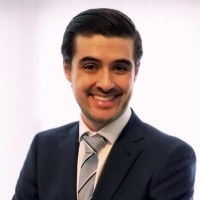
Preview how this speaker shows up across market transcripts. Unlock the full archive, AI chat, and the version personalized to your watchlist, followed channels, and favorite speakers.
Speaker snapshot
Research profile
Profile notes are still being inferred from transcripts.
Economic vision
The agent is still building this speaker's macro framework.
Reliability notes
- Admin-validated speaker with linked X / Twitter profile.
- Preview built from 10 analyzed appearances.
- Latest tracked appearance: 2026-07-10 03:44.
- Most often seen on Crux Investor.
Mining company record (167)
167 transcript-backed statements from 10 appearances, covering key assumption, milestone, capital needed and other company claims. These reflect management's own framing and have not been independently verified.
- Is the resource figure supported by a current NI 43-101 / JORC technical report — and is it measured, indicated or inferred?
- Is the stated grade a reserve grade, a resource grade, or a single drill intercept?
- Which study do these economics come from — PEA, pre-feasibility or feasibility?
- What metal price and discount rate underpin the NPV and IRR?
We're developing the Great Atlantic Salt Project on the west coast of Newfoundland aiming to supply de-icing road salt
shallow flat lying evaporate halied body within Devonian Carboniferous uh strata
We're developing the Great Atlantic Salt Project on the west coast of Newfoundland.
Our salt is used for the deicing of roads.
We're developing the Great Atlantic Salt Project on the west coast of Newfoundland, which will be North America's first new salt mine built in nearly three decades.
we have a very large high-grade pillowy shaped it's been described deposit.
We are in a nice pillowy shaped salt deposit. So once we're in there, we've hit it and then you're not chasing veins.
within a much larger indicated resource of 383 million tons and inferred resources of 868 million tons
We also have 50 years of resource already defined by drilling.
we have a 25-year mine plan already in our um in our updated feasibility study that in that plans lays out the plan to mine the entire reserve.
probable reserves of 95 million tons grading almost 96% sodium chloride
so there's some of that uh but we're talking about grades that are massively higher than any other resource project.
We also have 50 years of resource already defined by drilling. Now, that's not guaranteed to make its way into reserve, but based on what we know about salt deposits, the nature of them, it is a high possibility that it can be added.
probable reserves of 95 million tons grading almost 96% sodium chloride
capex is not low. 589 million Canadian dollars of initial capex
So the total capex is 600 million Canadian.
about 600 million Canadian for in total
The total capex is $590 million Canadian.
All this for an initial capital of less than $600 million.
Based on our life of mine average EBITDA of 325 million, that would suggest a close to $3 billion valuation is possible if the market views it that way.
we have commissioned as part of our feasibility study work and then we're also doing independent due diligence as part of our financing work um by market experts that have verified our pricing model.
Compass Minerals selling at about the same price has much higher shipping and distribution and production costs
the IRR after tax 21.3%.
The NPV is very strong as well as the internal rate of return of 21.3%.
the NPV is a 920 million Canadian
The NPV is very strong as well as well as the internal rate of return of 21.3%.
We're not as extracting as much value because we have a 25-year mine life.
the after tax-free cash flow, uh which is 188 million a year every year on average for the 25-y year mine life.
capex is not low. 589 million Canadian dollars of initial capex
last month in June in a bot deal live financing that raised about 15 million Canadian dollars
build is about 590 million, right?
Once that's in place, we've talked to subordinate lenders, you know, that have said, you know, once your project financing secured, once we know what terms you've given them, once we know what security has been granted, come talk to us. We could be good for 50 to 100 million more.
If we get 60% 60-ish percent from senior secured, we're looking at 360 to 400.
Uh this is our initial capital and then the initial years of construction or operation as we ramp up, then our NPV peaks.
We have an early works package that's about 100 million that's been approved to start construction by the government.
ongoing discussions with Endeavor Financial on the path to um project financing
We're working with a group called Endeavour. Uh specialized in putting together lender packages for mining companies. Uh Uh we opened up our data room to lenders in earnest a couple months ago or month and a half ago.
we already have Sandvik as our equipment provider and they've provided they've committed to financing their equipment. So, that's 80 million dollar plus package there at least out of the gate for that.
To finance all of this, we are looking to get 60% from debt and debt having that lined up from the debt providers.
Uh we raised some money in the fall of last year 2025 and we are working on the financing for the broader package uh with a debt lender debt broker group uh brokerage called Endeavor Financial. They work out of London. A lot of experience putting together packages for mining companies. Uh that's well underway. Due diligence has been uh completed on that. that will go out to market and we can yeah we expect to have that in the near future and of course there's ongoing discussions with many other groups uh including the government and other financing partners in the intermediate uh that could come to the table we have with a uh we have anou with Sanvic our equipment provider and a potential financing partner as well where they've committed to financing their equipment package
the finan uh financing we completed last year in October. We'll go to the equity markets, make sure that uh there's there's a component there for uh, you know, the down payment.
So, total of 25 million raised in the last year so.
we had raised some working capital in the fall that had allowed us to start that construction. Recently we uh and that allowed us to continue or advance through March, April, May, June
we have over a year of work already approved to advance and that lines up nicely with our the next phase of permits
closing that financing package needed for uh the capex
securing a um a binding commercial agreement because there is something in place but it's not a binding commercial agreement for port access
We show a peaking of NAV in year four from year eight really, minus four and then plus four from today.
Right now we are doing site clearing, tree cutting, ground preparation, grubbing, all stuff that needs to be done.
We have received early works permits that have come out of the EA that it will allow us to start construction and that will be meaning clearing the site preparing pads and lay down areas uh and development that will support the future development.
this is based on the finan uh financing we completed last year in October that allow us to do some of that site prep work and really just ensure that the schedule is maintained. Um, we are starting construction actually next month. Uh, we're not waiting for that.
we announced that we had started construction. It was a very important milestone for the project
We are in this at the start of construction of the project.
Uh this is our initial capital and then the initial years of construction or operation as we ramp up, then our NPV peaks.
We recently started construction activities at site.
hit their production target of uh 2030
We have a feasibility study that was completed last year.
We're developing the Great Atlantic Salt Project on the west coast of Newfoundland
the Great Atlantic Salt project in the St. George Bay basin of Western Newfoundland
We're developing the Great Atlantic Salt project on the west coast of Newfoundland.
We're developing the Great Atlantic Salt project on the west coast of Newfoundland.
the uh provincial permits, we received an entire package approved for early works. That is encompassing over $150 million worth of capital activities
following provincial approvals in um last year in 2025
We are permitted.
As you know, we have an improved environmental assessment.
We're developing the Great Atlantic Salt Project on the west coast of Newfoundland
the Great Atlantic Salt project in the St. George Bay basin of Western Newfoundland
We're developing the Great Atlantic Salt project on the west coast of Newfoundland.
We're developing the Great Atlantic Salt Project on the west coast of Newfoundland.
we have a town we have they have a committee that has been established that the part of the the local government and they interface with our engineers and our on-site staff regularly.
We have full support uh can't can't say enough support from the provincial government of Newfoundland and Labrador.
He's worked with Vale, Hudbay, Newmont. Over 30 years of experience, billion dollars of worth of construction activity.
I actually only joined the company in June of last year. I'm a process metallergical engineer, but uh you know
Our chairman and founder is a lawyer as well as a geologist. He discovered this project uh and brought and demonstrated its viability.
our project director, Andrew Smith. And again, we're bringing on some new engineers...we also have Hatch as our integrated project delivery partner that kind of is leading our detailed engineering
We have Roland How is a director. He was the former general manager of that Godric mine that I mentioned earlier, the largest underground salt mine in the world. And we have Bob Kelly who is a former uh VP at tech resources with a significant experience in operations safety and mine development.
my engineers are saying it's a lot better than expected. The ground is a lot drier than we initially anticipated.
we're doing, as you know, a kilometer and a half drift.
We don't have metallurgy on our project. Salt deposits are very easy to define and permitting is advanced on this project.
Their minds are tend to be older. Uh they are deeper. uh because of the nature of the salt deposits, many of them are found at depths of 500 to 600 meters and some of them are underwater and by that I mean they're below lakes and uh you know they're the remnants of uh old seas, right?
we have to take the salt because it's 95 96% purity salt.
the conveyors are not the bottleneck for our product, uh for our mind. It's really the port and how much it would cost and the the size of the vessels we can move in there
a covered and insulated conveyor that runs 3 kilometers to the port that we plan to use for our shipping of product.
the remaining risks on the project are financing and then execution of the mind design.
The big one for us is how stable the ground is, the ground conditions. The ground during the updated feasibility study process was determined through a geological a test work, uh geotechnical drilling work to be less competent than expected
We're a 100% battery electric operated project. That's what we're contemplating.
not cyclical, recession proof, very low volatility on the price. On the downside, only on the upside does it benefit in cold weather.
The drift access or critical element for our mine especially for well for any underground mine really.
There's very little metallergical risk. There's very little mining risk in terms of I guess call geology risk. There's very little of that.
We don't have metallurgy on our project. Salt deposits are very easy to define and permitting is advanced on this project.
We aim to supply de-icing road salt to the North American market.
We're shallower deposit, easier to access, faster timeline to development. And so when those are less expensive, we can produce less expensively as well. But we're also in Newf Finland. Uh so we have a lower operating costs, hydro power connections, Newfoundland, West Coast Newf Finland labor, experienced miners who already travel for work but you know are looking to work closer to home.
we would be producing 4 million tons. So you get the growth from today's market size >> let's say mid30s to possibly 40 and then we would come in with about potentially 10% of the market
shows our average selling price if we were vertically integrated which estimates our production costs and shipping costs and leaves us with a 54% margin
we will operate at the lowest quintile of the cost curve, not only in North America, but also competitive with foreign production.
It is a project that aims to address the supply shortage of de-icing road salt in North America, the Northeast US, Midwest, Ontario, Quebec and the Atlantic provinces.
We will be the first new salt mine built in North America in 25 years.
sovereign wealth funds, export development credit agencies, major infrastructure banks uh that view this project uh as for a lot of the reasons that we just talked about as a very safe investment
we view ourselves as complimentary which could be a good horizontal integration strategy.
aiming to satisfy a need for a shortage of deicing road salt in Eastern Canada and the northeast US. Targets North America's 30-40% De-icing Salt Supply Gap
In 2001, the last new salt mine to open in North America was built by American Rock Salt. In 2021, North America's first ever salt mine closed. We import about 30 to 40% of our salt needs from primarily from Chile and Egypt.
we expect to unlock a reate for the project to secure the value of it by announcing financing, announcing additional strategic partnerships, obtaining remaining permits and signing potential additional offtake agreements
get them to be a part of the story, and to give them a win with the news that we're going to be having in the, you know, expect to have over the next few months
Every claim above was said by Nolan Peterson in the interview it is dated to, and carries their own words. Nothing is added from filings, and nothing has been checked against them. Transcripts are automated — clearly mis-heard words are corrected for readability, never figures, dates or the speaker's own hedges. Not financial advice: an executive discussing their own company has an interest in it.
Themes and assets
Most discussed assets
Transcript previews
Every analyzed appearance we have for this speaker, newest first. Open any transcript preview to read the underlying transcript.


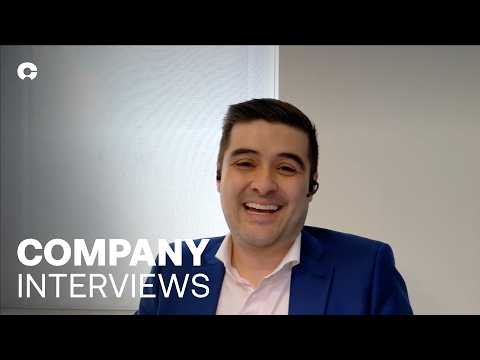


Related speakers


Create your free research agent
Unlock every transcript this speaker appears in, compare them with your other followed voices, and ask the agent for the bull, bear, and consensus read in one workspace.
- Full transcript archive for this speaker
- Personalized relevance to your watchlist
- Cross-speaker comparisons inside your workspace
- AI chat about this speaker’s thesis
- Track how their view changes over time