hosts market interviews and commentary on macro and crypto
Preview how this speaker shows up across market transcripts. Unlock the full archive, AI chat, and the version personalized to your watchlist, followed channels, and favorite speakers.
Felix Jauvin is a market-focused host/commentator at Blockworks who frames conversations around macro, trading, and digital assets through a practical, cross-asset lens. In the supplied material, he comes across as an active markets explainer rather than a purely academic macro voice: he emphasizes risk management, positioning, market structure, and how policy headlines filter into tradable narratives. He frequently brings in guests on FX, rates, Fed policy, AI capex, gold, Bitcoin, and systematic flows, suggesting a broad multi-asset research style anchored in market reaction rather than abstract forecasting.
Jauvin’s recurring economic worldview is that markets are driven less by textbook macro predictions than by incentives, positioning, liquidity, and human behavior. He repeatedly emphasizes that independent thinking matters, but mainly because consensus tends to be crowded and lossy. Across the material, he appears skeptical of overly mechanical central-bank communication, wary of the Fed’s signaling power, and attentive to regime shifts in rates, inflation, and volatility. He also often stresses that policy intervention, fiscal pressures, and large capital-expenditure cycles can matter more than incremental data prints. In crypto and AI, he seems interested in how narratives, infrastructure spending, and capital allocation reshape market leadership. Overall, his framework is pragmatic, narrative-aware, and somewhat regime-sensitive rather than doctrinaire.
Every analyzed appearance we have for this speaker, newest first. Open any transcript preview to read the underlying transcript.

Preview:Steve Hou argues AI compute is moving from a scarcity-driven “token maxing” phase to a more efficient, substitutable, and increasingly hedged market. He says the near-term market turbulence around AI names reflects a transition: frontier-model margins may be pressured by cheaper open-weight models and smarter routing, but total compute demand can still grow as inference broadens across enterprises.
Preview:A panel discussion on the historic momentum unwind and rotation out of AI/semiconductor stocks into value, industrials, and financials. The speakers analyze market structure (levered ETFs, gamma squeezes, concentration), fundamental cracks in AI (cheaper open-weight Chinese models, capex sustainability, memory competition), Fed communication failures, Iran/oil risk, and the potential for broader contagion via yen carry trade or credit spreads. Overall tone is cautious: preserve capital, don't catch falling knives, and wait for single-stock volatility to subside before re-entering.
Preview:Brent Donnelly argues that trading edge comes from independent thinking, not from predicting every macro release. He frames his new book as an extension of Alpha Trader, drawing on poker, psychology, and behavioral discipline to explain why traders overtrade, chase losses, and mismanage risk. On markets, he is broadly bearish USD/JPY upside from intervention risk, thinks the Fed chair’s recent hawkishness is partly performative, and sees FX still driven mainly by rate differentials and positioning.
Preview:Quinn Thompson and Jack Farthing discuss a dramatic momentum factor unwind in AI/semiconductor trades, coinciding with Japanese yen intervention. They argue the AI trade is cracking — hyperscaler capex questions, memory-efficiency breakthroughs, and extreme positioning are colliding. Both see peak growth/inflation, a Fed that cannot credibly hike, and favor fading hawkishness via gold and SOFR. They are cautious on tech bounces, note Bitcoin/crypto sentiment is washed out, and expect a treacherous next two months into midterm elections.
Preview:Bob Sheehan of Lighthouse Macro argues the Fed put is dead under new Chair Kevin Warsh, who has signaled a deliberate removal of forward guidance, shorter FOMC statements, and a hawkish, less market-coddling posture. Sheehan frames the market reaction as two separate trades: a near-term bear flattener driven by short-end volatility as the market reprices Fed uncertainty, and a longer-term long-end supply/term-premium story that eventually steepens the curve. He advocates a defensive equity posture favoring short-duration sectors (healthcare, staples) over long-duration tech, and notes unusual cross-asset dislocations (gold and bitcoin selling off together) that reflect a regime shift younger traders haven't experienced.
Preview:A weekly roundup discussion among Tyler Neville, Quinn, and Felix covering the fading Fed hawkishness narrative, the rotational market regime, the AI/memory capex cycle, the decline of the Mag-7, and the implications of secular inflation. The group argues the Fed is unlikely to hike, that the long-end is where real accommodation lives, and that capital is rotating from large-cap tech into industrials, banks, and old-economy sectors — a trend they see as healthy but potentially a long-term topping pattern for the S&P 500. Bitcoin and MicroStrategy get bearish treatment as the debasement narrative fades in favor of productive investment.
Preview:This weekly round-up argues that Fed communication has reached a peak-hawkish, low-utility stage and that the market is now shifting toward a different regime: less forward guidance, more volatility, a stronger dollar, tighter liquidity, and more emphasis on the long end of rates. The speakers also frame the current environment as supportive for AI infrastructure and other real assets/capex beneficiaries, while warning that credit spreads, carry trades, and liquidity should be watched for the next break.
Preview:Joseph Wang argues Kevin Warsh’s first FOMC meeting was hawkish in tone even without a rate hike. He sees a more centralized, less forward-guidance-driven Fed emerging, but still thinks the most likely path this year is no hike as oil eases and growth/risk assets could weaken.
Preview:The episode is a weekly market roundtable arguing that recent policy intervention, especially around Iran, oil, FX, and rates expectations, is helping keep the bull market alive. The speakers think positioning had become crowded bearish, volatility protection was overbought, and a snapback rally could follow if oil rolls over and rate-hike pricing is removed. They also argue the bigger structural trade remains AI/capex, but with important caveats about Mag 7 underperformance, equity issuance, and the political/social backlash to AI centralization.
Preview:Luke Gromen argues that the Fed and Treasury are cornered by high debt, persistent deficits, and war-driven inflation, forcing a choice between defending the dollar or defending the bond market. He thinks Kevin Warsh will likely present a narrative of “disinflationary growth” via AI, deregulation, and balance-sheet reduction, but says that story is mostly cover for a more inflationary coordination between the Fed and Treasury. In the near term, Gromen expects rising pressure on bonds, stocks, gold, Bitcoin, and the dollar as the physical realities of oil and supply constraints start to dominate financial markets.
Preview:David Cervantes argues that the U.S. economy remains too flush with capital to tip into recession: the AI buildout, still-large fiscal deficits, and a resilient consumer are creating powerful demand that offsets shocks. He also says inflation is broadening beyond oil, the labor market is firmer than earlier in the year, and the market is now correctly repricing toward Fed hikes rather than cuts.
Preview:The discussion argues that the macro backdrop is being managed by policy across geopolitics, monetary policy, and liquidity, and that this is fueling both a productivity boom and a highly centralized, K-shaped market structure. The speakers are bullish the long-run equity/AI regime, but tactically cautious because positioning is crowded, volatility is cheap, and leadership looks vulnerable to sector rotation.
Preview:Two Forward Guidance hosts argue that the recent AI-led equity rally can persist only if bond-market stress is actively managed. They frame rising Treasury yields, oil shocks, and inflation as the real macro constraint, while still seeing powerful support from fiscal policy, capex, and liquidity into AI infrastructure and defense.
Preview:The episode argues that markets are being driven by an AI/earnings bubble, but the near-term setup is extremely crowded and fragile. The hosts also warn that consumer strain is worsening as inflation, energy costs, and delinquencies rise, even while policy still props up assets.
Preview:Neil Dutta argues the Fed is increasingly boxed in toward a hawkish bias because inflation is still above target, labor markets are not deteriorating, and equities are near highs. He says the bigger macro story is the AI/data-center capex boom and energy shock: both support markets for now, but both also create inflation pressure and a potential future growth reversal if capex slows or consumers get squeezed.
Preview:A weekly market roundtable argues that oil risk from Iran and the Strait of Hormuz is still unresolved, keeps long-dated oil attractive, and could feed a broader inflation rebound. The group also links AI/data-center capex, K-shaped consumer strain, labor-market disruption, and rising gold appeal into one regime of asset-price inflation and worsening wealth divergence.
Preview:Danny Dayan argues the Fed eased too early, financial conditions remain too loose, and the combination of passive easing, a prior cyclical reacceleration, and new oil/supply shocks sets up another inflation wave and a potential meltup in risk assets before the Fed is forced to tighten.
Preview:Weekly market roundup centered on the Fed’s hawkish turn, rising oil prices, and the implications of geopolitically driven inflation. The speakers argue that central-bank control is increasingly constrained, that the market is underpricing a persistent inflationary regime, and that energy and real-asset exposures may have a stronger setup than duration-sensitive growth trades.
Preview:Steve Hou argues AI is already a real bubble, but that label should not be used to dismiss its macro and market impact. He says the buildout cycle is large enough to matter for GDP, supply chains, and asset prices, and that agentic AI could sharply raise compute demand as adoption broadens and pricing normalizes.
Preview:The hosts argue that the Fed’s latest reform theater is less important than the real macro drivers: AI capex, energy shocks, and geopolitics. They see a short-term market stretch and likely washout, but a broader medium-term industrial/buildout cycle still intact.
Preview:Michael Howell argues that global liquidity is rolling over into a late-cycle 'speculation' phase that precedes turbulence, but not yet outright recession. He says the real drag on liquidity is working-capital demand from a still-strong real economy, while Treasury bill issuance and buybacks are effectively a liquidity-supportive duration shift.
Preview:Michael Howell argues that the global liquidity cycle is rolling over from a late-stage 'speculation' phase toward 'turbulence,' but he does not think the economy is in a recessionary collapse. His core view is that debt refinancing needs and Treasury/Fed balance-sheet actions are currently the main forces shaping market liquidity, with bond volatility and reserve management acting as key transmission channels.
Preview:A Forward Guidance weekly roundup focused on market structure, positioning, inflation, and policy. The speakers argued that the recent rally was driven less by fundamentals than by leveraged flows, dealer/CTA mechanics, and a sharp unwind in hedging, while warning that tariff, oil, and fiscal policy still point toward sticky inflation.
Preview:Interview with Reflexivity CEO Jan Szilagyi on how AI is being used by hedge funds, especially in global macro, to synthesize data, test ideas faster, reduce blind spots, and improve execution. He argues AI is already creating productivity gains, but finance alpha will not disappear immediately because market relationships are unstable, data is sparse in many macro areas, and human judgment still matters.
Preview:A weekly Forward Guidance roundtable argues over whether the post-ceasefire selloff/rally reset leaves equities attractive or still vulnerable. One side says the tape is in a position-driven squeeze with AI/compute and semis leading, while the other says oil, inflation, weak liquidity, and unresolved geopolitics argue for caution on broad indices.
Preview:Jacob Shapiro argues the Iran conflict is less about battlefield dynamics than about shipping through the Strait of Hormuz, physical supply shortages, and the acceleration of deglobalization. He frames the war as a stress test for global supply chains, with oil important but not the only or even biggest concern; LNG, fertilizers, petrochemicals, and downstream inputs may matter more over time.
Preview:Jordi Visser argues that AI has already moved from the chatbot era into an agentic era that is massively increasing compute demand, reshaping labor, and changing how markets should value software, hardware, crypto, and commodities.
Preview:A Forward Guidance roundtable argues that the market is being driven more by positioning and flows than by fundamentals, with oil, inflation, and credit conditions becoming the dominant macro risks. The speakers remain cautious on risk assets, see more downside in tech if inflation and rates stay sticky, and favor scarce real assets like energy and gold over long-duration financial assets.
Preview:Fed Governor Christopher Waller argues inflation fears from oil are overstated, the labor market is gradually weakening, and policy should move back toward neutral. He also frames AI, deregulation, and financial innovation—especially stablecoins—as positive supply shocks that could lower inflation and reshape the neutral rate over time.
Preview:A macro roundtable argues the Middle East war and oil spike are creating a global growth shock that limits Fed action, strengthens the dollar, and pressures risk assets. The speakers think banks and deregulation may provide more liquidity than the Fed near term, while commodities—especially energy and agriculture—look relatively better than equities.
Preview:Raoul Pal argues that AI is the dominant macro force: it is driving energy demand, capital formation, robotics, and a long-running US-China race that will reshape markets and labor. He is constructive on the liquidity backdrop, sees policy and banking-system plumbing as supportive, and thinks crypto, tokenization, and digital assets become much larger as AI agents proliferate.
Preview:Forward Guidance’s weekly roundup argues that the oil shock is not a one-off headline but a structural stressor that is already forcing central banks, currencies, and risk assets to reprice. The speakers see the Fed as more dovish than the market expected, but they think the bigger story is that Europe and other single-mandate central banks are boxed in, while energy disruption, liquidity weakness, and market structure fragility create a ceiling on equities, especially the S&P 500 and more vulnerable non-U.S. markets.
Preview:Bob Elliott argues that the Iran/oil shock should be read as a sequential macro shock: first higher energy prices crush real household spending, then labor and incomes weaken, and only later does disinflation and easier policy show up. He says central banks do not ease into oil shocks, and markets are still too complacent about the inflation, rate, FX, and risk-asset consequences.
Preview:This episode is a bearish macro roundtable on the Iran/Hormuz oil shock and its second-order effects. The hosts argue the shock is already flipping the market from inflation-to-demand-destruction, pressuring Asia/Europe first, strengthening the dollar, and eventually forcing a recessionary policy response even as oil, rates, and bond-market behavior remain unusually hard to price.
Preview:Eric Wallerstein argues the world is moving into geopolitical and economic “spheres,” with Latin America emerging as a relative winner and Europe/East Asia more exposed to shocks. He also says the Fed should keep unwinding distortionary balance-sheet policies, but only alongside bank-regulatory reform so liquidity can actually flow through the system.
Preview:A Forward Guidance weekly roundup focused on the Iran strike, oil/LNG shock, and what it may mean for bonds, credit, FX, and risk assets. The speakers argue the market is underestimating how long the disruption could last, and that the move is showing up first in the oil curve, volatility, and cross-asset stress rather than a simple headline-driven equity selloff.
Preview:Luigi Buttiglione argues that AI is a real productivity revolution, not a bubble, and that it mainly reinforces US exceptionalism rather than weakening it. His main warning is that central banks should not cut rates below the neutral rate just because measured inflation or unit labor costs improve; that could fuel bubbles, steepen the yield curve, and create a worse medium-term inflation problem.
Preview:The hosts argue that AI has triggered a broad rerating of software multiples while also accelerating a rotation into real assets, commodities, and other inflation-protected exposures. They pair that with a bullish near-term macro view: U.S. growth is reaccelerating, tax refunds and softer financial conditions may support activity, and the market is increasingly pricing a productivity-driven regime change rather than a simple cyclical slowdown.
Preview:James Seyffart says crypto ETF flows have weakened, but the broader institutional story is still intact. The recent Bitcoin ETF outflows look partly mechanical—especially basis-trade unwind and lower leverage demand—while issuers keep filing and institutions keep building tokenization and crypto infrastructure products. He also sees the ETF industry broadening into more leveraged, covered-call, and niche structures, with some of those likely to fail or liquidate.
Preview:A live, conference-style weekly roundup from Forward Guidance focused on macro, commodities, and the ongoing rotation out of big tech. The speakers argue that gold, gold miners, energy producers, and some international/value assets are benefiting from underinvestment, a potentially steeper yield curve, and a broader shift away from the AI/Mag 7 trade. They also discuss demographics, marriage, household deleveraging, consumer sentiment, and why in-person macro conferences still matter.
Preview:This weekly roundup argues that the U.S. labor market and broader Main Street economy reaccelerated after a hidden spring 2025 slowdown, but the market is no longer a simple one-trade regime. The hosts emphasize explosive dispersion beneath flat indices: AI capex still drives growth, yet capital is rotating away from crowded mega-cap tech and toward real-economy bottlenecks, resources, and other scarce physical assets.
Preview:Vincent Delaurd argues 2026 is set up for an inflationary growth re-acceleration, driven by strong nominal income/tax receipts, sizable tax refunds, possible additional fiscal stimulus, looser banking conditions, and AI-related capex. He sees a bubble in stocks, a bubble in pessimism, and a bubble in nominal growth all existing at once, with equities likely to grind higher into summer before risks rise later in the year.
Preview:The episode argues that AI is triggering a major productivity regime shift that is already changing capital allocation, market structure, and policy expectations. The immediate market result, in the speakers’ view, is violent dispersion: mega-cap software and retail/speculative trades are getting hit while hardware, regional banks, staples, and other cyclicals rotate higher.
Preview:Joseph Wang argues that Trump’s new Fed-chair pick, Kevin Warsh, is unusually hawkish and likely to push a smaller Fed balance sheet, but that this does not automatically mean runaway inflation or a market crash. He says QE mainly changes asset composition and supports financial assets rather than creating broad consumer inflation, and he thinks the bigger shift is toward a more coordinated Treasury-Fed framework with lower policy rates, less Fed independence, and more pressure on risk assets if balance-sheet reduction is pursued aggressively.
Preview:This weekly roundup argues that the Fed meeting was basically background noise while markets are repricing a much bigger macro story: a rotation into metals and other scarce real assets, a growing challenge to the old bond-led system, and rising stress in the structure of mega-cap tech and market liquidity. The hosts repeatedly frame silver/gold’s move as unusually large, potentially mania-like, and tied to geopolitics, Chinese demand, and a broader shift away from paper claims toward scarce assets.
Preview:Alex Gurevich argues that good trades are defined less by a perfect forecast than by having a setup that works now or later, with clear asymmetry, manageable risk, and a coherent link between location and story. He says the macro regime has changed since the long bond bull market broke, and he now sees high real rates, a weakening job market, and inflation fear as setting up a renewed bull case for Treasuries and potentially much lower front-end rates, while also keeping an open mind on gold, silver, copper, and Japan.
Preview:The hosts frame the current market as a historic squeeze in physical commodities and metals, driven by sovereign debt stress, bond-market distortion, and a weakening dollar. They think the trade is partly fundamental and partly a violent positioning unwind, but they also warn that commodities are already crowded and tactically stretched.
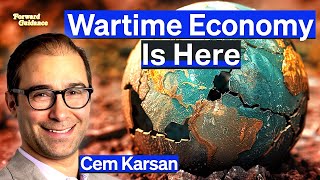
Preview:Cem Karsan argues the world has shifted into a wartime, geopolitically fragmented regime where fiscal policy, trade protectionism, and military strategy are all linked. His core market view is that this supports higher inflation, a steeper yield curve, ongoing rotation into precious metals/strategic assets, and continued volatility as capital leaves overowned growth assets and reallocates toward hard assets and policy-favored sectors.
Preview:A weekly macro roundup focused on near-term market rotation: the hosts argue that breadth has improved, big tech/Mag 7 is lagging, cyclicals and consumer-linked names are catching a bid, and positioning looks crowded enough to raise short-term caution. They also discuss Fed policy timing, tariff and election dynamics, Japan/yen stress, AI capex bottlenecks, crypto’s tentative rebound, and the idea that policy is trying to stimulate Main Street without destabilizing markets.
Preview:Alex Campbell argues that silver’s recent surge is being driven by a real, multi-month supply-demand squeeze tied to solar/energy demand and inelastic supply, not just speculation, though he thinks the trade is now more dangerous tactically after a violent move. He uses that setup to broaden into three bigger themes: the death of globalism/resource nationalism, the acceleration of AI buildout and the compute/energy/minerals bottleneck, and a political realignment (“horseshoe”) driven by generational pressure, inequality, and the failure of the neoliberal consensus.
Preview:The panel argues that 2026 is starting with a strong pro-commodity, pro-cyclicals rotation as geopolitics, defense spending, tariff policy, and a likely growth reacceleration push capital toward resources and away from mega-cap tech. They think the market is moving from a Main Street slowdown into a hotter nominal-growth regime, which could steepen the yield curve, pressure bonds, and keep metals, miners, uranium, and select industrial/cyclical names outperforming.
Preview:Andy Constan argues that the market has moved from a Fed-driven liquidity regime to one driven mainly by private credit creation, bank lending, and the funding of large real-economy promises like AI buildout and onshoring. He thinks the key question for 2026 is not whether the Fed buys assets, but who funds these promises, at what price, and whether the resulting borrowing pressure lifts growth without breaking credit markets.
Preview:Warren Pies argues 2026 starts in a Goldilocks regime: no recession, no inflation boom, and enough earnings/fiscal/AI support to keep equities bid. His base case is that the market can reach about 8,000 on the S&P 500 by early 2026 without being clearly overvalued, while the bigger risk later in the year is that Fed cuts, fiscal re-expansion, and a firmer inflation backdrop push the cycle from disinflation into overheating.
Preview:Two Market Radar guests argue the market has moved out of an outright risk-off phase and into a “slowdown” regime: growth impulses have improved off the November lows, but not enough to justify full risk-on positioning yet. They see choppy, dispersion-heavy markets where some assets like gold remain in trend, while crypto and broad momentum trades have been much less clean.
Preview:The hosts argue the Fed’s December cut and new $40B/month Treasury bill purchases are a clear pivot toward easier financial conditions, with Powell effectively trying to “run it hot” into the end of his term. They think fiscal stimulus, a friendlier Fed, and reserve-management buying all point to more cuts, weaker dollar, higher long-end yields, and a broad rotation away from mega-cap tech toward hard assets, small caps, metals, cyclicals, and select Main Street beneficiaries.
Preview:The episode argues that inflation, central-bank policy, and concentrated equity market structure are creating a deeply uneven economy: large-cap tech and asset owners are propping up nominal growth while small businesses, labor, and Main Street weaken. The hosts connect weak ADP small-business job growth, Black Friday volume declines, and rising buy-now-pay-later usage to a K-shaped economy that can keep looking fine on the surface while real purchasing power erodes.
Preview:Jordi Visser argues that AI is not a cyclical tech fad but an expanding economic paradigm: demand for compute is effectively infinite, the buildout is still early, and the main risk is not inflation but eventual deflation as intelligence compounds. He connects this to profit margins, labor displacement, government support for the AI stack, and a bullish long-run view on Bitcoin as a decentralized store of value in an increasingly financialized, AI-driven world.
Preview:The episode argues that Nvidia’s strong earnings temporarily revived AI sentiment, but the bigger market story is the Fed’s increasingly hawkish communication, weaker liquidity, and the resulting pressure on risk assets. The hosts focus on how AI capex is shifting from equity enthusiasm to credit-market financing, while also broadening into a macro discussion of real rates, Treasury duration, FX volatility, Japan’s weak yen, and crypto capitulation.
Preview:Raoul Pal and Julian Patel argue that post-2008 markets are dominated by a persistent debasement/liquidity cycle, not classic valuation or diversification logic. Their core claim is that once you adjust assets for fiat debasement, only tech and crypto have consistently compounded purchasing power, and the current setup still favors higher risk assets into the next cycle leg.
Preview:This is a structured interview about collateralized loan obligations (CLOs), why they have outperformed many other fixed-income assets, and how an active CLO manager thinks about security selection, liquidity, and credit-cycle risk. Laila Kollmorgen argues that CLOs are structurally different from the subprime/CDO products that blew up in 2008 because the collateral is syndicated corporate loans, not liar-loan mortgages, and because the market is monitored by many institutional credit investors rather than one originator. The conversation also covers why CLOs benefited from rising rates, why demand for AAA CLO paper remains strong, and why she is becoming more selective as credit fundamentals soften and spreads tighten.
Others tracked across the same asset focus or market thesis.
Unlock every transcript this speaker appears in, compare them with your other followed voices, and ask the agent for the bull, bear, and consensus read in one workspace.
Type a question. Create a free agent to send it and keep the answer linked to this speaker.
Your question is preserved across sign-in.
Free. No card. Takes about a minute.