Shane Williams
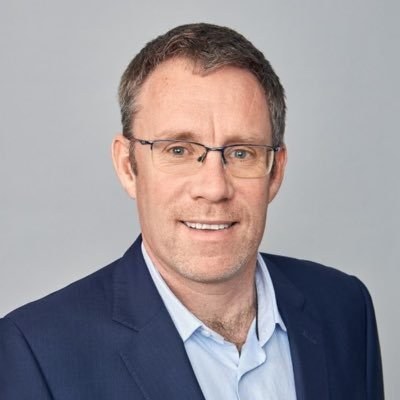
bullish on gold prices and the mining sector
Preview how this speaker shows up across market transcripts. Unlock the full archive, AI chat, and the version personalized to your watchlist, followed channels, and favorite speakers.
Speaker snapshot
Research profile
Profile notes are still being inferred from transcripts.
Economic vision
bullish on gold prices and the mining sector
Reliability notes
- Admin-validated speaker with linked X / Twitter profile.
- Preview built from 12 analyzed appearances.
- Latest tracked appearance: 2026-07-22 16:00.
- Most often seen on David Lin.
Mining company record (66)
66 transcript-backed statements from 4 appearances, covering milestone, key assumption, grade and other company claims. These reflect management's own framing and have not been independently verified.
- Is the resource figure supported by a current NI 43-101 / JORC technical report — and is it measured, indicated or inferred?
- Is the stated grade a reserve grade, a resource grade, or a single drill intercept?
- Which study do these economics come from — PEA, pre-feasibility or feasibility?
- What metal price and discount rate underpin the NPV and IRR?
We had a 30% increase in grade from Q1 to Q2.
So, we're now at around that 4 g sort of grade, and we're stepping that up as we get forward. We'll get to that 6 to 7 8 g over the rest of the year.
Madsen came with 1.7 million ounces of resources in the ground, a lot of them indicated at an average grade of around 7 g. High-grade underground mine. And we also have another project in Red Lake which we picked up called the Rowan project which had over 400,000 oz at around 8 g.
a quarter here and there of this seven to eight gram, six, seven, eight gram sort of area.
triple 4 7 is the is the higher grade non-remnant. There's a There's an area of non-remnant area that's never been mined before. It's been newly defined. It's clean ore. It's higher grade.
The model, all the drilling we've done over the last 2 years, it's been over 200,000 m of underground drilling.
we've kind of opened up or discovered a new area at the bottom of Austin. We've known about it, but we're just beginning to get in there. And that's kind of an analog, an analogy to triple 47.
We've developed 15,000 tons stockpile of material on surface ahead of the men.
I don't know if you remember what the deposit looks like. The top of the deposit is very much remnant old areas. But now we're down into the part of the ore body that's less and less mined. And that that 1147 we've talked about and that 904.
Madsen came with 1.7 million ounces of resources in the ground, a lot of them indicated at an average grade of around 7 g. High-grade underground mine. And we also have another project in Red Lake which we picked up called the Rowan project which had over 400,000 oz at around 8 g.
cuz like I said, it's a narrow high-grade nature of of the Madison, right?
Madsen came with 1.7 million ounces of resources in the ground, a lot of them indicated at an average grade of around 7 g. High-grade underground mine.
There's been over 25 million oz of gold pulled out of Red Lake, and all high-grade gold, an average of around 16 g.
There's been over 25 million oz of gold pulled out of Red Lake, and all high-grade gold, an average of around 16 g.
the design throughput of of or the permanent throughput is around 800 tons a day.
800 tons a day through that mill consistently every day, day in day out. 800 tons a day consistently through the mill at that average grade of six to six and a half maybe more grams
Madsen as a mine had been the spent had been over 350 million dollars Canadian dollars of money had been put into the Madsen mine. And shareholders' money had been put into the Madsen mine. Uh they had built a mine. They had put it into operation. They had put an IBA. They had actually went into commercial production. And so, that 350 million dollars of Canadian dollars of value, plus on top of that, there's 170 million dollars worth of tax losses associated with that project.
Q1 we were break even when we had our Q1 results. As we get into Q2, we're building up cash in the balance sheet at the moment.
We are around at 320 depending on the day mark Canadian market capitalization at the moment.
We have poured 20,000 ounces this year, you know, um, and so generated around $73 million of last year in in cash flow.
we've also started paying debt now. You know, we took on some debt. We've debt loads to pay.
There was $350 million the dollars on the project, plus $150 million in tax losses, and we bought it for $6 million.
There was $350 million the dollars on the project, plus $150 million in tax losses, and we bought it for $6 million.
There was $350 million the dollars on the project, plus $150 million in tax losses, and we bought it for $6 million.
We're getting that 75 to 80% availability.
clearly I think you you said it like 35 to 40 45,000 ounces, right?
Yeah, expectation for H2 would be probably 25 to 30,000 ounces.
this quarter's ore for us in terms >> And this was Austin and South >> Austin, okay. Just Austin, not not South Austin.
we've all in all metrics we've jumped we've doubled. You know our gold produced has jumped up 50% our even our tons mined have jumped up 50% our grade has jumped up 20%
We're not at steady state yet. We've another quarter probably of ramp up to get to that steady state.
now we we expect to see another step up in Q3
Since since early Q2, call it mid Q2, the the mine is doing about 1,000 tons of material underground a day or very very consistently every day.
we had Q1, Q2, Q3 and I think people will see that production will ramp up.
in September of this year we have another project called the Madsen project with another project called the Rowan property and the idea is to combine those and put a study together
We are a producing mine in Red Lake region of Ontario.
and in January this year we're back into production.
In January of this year we brought the mine back into commercial production.
Over the last 3 years we've the company we founded 3 years ago into production.
Red Lake region of Ontario
Red Lake is a fabled area in Canada.
Madsen as a mine had been the spent had been over 350 million dollars Canadian dollars of money had been put into the Madsen mine.
We are a producing mine in Red Lake region of Ontario.
So we're in Ontario, northern Ontario, which is the Red Lake district of Canada.
So, Madsen came with 1.7 million ounces of resources in the ground, a lot of them indicated at an average grade of around 7 g. High-grade underground mine. And we also have another project in Red Lake which we picked up called the Rowan project which had over 400,000 oz at around 8 g.
all in about 500 million dollars worth Canadian dollars worth of value in the project with a permit in place operating and with a lot of infrastructure tailings everything that you would want on a mine operation.
I was part of the team who bought that mine. It was a brownfield, very similar to Madison, a restart. And I I led the buying of that, and we put it into production in two years record time. And today that's the best operating mine for Eldorado.
So, my background is mainly in project development and operations. So, I have a long history of restarts. I love the restart game where we take a let's call it an an unloved asset and take that asset and then turn it around and make it a success. I've done that about four different times in my career. And people might know a couple of projects that I've done recently. One was the the La Mac project for Eldorado, which is a very successful operation that that I bought with Eldorado and then put a team together and turned that around.
And so, that's that got the intrigue between myself and obviously an early investor with myself was Frank Giustra.
Everything we've mined today that's all been long hole open stoping.
So, you know, our mill can do 800 sort of permanent. So, that give you the balance of that stockpile that's building 5 or 6,000 tons every month
The model, all the drilling we've done over the last 2 years, it's been over 200,000 m of underground drilling. The model gold produced to what the model says we should is is reconciling very, very well.
Our mill is like 800 tons a day to give the viewers.
we've drilled over 200,000 meters of of drilling underground ground and two drills will continue underground life of mine on this deposit.
That was a key technical risk, as you know, with this asset associated with this asset.
This asset has has failed before. Obviously, it went into bankruptcy.
there is that variety. There is that sort of um variability in grade for sure.
Are we getting the ramp up? Are we getting the gold? Are we getting the recovery?
with a good recovery and an operational stability are usually the triggers for that commercial production.
we're looking at building a hub and spoke model to 150,000 oz. We can see a pathway in Red Lake basically over the next 5 years.
I would like to see probably by the end of uh Q1 another step up close to that 800 and probably by Q2 we should be around that 800 sort of number.
the plan is for Q1 to get into this triple 47 area. Um, we've been really drilling that over the last the back half of 2025 and that's this higher grade zone
Every claim above was said by Shane Williams in the interview it is dated to, and carries their own words. Nothing is added from filings, and nothing has been checked against them. Transcripts are automated — clearly mis-heard words are corrected for readability, never figures, dates or the speaker's own hedges. Not financial advice: an executive discussing their own company has an interest in it.
Themes and assets
Most discussed assets
Transcript previews
Every analyzed appearance we have for this speaker, newest first. Open any transcript preview to read the underlying transcript.





Related speakers
 Adrian Day
Mining & resource stocks
Adrian Day
Mining & resource stocks
 Justin Huhn
Mining & resource stocks
Justin Huhn
Mining & resource stocks
 Michael Gentile
Mining & resource stocks
Michael Gentile
Mining & resource stocks
 Shawn Khunkhun
Mining & resource stocks
Shawn Khunkhun
Mining & resource stocks
 Keith Neumeyer
Mining & resource stocks
Keith Neumeyer
Mining & resource stocks
 Ross Beaty
Mining & resource stocks
Ross Beaty
Mining & resource stocks
 John Feneck
Mining & resource stocks
John Feneck
Mining & resource stocks
 Joe Mazumdar
Mining & resource stocks
Joe Mazumdar
Mining & resource stocks
Create your free research agent
Unlock every transcript this speaker appears in, compare them with your other followed voices, and ask the agent for the bull, bear, and consensus read in one workspace.
- Full transcript archive for this speaker
- Personalized relevance to your watchlist
- Cross-speaker comparisons inside your workspace
- AI chat about this speaker’s thesis
- Track how their view changes over time