translates macro and market events into simple, high-confidence finance narratives
📈 See how Andre Jikh's thesis changed over time →Preview how this speaker shows up across market transcripts. Unlock the full archive, AI chat, and the version personalized to your watchlist, followed channels, and favorite speakers.
Andre Jikh is a finance-focused YouTube creator who translates market and macro topics into high-confidence, attention-grabbing narratives. Across the supplied material, he repeatedly frames complex financial events in plain language, often using charts, simple mechanics, and strong causal claims. His public X posts and channel identity suggest a speaker who blends investing education, personal finance, and commentary on current events into a broad creator brand.
His recurring economic worldview is skeptical of official narratives and strongly focused on systemic fragility. He tends to see major outcomes—oil shocks, inflation, debt growth, CBDCs, and monetary policy—as connected parts of a larger structure of control, liquidity management, and wealth transfer. He often argues that paper markets can diverge from physical reality, that central-bank intervention can inflate asset prices and consumer prices, and that governments and large institutions use money systems to shift costs onto ordinary people. He also repeatedly emphasizes debt monetization, inflation risk, and the idea that digital money rails could become tools for large-scale financial control. Overall, his framing is populist, macro-critical, and suspicious of elite coordination, though the evidence here is mostly from recent political-economy commentary rather than a full long-run sample.
Every analyzed appearance we have for this speaker, newest first. Open any transcript preview to read the underlying transcript.
Preview:Andrei Jikh draws parallels between South Korea's recent KOSPI crash — driven by leveraged retail investors concentrated in Samsung and SK Hynix — and the US market, where margin debt has reached an all-time high of 4.5% of GDP. He argues that AI capex from Microsoft, Google, Amazon, and Meta is the linchpin holding up the global AI trade, and that a single hyperscaler cutting spending could trigger a similar forced-selling cascade in the US.
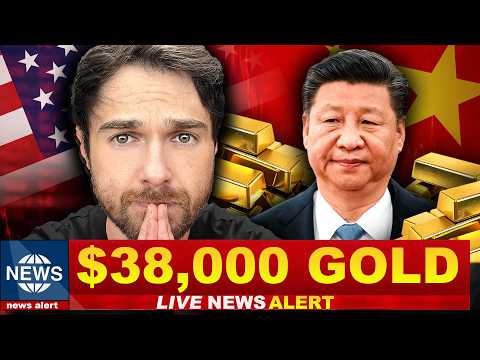
Preview:Andrei Jikh lays out Luke Gromen's thesis that the US is returning to Hamiltonian economics — a system of tariffs, industrial subsidies, and a weaker dollar — and that gold is being positioned as the neutral reserve asset to settle global trade imbalances. He argues both China and the US are signaling this shift, central banks are accumulating gold at record pace, and the math balancing China's trade surplus in gold points to ~$38,000/oz. He presents two endgames: disorderly dollar collapse or managed transition, with gold outperforming either way. He personally holds no gold yet but is watching for an entry.
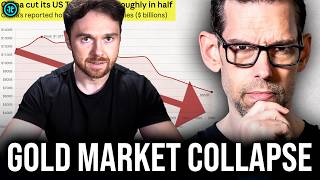
Preview:Tom Bilyeu reacts to a video by YouTuber Andre Jick explaining why China's major banks are shutting down retail paper gold trading. The official reason is protecting citizens from volatility, but the real motive, they argue, is that China wants to siphon physical gold out of Western vaults, anchor the yuan to gold, and challenge the US dollar as the world's reserve currency. Central banks globally are selling US Treasuries and buying record amounts of physical gold. Bilyeu adds his own thesis: China may use its citizens as a forced conduit to pull gold into the country, potentially creating a one-way flow by restricting gold sales, draining the physical reserves that underpin Western paper gold markets.
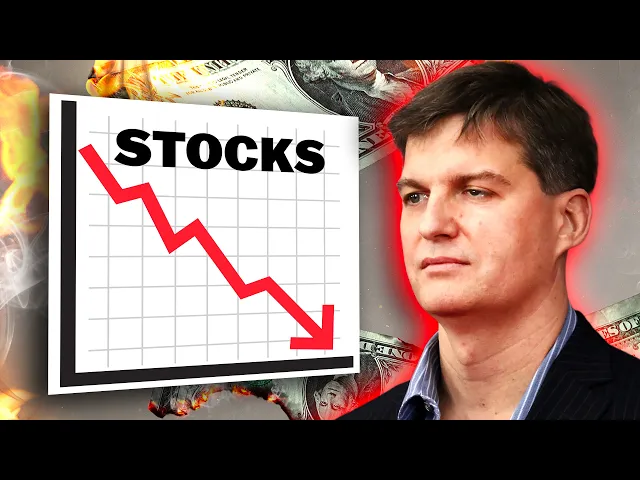
Preview:Andrei Jikh presents a bearish thesis on AI stocks, arguing the bubble could pop sooner than most expect. He outlines three problems: (1) enterprises don't trust AI and can't measure ROI, (2) AI's business model is broken — costs rise linearly with usage unlike traditional software, and (3) China is producing AI models at 90% of the quality for ~10% of the price, undermining the "America captures all the profits" assumption. He cites Ed Zitron, Alex Karp, and Michael Burry, and identifies early warning signs: a hyperscaler capex pullback, debt market freeze, and widening credit spreads — though he notes spreads are currently calm, just as they were before 2008.
Preview:Andrei Jikh analyzes China's coordinated shutdown of retail paper gold trading across multiple major banks (ICBC, Postal Savings Bank, Pingan Bank, Guangfa Bank), all effective July 24, 2026. He argues the official reason — protecting citizens from volatility — masks a strategic play: China is dismantling paper gold speculation to enable real price discovery, while simultaneously building a Shanghai-Hong Kong gold settlement system to challenge London/NY dominance and anchor the yuan to gold. He ties this to record central bank gold buying, Treasury selling, and speculates the US could counter with a gold revaluation or gold-backed Treasury bonds, possibly around July 4th (America's 250th anniversary).
Preview:Andrei Jikh argues that the Iran/Israel conflict is part of a larger fight between an old “forever war” business model and a newer stability/AI buildout model. He claims the U.S. empire has historically used proxies, sanctions, dollar access, war, and propaganda to crack countries open for profit, and says Israel has functioned as America’s proxy in the Middle East. In his framing, the recent Iran deal’s collapse and renewed regional instability show the military-industrial system still fighting the rise of the technological-industrial complex, which wants peace long enough to build AI, robots, data centers, and related infrastructure.
Preview:The video argues that a coming shift in Fed policy, data measurement, bank regulation, and oil prices will let policymakers ease aggressively while making it look data-driven rather than like money printing. The speaker’s core claim is that this will leave money “worth a lot less” over the next few years.
Preview:Andrei Jikh argues that a U.S.-Iran deal and the coming Fed meeting are linked through a broader macro setup: lower short rates, a steeper yield curve, easier bank treasury buying, and ultimately more liquidity for risk assets. He says the market is already priced for no immediate rate change, so the real signal on Wednesday will be Fed language about inflation, bond-market stress, and whether the dollar weakens or strengthens.
Preview:The speaker argues that the global monetary system is splitting between two paths: the US trying to preserve dollar dominance through stablecoins and digital payment rails, and the rest of the world moving toward physical gold and alternative settlement systems. He frames AI as both the biggest economic technology in his lifetime and a potential mechanism that concentrates wealth, boosts valuations, and strains the debt/tax base that supports the current system. He ends by saying he is uncertain on timing, is holding some stocks and Bitcoin, mostly cash, and would like to own gold or silver but is waiting for a better entry.
Preview:Andrei Jikh argues that the market is entering a historically dangerous AI/IPO bubble where passive retirement money may be forced into richly valued listings like SpaceX, and later OpenAI and Anthropic, because index rules have been changed to speed inclusion and accommodate low-float IPOs. He connects that to a broader claim that AI-related earnings are being overstated by circular spending and accounting effects, while rising rates, oil shocks, and weak market breadth could expose the whole setup.
Preview:Andrei Jikh argues that a global sovereign debt crisis is emerging because inflation is sticky, major foreign buyers of U.S. Treasuries are reducing purchases or selling, and governments—including the U.S. and Japan—have too much debt to service without eventually relying on money printing. He says this creates a Fed “trap”: cutting rates could break the bond market, while holding or raising rates could stress the economy and government finances.
Preview:Andrei Jikh argues Trump’s China trip with major CEOs was really about negotiating a broader monetary reset, not just tariffs, with gold as the key adjustment mechanism rather than a direct yuan revaluation.
Preview:A conspiracy-framed market monologue arguing that digital IDs, programmable money, surveillance hardware, and AI infrastructure are converging into a 'digital control grid' that could centralize power. The speaker ties that theme to World ID, stablecoins, the Genius Act, the BIS/UN, vaccine passports, and Palantir, while suggesting the setup may also help explain current market strength via dollar devaluation and bond-market support.
Preview:The video argues that the UAE’s reported move away from OPEC, paired with Gulf dollar shortages and U.S. swap-line support, signals strain in the petrodollar system and a broader shift toward China, yuan pricing, and gold. The speaker frames the Iran war, oil supply shocks, and U.S.-China resource dependence as reinforcing a fragile market setup that could pressure bonds, inflation, and equities.
Preview:Andrei Jikh argues that the Iran/Strait of Hormuz disruption is creating the largest oil supply shock in decades, with physical crude prices diverging sharply from paper prices, and that the real macro impact will show up first abroad and then hit U.S. inflation, gas prices, consumer sentiment, and the bond market.
Preview:Andrei Jikh argues the Iran war/Strait of Hormuz disruption is a catalyst for inflation, higher yields, and a potential monetary reset that could ultimately expand digital financial control. He leans heavily on a crisis-to-centralization framework, then pivots to self-custody, physical gold, and Bitcoin as personal defenses.
Preview:Andrei Jikh argues that the Iran conflict could accelerate the decline of the dollar-centric post-1945 order, with oil, gold, and the bond market all acting as stress points. He presents three scenarios ranging from a quick diplomatic de-escalation to a prolonged conflict that triggers bond-market strain, stagflation, or a forced monetary response.
Preview:Andrei Jikh argues that the tariff fight is really about power during an imperial transition: the U.S. is trying to reassert sovereign leverage through tariffs while financial capital profits from the volatility and may even position ahead of policy outcomes. He frames the episode as an example of crony capitalism and a broader shift from financialization toward industrialization, with gold, debt, and dollar devaluation as possible parts of the next regime.
Preview:The video argues that Jane Street may have had the ability and incentive to influence Bitcoin’s price through ETF market structure, while also connecting the firm to prior regulatory controversies in India, China, and Terra. The speaker frames Bitcoin ETF custody as a system that reintroduces powerful intermediaries into an asset meant to be outside traditional finance, and ends by urging self-custody.
Preview:Andrei Jikh argues that the Iran war is not random but the product of overlapping interests: Israel, China-focused U.S. strategy, the military-industrial complex, and a broader tech/control-grid agenda. He ties the conflict to oil flows, dollar strength, AI-enabled warfare, and the push toward tokenized/programmable finance.
Preview:The video argues that the U.S. economy is becoming fragile because of leverage, private credit stress, rising oil prices from the Iran war, and unsustainable federal deficits. The speaker’s most novel idea is that the government could revalue its gold holdings to create balance-sheet room and potentially use gold as a tool to stabilize oil and inflation.
Preview:Andrei Jikh argues that a global monetary and capital rotation is underway, with gold already confirming the move while Bitcoin is lagging and may still have downside. He frames the debate as macro forces favoring hard, neutral assets versus technical cycle signals that suggest Bitcoin could be in or near a bear market, then concludes that diversification and patience matter more than trying to time the rotation perfectly.
Preview:Andrei Jikh argues that the old debt-driven global system is colliding with a new AI-driven world where future labor, income, and tax bases may be weaker. He ties that macro paradox to rising geopolitical distrust, higher sovereign yields, and deleveraging pressure that he thinks shows up first in Bitcoin and other liquid assets.
Preview:Andrei Jikh argues the dollar is entering a structural decline as the world moves from a U.S.-led, dollar-centered order toward a more regional, multipolar system. He frames this as a monetary regime break that favors gold, silver, Bitcoin, and asset owners, while making life harder for wage earners and anyone exposed mainly to cash income.
Preview:Andrei Jikh argues that the post–World War II globalization system is breaking down and being replaced by a new power arrangement. He frames the shift as a struggle among financial globalists, sovereign states, technologists, and the military-industrial complex, with asset managers and banks trying to preserve control through tokenization, CBDCs, and capital-flow dominance.
Preview:Andrei Jikh argues that AI may compress economic mobility so much that the next 5 years could be the last meaningful window to get rich by building rather than just owning. His core thesis is that a K-shaped economy, easy money, and AI-driven efficiency will increasingly favor owners of productive assets over wage earners, with Bitcoin framed as the clearest way to "vote" for hard money.
Preview:Andrei Jikh argues that the Venezuela move is not really about oil, but about U.S. hemispheric security, denying rival powers access to resources, and preventing China, Russia, and Iran from building leverage close to the United States. He frames the situation through the Monroe Doctrine, then extends the logic to Heartland/Rimland geopolitics and concludes that Iran is likely the next major pressure point.
Preview:Andrei Jikh argues that the Minnesota daycare-fraud scandal is not an isolated abuse but evidence of a broader failure of U.S. institutions to stop fraud, waste, and abuse. He frames the issue as a legitimacy crisis: if citizens believe taxes and public programs are being stolen and oversight only reacts after viral exposure, trust in government, voting, and paying taxes erodes.
Preview:Andrei Jikh examines the escalating BRICS-US conflict in 2025: Trump's 50% tariffs on India and Brazil, BRICS expansion to include Indonesia, and the bloc's accelerating de-dollarization via local-currency trade, yuan settlement, and talks of a shared BRICS currency. He frames this as a slow-moving structural trend that could raise US borrowing costs, weaken sanctions power, and reshape global trade — while emphasizing he's not betting on dollar collapse, just staying diversified across bitcoin, stocks, real estate, and cash.
Preview:Andrei Jikh explores Universal Basic Income (UBI) through historical context, global experiments, and the recent Open Research study results. The video walks through arguments for UBI (poverty reduction, automation displacement) and against it ($4T/year cost for $1K/month in the US). The key finding: UBI recipients worked slightly less (~8 days/year), spent more on basics, and showed only temporary mental health benefits — with the most meaningful impact concentrated on those at the very bottom of the income ladder. Jikh ends with a personal reflection that happiness correlates with income growth and the gap between reality and expectation, not absolute income.
Preview:Andrei Jikh examines the wave of job resignations from 2021-2024, tracing root causes back to 1940s labor laws and decades of policy shifts that decoupled wage growth from productivity. He argues the pandemic triggered a mental shift from "living to work" to "working to live." The video contains no market analysis, no asset discussion, and no investable thesis — it is purely a socioeconomic commentary video on labor trends.
Preview:Andrei Jikh reviews how AI works (machine learning, deep learning, agents) and shares Eric Schmidt's prediction that within 5 years we'll have infinite context windows, specialized AI agents, and text-to-action capabilities that could fundamentally reshape the economy. He cites studies forecasting massive job displacement (85M+ jobs by 2025) alongside 97M new roles, then pivots to the investing implication: market concentration into the top 10 S&P 500 stocks may be pricing in a future where a handful of AI-dominant firms consolidate power. His personal take: stay diversified via dollar-cost averaging into the index rather than chasing individual names.
Preview:Andrei Jikh reviews his 4-year Fundrise investment experience, revealing a net annualized return of just 0.6% (~$1,345 profit on $75,000 contributed). While he earned $5,450 in dividends, property depreciation wiped out $35,000 in value. He attributes the decline to rising interest rates post-August 2022 and frames the opportunity cost against stocks like Apple (+165%) and Tesla (+700%) over the same period. Despite withdrawing, he remains cautiously positive on Fundrise as a small portfolio allocation, especially if the Fed cuts rates as expected.
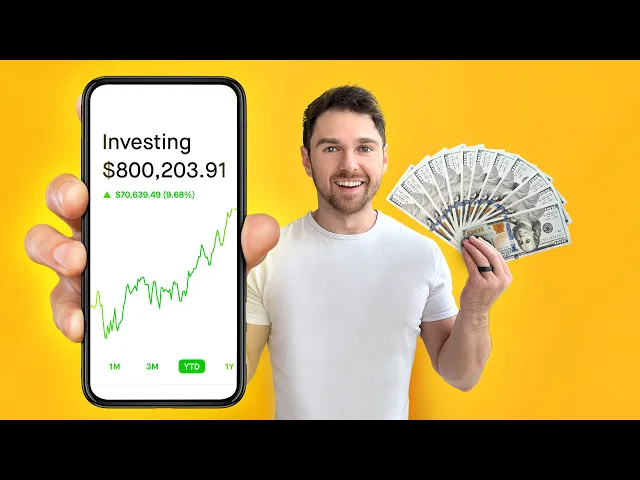
Preview:Andrei Jikh walks through his personal dividend investing journey from $0 to a ~$800K portfolio generating ~$185K/year in passive income. He explains his stock-selection criteria (yield >5%, long payout history, payout ratio, dividend growth rate), demonstrates screening tools via sponsor Mumu, and adds to his position in Realty Income (O). Crucially, he acknowledges that broad market index funds (VOO) have historically outperformed dividend strategies, framing dividend investing as his preferred "way to suffer" — a psychological fit rather than a pure return-maximizing strategy.
Preview:Andrei Jikh dissects the viral headline that Michael Burry bet $1.6 billion against the stock market via SPY and QQQ put options. He explains that the media conflated notional value with actual value — Burry's true cost was likely only a couple million dollars, representing 1-2% of his portfolio as a hedge, not an all-in crash bet. Jikh also catalogs Burry's many failed predictions since 2015 to argue against blindly following him.
Preview:Andrei Jikh gives a complete furnished house tour of his Las Vegas home, walking through the finished remodel with the Boatly Brothers (Landon and Jesse), who helped design and execute the renovation. The video showcases kitchen, living room, bedrooms, den, bathroom, theater room, studio, and backyard — focusing on design choices, materials, and cost-saving tips. There is zero market or financial content.
Others tracked across the same asset focus or market thesis.
Unlock every transcript this speaker appears in, compare them with your other followed voices, and ask the agent for the bull, bear, and consensus read in one workspace.
Type a question. Create a free agent to send it and keep the answer linked to this speaker.
Your question is preserved across sign-in.
Free. No card. Takes about a minute.