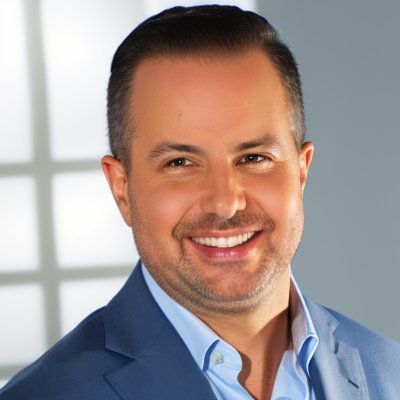
Gareth Soloway argues gold and silver are still in a corrective phase despite today’s violent rebound, with a tactical bounce possible first but a larger washout still likely before a durable bottom. He remains bearish near term on gold toward $3,500 and silver toward $50–$54, while still bullish structurally over the next several months and years.
Watch on YouTube ›Get the market thesis, key claims, assets, contradictions, and follow-up questions from any financial video — then unlock a version personalized to your portfolio, watchlist, and favorite speakers.
This Kitco interview centers on Gareth Soloway’s view that the recent gold and silver selloff is not a structural top in the secular bull market, but rather a violent liquidation of weak hands after a speculative run. The immediate tape was driven by fast-moving geopolitical headlines around Iran, oil, and U.S. policy, but Soloway repeatedly frames the metals through chart structure and investor psychology rather than the news alone. On gold, he says the metal’s intraday reversal after a plunge toward roughly $4,100 is consistent with a short-term bounce, not a durable bottom. He keeps a near-term bearish target around $3,500, describing the recent move as a “bare flag” / inside-bar type consolidation after a parabolic advance. He says gold is being traded like a risk asset right now, which in his view means it must flush more weak holders before it can resume behaving as a safe haven. …
Near term, gold and silver are still vulnerable to another flush even if they bounce first; the key tactical risk is a failed rally under recent resistance and headline-driven liquidation. Traders should treat the current move as tradable volatility, not confirmation of a durable bottom.
Over the next few months, the base case is a washout in the metals followed by a recovery if speculative positioning resets and liquidity stress or policy easing reintroduces the debasement trade. The bearish view weakens if gold reclaims the prior breakout area; otherwise, the corrective structure likely continues.
The structural thesis is that gold is entering a regime where it can rally even without a falling dollar, because global confidence in fiat, U.S. fiscal discipline, and reserve-currency dependence is eroding. In that world, de-dollarization and debasement remain the durable tailwinds, with deeper corrections viewed as accumulation windows rather than thesis breakers.
Gold’s plunge toward roughly $4,100 is a violent but potentially tradable bounce setup, not yet a confirmed durable bottom.
He says the chart has regained the 4,400–4,300 zone and expects a near-term bounce before more downside.
Gold remains on track for a move toward $3,500 if the 4,400–4,300 area fails on a daily close basis.
He uses the chart structure and prior support/resistance to define the bearish continuation case.
Gold is being traded like a risk asset, and weak holders must be washed out before it can resume safe-haven behavior.
He argues investor psychology has changed and speculative players entered the trade.
If an Islamabad diplomatic channel is real, does that strengthen or weaken the bearish case for gold?
He says it would not change the bigger picture much: he still expects gold to move down toward 3,500. He argues gold is currently behaving like a risk asset, so near-term market rallies could give it a bid, but the larger bearish setup remains intact.
What is the market actually pricing in gold right now?
He thinks the main driver is a change in the character of the investors in gold, with recent buyers treating it like an easy-money trade. Those weaker holders are being washed out, which he says explains the selloff.
Does today's drop validate the path to 3,500, or has gold found a near-term floor?
He says the market has regained the 4,400 to 4,300 zone, which gives gold a near-term bounce bias. If gold closes below that area, he expects another leg down toward 3,500; otherwise, he sees a potential bounce toward 4,600 to 4,700 first.
Unlock the full claims, asset map, scores, related transcripts, follow-up questions, and AI chat — shaped around your portfolio, watchlist, favorite speakers, and risks.