TranscriptAgent
Try it free
TRANSCRIPTAGENT.AI · transcript analysis

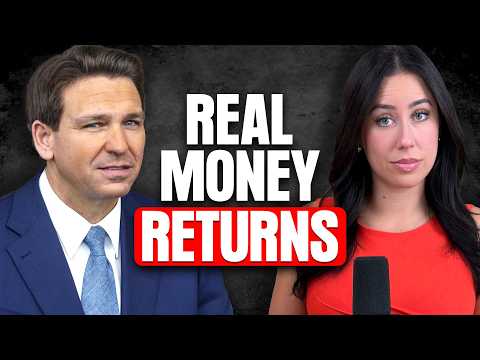
Iran War Triggers Inflation Fears as Bonds Start Failing

Channel: ITM TRADING, INC. Published: 2026-03-08 11:05
ITM TRADING, INC.

The video argues that the Iran/Middle East war is colliding with a fragile U.S. debt and inflation setup, and that rising Treasury yields during geopolitical stress signal a structural loss of confidence in U.S. bonds. The speaker frames gold and silver as the preferred protection and uses the segment to promote a free webinar on wealth protection.

Watch on YouTube ›

Get the market thesis, key claims, assets, contradictions, and follow-up questions from any financial video — then unlock a version personalized to your portfolio, watchlist, and favorite speakers.

Detailed summary

Taylor Kenny of ITM Trading argues that the current escalation in Iran and the Middle East is worsening an already fragile U.S. monetary situation. The core thesis is that, unlike past geopolitical shocks when investors rushed into U.S. Treasuries and yields fell, bond yields are now rising, which the speaker interprets as a sign that U.S. government debt is no longer viewed as a safe haven. The video links this to central-bank diversification away from Treasuries, especially by China and BRICS countries, and to the 2022 freezing of Russia’s reserves, which the speaker says damaged trust in dollar assets. The argument then connects the Middle East conflict to oil prices via Iran’s role and the Strait of Hormuz, suggesting that disruption could lift oil, gas, and inflation. The speaker also emphasizes a large U.S. …

🔒 The full detailed summary continues — read all of it free with an account. Read the full summary →

Main takeaways

  1. The speaker sees rising Treasury yields during geopolitical stress as evidence of a regime break in safe-haven behavior.
  2. The war in Iran/Middle East is framed as an inflation catalyst through oil and supply-chain risks.
  3. U.S. debt refinancing needs are presented as a major constraint on policy.
  4. The speaker expects the Fed to eventually choose liquidity support over strict inflation control.
  5. Gold and silver are presented as the preferred defense against currency devaluation.
  6. The video is heavily sales-oriented, ending with a webinar pitch and consultation CTA.

Market read by horizon

Short term

Near term, the actionable setup is to watch oil and Treasury yields: if the Middle East escalation pushes both higher, the market will likely treat that as an inflation-and-rate shock rather than a classic risk-off bid for bonds.

  • Immediate focus is the Middle East escalation and any move in oil, gas, and Treasury yields.
Show more
  • If conflict disrupts the Strait of Hormuz, the speaker expects a quick inflation impulse and more bond-market stress.
  • Rising yields are framed as the key tactical warning sign, especially if they keep diverging from the usual war-time flight-to-safety pattern.
Mid term

Over the next few weeks to months, the speaker expects the conflict and the U.S. refinancing calendar to keep pressure on rates and inflation expectations unless the geopolitical shock fades or yields snap back into safe-haven behavior.

  • Over the next several weeks to months, the speaker expects higher energy prices and inflation pressure to persist if the conflict broadens.
Show more
  • The base case is that the U.S. will face a difficult tradeoff between containing inflation and handling a large refinancing calendar.
  • Confirmation of the thesis would be continued Treasury selling or failure of Treasuries to rally on risk-off headlines.
Long term

The long-run thesis is that sovereign debt and fiat money are slowly losing their monopoly on reserve status, with gold and other hard assets gaining relevance as trust in government promises erodes.

  • The speaker’s structural thesis is that U.S. Treasuries are losing their role as the world’s unquestioned safe asset.
Show more
  • A broader regime shift is implied: trust in fiat and sovereign debt is eroding while gold is regaining reserve-asset appeal.
  • The long-run implication is persistent pressure on purchasing power and a deeper reliance on monetary accommodation to manage debt burdens.
Unlock the full horizon read See the full short-term, mid-term, and long-term implications with confirmation and invalidation signals. Unlock horizon read

Key claims (8)

MIXED safe-haven behavior US Treasuries

Historically, geopolitical shocks have pushed investors into U.S. bonds and lowered yields, but that pattern is now breaking.

The speaker cites 9/11, 2020, and the Ukraine invasion as examples where yields fell, then contrasts that with current rising yields.

BEARISH bond market stress US Treasuries

Rising Treasury yields during a crisis indicate investors are exiting U.S. debt rather than fleeing into it.

The speaker treats rising yields as evidence of selling and loss of safe-haven demand.

BEARISH reserve diversification US Treasuries

Central banks, especially China and BRICS countries, have been steadily reducing Treasury holdings after Russia’s reserves were frozen in 2022.

The speaker links reserve diversification to the sanctions precedent.

Unlock 5 more claims See the full bullish, bearish, and counter-consensus argument map extracted from the transcript. Unlock all claims

Assets discussed (6)

US Treasuries
BEARISH bond

The speaker says yields are rising and investors are selling instead of rushing into Treasuries, implying weakness in the asset’s safe-haven status.

US bonds
BEARISH bond

Presented as no longer behaving like a safe-haven asset, with rising yields indicating selling pressure.

Unlock the full asset map (4 more) See all assets mentioned, their directional bias, and the exact reasoning. Unlock asset map

Speakers

SPEAKER Taylor Kenny

Where this transcript pushes against consensus

  • The claim that rising Treasury yields during this event prove a structural loss of safe-haven status is asserted more than demonstrated; alternative explanations like supply, term premium, and rate expectations are not discussed.
  • The suggestion that China may retaliate by selling Treasuries is speculative and not supported with evidence in the transcript.
  • The leap from higher oil/inflation to a near-certain Fed money-printing response is presented as inevitable, but no policy constraints or counter-scenarios are considered.
  • The statement that central banks no longer want fiat currency or government debt is overstated and broad; the speaker does not distinguish between reserve diversification and abandonment.
  • The video strongly promotes physical gold/silver while giving little balanced discussion of risks, valuation, or liquidity tradeoffs.

Topics

Iran warMiddle East geopoliticsTreasury yieldsU.S. debt refinancinginflation fearsFed policyoil and Strait of Hormuzcentral bank gold buyingdollar devaluationphysical gold and silver

Create your free research agent

Unlock the full claims, asset map, scores, related transcripts, follow-up questions, and AI chat — shaped around your portfolio, watchlist, favorite speakers, and risks.
  • Full claims and asset map
  • Personalized relevance to your watchlist
  • Follow-up questions you can track
  • Related transcripts from your workspace
  • AI chat about this video
Create your free research agent
TRANSCRIPTAGENT.AI