TranscriptAgent
Try it free
TRANSCRIPTAGENT.AI · transcript analysis

Is the Dollar finally on the way out?

Channel: Money & Macro Published: 2026-03-18 19:00
Money & Macro

A historical explainer arguing that reserve-currency status can rise, decay, and sometimes return—and that the dollar is now showing some classic warning signs, but still lacks a clear replacement. The speaker’s base case is not an imminent collapse; it’s that policy choices, foreign trust, and the absence or emergence of a credible alternative will determine whether the dollar merely weakens or enters a longer decline.

Watch on YouTube ›

Get the market thesis, key claims, assets, contradictions, and follow-up questions from any financial video — then unlock a version personalized to your portfolio, watchlist, and favorite speakers.

Detailed summary

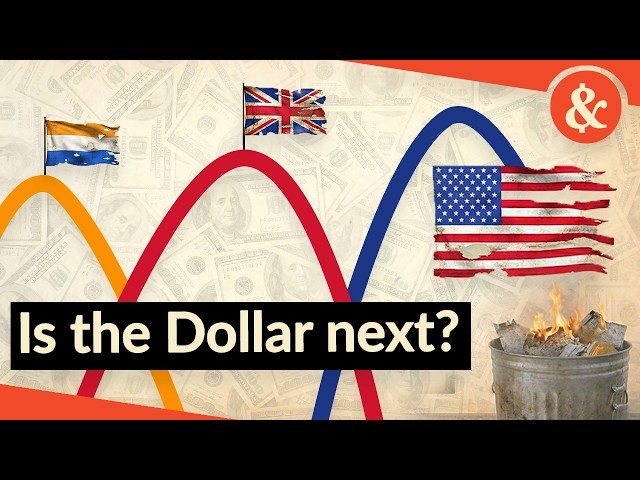
The video uses the Dutch guilder, British pound, and US dollar as historical case studies to answer whether the dollar is finally on the way out. The core framework is “exorbitant privilege”: reserve-currency issuers can borrow more cheaply, borrow more in crises, and fund geopolitical power; but the same privilege can also encourage overborrowing, financialization, inequality, and complacency. The first half tracks the Dutch Republic’s rise through the Bank of Amsterdam, the benefits of Amsterdam as a safe haven, and the eventual erosion of trust as the system became overstretched and geopolitical shocks shifted power to London. The speaker then draws the parallel to Britain: sterling gained reserve status, financed war and empire, and later suffered from overextension, industrial decline, and the emergence of the US dollar as a credible alternative. …

🔒 The full detailed summary continues — read all of it free with an account. Read the full summary →

Main takeaways

  1. Reserve-currency dominance is historically cyclical, not permanent.
  2. Exorbitant privilege brings both benefits and structural distortions.
  3. The dollar today is backed by the US state and the scale of US markets, not gold.
  4. A credible alternative currency matters more than narratives about decline alone.
  5. Policy that undermines foreign trust can accelerate reserve-currency erosion.
  6. Even if the dollar weakens, the decline could be gradual and reversible rather than immediate.

Market read by horizon

Short term

Near term, the key risk is that any new tariff, reserve-related policy, or geopolitical shock keeps pressuring confidence in dollar assets and pushes volatility higher. That matters more tactically than a clean “end of dollar” call.

  • The immediate setup is about foreign trust in dollar assets, not a clean end to the system.
Show more
  • Reserve freezes, tariff escalation, and any move to tax or penalize foreign holdings are framed as near-term risks.
  • The speaker treats the recent dollar weakness as a warning sign, but not proof of collapse.
Mid term

Over the next few months, the dollar likely remains dominant unless foreign holders materially accelerate diversification or a viable alternative becomes more credible. The base case is choppy erosion in trust rather than sudden collapse, with the trend highly dependent on policy credibility.

  • Over the next several weeks to months, the key question is whether foreign investors keep funding the US at scale.
Show more
  • The base case is a gradual erosion path if policy keeps looking hostile to allies and reserve holders.
  • A stronger alternative, especially from China, would need not just industrial strength but friendlier capital rules and trust.
Long term

Structurally, the dollar’s status looks durable but not invincible: reserve currencies can decay when the issuing state loses credibility, even if the transition takes years. If the US keeps treating reserve status as a burden rather than an advantage, the long-run regime could shift toward a more multipolar monetary order.

  • The long-run thesis is that reserve-currency leadership is a regime, not a birthright, and can be lost through accumulated trust failures.
Show more
  • The dollar’s durability depends on whether the US remains the most convenient and safest place for the world to store savings and transact.
  • A post-dollar world would likely mean less US geopolitical flexibility and a weaker transmission from US markets to global finance.
Unlock the full horizon read See the full short-term, mid-term, and long-term implications with confirmation and invalidation signals. Unlock horizon read

Key claims (8)

BULLISH exorbitant privilege reserve currencies

Reserve-currency status creates three key benefits: cheaper borrowing, larger borrowing capacity, and safe-haven inflows during crises.

This is the central mechanism the video uses to explain exorbitant privilege across Dutch, British, and US cases.

BEARISH reserve currency decline Dutch guilder

The Dutch Republic lost reserve-currency dominance after overborrowing, financialization, and declining trust in the Bank of Amsterdam.

The video argues that cheap money created distortions and eventually undermined confidence in the system.

BULLISH reserve currency persistence British pound

Britain’s pound remained dominant for a time because it had no true rival after Napoleon, and because the Bank of England defended the currency with high interest rates.

The speaker says a lack of alternative and deliberate sacrifice helped sterling retain reserve status longer than expected.

Unlock 5 more claims See the full bullish, bearish, and counter-consensus argument map extracted from the transcript. Unlock all claims

Assets discussed (7)

US dollar — USD
BEARISH fx

The video argues the dollar is showing signs of losing exorbitant privilege and foreign trust, though not necessarily collapsing soon.

British pound — GBP
NEUTRAL fx

Used as a historical comparison for a reserve currency that rose, defended its status, then declined.

Unlock the full asset map (5 more) See all assets mentioned, their directional bias, and the exact reasoning. Unlock asset map

Speakers

SPEAKER Unknown narrator

Where this transcript pushes against consensus

  • The video leans heavily on historical analogy, which is useful but does not prove the dollar must follow the same path.
  • It suggests Trump and Biden policies are materially eroding dollar trust, but offers limited hard evidence that these actions are already causing a structural break.
  • The claim that losing reserve status would lead to a century of stagnation for the US is presented as a historical analogy, not a demonstrated forecast.
  • The comparison between reserve-currency transitions across very different eras may overstate how directly one case maps onto another.

Topics

reserve currenciesexorbitant privilegeUS dollarBritish poundDutch guilderfiat moneyglobal financeforeign trustChina currency challengegold standard

Create your free research agent

Unlock the full claims, asset map, scores, related transcripts, follow-up questions, and AI chat — shaped around your portfolio, watchlist, favorite speakers, and risks.

  • Full claims and asset map
  • Personalized relevance to your watchlist
  • Follow-up questions you can track
  • Related transcripts from your workspace
  • AI chat about this video
Create your free research agent
TRANSCRIPTAGENT.AI