
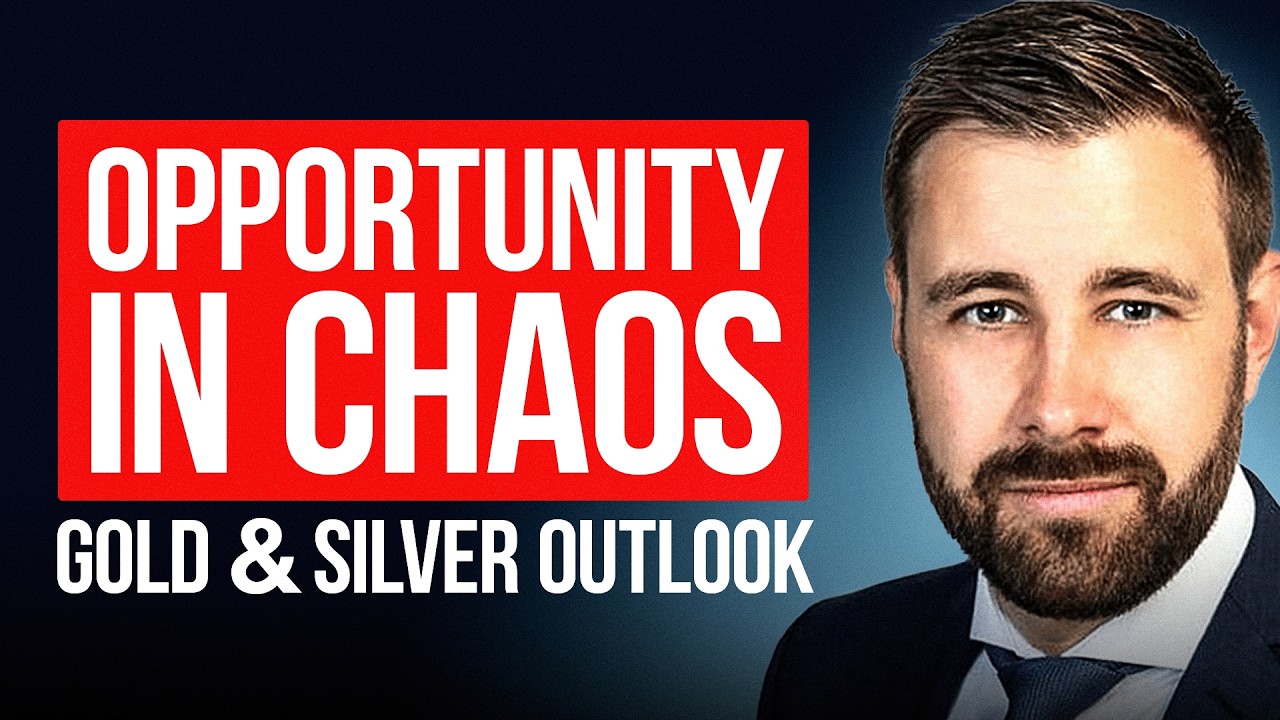
An interview between VRIC Media host Daryl Thomas and Kai Hoffman of Soore Financial focused on how Middle East conflict, liquidity stress, tariffs, debt concerns, and possible Fed easing are supporting gold, silver, copper, and related miners. Hoffman remained constructive but cautious, favoring large and mid-tier producers over early-stage explorers until the ceasefire and market reaction prove more durable.
Watch on YouTube ›Get the market thesis, key claims, assets, contradictions, and follow-up questions from any financial video — then unlock a version personalized to your portfolio, watchlist, and favorite speakers.
Daryl Thomas opens by introducing the Vancouver Resource Investment Conference/VRIC Media and interviewing Kai Hoffman of Soore Financial about gold, silver, and copper. Hoffman says the precious-metals setup remains constructive because geopolitics, inflation fears, rate expectations, tariff uncertainty, U.S. debt, and weak growth are still in place. He emphasizes that gold and silver have also been affected by liquidity-driven selling, where investors or countries sell metal to meet cash needs, citing Turkey as an example of a nation selling gold to support its currency. A major theme is the Middle East ceasefire/peace-deal situation and its effect on oil, inflation expectations, and the metals. …
Near term, the setup is bullish but fragile: miners can keep bouncing if oil stays contained and the ceasefire holds, but any new attack or shipping disruption could quickly reverse the calm. The most actionable tactic is to wait for confirmation rather than chase the first relief rally.
Over the next several weeks, the likely path is still constructive for gold, silver, and quality miners if inflation fears, debt stress, and weaker growth keep the Fed biased toward easing. Confirmation would come from stable shipping lanes, supportive earnings, and prices holding near current levels rather than spiking and fading.
Structurally, the interview argues for a durable hard-asset regime: persistent geopolitical risk, supply deficits in silver, and weak fiscal backdrops should keep precious metals and miners strategically relevant. The lasting implication is that investors should favor profitable producers and disciplined developers over speculative leverage to extreme commodity targets.
Gold and silver remain constructive because geopolitical conflict, inflation fears, tariff uncertainty, debt stress, and weaker growth are still present.
He explicitly lists these as ongoing supports for precious metals.
Liquidity-driven selling is pressuring gold and silver because holders, including some countries, sell metal to raise cash for energy and other obligations.
He frames part of the selloff as forced selling rather than a loss of the thesis.
The market reaction to the ceasefire appears driven more by oil prices than by peace itself.
He says gold is up because oil is down, not simply because conflict ended.
How are gold, silver, and copper looking right now?
Kai says the environment looks constructive for precious metals and somewhat constructive for copper. He links recent moves to geopolitics, inflation fears, rate expectations, and liquidity stress, but still sees the setup as favorable long term.
How do you reconcile gold's safe-haven role with the need for liquidity during war?
He says the key fundamentals behind gold and silver have not disappeared: tariff uncertainty, US-China conflict, debt, military spending, and weakening growth. In his view, those conditions support gold and silver even though the market has been whipsawed by liquidity needs.
Why have gold and silver equities been so weak recently, and where do you see them going?
He says the selloff was a major overreaction after stocks had also overshot on the upside. He expects miners to look more constructive as Q1 results come out, since the average gold price in Q1 was much higher than in Q4 and should support record earnings.
Unlock the full claims, asset map, scores, related transcripts, follow-up questions, and AI chat — shaped around your portfolio, watchlist, favorite speakers, and risks.
