TranscriptAgent
Try it free
TRANSCRIPTAGENT.AI · transcript analysis

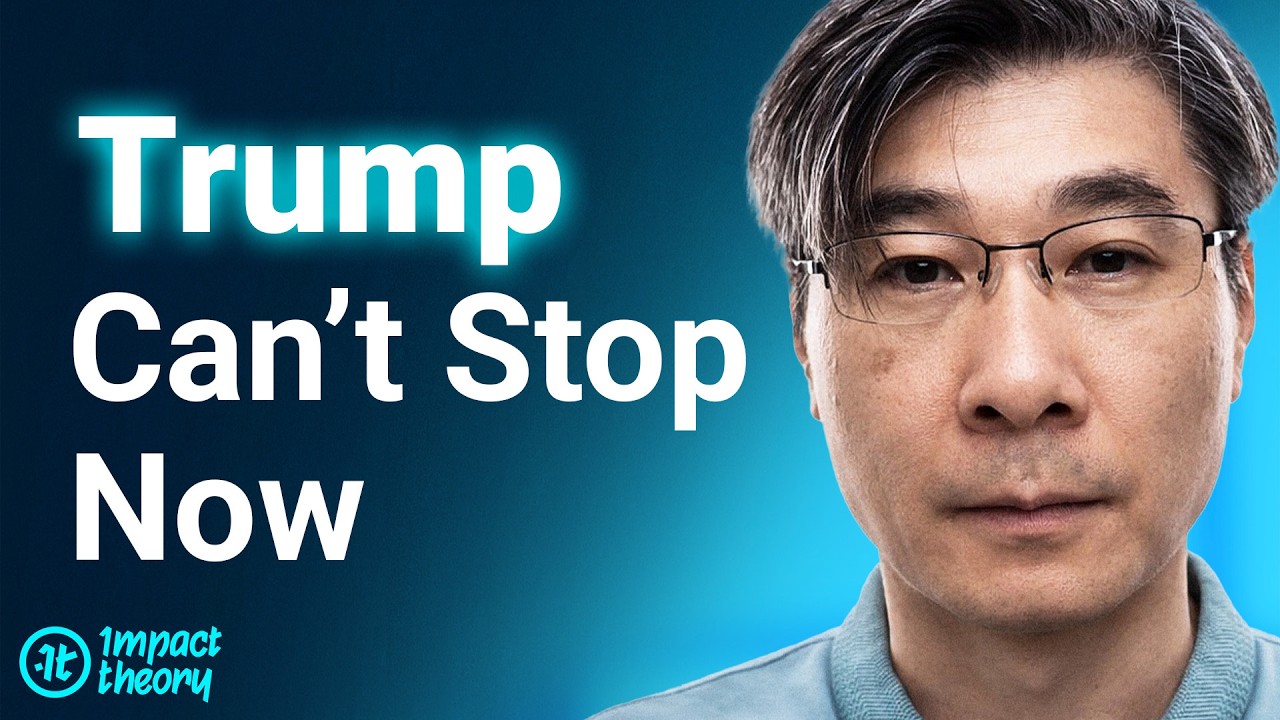
Prof Jiang: Trump Can't End This War — If He Loses Power, He Goes to Prison

Channel: Tom Bilyeu Published: 2026-03-19 08:01
Tom Bilyeu

A geopolitical and historical framework episode arguing that the Iran war is driven less by the nuclear issue than by empire, oil, reserve-currency power, and religious eschatology. The guest says the U.S. is likely to escalate rather than exit, because backing down would weaken the dollar system and Trump’s own political survival.

Watch on YouTube ›

Get the market thesis, key claims, assets, contradictions, and follow-up questions from any financial video — then unlock a version personalized to your portfolio, watchlist, and favorite speakers.

Detailed summary

This interview centers on Professor Jiang’s thesis that the Iran conflict is not primarily about nuclear weapons, but about deeper imperial, economic, and ideological forces. He argues that the U.S. empire depends on maritime choke points, oil settlement in dollars, and global legitimacy, and that attacking Iran is part of an attempt to preserve the dollar system by controlling the Strait of Hormuz and blocking any Russia-Iran-China alignment. He repeatedly says the war is structurally likely to escalate, not de-escalate, because U.S. …

🔒 The full detailed summary continues — read all of it free with an account. Read the full summary →

Main takeaways

  1. The guest’s core thesis is that the Iran war is an empire-preservation move, not just a response to nuclear fears.
  2. He sees the decisive lever as control of oil, the Strait of Hormuz, and the dollar system.
  3. He believes escalation is more likely than a clean exit because retreat would weaken U.S. credibility and the petrodollar.
  4. He thinks Trump’s incentives are partly personal: staying in power may matter as much as foreign-policy success.
  5. He argues the world is moving toward regional blocs, nationalism, remilitarization, and de-globalization.
  6. He treats eschatology as a real strategic factor because religious narratives can motivate state-level behavior.
  7. He is skeptical of the usual U.S.-China war narrative, arguing China mainly wants sovereignty and trade leverage, not outright hegemony.
  8. He expects Japan to adapt better than China to a more fragmented global order.

Market read by horizon

Short term

Near term, the setup looks tactically escalatory: the guest expects Washington to keep leaning into Iran to preserve leverage, with headline risk centered on Hormuz, oil, and any apparent move on Iranian territory. For markets, that means immediate shock risk in energy and risk assets if the conflict widens or retaliation hits Gulf infrastructure.

  • The immediate setup is an escalation risk around Iran, with the guest expecting the U.S. to keep pressing rather than withdraw.
Show more
  • He specifically flags a possible move on Karan/Kar Island as a tactical attempt to seize leverage over Iran’s oil lifeline.
  • The near-term risk is mission creep: even a seemingly small operation could expand into broader ground involvement.
Mid term

Over the next few months, the base case in the interview is a messy escalation cycle rather than a clean win: the U.S. tries for a face-saving outcome, but Iran, Russia, and possibly China complicate any quick resolution. Validation would come from persistent military pressure, sustained high oil, and growing doubt about U.S. ability to disengage without loss of credibility.

  • Over the next several weeks to months, the base case in the interview is a broader grind toward regional fragmentation rather than a stable ceasefire.
Show more
  • The guest thinks the war will keep testing whether the U.S. can actually impose control over Hormuz and Iranian energy routes.
  • He says confirmation of his view would be continuing pressure on Iran, more sanctions, more military posturing, and allied coordination around escalation.
Long term

The structural thesis is that the post-1945 dollar-led order is weakening and the world is drifting toward regional blocs, remilitarization, and more self-sufficient economic spheres. If that regime shift persists, energy chokepoints, reserve-currency trust, and alliance credibility become the lasting strategic variables, not any single battlefield outcome.

  • Structurally, the conversation argues that the post-1945 U.S.-led global order is already in decline.
Show more
  • The durable shift he expects is from globalization to regionalized, more autarkic economic blocs.
  • He believes states will increasingly remilitarize and prioritize internal cohesion, borders, and strategic self-sufficiency.
Unlock the full horizon read See the full short-term, mid-term, and long-term implications with confirmation and invalidation signals. Unlock horizon read

Key claims (9)

BULLISH energy shock Oil

Iran’s goal is to push oil prices to $200 per barrel as part of a long war of attrition.

Speaker says Iranians have stated this aim and frames it as strategic leverage.

BEARISH imperial decline US dollar

If the U.S. withdraws from the Middle East, American imperial power and dollar credibility would collapse.

A central thesis in the interview is that retreat destroys alliance trust and reserve-currency support.

MIXED escalation Iran war

The war is likely to escalate because the U.S. and its partners are being pulled into mission creep.

He repeatedly argues the logic of escalation dominates any quick exit.

Unlock 6 more claims See the full bullish, bearish, and counter-consensus argument map extracted from the transcript. Unlock all claims

Assets discussed (9)

Oil
BULLISH commodity

Guest says Iran wants to spike oil to $200 a barrel and that conflict would drive prices sharply higher.

US dollar
BEARISH fx

He argues war, sanctions fatigue, and loss of legitimacy weaken the dollar’s reserve status.

Unlock the full asset map (7 more) See all assets mentioned, their directional bias, and the exact reasoning. Unlock asset map

Interview (38 Q&A)

war strategy

If the U.S. wanted to get out with the least damage or win, what should it do?

The guest says the situation is driven by hubris, desperation, and an inability in Washington to recognize defeat. He argues there is no easy resolution because leaders are insulated from reality and keep doubling down.

war cause

If the war is only a symptom, what is the real underlying cause?

He says the nuclear program is not the real cause, noting Iran had already agreed to zero uranium enrichment. He frames the conflict as a war searching for a purpose, shaped by deeper imperial and strategic forces.

napoleon

Did the British see Napoleon as an existential threat?

Yes. The guest explains that Napoleon’s continental system threatened Britain’s survival by potentially blockading England and starving it, especially given Britain’s reliance on naval power and finance.

Unlock the full interview (35 more Q&A) Every question, answer summary, and YouTube timestamp. Unlock full Q&A

Where this transcript pushes against consensus

  • The guest gives strong causal weight to eschatology and temple/Third Temple politics; that part is highly speculative and difficult to verify.
  • He asserts the U.S. must escalate because retreat would collapse the empire, but this is more a strategic narrative than a demonstrated necessity.
  • The claim that China does not want a sphere of influence is debatable and conflicts with many common readings of Chinese state behavior.
  • His idea that taking a specific island or chokepoint could decisively solve the Iran problem may understate asymmetric retaliation and logistics.
  • Several historical analogies are used very broadly, which makes the argument feel coherent but not always tightly evidenced.
  • The prediction that Japan is uniquely well positioned may be overstated given its own demographic and resource constraints.

Topics

Iran warpetrodollarStrait of HormuzU.S. empire declineChina-U.S. rivalryRussia-Iran-China bloceschatologyChristian Zionismgreater Israelglobal de-globalization

Create your free research agent

Unlock the full claims, asset map, scores, related transcripts, follow-up questions, and AI chat — shaped around your portfolio, watchlist, favorite speakers, and risks.

  • Full claims and asset map
  • Personalized relevance to your watchlist
  • Follow-up questions you can track
  • Related transcripts from your workspace
  • AI chat about this video
Create your free research agent
TRANSCRIPTAGENT.AI