TranscriptAgent
Try it free
TRANSCRIPTAGENT.AI · transcript analysis

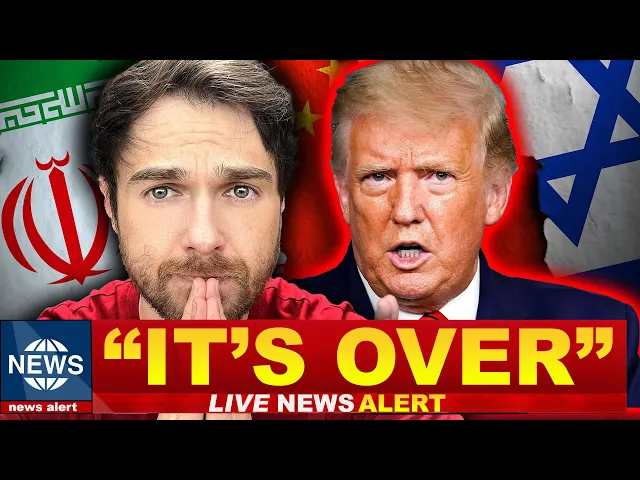
The War Is About To Get A Lot Worse

Channel: Andrei Jikh Published: 2026-04-07 14:15
Andrei Jikh

Andrei Jikh argues the Iran war/Strait of Hormuz disruption is a catalyst for inflation, higher yields, and a potential monetary reset that could ultimately expand digital financial control. He leans heavily on a crisis-to-centralization framework, then pivots to self-custody, physical gold, and Bitcoin as personal defenses.

Watch on YouTube ›

Get the market thesis, key claims, assets, contradictions, and follow-up questions from any financial video — then unlock a version personalized to your portfolio, watchlist, and favorite speakers.

Detailed summary

The video frames the escalating Iran conflict as more than geopolitics: Jikh argues the closed Strait of Hormuz is the key market transmission mechanism because it threatens global oil flows, pushes oil higher, and pressures stock futures, Bitcoin, and bond markets. He claims foreign holders of U.S. assets may need to sell Treasuries and other dollar assets to source dollars for oil purchases, which could drive yields higher and worsen America’s debt burden. From there, he lays out three possible U.S. responses: allow yields to rise and risk recession; print money via QE/yield-curve control and risk inflation; or withdraw from Iran and risk a loss of U.S. credibility and dollar dominance. …

🔒 The full detailed summary continues — read all of it free with an account. Read the full summary →

Main takeaways

  1. The video’s central market claim is that an oil shock from the Iran conflict could lift inflation and bond yields while weakening stocks and Bitcoin.
  2. Jikh’s base-case is not simply higher oil; it is a chain reaction into U.S. funding costs, recession risk, and eventual policy response.
  3. He expects the likely policy response to be more liquidity/QE rather than accepting a prolonged yield spike.
  4. He treats the current crisis as part of a historical pattern where emergencies accelerate centralization of wealth and power.
  5. The long-run thesis is that stablecoins, corporate wallets, and CBDC-style rails could become a new mechanism for absorbing U.S. debt and controlling money flows.
  6. His personal defense strategy is self-custody, physical precious metals, Bitcoin held directly, and avoiding overreliance on intermediated digital finance.

Market read by horizon

Short term

Tactically, the setup is bearish risk assets if the Iran/Hormuz shock keeps oil elevated and yields keep backing up. The immediate trade-off to watch is whether policy responds with liquidity support, which could relieve bonds but worsen inflation.

  • Watch the Strait of Hormuz and tanker traffic as the immediate catalyst; Jikh treats continued closure as the key market driver.
Show more
  • Near term, he expects oil to stay bid and stock futures/Bitcoin to remain pressured if the conflict escalates further.
  • He flags the 10-year Treasury yield as the critical market variable, with a danger zone he cites around 4.6%–4.8%.
Mid term

Over the next several weeks to months, the base case is a stagflationary mix if the energy shock persists: stronger inflation, weaker growth, and more pressure on financing costs. The view improves only if oil normalizes or policymakers credibly contain yields without reigniting inflation.

  • Over weeks to months, his base case is stagflation risk: higher oil, higher inflation, and slower growth if the shock persists.
Show more
  • He thinks the U.S. is more likely to respond with QE/yield-curve control than to tolerate an uncontrolled rise in financing costs.
  • A key confirmation signal would be rising yields alongside worsening oil-driven inflation readings.
Long term

Structurally, the video argues the crisis will accelerate a more programmable financial system in which stablecoins, corporate wallets, and potentially CBDC-like rails help absorb U.S. debt. The long-run regime implication is greater monetary centralization and more direct control over payment access.

  • Structurally, he argues repeated crises centralize power and accelerate new monetary systems.
Show more
  • His longer-run thesis is that U.S. debt will increasingly be distributed through digital financial rails rather than traditional bank balance sheets alone.
  • He sees stablecoins and corporate wallets as potential instruments for turning everyday users into indirect holders of U.S. government debt.
Unlock the full horizon read See the full short-term, mid-term, and long-term implications with confirmation and invalidation signals. Unlock horizon read

Key claims (10)

MIXED

The Iran war and Strait of Hormuz closure are already pressuring markets, with futures down, oil up, and Bitcoin down.

He directly states the market reaction during the speech.

BULLISH

The Strait of Hormuz is the key oil chokepoint and its closure threatens about 20 million barrels per day.

He uses the choke point as the central oil-supply mechanism.

BEARISH US Treasuries

Foreign holders may need to sell U.S. dollar assets, especially Treasuries, to obtain dollars for oil purchases.

He argues dollar demand from oil imports will force asset sales.

Unlock 7 more claims See the full bullish, bearish, and counter-consensus argument map extracted from the transcript. Unlock all claims

Assets discussed (12)

Iran
BEARISH other

Used as the source of the escalating conflict that threatens oil supply and global stability.

Strait of Hormuz
BULLISH other

He says the shipping lane remains closed, supporting higher oil and market stress.

Unlock the full asset map (10 more) See all assets mentioned, their directional bias, and the exact reasoning. Unlock asset map

Where this transcript pushes against consensus

  • The video presents the Strait of Hormuz as definitively closed and treats multi-week closure as virtually guaranteed, but provides no independent verification in the transcript.
  • The claim that foreign Treasury holders are already selling in a way that meaningfully drives yields higher is asserted more than demonstrated.
  • The 4.6%–4.8% 10-year yield danger zone is cited as research-backed, but the specific source and methodology are not shown.
  • The leap from a wartime oil shock to a global CBDC/control-grid rollout is highly speculative and not evidenced with concrete policy steps.
  • The argument that any new digital wallet system would necessarily function as a broad political control mechanism is possible but overstated in the presentation.
  • Several historical comparisons (2008 QE, 2020 QE, Great Reset, Suez Canal) are used rhetorically to imply a recurring pattern, but the analogy is not rigorously tested.

Topics

Iran warStrait of Hormuzoil shockTreasury yieldsQE and yield curve controlstagflationU.S. debtstablecoinsCBDCsfinancial control grid

Create your free research agent

Unlock the full claims, asset map, scores, related transcripts, follow-up questions, and AI chat — shaped around your portfolio, watchlist, favorite speakers, and risks.

  • Full claims and asset map
  • Personalized relevance to your watchlist
  • Follow-up questions you can track
  • Related transcripts from your workspace
  • AI chat about this video
Create your free research agent
TRANSCRIPTAGENT.AI