TranscriptAgent
Try it free
TRANSCRIPTAGENT.AI · transcript analysis

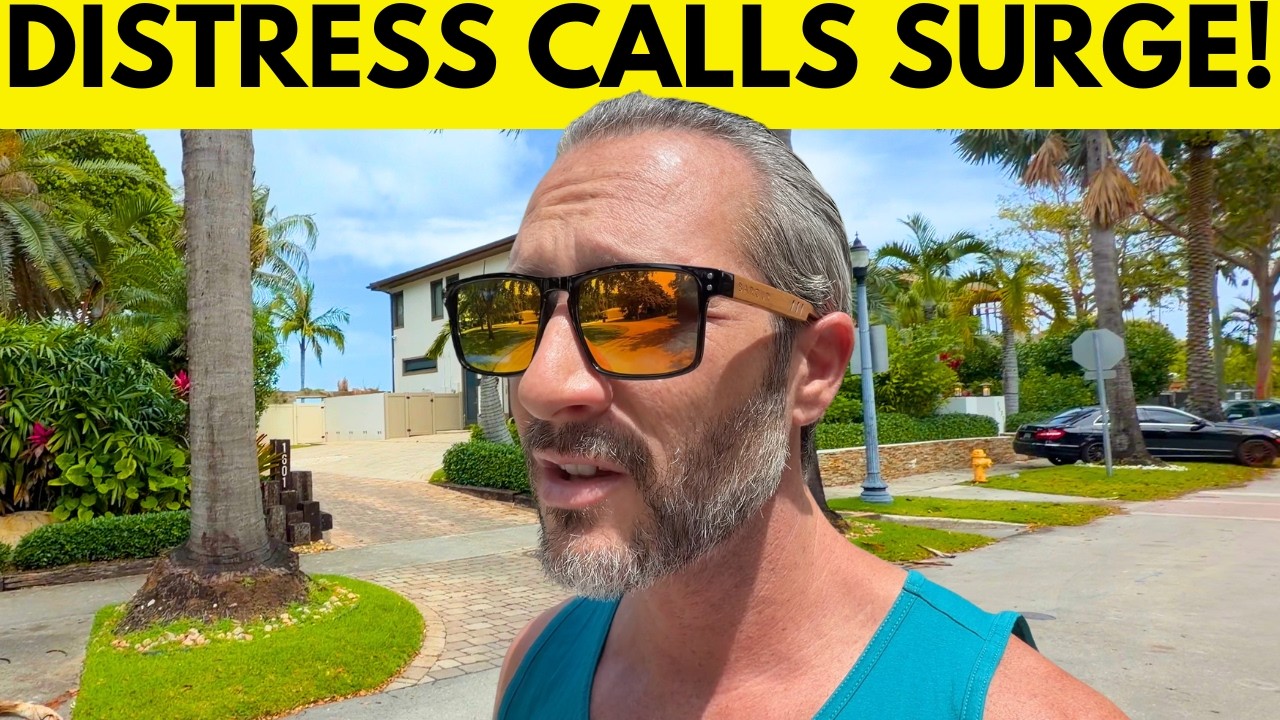
EVEN Homeowners With Equity are FACING FORECLOSURE

Channel: Michael Bordenaro Published: 2026-04-11 16:08
Michael Bordenaro

The speaker argues that homeowners are under growing financial pressure from rising insurance premiums, HOA fees, taxes, and special assessments, and that these costs are showing up in foreclosure and legal-help inquiries even among owners with equity. He concludes that housing affordability is still poor, condos and HOA-heavy properties are especially stressed, and buyers need to judge purchases case by case rather than assuming equity makes sellers safe.

Watch on YouTube ›

Get the market thesis, key claims, assets, contradictions, and follow-up questions from any financial video — then unlock a version personalized to your portfolio, watchlist, and favorite speakers.

Detailed summary

This video is a housing-market warning centered on the idea that rising non-mortgage ownership costs are squeezing homeowners harder than headline mortgage-rate discussions suggest. The speaker says homeowners insurance has risen far faster than official inflation, HOA fees are climbing sharply, and special assessments plus maintenance costs are creating a growing burden—especially in condo markets and in Florida. He uses Miami Beach flooding visuals and local neighborhood examples to reinforce the idea that high-cost coastal housing is exposed both physically and financially. A major theme is that equity is not the same as liquidity: the speaker argues that even homeowners with large paper gains can still face distress if monthly carrying costs keep rising or if they need to borrow against equity to stay current. …

🔒 The full detailed summary continues — read all of it free with an account. Read the full summary →

Main takeaways

  1. Insurance, HOA fees, taxes, and assessments are increasingly the real affordability pressure points, not just mortgage rates.
  2. The speaker believes equity does not protect homeowners from foreclosure risk if carrying costs outrun cash flow.
  3. Condos and HOA-heavy properties are portrayed as the weakest parts of the housing market.
  4. Legal help requests for foreclosure and bankruptcy are used as evidence of mounting household stress.
  5. The speaker’s stance is more nuanced than a hard bearish call: buy/wait decisions depend on individual circumstances and local pricing.

Market read by horizon

Short term

Near term, the most actionable risk is in condo and HOA-heavy housing where fee resets, assessments, and insurance renewals can quickly break affordability. Watch for more distressed selling and rising legal-help traffic as the early tell that stress is spreading.

  • Watch for continued stress in condo and HOA-heavy properties, especially where special assessments and insurance resets hit at the same time.
Show more
  • Foreclosure-related legal inquiries are the immediate catalyst the speaker highlights as a sign that distress is already appearing in the system.
  • If insurance or HOA bills spike again, sellers in fee-heavy communities may need to cut prices quickly to move inventory.
Mid term

Over the next few months, the base case is continued softening in fee-heavy segments while broader housing remains patchy and highly local. The setup improves only if insurance growth slows, assessments stop compounding, and buyers can absorb the all-in monthly payment without stretching.

  • Over the next several weeks to months, the speaker expects affordability to remain constrained even if wage growth modestly outpaces home-price growth.
Show more
  • The base case is continued buyer hesitation in higher-fee communities, with condos likely to stay softer than lower-cost single-family segments.
  • Confirmation would come from more legal filings, more delinquencies, and more forced price concessions in HOA-heavy neighborhoods.
Long term

Structurally, housing is shifting toward a regime where ownership is defined by volatile carrying costs rather than just mortgage terms. If that continues, equity will matter less as a safety buffer unless owners also have enough cash flow to survive recurring non-mortgage shocks.

  • Structurally, the video argues that the cost of homeownership now includes multiple volatile, non-mortgage charges that can erode the traditional security of owning real estate.
Show more
  • The long-run implication is that equity-rich homeowners are not necessarily safe if ownership costs outpace income growth.
  • The speaker implies a durable regime shift away from the old assumption that monthly housing costs are mostly fixed once you buy.
Unlock the full horizon read See the full short-term, mid-term, and long-term implications with confirmation and invalidation signals. Unlock horizon read

Key claims (7)

BEARISH housing affordability homeowners insurance

Homeowners insurance rates have jumped about 46% since 2020, outpacing official inflation.

Speaker compares insurance inflation to CPI and says insurance rose roughly twice as much.

BEARISH housing affordability homeowners insurance

Insurance costs matter more than mortgage rates for affordability because every mortgage holder must pay them and they can rise unpredictably after purchase.

He argues insurance is universal for mortgaged homes and creates unstable monthly payments.

BEARISH housing affordability HOA fees

Median condo fees are $420 per month in 2025, up 29% since 2019, and single-family HOA fees are up 26% since 2019.

He cites fee growth as a major burden on monthly ownership costs.

Unlock 4 more claims See the full bullish, bearish, and counter-consensus argument map extracted from the transcript. Unlock all claims

Assets discussed (5)

homeowners insurance
BEARISH other

Rising insurance costs are presented as a major affordability burden and driver of homeowner stress.

HOA fees
BEARISH other

The speaker says HOA fees are surging and pricing some people out of ownership, especially in condos.

Unlock the full asset map (3 more) See all assets mentioned, their directional bias, and the exact reasoning. Unlock asset map

Where this transcript pushes against consensus

  • The speaker treats the rise in foreclosure legal inquiries as direct evidence of broad market cracking, but the causal link is not fully proven in the video.
  • He argues official inflation is understated and implies insurance is the real inflation rate, which is more rhetorical than analytically demonstrated.
  • The claim that affordability is worse than during 2008 is asserted with selective comparisons and without a full cross-period adjustment for credit standards, loan products, or household balance sheets.
  • He suggests wages would need to rise 20% to 60% to restore affordability, but those thresholds are presented as rough judgment rather than modeled scenarios.
  • The video leans heavily on Florida/Miami visuals to generalize about the national market, which may overstate local distress as a national signal.

Topics

homeowners insuranceHOA feesspecial assessmentsforeclosureshousing affordabilitycondosMiami Beach floodingLegalShield stress indexbuyer demandmonthly carrying costs

Create your free research agent

Unlock the full claims, asset map, scores, related transcripts, follow-up questions, and AI chat — shaped around your portfolio, watchlist, favorite speakers, and risks.


  • Full claims and asset map
  • Personalized relevance to your watchlist
  • Follow-up questions you can track
  • Related transcripts from your workspace
  • AI chat about this video
Create your free research agent
TRANSCRIPTAGENT.AI