
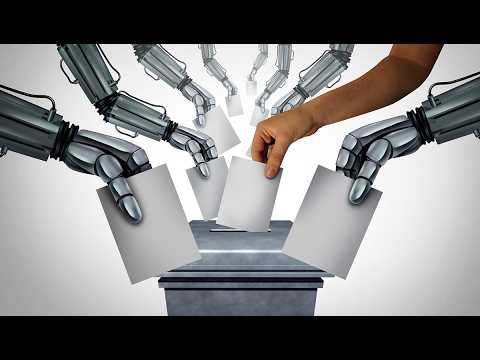
A Europe 1 media segment that briefly notes TV ratings, then focuses on a Teranova study suggesting 16% of French voters used AI tools to help decide how to vote in municipal elections. The speaker frames this as potentially concerning ahead of the presidential election, while acknowledging AI-based political questionnaires can also help users orient themselves by matching program positions.
Watch on YouTube ›Get the market thesis, key claims, assets, contradictions, and follow-up questions from any financial video — then unlock a version personalized to your portfolio, watchlist, and favorite speakers.
This transcript is a fast-moving Europe 1 media roundup rather than a market or financial discussion. It opens with TV audience numbers: Laurence Boccolini’s return to TV is described as “correct,” W9’s post-Touche pas à mon poste slot is said to have lost about 1 million viewers compared with Cyril Hanouna, France 3 is said to have led the night with Alexandra Ehle, and a France 2 science documentary with Thomas Alan Petre from NASA drew nearly 400,000 viewers and an 8% audience share. The central segment concerns artificial intelligence and elections. The speaker cites a Teranova study claiming 16% of French people used an AI tool to help them vote in the last municipal elections, and argues that this is noteworthy and potentially worrying ahead of next year’s presidential election. …
Immediate setup: the AI-voting statistic is likely to trigger concern and debate ahead of the presidential campaign, but the transcript itself does not show evidence of a market-moving policy response yet.
Over the next few weeks, watch whether the 16% figure becomes a media narrative or a policy issue; the key question is whether AI voter tools remain a novelty or draw formal scrutiny.
Longer term, the structural implication is that AI may become part of the electoral information stack, which could alter how voters compare platforms and how democratic influence is contested.
16% des Français ont utilisé un outil d'intelligence artificielle pour les aider à voter aux dernières élections municipales.
This is explicitly attributed to a Teranova study in the transcript.
The speaker views the AI-voting figure as potentially worrying ahead of next year's presidential election.
The transcript explicitly connects the statistic to possible concern before the presidential vote.
AI-based voter tools do not directly tell users whom to vote for, but can steer them by asking program-related questions and suggesting alignment.
The speaker explains the mechanism after describing a test of such a tool.
Unlock the full claims, asset map, scores, related transcripts, follow-up questions, and AI chat — shaped around your portfolio, watchlist, favorite speakers, and risks.
