
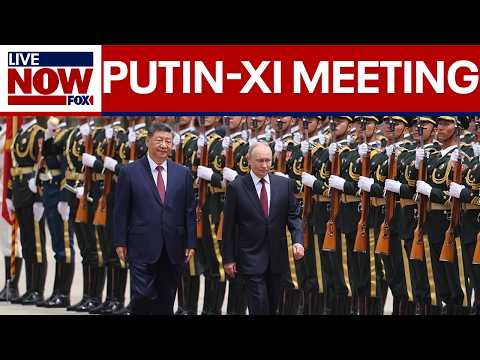
LiveNOW from Fox covered Xi Jinping hosting Vladimir Putin in Beijing, with analyst Jack Burnham framing the visit as a signal of deepening China-Russia strategic alignment, especially around Ukraine, energy, and military-industrial cooperation. The segment emphasized that China is publicly cautious but still materially supports Russia, while also using the summit to project diplomatic clout and warn the West.
Watch on YouTube ›Get the market thesis, key claims, assets, contradictions, and follow-up questions from any financial video — then unlock a version personalized to your portfolio, watchlist, and favorite speakers.
The segment opens with the anchor noting breaking international headlines and then pivots to Beijing, where Chinese leader Xi Jinping hosted Russian President Vladimir Putin. The host frames the meeting as part of a broader diplomatic moment, pointing out that Xi had just met Donald Trump days earlier and that the back-to-back visits underscore China’s growing international role. Guest Jack Burnham, a research analyst for the China program at the Foundation for the Defense of Democracies, argues that the relationship is built on shared dependencies and has intensified since Russia’s invasion of Ukraine. He says the partnership is driven by security cooperation and by a broader alignment among Russia, China, Iran, and North Korea against the West. …
Tactically, the event is a geopolitics headline until it produces concrete trade, energy, or sanctions follow-through. The immediate market risk is any escalation in Iran-related energy stress or a fresh round of China-Russia support headlines.
Over the next few weeks, the setup looks like steady China-Russia coordination with occasional policy or trade signals, especially around energy and dual-use goods. The thesis weakens if Beijing visibly distances itself from Moscow or if pipeline and cooperation talks stall without tangible steps.
Structurally, the transcript frames a more durable anti-Western alignment where China, Russia, and related partners trade support, energy security, and military learning. The long-run implication is a more fragmented global system in which geopolitics increasingly shapes supply chains, sanctions, and energy access.
Xi and Putin’s meeting is meant to reaffirm China-Russia ties and signal Beijing’s growing diplomatic role.
The anchor says the summit is about reaffirming ties and highlights China hosting both Trump and Putin in close succession.
Russia’s war in Ukraine is driving deeper dependence on China for trade, energy, and military-related support.
Burnham says Russia needs China to support its war economy and replace lost European energy sales.
China is publicly neutral on Ukraine but continues indirect support for Russia through dual-use exports and concealed assistance.
The guest distinguishes diplomatic neutrality from material support, citing microelectronics and drones.
How would you describe the relationship between Xi Jinping and Vladimir Putin?
He says Xi and Putin have known each other for years and that Putin has visited China many times. He characterizes the relationship as one of closer cooperation since the war in Ukraine, built on shared dependencies and security cooperation against the West.
What are Xi and Putin trying to achieve in this meeting?
He says Putin wants stability because the war in Ukraine is going badly and Russia needs China to keep supporting its war economy and energy trade. For China, Russia offers a large export market, military technologies, and possible energy security through a new pipeline.
How does Beijing reconcile its claim of neutrality on Ukraine with its ties to Russia?
He argues there is no real reconciliation: China says one thing diplomatically while continuing military and security cooperation. He says this lets China present itself as a responsible diplomatic actor while still benefiting from the war and weakening the United States.
Unlock the full claims, asset map, scores, related transcripts, follow-up questions, and AI chat — shaped around your portfolio, watchlist, favorite speakers, and risks.
