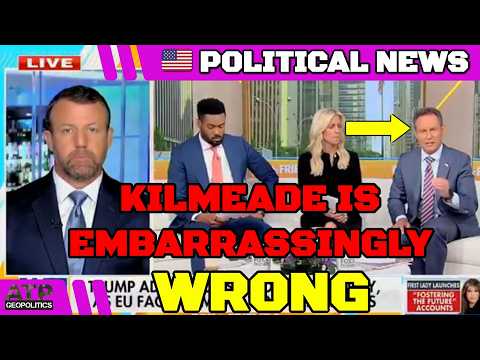
The video is a highly opinionated political rant arguing that Donald Trump and his family are engaging in blatant corruption through stock trading, IRS settlement terms, and Truth Social posting. The speaker frames these actions as insider trading and taxpayer-funded protection, and repeatedly says Trump should be in prison.
Watch on YouTube ›Get the market thesis, key claims, assets, contradictions, and follow-up questions from any financial video — then unlock a version personalized to your portfolio, watchlist, and favorite speakers.
This ATP Geopolitics video is a US political update focused on alleged corruption involving Donald Trump, his family, and the Trump administration. The speaker says Trump’s disclosure of many stock trades, especially in companies affected by presidential policy, amounts to insider trading because Trump controls policy that can move those stocks. He cites examples such as Nvidia, Oracle, Palantir, Eli Lilly, Boeing, Apple, Meta, Visa, Citi, Qualcomm, GE, and Intel, and argues that trades tied to export controls, AI rules, government contracts, China policy, and antitrust decisions create a clearer insider-trading case than previous politicians who were imprisoned for much smaller trades. …
Near term, the actionable setup is headline-driven reputational damage around Trump’s stock disclosures and the IRS settlement, with more backlash risk if new documents or clips circulate.
Over the next few weeks or months, the story likely stays alive if reporting keeps linking trade timing, policy decisions, and family-linked transactions; the thesis weakens only if the trades are shown to be routine or preplanned.
The structural argument is that concentrated executive power can morph into persistent private enrichment unless stronger rules and enforcement are imposed. The long-run issue is institutional capture and the normalization of conflicts, not a single scandal episode.
Trump’s stock trading exposure is more serious than prior insider-trading cases that led to prison sentences for politicians.
The speaker compares Trump’s activity to Chris Collins and Steve Buyer and says Trump’s case is larger and clearer.
Trump traded in companies directly affected by presidential policy decisions under his control.
The speaker argues that export controls, AI rules, federal contracts, TikTok policy, and antitrust actions all connect Trump’s policy power to the stocks he bought.
Trump did not use a qualified blind trust, which makes the conflict-of-interest problem worse.
The speaker says presidents usually avoid conflicts with blind trusts and says Trump reportedly did not use one.
The question is how can you and your administration argue to Americans that you're cleaning up corruption, preventing fraud, and fighting the sorts of things that harm people when the president seems to be talking up stocks that he owns, selling them, and enriching himself?
JD Vance responds that Trump does not personally buy and sell stocks, that his family and advisers manage his wealth, and that he supports banning stock trading by public officials, but he does not address the core allegation of conflict and access to non-public information.
Unlock the full claims, asset map, scores, related transcripts, follow-up questions, and AI chat — shaped around your portfolio, watchlist, favorite speakers, and risks.