TranscriptAgent
Try it free
TRANSCRIPTAGENT.AI · transcript analysis

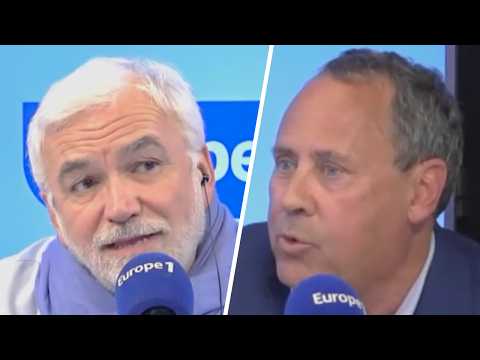
Bruno Halioua présente son livre "Les mères juives, 16 commandements pour un enfant parfait"

Channel: Europe 1 Published: 2026-05-20 11:06
Europe 1

A radio interview on Europe 1 featuring Bruno Halioua about his book on the 'mother' figure in Jewish family culture, arguing that maternal encouragement, confidence-building, and active involvement are major drivers of children’s success.

Watch on YouTube ›

Get the market thesis, key claims, assets, contradictions, and follow-up questions from any financial video — then unlock a version personalized to your portfolio, watchlist, and favorite speakers.

Detailed summary

The transcript is a conversational interview about Bruno Halioua’s book 'Les mères juives, 16 commandements pour un enfant parfait.' Halioua presents the core idea that many successful people were shaped by mothers who gave them confidence, detected talent early, and pushed them to develop it. He uses examples such as Freud, Albert Cohen, Romain Gary, Woody Allen, Stanley Kubrick, Spielberg, Dustin Hoffman, Harrison Ford, Bob Dylan, Leonard Cohen, Léon Blum, and the Marx Brothers to argue that maternal influence often matters more than the father’s in these stories, especially when fathers were distant or absent. …

🔒 The full detailed summary continues — read all of it free with an account. Read the full summary →

Main takeaways

  1. The book’s central thesis is that mothers often provide the confidence and pressure that enable talent to develop.
  2. The speaker emphasizes early encouragement, not just inherited talent or hard work.
  3. The host challenges the argument by asking about cases where overpraise creates distress or unrealistic expectations.
  4. The transcript frames the 'Jewish mother' as a cultural stereotype with both affectionate and caricatured dimensions.
  5. The discussion links family structure, paternal absence, and children’s achievement patterns.
  6. The interview is more cultural/social commentary than market-related analysis.

Market read by horizon

Short term

No actionable market bias: this transcript is a promotional culture interview, not a trading or macro setup.

  • No immediate market setup is present; this is not a tradable market transcript.
Show more
  • The only near-term catalyst is media exposure from the book interview itself.
  • Any actionable angle is identity/author visibility rather than asset price action.
Mid term

No medium-term market path is discernible because the content does not discuss assets, policy, or economic variables.

  • The base-case path is continued audience interest in the book’s thesis about maternal influence and Jewish family culture.
Show more
  • The argument may gain traction among listeners drawn to family psychology, identity, and cultural storytelling.
  • The main vulnerability is overgeneralization: many examples are anecdotal rather than systematic.
Long term

No structural market thesis is present; the only durable implication is cultural, about family transmission and narrative framing.

  • The transcript’s enduring implication is a cultural one: confidence-building and family transmission are portrayed as lasting determinants of success.
Show more
  • It also reinforces how stereotypes can be repurposed into flattering narratives, which can still remain analytically weak if treated as universal truth.
  • The durable thesis is about parenting, identity, and the social reproduction of ambition, not markets.
Unlock the full horizon read See the full short-term, mid-term, and long-term implications with confirmation and invalidation signals. Unlock horizon read

Key claims (7)

NEUTRAL family transmission none

The book’s core idea is that a mother gives a child confidence that can last a lifetime.

The speaker explicitly summarizes the thesis as giving a child 'assurance' so it remains throughout life.

BULLISH parenting and achievement none

The speaker argues that many famous men succeeded because their mothers detected talent early and encouraged it.

He repeatedly cites examples such as Kubrick, Spielberg, Dustin Hoffman, Harrison Ford, Bob Dylan, and Leonard Cohen.

NEUTRAL family structure none

The mother’s role is often more visible than the father’s because she usually handles education and daily child-rearing.

He says the mother is behind the child and typically manages education while the father is less present.

Unlock 4 more claims See the full bullish, bearish, and counter-consensus argument map extracted from the transcript. Unlock all claims

Speakers

HOST Unknown Interviewer GUEST Bruno Halioua

Interview (2 Q&A)

downsides of overpraise

Est-ce qu'il y a quand même à cette éducation des inconvénients ?

Halioua says the real issue is balancing assurance and love; some children may become unhappy if they are endlessly told they are exceptional but not validated by life.

family and spouse selection

Au-delà de l'amour, l'amoureux que vous étiez, est-ce que vous avez pensé à la mère de vos enfants que vous épousiez ?

He says yes, and the exchange moves into discussion of his wife as a '100 % mère juive' and their family life.

Where this transcript pushes against consensus

  • The thesis relies heavily on anecdotal examples of famous people rather than comparative evidence.
  • The speaker treats maternal influence as broadly decisive while downplaying cases where fathers are equally important.
  • The claim that 'it is the mother’s will' behind children’s success is asserted strongly but not demonstrated systematically.
  • The distinction between cultural description and stereotype is blurry in the way 'mère juive' is framed.
  • Examples of crime and dysfunction are mentioned only briefly and not analyzed, despite complicating the thesis.

Topics

Jewish mothersparenting and confidencefamily transmissioncultural stereotypesmaternal influencepaternal absencesuccess biographiesShabbat and family tradition

Create your free research agent

Unlock the full claims, asset map, scores, related transcripts, follow-up questions, and AI chat — shaped around your portfolio, watchlist, favorite speakers, and risks.

  • Full claims and asset map
  • Personalized relevance to your watchlist
  • Follow-up questions you can track
  • Related transcripts from your workspace
  • AI chat about this video
Create your free research agent
TRANSCRIPTAGENT.AI