TranscriptAgent
Try it free
TRANSCRIPTAGENT.AI · transcript analysis

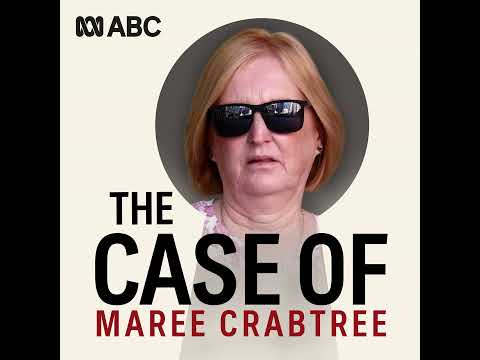
03 Maree Crabtree | What did the note mean?

Channel: ABC News (Australia) Published: 2026-05-21 00:26
ABC News (Australia)

This episode is a true-crime recap of the Marie Crabtree trial, centered on a handwritten note found in her son Jonathan’s room and whether it supported the defense’s suicide theory or the prosecution’s murder theory. The discussion focuses on how the jury weighed that note, Tara Crabtree’s evidence, and the long deliberations that ended in a not-guilty verdict.

Watch on YouTube ›

Get the market thesis, key claims, assets, contradictions, and follow-up questions from any financial video — then unlock a version personalized to your portfolio, watchlist, and favorite speakers.

Detailed summary

The transcript is an ABC News Australia podcast episode from The Case Of, hosted by Steven Stockwell and featuring ABC court reporter Talissa Siganto. It recaps the final witness evidence and closing arguments in the Marie Crabtree trial, where Crabtree was accused of killing her son Jonathan and staging the death as a suicide, allegedly for financial gain and insurance-related reasons. The key evidence discussed is a crumpled handwritten note found in a bin in Jonathan’s room. …

🔒 The full detailed summary continues — read all of it free with an account. Read the full summary →

Main takeaways

  1. The episode is fundamentally about how a late-discovered handwritten note may have influenced the jury in a murder trial.
  2. The prosecution and defense gave sharply different interpretations of the same note: irrelevant scrap versus suicide evidence.
  3. Tara Crabtree’s testimony appears to have been a major target for both sides and may have mattered heavily in deliberations.
  4. The jury struggled early, asked to revisit evidence, and took multiple days before returning not guilty.
  5. The show frames the verdict as the result of reasonable doubt rather than proof of a single alternative theory.

Market read by horizon

Short term

No actionable market setup is present; the transcript is a trial recap with no tradable catalyst, levels, or positioning angle.

  • The immediate issue in the episode is evidentiary: whether the handwritten note would sway viewers toward the suicide theory or leave them unconvinced.
Show more
  • The transcript emphasizes that the note was introduced late and was not heavily explored until closings, which made it feel like a possible jury wildcard.
  • Tara’s testimony is presented as the most likely near-term pressure point in understanding why the jury asked to review evidence.
Mid term

No medium-term market thesis can be extracted from this episode, since the content is legal-story commentary rather than an asset or macro discussion.

  • Over the next several weeks or months, the base-case reading is that the verdict was driven by accumulated uncertainty rather than one decisive item.
Show more
  • The prosecution’s narrative only holds if the jury accepted Tara’s account and dismissed the note and overdose theory; the defense’s version depends on those same items creating reasonable doubt.
  • If later commentary or released material shows the note was more coherent than the prosecution argued, that would strengthen the view that it was material to deliberations.
Long term

No structural market regime implication is present; the transcript does not address markets, policy, or asset fundamentals.

  • Structurally, the episode highlights how murder cases can turn on interpretation of ambiguous personal evidence rather than direct proof.
Show more
  • It also shows how juries in complex cases may lean toward reasonable doubt when multiple narratives remain plausible.
  • The longer-term implication is that documentary-style true-crime coverage can reshape public understanding of evidentiary weight after the fact, even when the courtroom outcome is already settled.
Unlock the full horizon read See the full short-term, mid-term, and long-term implications with confirmation and invalidation signals. Unlock horizon read

Key claims (10)

NEUTRAL true crime trial Marie Crabtree case

Marie Crabtree was accused of killing her son Jonathan and staging it as a suicide.

This is the core premise repeated at the start of the episode.

MIXED evidence dispute handwritten note

The handwritten note found in Jonathan’s room was the key disputed item at the end of the trial.

The episode repeatedly frames the note as a potentially crucial piece of evidence.

BEARISH evidence interpretation handwritten note

The prosecution argued the note was incomplete, indistinct, and not clearly a suicide note or will.

This is directly stated in the discussion of closing arguments.

Unlock 7 more claims See the full bullish, bearish, and counter-consensus argument map extracted from the transcript. Unlock all claims

Speakers

HOST Steven Stockwell HOST Sana Qadar GUEST Talissa Siganto

Interview (13 Q&A)

suicide note evidence

Was the note found in Jonathan's room a suicide note or just a scribble?

motive

What was the prosecution's suggested motive for Marie Crabtree killing her son?

note presentation

How was the note presented in court during the trial?

Unlock the full interview (10 more Q&A) Every question, answer summary, and YouTube timestamp. Unlock full Q&A

Where this transcript pushes against consensus

  • The prosecution and defense disagree on what the handwritten note was: irrelevant scribble, incomplete text, or a suicide note.
  • There is disagreement over whether the note was written all at once and whether it can be trusted as evidence of intent.
  • The sides disagree on Tara Crabtree’s credibility and whether her testimony was honest, mistaken, or fabricated.
  • The defense floated Jonathan self-overdosing; the prosecution rejected that as a reasonable explanation.
  • The defense suggested the prosecution may have delayed disclosure of the note; the prosecution did not accept that framing.

Topics

Marie Crabtree trialhandwritten notesuicide vs murder theoryjury deliberationsTara Crabtree testimonyreasonable doubtinsurance motiveoxycodone poisoningdefense closing argumentprosecution closing argument

Create your free research agent

Unlock the full claims, asset map, scores, related transcripts, follow-up questions, and AI chat — shaped around your portfolio, watchlist, favorite speakers, and risks.

  • Full claims and asset map
  • Personalized relevance to your watchlist
  • Follow-up questions you can track
  • Related transcripts from your workspace
  • AI chat about this video
Create your free research agent
TRANSCRIPTAGENT.AI