
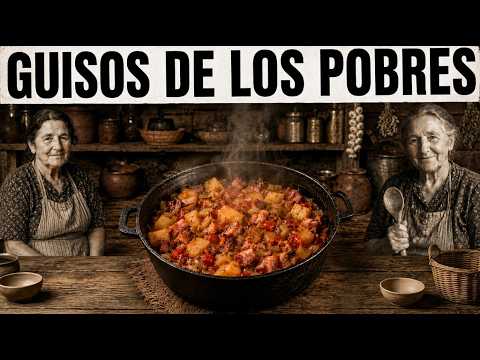
This is not a market video; it is a Spanish-language food-history narration about 25 humble stews that arose from poverty, wartime rationing, and frugality in 1940s America.
Watch on YouTube ›Get the market thesis, key claims, assets, contradictions, and follow-up questions from any financial video — then unlock a version personalized to your portfolio, watchlist, and favorite speakers.
The speaker recounts a nostalgic but practical history of 25 American stews and one-pot dishes associated with the 1940s, wartime rationing, working-class households, and regional cooking traditions. The core message is that poor families used scarcity creatively: bones, offal, salted meats, beans, lentils, cabbage, roots, and scraps were stretched into filling meals through slow cooking, patience, and memory. The video opens with an image of a Pennsylvania coal miner’s wife feeding seven people on almost nothing, then moves through a countdown of dishes such as sausage and cabbage stew, ground-beef macaroni stew, salt pork with potatoes, Spam with lima beans, onion stew, carrot-top stew, lentils and barley, beef heart, pig’s feet, Brunswick stew, catfish stew, squirrel stew, Mulligan stew, oxtail stew, wartime stretched beef stew, liver and onions, pork neck bones, Kentucky burgoo, …
No tradable setup is present. The only immediate reading is that the video promotes a thrift-cooking revival lens, not a market position.
If translated into a consumer trend, the medium-term theme would be renewed interest in budget, heritage, and scratch cooking; the video itself does not make a specific market forecast.
The long-run thesis is that practical household food knowledge can erode under convenience culture, and that economic change can permanently shift what people consider 'normal' food.
Many 1940s American families survived on stews and one-pot meals built from scraps, bones, and cheap ingredients.
The opening narration frames wartime and Depression-era cooking as survival food for large families on very little money.
Postwar prosperity and convenience foods helped push many old stews out of everyday kitchens.
The speaker directly links their disappearance to higher wages, supermarkets, advertising, and canned/frozen meals.
Bean-and-bacon stew was likely one of the most widespread sustaining dishes in 1940s America.
The narrator ranks it number one and says it probably fed more families than any other dish on the list.
Unlock the full claims, asset map, scores, related transcripts, follow-up questions, and AI chat — shaped around your portfolio, watchlist, favorite speakers, and risks.
