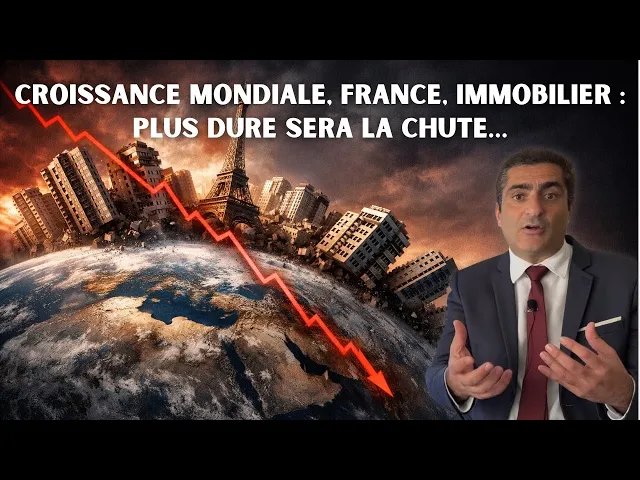
Marc Touati argues that a petroleum shock is dragging down global growth, pushing inflation higher, and setting up further rate pressure, especially in France. He extends that macro view into a bearish 2026 outlook for French activity, public finances, and housing prices.
Watch on YouTube ›Get the market thesis, key claims, assets, contradictions, and follow-up questions from any financial video — then unlock a version personalized to your portfolio, watchlist, and favorite speakers.
The speaker opens by framing the week around a worsening global growth picture, which he says is now visible in leading indicators such as PMI surveys. He links that slowdown directly to the oil shock: despite the ceasefire, oil prices remain high and he expects second-round effects to keep inflation elevated throughout the year. He says he has updated his inflation forecasts and now sees French inflation reaching or exceeding 4% by year-end 2026, with official inflation likely understating the pain felt in daily household budgets. He then broadens the macro argument: higher inflation should keep interest rates high, which in turn will further weaken economic activity. He is particularly bearish on France, saying the country’s public finances are already too weak to handle a new shock. …
Immediate risk is that oil remains elevated and keeps inflation and bond yields pinned higher, leaving no room for a quick relief rally in French rate-sensitive assets. Near-term weakness in PMIs and sovereign bonds is the setup to watch.
Over the next few months, the base case is slower growth plus higher inflation than expected, which should keep pressure on French fiscal metrics, unemployment, and housing. Confirmation would come from continued weak PMIs, sticky inflation prints, and persistently high OAT yields; a sharp oil reversal would challenge the thesis.
Structurally, the video argues that France is trapped in a high-debt, low-credibility regime where public spending and demographics work against sustained real growth. If that regime persists, rate sensitivity and housing affordability remain lasting vulnerabilities even after the current oil shock fades.
Global growth is collapsing, as shown by the latest PMI data.
He says composite PMI fell to an 11-month low and that many countries are slowing sharply.
The oil shock will keep inflation elevated for the rest of the year.
He argues that high oil prices create second-round effects across goods and services.
French inflation will reach or exceed 4% by end-2026.
He presents updated forecasts and says official inflation may understate household pain.
Unlock the full claims, asset map, scores, related transcripts, follow-up questions, and AI chat — shaped around your portfolio, watchlist, favorite speakers, and risks.