TranscriptAgent
Try it free
TRANSCRIPTAGENT.AI · transcript analysis

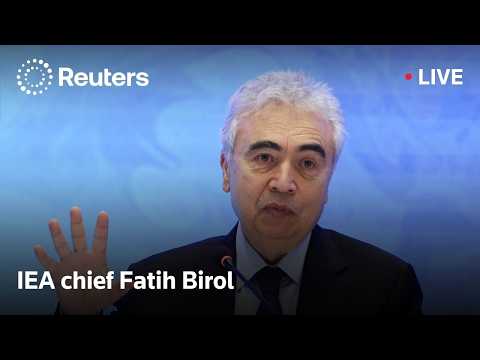
LIVE: IEA’s Fatih Birol speaks to Chatham House's Bronwen Maddox

Channel: Reuters Published: 2026-05-21 07:10
Reuters

IEA chief Fatih Birol argued the Hormuz crisis is the largest energy shock in history, warned of rising oil, gas, fertilizer, food, and inflation pressures, and said countries will re-rank energy sources and suppliers around security as well as cost.

Watch on YouTube ›

Get the market thesis, key claims, assets, contradictions, and follow-up questions from any financial video — then unlock a version personalized to your portfolio, watchlist, and favorite speakers.

Detailed summary

This Reuters/Chatham House discussion centered on Fatih Birol’s assessment of the Strait of Hormuz crisis and how it is reshaping global energy security. Bronwen Maddox opened by framing Birol and the IEA’s evolving mandate; Birol then explained that the IEA was created after the 1973 oil crisis, but under his leadership it broadened to cover oil, gas, electricity, renewables, nuclear, climate, critical minerals, and engagement with emerging markets. Birol called the current situation the largest energy crisis in history, arguing that the scale of lost oil and gas flows is larger than prior shocks and that the disruption also affects fertilizers, petrochemicals, helium, and sulfur moving through Hormuz. …

🔒 The full detailed summary continues — read all of it free with an account. Read the full summary →

Main takeaways

  1. Hormuz disruption is being framed as a systemic energy-security shock, not a narrow shipping issue.
  2. Birol thinks the market’s spare capacity and stock buffers are temporary, not a solution.
  3. Higher fertilizer and diesel costs could spill into food inflation, especially in developing Asia and Africa.
  4. Energy buyers are likely to prioritize reliability and trust over the lowest sticker price.
  5. Cheaper economics, not just climate policy, are driving EVs, renewables, and nuclear.
  6. The UK’s realistic lever is electrification and grid buildout, not hopes of changing global oil prices with new North Sea drilling.

Market read by horizon

Short term

Near term, the setup is bullish for volatility and risk premia across oil, gas, fertilizer, and food-linked exposures while Hormuz remains contested and inventories are drawn down. If the route does not normalize quickly, pricing can overshoot on headlines before any physical shortage fully materializes.

  • Watch the late-June to early-July period Birol flagged as the point when buffers could be stretched by travel-season demand.
Show more
  • If Hormuz remains constrained, stock draws and higher prices may intensify quickly; Birol said the market is already using inventories.
  • Near-term risk is broadening from crude to fertilizers, petrochemicals, LPG, and food inflation.
Mid term

Over the next few months, the base case is a partial reconfiguration of energy sourcing toward more reliable suppliers, more stock management, and more government intervention in import-dependent economies. The key invalidation would be a durable restoration of safe flow plus visible replenishment of inventories and freight confidence.

  • Over the next several weeks/months, Birol expects governments to review supply routes, contract terms, and energy technology choices.
Show more
  • The likely base case is a re-pricing of energy sourcing around security, with a trust premium added to cost comparisons.
  • He sees more appetite for renewables, nuclear, LNG diversification, and alternative pipelines, while some countries may also lean harder on coal for reliability.
Long term

Structurally, the transcript argues that energy markets are moving into an era where chokepoint risk, resilience, and supplier trust matter as much as cost. That favors diversification, distributed power systems, and broader security screening across energy and critical-mineral supply chains.

  • Birol’s core structural thesis is that energy security is now inseparable from national security.
Show more
  • He sees concentration in supply chains and chokepoints as the key durable vulnerability, whether in oil, gas, critical minerals, or electricity networks.
  • The long-run implication is more distributed energy systems, more domestic generation, and less reliance on single chokepoints.
Unlock the full horizon read See the full short-term, mid-term, and long-term implications with confirmation and invalidation signals. Unlock horizon read

Key claims (8)

BEARISH energy security global energy markets

The current Hormuz disruption is the largest energy crisis in history.

He compared lost oil and gas volumes with prior crises and said the current one is larger than all three past major crises combined.

MIXED inventory buffers oil

Existing oil inventories and March stock releases are cushioning the shock but are not a full solution.

He said surplus supply, released stocks, and commercial inventories are helping, yet they are eroding.

BEARISH seasonal demand and supply disruption oil

If Hormuz remains constrained through late June and early July, the market could enter a red zone as travel demand rises and stocks erode.

He tied the timing to seasonal demand and inventory drawdown.

Unlock 5 more claims See the full bullish, bearish, and counter-consensus argument map extracted from the transcript. Unlock all claims

Assets discussed (6)

Oil
BULLISH commodity

Birol said prices were around $100-$110 and that the crisis could push the market into a red zone if Hormuz stays constrained.

Natural gas
BULLISH commodity

He said gas flows through Hormuz and that the current crisis is larger than the 2022 Europe gas shock.

Unlock the full asset map (4 more) See all assets mentioned, their directional bias, and the exact reasoning. Unlock asset map

Speakers

HOST Bronwen Maddox GUEST Fatih Birol

Interview (21 Q&A)

IEA mission

What is the IEA's mission and how has it changed over time?

He says the IEA was founded in response to the 1973 oil crisis to improve oil security and coordinate responses to supply disruptions. Since he became head in 2015, he says the mandate has broadened to cover all energy sources, climate issues, and engagement with emerging economies.

energy crisis

Why do you call this the largest energy crisis in history?

He compares the current disruption with the 1973 and 1979 oil shocks and the 2022 gas crisis, saying the current losses in oil and gas are larger than all three combined. He also says other vital commodities moving through the strait, like fertilizers and petrochemicals, add major economic consequences.

outlook

What is your outlook for where this crisis goes?

He says oil prices are already near $100 to $110, but the market entered the crisis with surplus supply and stocks that are helping absorb the shock. Still, he warns that stocks are eroding and that the situation could become difficult or enter the 'red zone' in July and August if conditions do not improve.

Unlock the full interview (18 more Q&A) Every question, answer summary, and YouTube timestamp. Unlock full Q&A

Where this transcript pushes against consensus

  • Birol’s claim that this is the largest energy crisis in history is assertive, but it is based on a comparison of lost volumes and may understate differences in duration, price effects, and regional vs global impact across past crises.
  • He repeatedly treats a full Hormuz reopening as the key solution, but also acknowledges that reopened routes may still carry a trust premium; the practical market effect of reopening is therefore less certain than his wording suggests.
  • His argument that EVs and renewables are not driven by climate concerns may be directionally true on cost, but it downplays policy, subsidy, and climate-mandate effects that also clearly matter in many regions.
  • The dismissal of new UK North Sea drilling as irrelevant to prices is broadly correct for global pricing, but it may overlook domestic supply, fiscal, and resilience benefits that proponents care about.
  • He asserts the IEA is not an American institution, which is institutionally true in governance terms, but the organization’s historical origins and U.S. influence are more nuanced than his categorical phrasing.
  • His forecast that the crisis will force broad strategic revisions is plausible, but he does not quantify how lasting those changes will be once prices normalize or the conflict de-escalates.

Topics

Strait of Hormuzglobal energy securityIEA mandateoil and gas marketsfertilizer and food inflationelectric vehiclesrenewablesnuclear powerUK North Seaenergy decentralization

Create your free research agent

Unlock the full claims, asset map, scores, related transcripts, follow-up questions, and AI chat — shaped around your portfolio, watchlist, favorite speakers, and risks.

  • Full claims and asset map
  • Personalized relevance to your watchlist
  • Follow-up questions you can track
  • Related transcripts from your workspace
  • AI chat about this video
Create your free research agent
TRANSCRIPTAGENT.AI