
The transcript discusses how inflation is passing through the French economy from farm inputs to consumer prices, with a dairy producer absorbing sharp cost increases before raising prices. The panel argues France and the ECB are moving into a harder inflation regime where higher long-term rates, tighter margins, and weaker growth create more financial risk.
Watch on YouTube ›Get the market thesis, key claims, assets, contradictions, and follow-up questions from any financial video — then unlock a version personalized to your portfolio, watchlist, and favorite speakers.
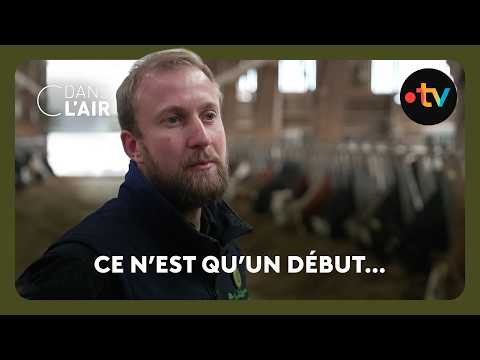
This segment starts with a field report on a family dairy farm in the Somme to show how inflation transmits through the production chain. The farm’s costs are rising across multiple inputs: tractor diesel, fertilizers, consumables, electricity, packaging, and transport. The producer says the diesel price is up 30%, fertilizers 40%, consumables 10–15%, electricity 20%, carton 5–7%, caps 20%, and transport 15%, leaving the production cost of a yogurt pot about 7% higher than a few months earlier. The farm tries to absorb part of the increase, but ultimately needs to pass some of it on to customers, raising prices by a few cents per yogurt. The studio discussion then broadens this into a macro view: inflation is no longer just a temporary hit but is spreading through the economy, with businesses having already squeezed margins as far as they can. …
Near term, the actionable theme is continued consumer-price pass-through and pressure on rate-sensitive assets as long yields stay elevated. The immediate risk is that financing conditions tighten faster than policymakers can offset.
Over the next few months, the likely path is broader inflation diffusion combined with weak growth, leaving the ECB stuck between credibility and support. The setup improves only if cost pressures ease and long yields stop repricing upward.
Structurally, the transcript points to the end of the ultra-cheap money era and a more durable higher-rate regime. That means capital-intensive businesses, leveraged borrowers, and policymakers all operate with less slack than in the previous decade.
Inflation is hitting the farm’s production process at multiple stages, from fuel and fertilizer to packaging and transport.
The farm details cost increases across several input categories before the product reaches consumers.
The farm says the crisis in the Strait of Hormuz is already raising diesel and input costs.
The speaker links a geopolitical shock to immediate production costs.
The producer is trying to absorb part of the cost increase rather than fully passing it through immediately.
He says the price increase to customers will only offset part of the higher costs.
Comment cela se traduit concrètement ?
The answer is a farm-level walkthrough showing higher costs for fuel, fertilizer, electricity, packaging, and transport, eventually forcing small price increases to consumers.
Aura-t-il le choix ?
The panel says consumers will likely have to absorb some of the increase because firms have already exhausted their margin buffers.
Nous changeons de moment, ça veut dire qu'il nous prépare à entrer dans le dur?
The response is that the economy has moved from a sharp hit to an outright crisis, with inflation spreading and policy space narrowing.
Unlock the full claims, asset map, scores, related transcripts, follow-up questions, and AI chat — shaped around your portfolio, watchlist, favorite speakers, and risks.
