TranscriptAgent
Try it free
TRANSCRIPTAGENT.AI · transcript analysis

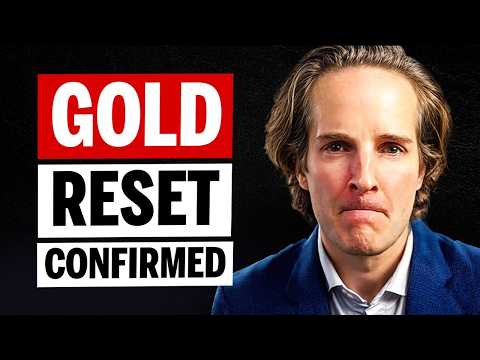
Devalued Overnight: The Biggest Reset is NOW

Channel: Felix & Friends (Goat Academy) Published: 2026-04-11 08:00
Felix & Friends (Goat Academy)

The speaker argues that gold’s recent drop was a liquidity-driven flush, not a fundamental breakdown, and says large institutions and central banks remain structurally supportive of gold. He frames gold as a hedge against inflation, dollar weakness, geopolitics, and lower-rate regimes, while promoting his free educational material and data/community access.

Watch on YouTube ›

Get the market thesis, key claims, assets, contradictions, and follow-up questions from any financial video — then unlock a version personalized to your portfolio, watchlist, and favorite speakers.

Detailed summary

This is a bullish gold thesis video built around recent Wall Street research notes and the speaker’s interpretation of institutional positioning. The speaker says gold fell sharply because hedge funds and managed money were forced sellers in a liquidity squeeze, not because gold’s outlook deteriorated. He points to ETF outflows, leverage-related deleveraging, and crisis-style selling where market participants liquidate what is most liquid. He also clarifies that earlier commentary about Turkey selling gold was incomplete: he says Turkey used about 50 tons in a gold swap, essentially borrowing against gold collateral rather than outright selling. The speaker then argues that gold is being supported by central bank demand, especially China, by a new Chinese insurance rule allowing up to 1% allocation to gold, and by the broad trend of reserve diversification away from the dollar. …

🔒 The full detailed summary continues — read all of it free with an account. Read the full summary →

Main takeaways

  1. Gold’s recent selloff is presented as a liquidity event, not a change in the underlying bullish thesis.
  2. Central banks are portrayed as persistent buyers of gold, with China and other emerging markets highlighted.
  3. The speaker thinks dollar weakness, deficits, geopolitics, and lower rates support gold over time.
  4. UBS and Goldman Sachs are cited as still constructive/bullish on gold despite volatility.
  5. China’s insurance sector rule change is framed as a meaningful new source of demand.
  6. The speaker stresses a contrarian framework: when forced sellers dominate, long-term buyers may benefit.
  7. The video is also a funnel for the speaker’s free masterclass and paid community/data products.

Market read by horizon

Short term

Tactically, gold looks like a possible washout-and-rebound setup if forced selling has peaked and ETF flows keep improving. Near-term risk is another de-risking wave from hedge funds or a fresh macro shock that forces more liquidation.

  • Near term, the setup is framed as a post-liquidation rebound in gold after a sharp monthly drop and extreme positioning.
Show more
  • The speaker highlights very heavy recent selling in gold ETFs and managed-money positions as a potential washout condition.
  • He says ETF flows were turning positive again by early April, which he treats as an immediate supportive signal.
Mid term

Over the next several weeks or months, gold’s path likely depends on whether central-bank demand and weaker-dollar expectations remain intact while rates drift lower. If those supports hold, the selloff should look like a reset rather than a trend break; if not, the recent weakness may persist.

  • Over the next few weeks to months, the base case is gold stabilizing and resuming its uptrend if central-bank buying persists and rate-cut expectations grow.
Show more
  • Validation would come from continued reserve diversification, positive ETF flows, and weaker U.S. dollar momentum.
  • The speaker believes stagflation risks and geopolitical stress could keep institutional demand elevated.
Long term

Structurally, the speaker sees gold as a beneficiary of de-dollarization, fiscal excess, and reserve diversification. In that regime, gold matters less as a trade and more as a durable monetary hedge against policy and geopolitical fragmentation.

  • The structural thesis is that gold is part of a larger de-dollarization and reserve-reallocation regime.
Show more
  • The speaker argues the U.S. dollar is under multi-year pressure because of deficits, money creation, and geopolitical fragmentation.
  • He sees central banks, sovereign institutions, and possibly insurance pools as durable buyers that can keep gold supported for years.
Unlock the full horizon read See the full short-term, mid-term, and long-term implications with confirmation and invalidation signals. Unlock horizon read

Key claims (7)

BULLISH liquidity Gold

Gold’s 12% monthly drop was caused by a liquidity squeeze, not a deterioration in gold’s fundamentals.

He explicitly says the drop had nothing to do with gold being a bad investment and instead reflects forced selling for cash.

BEARISH positioning Gold

Hedge funds and managed money sold gold rapidly to raise cash after losses elsewhere.

He describes leveraged funds cutting gold positions and needing to sell liquid winners to cover broader losses.

NEUTRAL official-sector demand Gold

Turkey’s gold activity was a swap against collateral, not a true sale of all the gold in question.

He corrects the earlier implication by explaining the country used about 50 tons in a borrowing transaction.

Unlock 4 more claims See the full bullish, bearish, and counter-consensus argument map extracted from the transcript. Unlock all claims

Assets discussed (10)

Gold — XAU
BULLISH commodity

Speaker argues the recent drop was a liquidity squeeze and says institutions, central banks, UBS, and Goldman remain constructive on gold.

US dollar — USD
BEARISH fx

He says the dollar is under pressure, expects weaker medium-term dollar trends, and links that to gold strength.

Unlock the full asset map (8 more) See all assets mentioned, their directional bias, and the exact reasoning. Unlock asset map

Speakers

SPEAKER Felix Pri

Where this transcript pushes against consensus

  • The claim that gold’s 12% monthly drop had nothing to do with gold fundamentals is too absolute; liquidity and fundamentals can both matter.
  • The video leans heavily on analogies and simplified money-printing logic, without fully quantifying real rates, inflation expectations, or opportunity costs.
  • The claim that more debt mechanically means more money printing and a worthless dollar is overstated and skips institutional constraints.
  • The argument that central-bank and insurance demand will continue rising is plausible but presented with limited hard evidence beyond cited notes.
  • The historical backtest of a 13/100 positioning score followed by a 90-day rally is mentioned but not robustly contextualized for regime changes.
  • The Turkey swap explanation is more nuanced than the initial framing, which the speaker partly acknowledges.

Topics

goldcentral bank buyingde-dollarizationUBS researchGoldman Sachs researchChina insurance ruleliquidity squeezeinflationU.S. dollar weaknessMiddle East conflict

Create your free research agent

Unlock the full claims, asset map, scores, related transcripts, follow-up questions, and AI chat — shaped around your portfolio, watchlist, favorite speakers, and risks.

  • Full claims and asset map
  • Personalized relevance to your watchlist
  • Follow-up questions you can track
  • Related transcripts from your workspace
  • AI chat about this video
Create your free research agent
TRANSCRIPTAGENT.AI