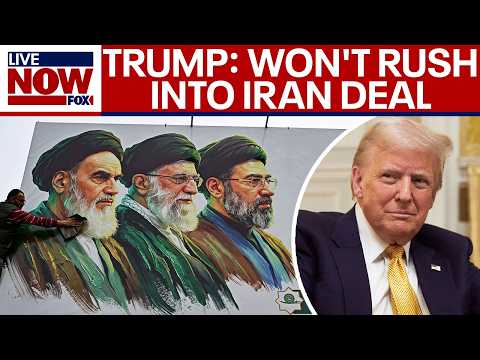
The segment says Trump is backing away from the idea of an imminent Iran deal and emphasizing that no one knows the details yet. Guest Paul McClary argues the real near-term focus is a limited, step-by-step framework: reopening the Strait of Hormuz first, then later negotiating nuclear material removal, with Israel and regional security still central.
Watch on YouTube ›Get the market thesis, key claims, assets, contradictions, and follow-up questions from any financial video — then unlock a version personalized to your portfolio, watchlist, and favorite speakers.
This LiveNOW from Fox segment centers on Trump’s latest Truth Social message about Iran: he says there is no rush, the deal is not finished, and it will be “a good and proper one” unlike Obama’s. The discussion with Politico Pentagon reporter Paul McClary interprets that as a signal that the administration is still shaping the framework and that the public knows very little about the actual terms. The core thesis from the guest is that the deal, if it happens, is likely to be incremental rather than comprehensive, with the Strait of Hormuz likely addressed before the nuclear file is fully resolved. McClary says the White House has been leaking pieces of the emerging framework and that Iran has pushed back on the leaked contours. …
Near term, this is a tactical risk-management story: any evidence that Hormuz traffic is normalizing could ease shipping/oil pressure, but the setup stays fragile until the White House shows concrete follow-through. The biggest immediate watchpoint is whether the president’s optimism is backed by an actual operational step or just messaging.
Over the next several weeks, the base case is a phased arrangement if talks progress: secure the Strait first, then negotiate a second-stage nuclear package and inspections. That view holds only if Iran starts making visible concessions; otherwise the narrative likely reverts to delay, leverage, and renewed market stress.
Structurally, the transcript frames Iran as a persistent regional security and nuclear-containment problem, not a one-off negotiation. The long-run question is whether the U.S. ends up with durable de-escalation or just a managed pause while Iran preserves strategic deterrence and proxy leverage.
Trump is signaling that there is no rush and the Iran deal is not yet fully negotiated.
Directly stated in Trump’s Truth Social remarks quoted in the segment.
The likely framework is a phased deal, with the Strait of Hormuz addressed before the nuclear issue is fully solved.
McClary repeatedly says the approach may be to 'nip away' at issues one by one.
The nuclear issue is the key condition for any deal; without it, the military operation would be considered a failure.
He says nukes are the 'lynch pin' and the original point of the campaign.
How imminent is a deal with Iran, and what would it likely include?
Paul McClary says the White House and Iran are leaking conflicting pieces, but the likely framework would focus first on Iran giving up nuclear material. He says the deal would fall short if it did not address the nukes, which he describes as the core objective.
What are the red lines on uranium enrichment and nuclear concessions?
He says the administration has publicly stuck to the nuclear issue, but the scope may be broader now because officials have also talked about degrading Iran's navy, missiles, and drones. He thinks the key questions are whether the deal covers only nukes or also the Strait of Hormuz and related military steps.
Would reopening the Strait of Hormuz signal that a framework deal had been reached?
McClary says opening the strait would be a major development, but not necessarily a full win because it would only return shipping to where it was before the bombing campaign. He says the real issue is whether Iran clears mines and stops threatening ships, which would likely be just one step in a longer process.
Unlock the full claims, asset map, scores, related transcripts, follow-up questions, and AI chat — shaped around your portfolio, watchlist, favorite speakers, and risks.