
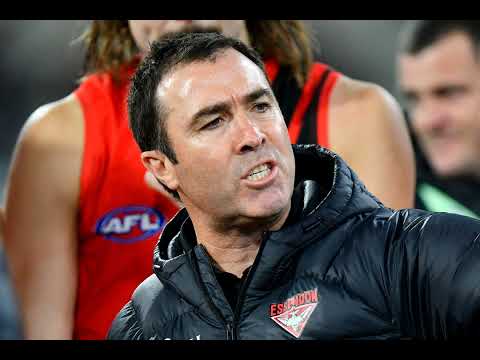
This ABC Sport Daily segment is a fast-moving AFL discussion about Essendon sacking Brad Scott and the possibility of James Hird returning. Club legend Adam Ramanauskas says the move was surprising given the public line of a united front, but argues the board appears to have acted on KPIs, performance, and the need to keep building toward a long-term list strategy. The conversation also frames the coaching search as unusually open, with Essendon, Carlton, and Tasmania all presenting attractive opportunities for different reasons.
Watch on YouTube ›Get the market thesis, key claims, assets, contradictions, and follow-up questions from any financial video — then unlock a version personalized to your portfolio, watchlist, and favorite speakers.
This segment’s core thesis is that Essendon’s decision to part ways with Brad Scott looks abrupt on the surface, but can be explained by a mix of poor results, board-level performance review, and the club’s ongoing commitment to a longer strategic rebuild. Host Patrick Stack opens by noting the contradiction between Andrew Welsh’s recent confidence and the reality of Scott’s dismissal. Adam Ramanauskas, presented as an Essendon club legend, says he was “a little bit surprised” because the club had publicly projected a united front and a clear direction only weeks earlier. Ramanauskas argues the board likely assessed Scott against internal KPIs and decided he was not delivering enough on-field progress. …
Tactically, Essendon is in a messy transition where the next few announcements will drive sentiment more than football logic. The biggest immediate risk is that the Hird rumor overwhelms the process before the club establishes credibility.
Over the next few weeks, the club needs to show that the coaching change is part of a coherent list-building plan rather than a panic move. If it appoints a coach who matches the rebuild narrative, the story can stabilize; if not, the board’s judgment will stay under pressure.
Structurally, the transcript says Essendon is still trying to escape a long shadow from the supplement saga and years of instability. The lasting question is whether the club can build a durable football model that survives coach turnover and public nostalgia cycles.
Essendon sacked Brad Scott after a period of poor results and a board review of performance.
The guest links the decision to one win in 26 or 27 games and says the board reviewed KPIs over the weekend.
The sacking was surprising because the club had recently projected a united front and backing for Scott.
Ramanauskas says the public commentary suggested the club would continue with the existing strategy.
Essendon’s long-term strategy is still centered on list building through draft talent, uncontracted players, and free agents.
Welsh explicitly says the strategy remains and mentions draft and recruiting priorities.
What was your immediate reaction to the news that Essendon had moved on from Brad Scott?
Ramanauskas says he was a bit surprised, because the club's commentary over recent weeks had projected a united front and a commitment to continuing their strategy. Getting the news early this morning was surprising.
Does the quick turnaround from Welsh saying Scott would win a premiership to sacking him tell us something about the president and board's judgment?
Ramanauskas says he doesn't think it tells a story about their judgment — the board clearly had KPIs they were using around performance, reviewed them over the weekend, and concluded Brad wasn't hitting those. The overlap between poor development results and the heavy losses drove the decision.
If you were another coach looking at the Essendon job, would you have confidence that there is alignment and trust in the direction?
Ramanauskas says the key question for a new coach is whether it's about performance or seeing the strategy through. He notes that Brad did what the club asked — blooding young players — and that performance has been affected by injuries. The club is now in a win-loss industry, but Brad was doing the right thing by the club.
Unlock the full claims, asset map, scores, related transcripts, follow-up questions, and AI chat — shaped around your portfolio, watchlist, favorite speakers, and risks.
