
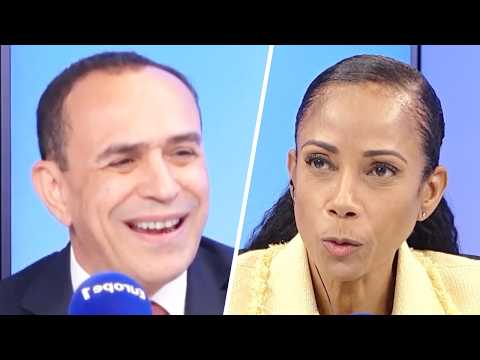
The segment is a French radio discussion about a 2027 presidential poll: Jordan Bardella leads, Édouard Philippe falls, and Jean-Luc Mélenchon rises into contention for the second-round spot. The speakers debate whether Philippe’s decline reflects structural limits of the centrist bloc, old policy scars, and judicial/political baggage, while one guest argues the country’s crisis makes voters seek a more radical option.
Watch on YouTube ›Get the market thesis, key claims, assets, contradictions, and follow-up questions from any financial video — then unlock a version personalized to your portfolio, watchlist, and favorite speakers.
This is a politically oriented, interview-style radio segment centered on a new 2027 presidential poll and the question of who could reach the second round. The host frames the headline numbers as striking: Jordan Bardella is at 32%, Édouard Philippe drops to 17%, and Jean-Luc Mélenchon climbs to 16%, making the race behind Bardella tighter. The conversation then becomes less about the poll itself and more about what these numbers say about the French political mood: frustration, demand for rupture, and distrust of moderate or centrist positioning. Tugdual Denis, introduced as director of the editorial staff of Valeurs Actuelles and author of La cendre et le feu, argues that it is never good to be the favorite in a presidential race. He says Philippe’s main problem is that he has spent months leading the polls, leaving him exposed to erosion as the “pack” closes in. …
Tactically, the immediate setup favors Bardella and leaves Philippe exposed; the short-term question is whether Philippe’s decline accelerates if another poll confirms the move toward Mélenchon.
Over the next few months, the likely path is continued pressure on centrist candidates unless Philippe successfully reframes himself as a rupture candidate and stops carrying Macron-era baggage. Mélenchon remains a plausible beneficiary if polarization intensifies.
The structural read is that French presidential politics is shifting toward polarization and away from moderate technocratic brands. Over time, candidates who can signal clear rupture may remain better positioned than those associated with continuity.
Jordan Bardella leads the poll with 32%, while Édouard Philippe falls to 17% and Jean-Luc Mélenchon rises to 16%.
The host states the headline polling numbers as the reason for the discussion.
It is hard for Édouard Philippe to win if he remains associated with Emmanuel Macron rather than presenting a distinct rupture.
Tugdual Denis argues Philippe is still seen as Macron’s former prime minister and has not fully escaped that identity.
Philippe's call to vote Communist against the RN candidate in Le Havre remains a lasting liability.
The speaker says this anti-RN local move is difficult to forget and will be hard to erase.
Qui voyez-vous au second tour et comment expliquez-vous cette baisse d'Édouard Philippe ?
Tugdual Denis says Philippe is hurt by being the favorite, by his Macron/Juppé association, and by difficulty embodying real rupture.
Qui voyez-vous au second tour ?
One guest says Bardella and Mélenchon are the only two who seem to have programs and identity; another says Mélenchon can never reach the second round, before being challenged.
Unlock the full claims, asset map, scores, related transcripts, follow-up questions, and AI chat — shaped around your portfolio, watchlist, favorite speakers, and risks.
