TranscriptAgent
Try it free
TRANSCRIPTAGENT.AI · transcript analysis

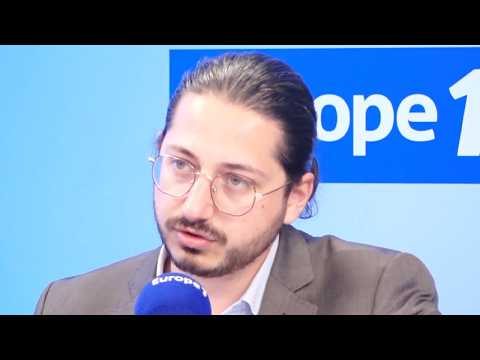
"Glucksmann préfère passer trois mois au bord de la piscine plutôt que de se battre" (A.Le Coq)

Channel: Europe 1 Published: 2026-05-27 08:16
Europe 1

This is a combative political interview on Europe 1 with Aurélien Le Coq (LFI deputy for the Nord) defending a hard-left economic and security program. He argues that TotalEnergies is profiting excessively from the crisis, should pay more tax, and could face price freezes, requisitioning, or even nationalization if it refuses lower prices. He also says France’s response to narcotrafficking has failed because it lacks resources and investigative capacity, not because laws are missing, and he supports more police judiciaire, prevention, proximity policing, and cannabis legalization.

Watch on YouTube ›

Get the market thesis, key claims, assets, contradictions, and follow-up questions from any financial video — then unlock a version personalized to your portfolio, watchlist, and favorite speakers.

Detailed summary

Aurélien Le Coq uses the segment to advance a broad France Insoumise critique of the government, capitalism, and the current policy mix. On energy prices, he argues that TotalEnergies is “making record profits” off the crisis while households struggle with inflation, and says the company should pay back part of those gains through taxation, price caps, or margins being limited. He repeatedly frames the debate as moral rather than technical, insisting that TotalEnergies has paid zero corporate tax in some recent years because it shifts profits to Switzerland, and that this is evidence of a system that lets a small wealthy minority “take” from workers who must spend their wages on fuel and essentials. He pushes this further into a full policy break with the current model: LFI wants immediate price freezes, wage indexation to inflation, and a “rupture” with what he calls generalized …

🔒 The full detailed summary continues — read all of it free with an account. Read the full summary →

Main takeaways

  1. Le Coq’s core frame is moralized anti-corporate economics: TotalEnergies is portrayed as profiting from inflation and passing the cost to households.
  2. He supports tax measures, price controls, wage indexation, and, if needed, requisitioning or nationalizing TotalEnergies.
  3. On narcotrafficking, he says France already has the legal powers it needs; the real failure is underfunding and weak investigative capacity.
  4. His security line combines more police judiciaire, more prevention, neighborhood policing, and legalization of cannabis for that specific market.
  5. He positions LFI as the only serious anti-far-right force and uses Glucksmann as a contrast foil for indecision.
  6. The segment is more of a political attack interview than a neutral policy discussion; the rhetoric is highly charged and often absolutist.

Market read by horizon

Short term

Tactically, the setup is a political pressure campaign on fuel prices and corporate profits, with LFI trying to keep total cost-of-living anger in the spotlight. Near term, the risk is more rhetorical heat than policy change unless the government moves on taxes, caps, or enforcement funding.

  • Immediate catalyst is the public debate over whether the state should tax or constrain TotalEnergies’ crisis profits.
Show more
  • The near-term political setup is confrontational: Le Coq is actively amplifying LFI’s line on price freezes and wage indexation.
  • Watch for whether the government makes any concrete move beyond rhetoric on energy taxation, since he claims current signals are “enfumage.”
Mid term

Over the next few months, the base case in this interview is continued polarization around inflation, crime, and anti-establishment politics, with LFI betting that social anger will validate its interventionist agenda. That view strengthens if living-cost pressure and security incidents keep dominating headlines; it weakens if policy responses become more credible or another left contender overtakes LFI.

  • Over the next several weeks and months, his base case is rising anger over inflation and living costs, which he believes will validate LFI’s interventionist program.
Show more
  • He expects the narcotraffic debate to keep failing unless the state shifts from headline operations to investigation-heavy dismantling of networks.
  • A confirming sign for his thesis would be visible pressure on wages, fuel prices, and public services that keeps his justice-social framing salient.
Long term

Structurally, the speaker is arguing for a stronger-state, anti-rent, anti-corporate regime in which prices, strategic firms, and selected illicit markets are more tightly controlled by public power. The long-run implication is a deeper split between market-oriented governance and a left-populist model that openly accepts intervention, ownership changes, and redistribution.

  • Structurally, he is arguing for a more dirigiste French economic model in which the state intervenes heavily in prices, wages, ownership, and strategic assets.
Show more
  • His long-run thesis is that capitalism, as currently practiced, is extracting rents from workers and needs stronger public control or ownership.
  • On security, he implies durable reform requires not just more policing but a reallocation of the state toward investigation, prevention, and social service access.
Unlock the full horizon read See the full short-term, mid-term, and long-term implications with confirmation and invalidation signals. Unlock horizon read

Key claims (7)

BEARISH energy prices TotalEnergies

TotalEnergies is making unusually large profits from the crisis and should return some of that money to consumers.

He says Total benefits from higher oil prices and should redistribute profits via distribution caps or taxes.

BEARISH corporate taxation TotalEnergies

TotalEnergies is shifting profits to Switzerland and therefore can legitimately be accused of avoiding French corporate tax.

He explicitly says Total paid zero corporate tax last year and shifted billions of profits to Switzerland.

BULLISH inflation

Price caps and wage indexation are the correct response to inflation and energy stress.

He advocates immediate price blocking and automatic wage indexation to inflation.

Unlock 4 more claims See the full bullish, bearish, and counter-consensus argument map extracted from the transcript. Unlock all claims

Assets discussed (3)

TotalEnergies
BEARISH stock

Presented as extracting excessive profits, paying too little tax, and being a candidate for tax hikes, price caps, requisitioning, or nationalization.

Jean-Luc Mélenchon
BULLISH other

Presented as the central political vehicle LFI wants listeners to support for 2027.

Unlock the full asset map (1 more) See all assets mentioned, their directional bias, and the exact reasoning. Unlock asset map

Speakers

SPEAKER Aurélien Le Coq

Interview (9 Q&A)

Taxe Total

Avez-vous réussi à convaincre Roland Lescure?

L'invité dit que non, que le ministre n'a rien changé et tient un discours de "poudre aux yeux" — reconnaissant que Total s'est enrichi mais remerciant l'entreprise pour son plafonnement, ce qui revient à laisser faire.

Ciblage Total

Pourquoi viser uniquement Total Énergie et pas l'État ? Pourquoi Total est l'ennemi ?

L'invité répond que Total fixe les prix et verse les salaires, et que c'est immoral que quelques centaines d'actionnaires s'enrichissent sans travailler pendant que des millions de Français peinent à se loger, se nourrir et payer leurs factures. Il dénonce un système profondément injuste et propose le blocage des prix, l'indexation des salaires, et un programme de rupture.

Narcotrafic

Que proposez-vous dans la guerre contre le narcotrafic ?

Unlock the full interview (6 more Q&A) Every question, answer summary, and YouTube timestamp. Unlock full Q&A

Where this transcript pushes against consensus

  • He treats TotalEnergies’ price-setting and profit behavior as straightforwardly abusive, but provides no independent data in the transcript to verify the tax and profit claims.
  • He says Total paid zero corporate tax and shifted billions to Switzerland; these are asserted forcefully but not substantiated in the segment.
  • His claim that legal tools already exist and that the problem is only resources may understate organizational or jurisdictional obstacles in practice.
  • The suggestion that legalizing cannabis would reduce trafficking is asserted as a likely solution, but no detailed evidence is provided here beyond broad international comparisons.
  • He frames the political contest as essentially Mélenchon vs the far right, but that excludes other plausible opposition configurations and assumes current dynamics will persist.
  • His rhetoric toward TotalEnergies and its shareholders is highly absolutist and may overstate the simplicity of intervention outcomes, especially around pricing and supply effects.

Topics

TotalEnergies profitsenergy taxationprice capsnationalizationnarcotraffickingpolice judiciairecannabis legalizationFrench social inequality2027 presidential raceMélenchon vs Glucksmann

Create your free research agent

Unlock the full claims, asset map, scores, related transcripts, follow-up questions, and AI chat — shaped around your portfolio, watchlist, favorite speakers, and risks.

  • Full claims and asset map
  • Personalized relevance to your watchlist
  • Follow-up questions you can track
  • Related transcripts from your workspace
  • AI chat about this video
Create your free research agent
TRANSCRIPTAGENT.AI