
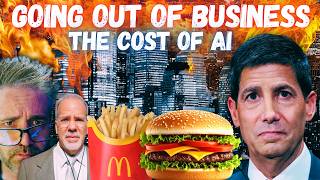
The video argues that restaurants, especially mom-and-pop operators, are under severe pressure from inflation, property taxes, debt, and private equity buyouts, and that this will continue to drive closures and bankruptcies. The speaker frames the issue as part economics, part civic corruption, and part cultural loss, and repeatedly claims another inflation wave will worsen the situation.
Watch on YouTube ›Get the market thesis, key claims, assets, contradictions, and follow-up questions from any financial video — then unlock a version personalized to your portfolio, watchlist, and favorite speakers.
The core thesis is blunt: restaurants are a leading stress point in the economy, and many more failures are coming. The speaker says a crash is certain even if timing and depth are unclear, then uses restaurant closures, food inflation, and property-tax pressure to argue that both independent restaurants and chain operators are being squeezed into bankruptcy. The presentation mixes market data, emotional nostalgia, and a broader political argument that the system is being distorted by debt, private equity, and what the speaker calls fraud. A major part of the case is that restaurant economics have deteriorated sharply since 2019-2025. The speaker cites roughly 72,000 restaurant closures in 2024, around 90,000 since 2020, and says one restaurant is going bankrupt every seven minutes. He argues independent restaurants are closing four to five times faster than chains. …
Tactically bearish on restaurant operators and related commercial landlords: margins look squeezed now, and any renewed inflation or tax revaluation could trigger more bankruptcies quickly.
Over the next few months, the base case is continued pressure on independents and leverage-heavy chains unless food, labor, and tax costs ease materially. Watch for more restructurings, smaller menus, and renegotiated leases as signs the industry is adapting rather than stabilizing.
Structurally, the video argues the industry is shifting toward consolidation and financial extraction, with local operators losing ground to debt, taxes, and scale. If that regime persists, the lasting winners are likely to be owners with pricing power, capital access, and operational systems rather than traditional mom-and-pop models.
A market crash is certain, though the timing and depth are unknown.
The speaker opens by asserting a crash will happen but cannot specify when or how severe.
Restaurant closures are accelerating and reached roughly 72,000 in 2024, with about 90,000 since 2020.
The speaker uses these figures to argue inflation finally caught up to restaurants.
Independent restaurants are closing four to five times faster than chains.
The speaker repeats this as evidence that mom-and-pop operators are especially vulnerable.
Do you think we will have a crash or not?
The speaker unequivocally says 'we will have a crash' but cannot say when or how deep. They connect it to restaurant closures as a leading indicator of economic distress, citing 90,000 restaurant closures since 2020 and the role of private equity.
Is it not over for mom and pop restaurants?
Mitch acknowledges the pressure but emphasizes the key difference between survival and bankruptcy is the ability to hedge off operating expenses (employee cost, food cost). He notes that successful restaurants now have menus 30% smaller than before and struggle with qualified staff.
Can you explain to mom and pop how they have to adapt to survive the challenges of inflation, property taxes, and private equity?
Mitch breaks it down into debt and inflation. He notes larger restaurants fail due to debt from mergers/acquisitions that individual units can't sustain. He says hedging off operating expenses (employee cost, food cost) is the difference between survival and bankruptcy. He cites Boston Market's failure due to debt and his own Swiss LA restaurant which was incredibly popular but torn down due to inflationary pressures.
Unlock the full claims, asset map, scores, related transcripts, follow-up questions, and AI chat — shaped around your portfolio, watchlist, favorite speakers, and risks.
