
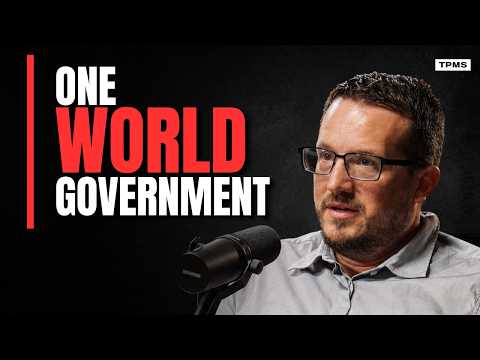
Simon Dixon argues that the world is moving toward a more centralized AI- and money-control regime, but that individuals can still preserve freedom by becoming financially sovereign, building small businesses, and leaning into AI rather than resisting it. The conversation mixes a broad geopolitical/capital-markets framework with very practical enthusiasm for AI’s ability to radically shrink the cost and time required to build software and automate operations.
Watch on YouTube ›Get the market thesis, key claims, assets, contradictions, and follow-up questions from any financial video — then unlock a version personalized to your portfolio, watchlist, and favorite speakers.
Simon Dixon’s core thesis is that the world is being reorganized into a more centralized “control grid” built around programmable money, social-credit-like profiling, AI, and surveillance, and that the only meaningful defense is sovereignty: owning assets, avoiding unnecessary debt, building small businesses, and keeping control over your own cash flow and identity. He frames this as the “golden pill” stage: after blue-pill, red-pill, white-pill, and black-pill phases, the mature response is to accept reality and build within it rather than waste energy trying to stop it. A large part of the discussion is about algorithms, media incentives, and capture. …
Near term, the actionable setup is still AI leadership, AI infrastructure, and the productivity gap between AI-native and non-native operators. The main risk is crowding: if liquidity or enthusiasm stumbles, the same narrow leadership that is driving indexes could reverse fast.
Over the next few months, the base case is continued capital concentration in AI/data-center winners alongside layoffs and workflow reorganization across weaker businesses. If IPO enthusiasm, capex, or the liquidity narrative breaks, the market could quickly reprice the whole AI complex.
Structurally, Dixon thinks we are moving into a regime where centralized AI, programmable money, and distributed settlement systems replace the old dollar/legacy-media order. In that world, durable advantage belongs to owners of productive assets and sovereign operating models rather than wage labor or indebted institutions.
The world is transitioning toward a centralized AI- and programmable-money-based control grid.
Repeated throughout the opening and closing sections as the core thesis.
Algorithms and platform incentives are shaping speech, reach, and user behavior more than people realize.
He argues that platforms reward engagement, profile users, and can suppress reach while allowing speech.
AI will destroy many desk jobs and consultancy layers while rewarding AI-native operators.
He repeatedly says repetitive data-transfer jobs are finished and AI-native people will replace incumbents.
Who are the winners and losers in this transition?
The guest responds that politics is gone and wasting time on it is wasting vital energy. He argues people need to build for themselves, starting with themselves, their family, and their community.
Is the algorithm control a conspiracy or just a business model?
The guest says it can be both. The primary goal is keeping users in a doom loop to maximize time on device and build their profile. Then there's the business model of advertising, where advertisers can pay to change the game, which could come from business, political, or intelligence agendas.
What is the hierarchy of the structure that makes this happen?
The guest says media is just about power, not a money business model. Most media are public companies, so they start decentralized but face capture through sponsorship requirements, monetization algorithms that teach behavior, and eventually become bigger than traditional media with an acceptable narrative or a lot of money to be made.
Unlock the full claims, asset map, scores, related transcripts, follow-up questions, and AI chat — shaped around your portfolio, watchlist, favorite speakers, and risks.
