TranscriptAgent
Try it free
TRANSCRIPTAGENT.AI · transcript analysis

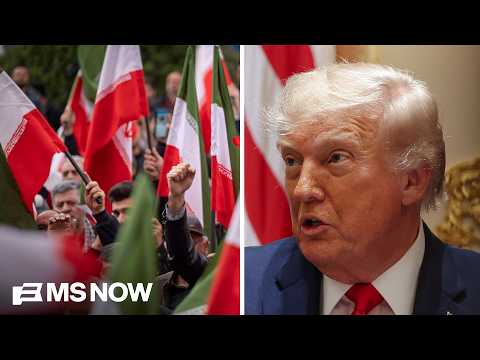
Will Trump sign the new Iran ceasefire deal?

Channel: MS NOW Published: 2026-05-29 04:48
MS NOW

The segment is a political-geopolitical update on a tentative U.S.-Iran ceasefire/nuclear framework that is not yet final because President Trump has not signed off. The discussion centers on whether the deal is substantively good enough, how it treats Iran’s nuclear stockpile and enrichment, what it means for shipping through the Strait of Hormuz, and how Trump is balancing foreign policy with domestic politics ahead of the midterms.

Watch on YouTube ›

Get the market thesis, key claims, assets, contradictions, and follow-up questions from any financial video — then unlock a version personalized to your portfolio, watchlist, and favorite speakers.

Detailed summary

The core thesis is straightforward: U.S. and Iranian negotiators appear to have reached a tentative ceasefire memorandum, but the deal is still unsettled because President Trump has not approved it yet. The reported draft would extend the ceasefire for 60 days, reopen shipping through the Strait of Hormuz, require Iran to remove mines, lift the U.S. naval blockade in step with restored commerce, and grant some sanctions waivers so Iran can sell oil. At the same time, the transcript emphasizes that the nuclear issue remains unresolved, with the “highly enriched uranium” stockpile and Iran’s enrichment program identified as the first major sticking points. The clip frames the agreement as more than just a war-ending arrangement. The reported package could also end the Israel-Hezbollah war in Lebanon, which is presented as part of a broader regional de-escalation. Vice President J.D. …

🔒 The full detailed summary continues — read all of it free with an account. Read the full summary →

Main takeaways

  1. A tentative U.S.-Iran ceasefire framework exists, but Trump has not approved it yet.
  2. The main unresolved issue is Iran’s nuclear program, especially enriched uranium and enrichment rights.
  3. The draft deal would reopen the Strait of Hormuz shipping lane and ease some sanctions pressure.
  4. Vance’s comments suggest progress, but not enough certainty to call the deal done.
  5. Trump is balancing foreign-policy signaling with domestic political concerns ahead of the midterms.
  6. The segment links the Iran deal to broader affordability politics and GOP messaging.
  7. The broadcast also highlights Trump’s mail-in voting order as part of a larger election-fight backdrop.

Market read by horizon

Short term

Near term, the setup is headline-sensitive: any Trump approval could quickly lower the Iran risk premium, while any hesitation keeps the market exposed to shipping and energy volatility. The most actionable risk is the unresolved Strait of Hormuz and nuclear-language negotiations.

  • Watch for Trump’s next public comment; the segment says there may be more clarity by Saturday morning.
Show more
  • Near-term market sensitivity is highest around the Strait of Hormuz, shipping disruption, and sanctions relief headlines.
  • Any confirmation on the uranium/enrichment language could move sentiment on oil and regional risk quickly.
Mid term

Over the next few weeks, the likely path is a choppy negotiation cycle where confirmation on uranium, enrichment, and implementation determines whether this becomes a real de-escalation or another temporary truce. If signed, the narrative should shift toward softer oil/geopolitical pricing; if not, risk premium remains sticky.

  • Over the next several weeks, the base case is a stop-and-start negotiation process rather than immediate resolution.
Show more
  • A durable ceasefire depends on final agreement over nuclear stockpiles, enrichment, and implementation details.
  • If the memorandum is signed, the market should shift toward lower geopolitical risk premium in oil and shipping-related assets.
Long term

Structurally, the transcript points to a regime where Middle East security, sanctions, and U.S. domestic politics remain tightly linked. Even a successful ceasefire would not remove the longer-run nuclear-proliferation and Hormuz-shipping risk that periodically resets energy and geopolitical pricing.

  • The transcript implies Iran policy remains structurally tied to U.S. domestic politics, not just foreign policy.
Show more
  • Strait of Hormuz security and sanctions leverage remain durable geopolitical price setters.
  • The unresolved nuclear question is the lasting regime issue: even a ceasefire would not settle proliferation risk.
Unlock the full horizon read See the full short-term, mid-term, and long-term implications with confirmation and invalidation signals. Unlock horizon read

Key claims (9)

MIXED Middle East geopolitics Iran

U.S. and Iranian negotiators have reached a tentative agreement, but Trump has not signed off yet.

This is the central report that frames the segment’s uncertainty.

BULLISH Middle East geopolitics Iran

If signed, the draft would extend the ceasefire for 60 days and start a new round of talks on Iran's nuclear program.

The report lays out the mechanics of the proposed memorandum.

BULLISH Energy/geopolitics Strait of Hormuz

Shipping through the Strait of Hormuz would be unrestricted during the ceasefire extension.

This is a concrete market-relevant implication for energy and shipping risk.

Unlock 6 more claims See the full bullish, bearish, and counter-consensus argument map extracted from the transcript. Unlock all claims

Assets discussed (6)

Iran
MIXED other

Negotiation progress is bullish for de-escalation, but unresolved nuclear issues and Trump approval risk keep the outcome uncertain.

Strait of Hormuz
BULLISH other

Reopening and unrestricted shipping would reduce geopolitical disruption risk and support calmer energy/shipping conditions.

Unlock the full asset map (4 more) See all assets mentioned, their directional bias, and the exact reasoning. Unlock asset map

Interview (5 Q&A)

Trump approval of Iran deal

Do we even have an understanding of if the president thinks this is a good deal?

Manchester says there is no clear understanding yet; negotiators may have agreed, but final approval still sits with leadership in Iran and the U.S., and Trump has not signed off.

Objectives of the Iran deal

What were the goals that they were trying to achieve if not to tackle the nuclear question?

She says the administration sees the nuclear question as huge and wants a stronger deal than the 2015 JCPOA, so the end state is still unclear.

Trump and midterm politics

What does it say that in acknowledging, well, I could have done this an hour after the midterms were over, but I did it now?

Manchester says Trump likely knows the politics are difficult and may be signaling both to Iran and to Republicans, though defenders would call it statesmanlike messaging tied to affordability.

Unlock the full interview (2 more Q&A) Every question, answer summary, and YouTube timestamp. Unlock full Q&A

Where this transcript pushes against consensus

  • The report says negotiators have agreed to a deal, but later says Trump has not signed off; the status is therefore internally tentative rather than settled.
  • Vance expresses optimism, but also says he does not think they will get there, which weakens the certainty of the progress narrative.
  • The transcript leans on Trump’s rhetoric about having “all the cards,” but provides no independent evidence that Iran is actually cornered or that the war can be ended quickly.
  • The discussion of midterms and affordability is plausible, but the transcript does not substantiate how directly voters will connect the Iran deal to prices.
  • The mail-in voting segment shifts into broad political interpretation without evidence that the order will materially change turnout yet.

Topics

U.S.-Iran ceasefire negotiationsStrait of Hormuz shippingIran nuclear programsanctions and oil exportsTrump political messagingmidterm electionsmail-in voting rulesGOP turnout strategy

Create your free research agent

Unlock the full claims, asset map, scores, related transcripts, follow-up questions, and AI chat — shaped around your portfolio, watchlist, favorite speakers, and risks.
  • Full claims and asset map
  • Personalized relevance to your watchlist
  • Follow-up questions you can track
  • Related transcripts from your workspace
  • AI chat about this video
Create your free research agent
TRANSCRIPTAGENT.AI