
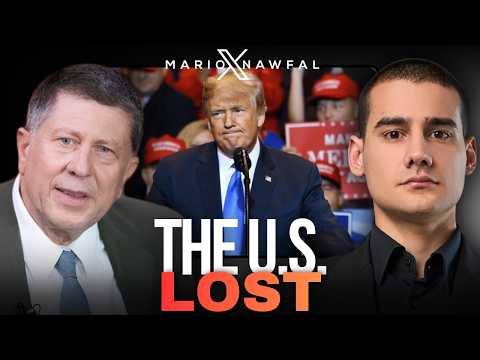
Mario Nawfal interviews Prof. David Gibbs about claims of an imminent Iran-US deal, the Strait of Hormuz, and whether the war is actually winding down or just entering a prolonged phase. Gibbs is skeptical that any real agreement is in place, argues Iran has little reason to trust Washington, and says the most likely path is muddling through: intermittent strikes, retaliation, and rising global economic damage. Both speakers also widen the frame to Israel’s influence on US policy, neoconservatism, censorship of antiwar voices, and the possibility that the conflict accelerates a broader shift away from US hegemony.
Watch on YouTube ›Get the market thesis, key claims, assets, contradictions, and follow-up questions from any financial video — then unlock a version personalized to your portfolio, watchlist, and favorite speakers.
This interview is centered on reports that a deal between Iran and the US may already be finalized, even though it has not been announced. Mario Nawfal opens by saying he believes the deal was already completed, citing multiple reports and indirect sources, while also highlighting The Atlantic’s hostile framing that Trump is “losing” on Iran. Prof. David Gibbs immediately pushes back, saying he is skeptical that a real peace deal exists and that he does not see why Iran would accept an arrangement involving the Strait of Hormuz without a clear and trustworthy end-state. His core thesis is that the current reports may be PR, media noise, or incomplete terms, but the most likely outcome is not a stable settlement. Gibbs’s reasoning is built around trust and incentives. …
Tactically, the market should treat any Iran deal headlines as fragile until Tehran officially confirms them; the immediate risk is a sharp reversal if the reported agreement proves incomplete. The setup still favors headline-driven volatility over confidence in a clean de-escalation.
Over the next few weeks or months, the more likely path is an unstable ceasefire or partial pause with intermittent strikes and retaliation rather than a lasting settlement. Confirmation would require credible, binding terms and a visible reduction in escalation; absent that, the conflict probably keeps dragging on and weighs on risk assets.
Structurally, the discussion points to a slower erosion of US regional dominance and a possible shift toward a more multipolar Middle East. If the war continues to damage the economy and public support, it could force a reassessment of US-Israel alignment and weaken the neoconservative policy consensus.
Reports that the Iran-US deal is finalized may be premature or misleading.
Gibbs explicitly says he is skeptical and thinks the reports have been circulating for weeks without confirmation.
Iran is unlikely to accept an arrangement that gives up the Strait of Hormuz leverage without a definitive end to the conflict.
He argues this would not be in Iran's interest and that the Hormuz card is too important to surrender temporarily.
The most likely near-term outcome is continued muddling through rather than a decisive peace or a major US strike.
He says the war will likely continue via intermittent attacks and retaliation until the US tires of it.
How likely is a peace deal with Iran, and what would make it viable?
The guest says he is very skeptical that a deal will happen, especially one that includes reopening the Strait of Hormuz. He argues Iran would need minimal trust and a definitive end to the conflict, and he does not think Iran sees the proposed terms as in its interest.
Why would Iran distrust the United States in these negotiations?
He says Iran has repeatedly tried to negotiate through the United States and Israel, and those efforts were used as openings for attack. He points to earlier strikes and decapitation tactics as reasons Iran would not trust a ceasefire or open-ended agreement.
What do you think is most likely to happen if no deal is reached soon?
He expects the war to continue, likely without a massive U.S. strike, and instead through muddling along with a ceasefire, intermittent attacks, and retaliation. He thinks the U.S. may eventually tire and walk away, but not yet.
Unlock the full claims, asset map, scores, related transcripts, follow-up questions, and AI chat — shaped around your portfolio, watchlist, favorite speakers, and risks.
