TranscriptAgent
Try it free
TRANSCRIPTAGENT.AI · transcript analysis

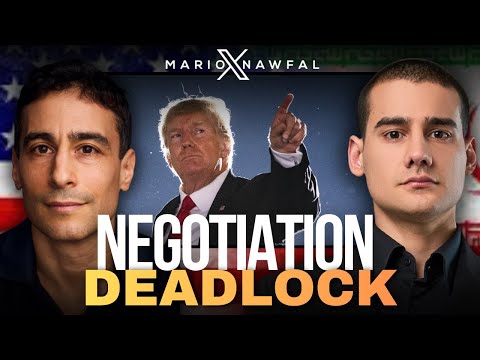
IRAN REJECTS TRUMP'S "PEACE DEAL" – w/ Aaron Maté

Channel: Mario Nawfal Published: 2026-05-29 13:42
Mario Nawfal

Mario Nawfal and guest Aaron Maté argue that the current Iran-U.S.-Israel dynamic is moving toward a limited deal or ceasefire arrangement rather than full-scale war. Maté says Oman’s neutrality, Iran’s willingness to keep negotiating, and the reported draft terms all point to a short-term understanding on asset relief and Hormuz access, while the hardest issues—missile capabilities, Hezbollah, and Israeli actions in Lebanon—remain unresolved. Nawfal is more cautious about Iran’s rhetoric and the risk that regional clashes, especially in Lebanon and Syria, could still derail diplomacy.

Watch on YouTube ›

Get the market thesis, key claims, assets, contradictions, and follow-up questions from any financial video — then unlock a version personalized to your portfolio, watchlist, and favorite speakers.

Detailed summary

This episode is centered on the latest claims around a possible U.S.-Iran understanding after Trump’s public posturing. Aaron Maté’s core thesis is that Trump’s dramatic social-media announcement is ahead of the actual negotiating substance: he thinks the parties are working on a narrow, interim arrangement, not a grand bargain. In his view, the deal structure being discussed is more likely a memorandum of understanding that extends the ceasefire, opens the Strait of Hormuz, and possibly offers limited sanctions relief and access to frozen assets, while postponing the hardest issues—especially the nuclear file, ballistic missiles, and Iran’s regional alliances. Maté repeatedly stresses that Iran is likely to be flexible on enriched uranium stockpiles and other nuclear restrictions, because those stockpiles were mainly leverage, but he draws a hard line on missiles and Hezbollah. …

🔒 The full detailed summary continues — read all of it free with an account. Read the full summary →

Main takeaways

  1. The speakers think a narrow Iran-U.S. de-escalation is more likely than a comprehensive peace deal.
  2. Trump’s public claims are treated as narrative management, not proof that a final agreement exists.
  3. Iran may be flexible on uranium and some sanctions issues, but not on missiles or Hezbollah.
  4. Lebanon is the main sticking point because Israel’s actions there could break the talks.
  5. Maté sees Israel as the core obstacle to regional peace; Nawfal gives more weight to Israeli security concerns.
  6. Both speakers think the region remains highly unstable even if full-scale war is unlikely in the immediate term.

Market read by horizon

Short term

Near term, the trade is headline-driven: if the ceasefire narrative holds, risk of immediate escalation fades; if Lebanon or Hormuz flash again, the situation can flip fast. Trump’s posts and walk-backs are the key catalyst to watch, not a finalized treaty.

  • Watch for whether the reported ceasefire/understanding holds while both sides keep talking about asset relief and Hormuz access.
Show more
  • Any fresh strike in Lebanon or near Hormuz could quickly undo the current de-escalation narrative.
  • Trump’s social posts and official walk-backs are driving short-term confusion, so headline risk is high.
Mid term

Over the next few weeks, the likeliest path discussed is a limited de-escalation with partial sanctions/asset relief and continued delay on the hardest issues. The setup is invalidated if Israel keeps striking in Lebanon or if either side hardens publicly enough to end the interim understanding.

  • Over the next several weeks, the base case discussed is a limited memorandum-style arrangement rather than a sweeping peace accord.
Show more
  • Confirmation would come from continued negotiations, partial sanctions relief, and an explicit attempt to keep the ceasefire alive.
  • The main invalidation would be renewed Israeli action in Lebanon or a breakdown in the Hormuz-related understanding.
Long term

Structurally, the transcript points to a Middle East regime where conflict is managed through partial deals while the core disputes remain unresolved. The lasting implication is that Israel-Iran tensions, Hormuz leverage, and the unresolved Palestinian question will keep reappearing as market and geopolitics stress points.

  • The transcript frames the durable regime issue as whether Israel can continue to impose regional insecurity while external powers manage around it.
Show more
  • Maté’s structural thesis is that resistance groups and Iranian leverage persist as long as occupation and aggression remain unresolved.
  • A lasting settlement would require Palestinian self-determination and a broader regional accommodation, not just a U.S.-Iran side deal.
Unlock the full horizon read See the full short-term, mid-term, and long-term implications with confirmation and invalidation signals. Unlock horizon read

Key claims (9)

NEUTRAL Middle East de-escalation Strait of Hormuz

Oman is signaling neutrality and adapting to a new reality in which Iran exerts leverage over the Strait of Hormuz.

Maté interprets the Oman statement as acknowledgement that Iran is not disappearing and may control trade leverage.

NEUTRAL Iran-U.S. talks Iran

Trump’s big public announcement is unlikely to reflect a finalized grand bargain; the real process is probably a temporary understanding that delays the hardest issues.

Maté says there is back and forth and that the parties are likely only reaching a short-term understanding, not a sweeping plan.

MIXED Nuclear negotiations Iran

Iran may be willing to accept harsher nuclear restrictions than under the JCPOA, but will not concede on missiles or Hezbollah.

Maté explicitly distinguishes between the nuclear file and the issues he thinks Iran will not trade away.

Unlock 6 more claims See the full bullish, bearish, and counter-consensus argument map extracted from the transcript. Unlock all claims

Assets discussed (4)

Strait of Hormuz
BULLISH other

A reopening or protected passage would reduce near-term shipping and energy-disruption risk; the discussion treats access through Hormuz as central to any agreement.

Iran
MIXED other

Iran is portrayed as gaining leverage if sanctions relief and asset releases occur, but also as facing continued military and diplomatic pressure.

Unlock the full asset map (2 more) See all assets mentioned, their directional bias, and the exact reasoning. Unlock asset map

Speakers

HOST Mario Nawfal GUEST Aaron Maté

Interview (14 Q&A)

Trump post

What do you make of Trump's post, given Iran has already denied its claims?

The guest says there has been a lot of back-and-forth and exchanged proposals, but not a sweeping final deal. He says the public post was overstated, and that the sides are really working toward a short-term memorandum to extend the ceasefire and possibly reopen the Strait of Hormuz, with some limited sanctions relief while bigger issues are delayed.

negotiations

Did Iran ask Trump to make that post as part of the negotiations?

The guest does not say Iran explicitly requested the post. Instead, he frames the situation as ongoing negotiation with ideas being exchanged, and says the grand bargain implied by Trump is not real.

deal terms

What are the main sticking points in any deal with Iran?

He says Iran may be flexible on its enriched uranium stockpile and accept harsher nuclear restrictions than under the JCPOA. But he says ballistic missiles are off the table, and he does not see Hezbollah support being traded away.

Unlock the full interview (11 more Q&A) Every question, answer summary, and YouTube timestamp. Unlock full Q&A

Where this transcript pushes against consensus

  • Maté argues Israel is the main aggressor and obstacle to peace; Nawfal argues Israel’s strikes are partly defensive responses to Hezbollah and regional threats.
  • Maté believes Trump likely cannot or will not sign a real comprehensive deal; Nawfal sounds more open to the possibility of a deal progressing.
  • Maté dismisses the idea that Israel blackmails Trump through hidden leverage; Nawfal relays that some observers believe Trump may be under duress.
  • Maté treats Hezbollah as a resistance response to Israeli occupation; Nawfal emphasizes Hezbollah’s attacks on Israel and Lebanon’s inability to disarm it.
  • The speakers differ on how to read current Israeli operations: Maté sees expansionism and destabilization; Nawfal sees mixed motives with some legitimate security claims.

Topics

Iran-U.S. negotiationsTrump public messagingStrait of HormuzLebanon and HezbollahIsrael security argumentsPalestinian statehoodOman neutralitySyria strikesSanctions reliefRegional de-escalation

Create your free research agent

Unlock the full claims, asset map, scores, related transcripts, follow-up questions, and AI chat — shaped around your portfolio, watchlist, favorite speakers, and risks.

  • Full claims and asset map
  • Personalized relevance to your watchlist
  • Follow-up questions you can track
  • Related transcripts from your workspace
  • AI chat about this video
Create your free research agent
TRANSCRIPTAGENT.AI