TranscriptAgent
Try it free
TRANSCRIPTAGENT.AI · transcript analysis

The Fed's New Plan to Shrink $40T Without Paying It Back

Channel: ITM TRADING, INC. Published: 2026-05-31 11:05
ITM TRADING, INC.

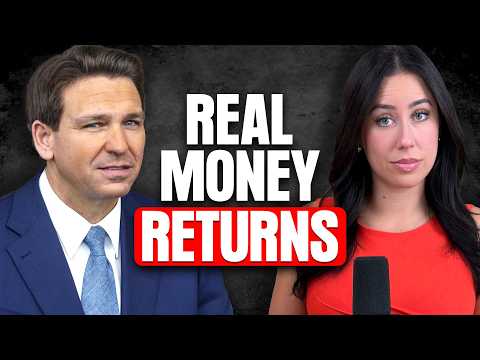
Taylor Kenny argues that Kevin Warsh’s apparent push for a new Federal Reserve regime signals a broader shift away from the post-2008 monetary order. The video frames the core issue as whether the Fed will prioritize fighting inflation and protecting the dollar, or instead use softer inflation readings and lower rates to ease the US debt burden.

Watch on YouTube ›

Get the market thesis, key claims, assets, contradictions, and follow-up questions from any financial video — then unlock a version personalized to your portfolio, watchlist, and favorite speakers.

Detailed summary

The video’s core thesis is that the United States is entering a monetary “regime change” moment, and that Kevin Warsh’s rhetoric as the new Fed chair points toward a rethink of how the Fed measures inflation, manages its balance sheet, and handles the relationship between rates, debt, and currency purchasing power. Taylor Kenny frames Warsh as unusually explicit about the need for transformation, contrasting that with prior Fed chairs who emphasized continuity and stability. A major pillar of the argument is historical: the speaker traces today’s system back to 2008, saying that crisis response marked the start of a new monetary era in which policymakers chose to “flood the system with money” rather than let the debt cycle reset naturally. …

🔒 The full detailed summary continues — read all of it free with an account. Read the full summary →

Main takeaways

  1. The video treats Kevin Warsh’s Fed leadership as a sign of broader regime change, not just a routine policy shift.
  2. The speaker believes the post-2008 monetary system is still built on intervention, debt support, and balance-sheet expansion.
  3. Inflation is framed as fundamentally monetary, and CPI may understate the pressure households feel.
  4. A lower measured inflation rate could be used to justify rate cuts and ease debt refinancing.
  5. The US debt burden is presented as so large that growth alone cannot realistically pay it down.
  6. AI is discussed as potentially inflationary through massive capital spending and bond issuance, not purely disinflationary.
  7. The key market risk is that bond investors may not believe the Fed or Treasury narrative, keeping yields elevated.
  8. The recommended defensive response is ownership of hard assets like gold and silver.

Market read by horizon

Short term

Tactically, the setup is about whether bond markets trust the Fed’s inflation story; if they don’t, yields can keep grinding higher and pressure rate-cut hopes. Near-term risk is being positioned for easier policy before the bond market confirms it.

  • Watch whether markets buy the idea that a new Fed chair can credibly shift the inflation narrative.
Show more
  • The immediate tactical risk is that any attempt to soften inflation measures could be met with skepticism in bond markets.
  • Rising yields are the near-term stress point emphasized in the video, especially if Treasury demand remains weak.
Mid term

Over the coming weeks and months, the key question is whether the Fed can validate a lower-inflation narrative without triggering a credibility problem in Treasuries. The base case in the video is a fragile equilibrium: debt service stays heavy, and any policy easing risks renewed yield pressure.

  • Over the next several weeks to months, the base case in the video is continued tension between debt-service costs and the Fed’s desire to normalize policy.
Show more
  • The thesis depends on whether investors accept a lower-inflation / easier-rate narrative; if not, the speaker expects yields to stay elevated.
  • A more bearish outcome for the dollar would emerge if markets conclude the US is managing debt through inflation rather than repayment.
Long term

The structural view is that the US is operating inside a debt-managed monetary regime where inflation is the exit valve. If that regime persists, hard assets should retain strategic value as claims on dollar purchasing power weaken over time.

  • Structurally, the video argues the US is in a debt-regime where inflation and currency debasement are the main escape valves.
Show more
  • The long-run implication is that central bank credibility and real purchasing power matter more than nominal debt levels.
  • The speaker’s durable thesis is that heavily indebted sovereigns tend to transfer cost to savers rather than repay in full.
Unlock the full horizon read See the full short-term, mid-term, and long-term implications with confirmation and invalidation signals. Unlock horizon read

Key claims (8)

MIXED Fed regime change Federal Reserve

Kevin Warsh’s rhetoric implies a regime change in US monetary policy, not simple continuity.

The speaker repeatedly contrasts Warsh’s language with traditional Fed-chair messaging and interprets it as a broader reset.

BEARISH post-2008 monetary regime Federal Reserve

The post-2008 policy response created a new monetary era built around flooding the system with money rather than letting debt cycles clear naturally.

The speaker links the current system to crisis-era interventions and says that choice reshaped global finance.

BULLISH inflation theory Federal Reserve

Warsh is aligned with Milton Friedman’s view that inflation is fundamentally a monetary phenomenon.

The speaker cites Friedman and uses his quote to frame Warsh’s anti-monetarist criticism of the Fed’s recent thinking.

Unlock 5 more claims See the full bullish, bearish, and counter-consensus argument map extracted from the transcript. Unlock all claims

Assets discussed (8)

Federal Reserve
MIXED other

Framed as the institution at the center of a regime change debate: possibly hawkish on rates, but also tempted to soften inflation measures and support debt markets.

CPI
BEARISH other

The speaker argues CPI may overstate or understate the true inflation environment depending on policy framing, and that reliance on it can mislead rate decisions.

Unlock the full asset map (6 more) See all assets mentioned, their directional bias, and the exact reasoning. Unlock asset map

Speakers

SPEAKER Taylor Kenny

Where this transcript pushes against consensus

  • The claim that the Fed can materially change inflation perception via trimmed-mean measures is asserted more than demonstrated.
  • The argument that AI spending is net inflationary is plausible but not proven in the video; disinflationary productivity effects are underexamined.
  • The statement that no indebted country ever pays back debt is an overgeneralization and not supported with examples or nuance.
  • The speaker treats the 2008 policy response as the start of a new permanent monetary system, but does not fully address counterexamples or periods of normalization.
  • The conclusion that rising yields will inevitably force more printing and more debt issuance is presented as a near-inevitable loop without alternative policy paths.

Topics

Federal Reserve regime changeKevin Warshinflation measurementCPI vs trimmed meanUS debt burdenTreasury yieldsAI capex and debt issuanceinflation and currency debasementgold and silver protectionbond market credibility

Create your free research agent

Unlock the full claims, asset map, scores, related transcripts, follow-up questions, and AI chat — shaped around your portfolio, watchlist, favorite speakers, and risks.
  • Full claims and asset map
  • Personalized relevance to your watchlist
  • Follow-up questions you can track
  • Related transcripts from your workspace
  • AI chat about this video
Create your free research agent
TRANSCRIPTAGENT.AI