TranscriptAgent
Try it free
TRANSCRIPTAGENT.AI · transcript analysis

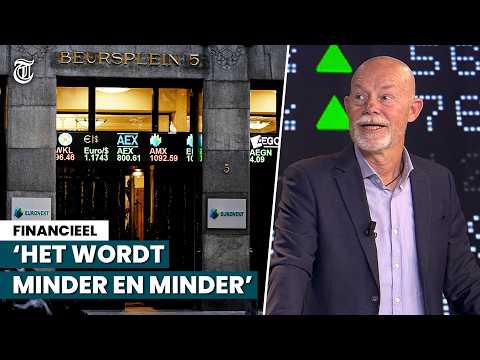
Beursexpert waarschuwt: 'Als spaarder ga je hier ieder jaar op achteruit'

Channel: De Telegraaf Published: 2026-05-31 10:00
De Telegraaf

Corne van Zeil argues that the Strait of Hormuz remains the key market risk: repeated ceasefire/negotiation hopes keep getting interrupted, oil supplies are being drawn down, and a quick normalization would likely ease markets only temporarily. He also says savers are losing purchasing power because inflation remains above deposit rates, bond yields are rising under heavy sovereign and corporate funding needs, and SpaceX’s upcoming IPO may be a momentum trade despite weak fundamentals.

Watch on YouTube ›

Get the market thesis, key claims, assets, contradictions, and follow-up questions from any financial video — then unlock a version personalized to your portfolio, watchlist, and favorite speakers.

Detailed summary

This interview centers on three linked market pressures: the Strait of Hormuz, persistent inflation/rates pressure, and speculative enthusiasm around SpaceX. Corne van Zeil frames the Hormuz situation as a kind of “Groundhog Day,” where every Friday there is talk of progress, and then a Trump post or renewed violence pushes oil higher again. His core thesis is that the disruption is not resolving, Iran is still able to keep the passage effectively constrained, and the market is forced to live with a supply shock that has already lasted for months. On oil, he argues that the usual comforting line — that the U.S. produces plenty of oil and is therefore insulated — is incomplete. He says U.S. refineries still need certain heavier crude grades and that the U.S. Strategic Petroleum Reserve has been declining as Washington draws on it to bridge the shortage. …

🔒 The full detailed summary continues — read all of it free with an account. Read the full summary →

Main takeaways

  1. Hormuz is presented as an ongoing supply shock, not a temporary headline.
  2. U.S. oil self-sufficiency does not eliminate exposure to global crude prices.
  3. The SPR is being used as a stopgap, not a solution.
  4. Inflation is still running above deposit rates, so savers are losing real purchasing power.
  5. Rising yields reflect heavy funding needs from governments and companies, not just central bank policy.
  6. A quick Hormuz resolution would likely help financial markets fast, even if the physical oil market takes longer to normalize.
  7. SpaceX may be a weak fundamental valuation but a strong near-term momentum trade because of index demand.

Market read by horizon

Short term

Tactically, the setup is still headline-driven: any real progress on Hormuz could quickly pull oil lower and lift risk assets, while renewed escalation would likely reverse that fast. Near-term positioning looks vulnerable to sudden swings rather than a stable trend.

  • Watch the Strait of Hormuz headlines: any real de-escalation could spark an immediate risk-on move and pressure oil lower.
Show more
  • The next ECB meeting on 11 June is a near-term rates catalyst in the transcript’s framework.
  • Bond markets are already repricing higher yields, which can spill into mortgages and broader funding conditions.
Mid term

Over the next few weeks and months, the base case in the transcript is continued tightness in oil and persistent pressure on rates unless the supply shock genuinely fades. The view would improve only if Hormuz normalizes and inflation starts to slow enough to change central-bank behavior.

  • Over the next several weeks to months, he expects the oil market to stay tight unless Hormuz actually reopens and supply normalizes.
Show more
  • Even if there is a diplomatic or military lull, he thinks it would take a long time for inventories and supply chains to fully reset.
  • Real returns on cash deposits are likely to stay negative unless inflation falls more than rates rise.
Long term

Structurally, the transcript points to a world where geopolitical chokepoints, inflation, and heavy funding needs keep real yields and borrowing costs elevated. The lasting implication is that savers can remain trapped in negative real returns while markets increasingly reward narrative-rich growth stories.

  • He implies a structural regime of negative real returns for savers if inflation remains above policy rates over time.
Show more
  • The transcript suggests a lasting world of higher funding costs because governments, defense budgets, and AI capex all compete for capital.
  • Oil is framed as a durable geopolitical vulnerability: as long as Hormuz remains a strategic chokepoint, energy markets stay exposed to conflict risk.
Unlock the full horizon read See the full short-term, mid-term, and long-term implications with confirmation and invalidation signals. Unlock horizon read

Key claims (9)

BULLISH geopolitical supply shock Strait of Hormuz

The Strait of Hormuz remains effectively unresolved and has kept oil rising for months.

He frames the situation as recurring headline-driven disruption with no end in sight.

BULLISH geopolitics and oil oil

Repeated negotiation optimism is repeatedly reversed by Trump comments and renewed strikes, which pushes oil higher again.

He argues the market keeps cycling through the same pattern of hope and disappointment.

BULLISH energy supply oil

The U.S. is not insulated from higher oil prices because it still needs heavier crude grades and is drawing down strategic reserves.

He disputes the idea that domestic production alone solves the problem.

Unlock 6 more claims See the full bullish, bearish, and counter-consensus argument map extracted from the transcript. Unlock all claims

Assets discussed (13)

Strait of Hormuz
BULLISH other

He says the chokepoint remains effectively blocked and oil keeps rising while a resolution is not in sight.

oil
BULLISH commodity

He repeatedly says the oil price keeps rising because supply remains constrained.

Unlock the full asset map (11 more) See all assets mentioned, their directional bias, and the exact reasoning. Unlock asset map

Speakers

INTERVIEWER Interviewer GUEST Corne van Zeil

Interview (4 Q&A)

rente grafiek

Kun je specifiek uitleggen wat we zien in de grafiek over de rente?

Corne legt uit dat de ECB op 11 juni de rente waarschijnlijk verhoogt door hoge inflatie. Maar de rente die consumenten krijgen is altijd lager dan de inflatie, waardoor spaarders er gemiddeld 2,7% per jaar op achteruitgaan. Op een spaarrekening met €10.000 wordt dat elk jaar minder waard.

oliecrisis oplossing

Als de straat van Hormoes op korte termijn wordt opgelost, gaan we dan meteen verlichting zien op de markten?

Op korte termijn zullen financiële markten direct positief reageren omdat het probleem dan opgelost is. Ook de korte termijn oliemarkt zal een daling laten zien. Maar het duurt nog wel tot einde van het jaar voordat de oliemarkt echt gestabiliseerd is.

beurzen prestaties

Hoe verklaar jij dat de beurzen het best wel oké doen ondanks de hoge olieprijs?

De winsten van bedrijven gaan keihard omhoog, vooral techbedrijven verdienen geld als water door de enorme AI-investeringen van 750 miljard. Samsung geeft bijvoorbeeld bonussen van $400.000 per werknemer in de semiconductor-divisie om stakingen te voorkomen.

Unlock the full interview (1 more Q&A) Every question, answer summary, and YouTube timestamp. Unlock full Q&A

Where this transcript pushes against consensus

  • The claim that the ECB will likely raise rates on 11 June is asserted too confidently; the transcript offers no policy probabilities or alternative outcome analysis.
  • The statement that U.S. oil producers are not insulated because they need heavier crude is directionally plausible, but the transcript does not quantify how material that exposure is.
  • The average annual real loss of 2.7% for savers depends on the specific dataset and time period; the methodology is not explained.
  • The SpaceX valuation discussion is internally skeptical but also assumes index inclusion will create buying without detailing float, timing, or actual index rules.
  • The claim that SpaceX ‘will’ come to market in June is presented as if confirmed, but the transcript gives only tentative timing language.

Topics

Strait of Hormuzoil pricesECB ratesinflationreal returns for saversbond yieldsgovernment deficitsAI capexSpaceX IPOMusk narrative

Create your free research agent

Unlock the full claims, asset map, scores, related transcripts, follow-up questions, and AI chat — shaped around your portfolio, watchlist, favorite speakers, and risks.

  • Full claims and asset map
  • Personalized relevance to your watchlist
  • Follow-up questions you can track
  • Related transcripts from your workspace
  • AI chat about this video
Create your free research agent
TRANSCRIPTAGENT.AI