TranscriptAgent
Try it free
TRANSCRIPTAGENT.AI · transcript analysis

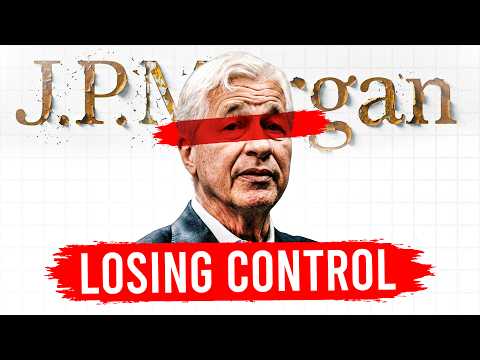
Why JPMorgan Fears Crypto More Than Ever

Channel: Coin Bureau Published: 2026-06-01 09:00
Coin Bureau

Guy argues that JPMorgan’s public attack on yield-bearing stablecoins and the Clarity Act is less about protecting consumers than about protecting banks’ deposit franchise. He says JPMorgan is simultaneously lobbying against crypto yield products while building its own tokenized deposit and tokenized yield infrastructure, which he frames as evidence that the future of money is moving on-chain.

Watch on YouTube ›

Get the market thesis, key claims, assets, contradictions, and follow-up questions from any financial video — then unlock a version personalized to your portfolio, watchlist, and favorite speakers.

Detailed summary

The video’s core thesis is that Jamie Dimon’s loud opposition to yield-bearing stablecoins is strategic hypocrisy: JPMorgan publicly warns that crypto dollars will drain deposits and destabilize lending, but privately it is building closely related tokenized money products on blockchain rails. Guy presents this as a fight over control of the future payment and funding infrastructure, not a principled safety objection. He begins with Dimon’s Fox Business appearance, where Dimon said he would fight the Clarity Act “until the bitter end” and attacked Coinbase’s CEO. Guy then lays out the banking lobby’s case: the ABA warned that yield-bearing stablecoins could grow from roughly $300 billion to $2 trillion, siphon deposits, and reduce community-bank lending, while the banking trade group mobilized thousands of letters to the Senate. …

🔒 The full detailed summary continues — read all of it free with an account. Read the full summary →

Main takeaways

  1. JPMorgan’s public anti-stablecoin stance is framed as a defense of deposits, but the video argues it is really about protecting bank control over money movement and yield.
  2. The bank is said to be building the same category of products it criticizes: tokenized deposits and tokenized yield instruments on public blockchains.
  3. The Clarity Act is presented as a major regulatory battleground, with bank lobbying contributing to delays and uncertainty.
  4. The real economic risk emphasized is not systemic collapse but disintermediation of cheap bank deposits.
  5. The speaker sees tokenized dollars and on-chain yield as a durable trend that large banks are trying to capture rather than stop.

Market read by horizon

Short term

Near term, the setup is event-driven around Clarity Act headlines and bank lobbying. The tradeable risk is delay or dilution rather than outright resolution, so sentiment can swing sharply on legislative timing.

  • The near-term catalyst is the Clarity Act process: Senate timing, markup delays, and whether the bill advances before recess or slips into late summer.
Show more
  • Watch lobbying intensity from JPMorgan and the ABA, since the speaker says the banking push is actively affecting legislative odds.
  • Prediction-market pricing for passage is falling, which he treats as a tactical warning that the regulatory path is less certain than headlines suggest.
Mid term

Over the next few weeks or months, the base case is continued tug-of-war between banks and crypto firms over whether yield-bearing digital dollars are allowed to scale. If bank-led amendments fail and product launches continue, the narrative shifts toward acceptance rather than prohibition.

  • Over the next several weeks to months, the base case in the video is continued fight over who controls tokenized dollar rails: banks, Coinbase/Circle, or both under tighter rules.
Show more
  • The speaker implies that if the bill passes with yield provisions intact, it would legitimize yield-bearing stablecoins and accelerate product adoption.
  • If the bill stalls, the market remains in a regulatory gray zone, which favors incumbents with lobbying power and existing distribution.
Long term

Long term, the transcript argues that tokenized money rails are becoming a structural part of finance and that banks will try to capture, not stop, that shift. The lasting question is who owns the distribution layer when dollars become programmable and yield-bearing by default.

  • Structurally, the video argues that money is moving toward tokenized, on-chain infrastructure, and both banks and crypto firms are competing to own that layer.
Show more
  • The lasting implication is that the traditional deposit franchise is vulnerable to disintermediation if consumers can hold dollar assets with better yield and similar convenience.
  • The speaker’s long-run regime view is that large banks will not simply oppose tokenization; they will try to absorb it through regulated internal products.
Unlock the full horizon read See the full short-term, mid-term, and long-term implications with confirmation and invalidation signals. Unlock horizon read

Key claims (7)

BEARISH crypto regulation Clarity Act

Jamie Dimon publicly declared war on the Clarity Act and on yield-bearing stablecoins, warning they threaten deposits and financial stability.

The opening frames Dimon as leading the banking fight against crypto yield products.

BEARISH bank funding stablecoins

The banking lobby argues that yield-bearing stablecoins could trigger deposit flight and reduce lending capacity substantially.

Guy summarizes the ABA and ICBA position as a major threat to bank deposits and credit supply.

BULLISH tokenized money JPMorgan

JPMorgan is building products that function like the very yield-bearing instruments it criticizes publicly.

The transcript highlights JPMD, Money, and JLTXX as evidence of internal contradiction.

Unlock 4 more claims See the full bullish, bearish, and counter-consensus argument map extracted from the transcript. Unlock all claims

Assets discussed (10)

Clarity Act
BULLISH other

The speaker treats passage as positive for crypto and tokenized money products, though he notes bank resistance is delaying it.

Coinbase
BULLISH stock

Mentioned as a beneficiary/competitor in the on-chain dollar infrastructure debate; the speaker implies Coinbase is on the receiving end of bank competition.

Unlock the full asset map (8 more) See all assets mentioned, their directional bias, and the exact reasoning. Unlock asset map

Speakers

SPEAKER Guy

Where this transcript pushes against consensus

  • The claim that banning stablecoin yield would materially change lending looks weak; the video itself cites a 0.02% estimate, which undermines the banks’ stated public rationale.
  • The argument leans heavily on motive inference: JPMorgan building related products does not by itself prove the public lobbying is purely cynical.
  • Some figures are presented without source detail in the video, including the $300 billion to $2 trillion market projection and the $1.5 trillion cumulative volume claim.
  • The video implies JPMorgan’s products are effectively the same as yield-bearing stablecoins, but deposit tokens and tokenized funds are not identical products or risk profiles.

Topics

stablecoinsClarity ActJPMorgantokenized depositsbank lobbyingdeposit flightyield-bearing cryptoBaseEthereumregulation

Create your free research agent

Unlock the full claims, asset map, scores, related transcripts, follow-up questions, and AI chat — shaped around your portfolio, watchlist, favorite speakers, and risks.

  • Full claims and asset map
  • Personalized relevance to your watchlist
  • Follow-up questions you can track
  • Related transcripts from your workspace
  • AI chat about this video
Create your free research agent
TRANSCRIPTAGENT.AI