
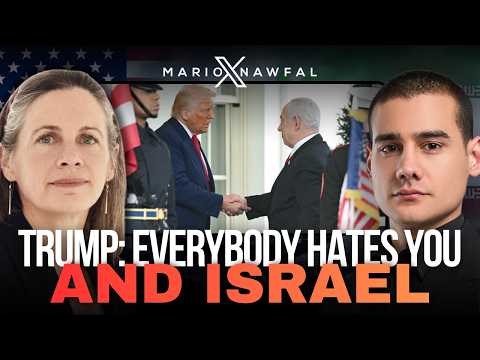
A geopolitics-focused interview about a reported Trump-Netanyahu call, with the guest arguing Trump is frustrated, Israel is overextended, and Iran is gaining leverage. The discussion centers on Lebanon, Hezbollah, ceasefire violations, U.S. support for Israel, and whether the Axios report signals a real rupture or a political warning shot.
Watch on YouTube ›Get the market thesis, key claims, assets, contradictions, and follow-up questions from any financial video — then unlock a version personalized to your portfolio, watchlist, and favorite speakers.
This is a fast-moving interview centered on a single breaking-news claim: Axios reported that Trump told Netanyahu, in effect, that he was “crazy” and that Israel was causing political damage. The guest, Lt. Col. Karen Kwiatkowski, treats the report as plausible even if not fully verified, because she thinks Trump is under pressure, frustrated with Netanyahu, and increasingly boxed in by the Lebanon/Iran situation. The host, Mario Nawfal, frames the item as potentially meaningful whether or not it is literally true, because a leak of that kind would itself be a warning shot to Netanyahu and a signal of Trump’s leverage problem. Kwiatkowski’s core thesis is that Iran has the stronger hand right now, because it is projecting discipline, control, and escalation management while Israel and the U.S. are in a more reactive position. …
Near term, the setup is headline-driven and fragile: any verified Israeli move in Lebanon or Trump follow-through could trigger a sharp reaction, while denial or de-escalation would deflate the story quickly. The tactical risk is misreading a leak or statement as a durable policy shift before ground action confirms it.
Over the next few weeks, the likely path is continued pressure on Netanyahu and a test of whether Israel can keep U.S. backing while facing Hezbollah/Iran pushback. The view strengthens if Iran keeps retaliatory discipline and Israel shows strain; it weakens if Washington fully re-commits and Israel regains initiative.
The structural implication is that Israel’s freedom of action may be more dependent on U.S. sponsorship than its rhetoric suggests, and that regional deterrence is becoming more about constraints than impunity. If that regime persists, leaks, public signaling, and alliance fatigue will matter increasingly alongside military capability.
Trump angrily confronted Netanyahu over the reported Beirut escalation and said Israel was causing political damage.
The guest and host discuss an Axios report quoting Trump in an angry call to Netanyahu.
Iran is gaining leverage and projecting control more effectively than Israel or the U.S.
Kwiatkowski repeatedly says Iran is using leverage and appearing like the 'mature adult.'
Israel's military is exhausted and struggling to achieve results in Lebanon.
She cites strain on the IDF and difficulty taking southern Lebanon.
Do you think Trump actually said those words to Netanyahu in the Axios report?
The guest says they know Trump gets angry and curses people, so it's possible. But they note we don't know who talked to Axios — it's definitely not Trump, probably one of his Zionist buddies close to Axios which is close to Israel. They add that despite usually not believing such reports, this one makes sense because Trump is in a tight spot.
How can Trump assert control given the situation with Iran and Israel?
The guest compares Trump to an absent father, saying he's like a drunk on the sidewalk who can't assert control. Iran is leveraging an appearance of being in control — orderly, controlled, like the mature adult in the relationship — and Trump cannot catch up.
Why would Trump call Netanyahu crazy if he supposedly greenlit the strike on Beirut?
The guest suggests two possibilities: either Trump is surrounded by Zionists close to Netanyahu who told him to approve it without understanding what he was doing, or he approved it and forgot. They reference Trump's first term when he ordered troops out of Syria but the Pentagon lied and never moved them — showing how easily he's manipulated.
Unlock the full claims, asset map, scores, related transcripts, follow-up questions, and AI chat — shaped around your portfolio, watchlist, favorite speakers, and risks.
