TranscriptAgent
Try it free
TRANSCRIPTAGENT.AI · transcript analysis

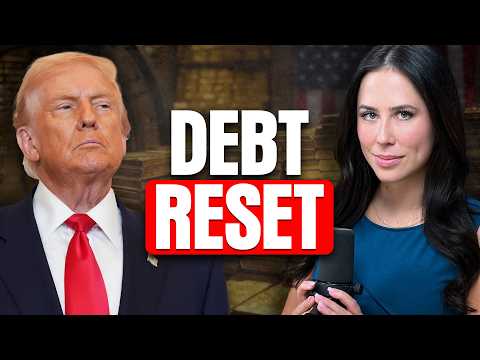
America’s Gold Problem Just Got Harder to Ignore

Channel: ITM TRADING, INC. Published: 2026-06-02 17:22
ITM TRADING, INC.

The speaker argues that the U.S. is facing a hidden gold reckoning: Fort Knox scrutiny, CIA-gold scandal, rising central-bank buying, and $40T debt all point toward a possible gold revaluation or monetary reset. The core recommendation is practical and emphatic: own physical gold, not just paper exposure, because if the rules change, holders of real metal may benefit while dollar holders lose purchasing power.

Watch on YouTube ›

Get the market thesis, key claims, assets, contradictions, and follow-up questions from any financial video — then unlock a version personalized to your portfolio, watchlist, and favorite speakers.

Detailed summary

The video’s central thesis is that America’s official gold accounting is intentionally outdated and that this isn’t just trivia — it may be a sign of a larger monetary regime problem. The speaker says the U.S. Treasury still values gold at $42.22 per ounce, a price set in 1973, and argues that leaving such a large asset understated on the balance sheet reflects a desire to avoid putting gold back at the center of the monetary system. In their framing, updating that price would be more than an accounting change; it would amount to an admission that the dollar has lost most of its purchasing power since the early 1970s. To build that case, the speaker links several events and historical precedents. …

🔒 The full detailed summary continues — read all of it free with an account. Read the full summary →

Main takeaways

  1. The video’s thesis is that U.S. gold is being politically and financially suppressed on the books.
  2. The speaker sees a possible gold revaluation as a monetary reset event, not a routine accounting change.
  3. Historical analogies to 1934 and 1971 are used to argue that early gold owners can benefit while cash holders lose.
  4. The speaker strongly prefers physical gold over ETFs or tokenized exposure when counterparty risk matters.
  5. Central bank gold buying is treated as evidence that official institutions are preparing for a weaker fiat regime.
  6. The tone is urgent and promotional, but the speaker admits the timing is uncertain.

Market read by horizon

Short term

Tactically, the setup favors attention on gold headlines and physical-gold positioning, but the immediate risk is that the Fort Knox/audit story remains only narrative noise with no policy follow-through.

  • The immediate catalyst is the Fort Knox audit talk plus the CIA-gold arrest story, which the speaker uses to heighten attention around gold.
Show more
  • Near-term sentiment could stay noisy and sensational, so the actionable point is mainly tactical positioning in physical gold rather than chasing headlines.
  • A key immediate risk is that the audit narrative produces attention without any policy action, which would leave the thesis unconfirmed.
Mid term

Over the next few months, the bullish case depends on continued official scrutiny of gold, persistent central-bank demand, and signs that confidence in U.S. fiscal and bond markets keeps deteriorating. If those signals fade, the revaluation thesis loses momentum.

  • Over the next several weeks or months, the thesis depends on whether gold continues to attract official and private demand while Treasury credibility remains pressured.
Show more
  • The speaker’s base case is that any serious move toward revaluation would first show up as more discussion of gold accounting, repatriation, or official reviews.
  • The view weakens if the Fort Knox story fades, central-bank buying slows, or bond demand stabilizes and the system appears less fragile than portrayed.
Long term

Structurally, the transcript argues that gold remains a reserve asset because fiat credibility is never permanent. The long-run implication is that physical bullion functions as regime insurance if confidence in the dollar system keeps eroding.

  • Structurally, the transcript argues that gold remains a reserve asset because fiat systems depend on confidence that can erode.
Show more
  • The long-run implication is that physical gold is framed as insurance against monetary regime change, not just a trade.
  • If the speaker is right, official underpricing of gold is a lasting sign that the post-1971 dollar system still rests on confidence rather than hard backing.

Key claims (7)

BULLISH gold revaluation U.S. Treasury gold holdings

The U.S. Treasury still values its gold at $42.22 per ounce, a price set in 1973 and never updated.

This is the factual cornerstone of the argument about hidden undervaluation.

BULLISH monetary regime gold

Updating gold’s official price would be an irreversible move that effectively puts gold back at the center of the monetary system.

The speaker frames revaluation as a structural regime shift, not a mere accounting adjustment.

BULLISH central bank demand gold

Central banks are buying gold at the fastest pace in modern history over the last five years.

Used to show that official institutions are positioning for a different monetary future.

Unlock 4 more claims See the full bullish, bearish, and counter-consensus argument map extracted from the transcript. Unlock all claims

Assets discussed (8)

gold — XAU
BULLISH commodity

Speaker argues gold is undervalued on official books, favored by central banks, and the best protection against monetary reset.

U.S. Treasury gold holdings
BULLISH commodity

He says the Treasury’s gold is recorded at an absurdly low official price and implies that revaluation would be positive for gold holders.

Unlock the full asset map (6 more) See all assets mentioned, their directional bias, and the exact reasoning. Unlock asset map

Speakers

SPEAKER Taylor Kenny

Where this transcript pushes against consensus

  • The claim that updating the Treasury’s gold price would itself put gold back at the center of the monetary system is asserted, not demonstrated.
  • The speaker treats a Fort Knox audit as potentially symbolic of a major regime shift, but provides no evidence that an audit would change policy.
  • The historical comparison to 1934 and 1971 is directionally relevant, but the transcript glosses over major differences in today’s monetary framework.
  • The assertion that the dollar is backed by oil and trust is rhetorical and oversimplified.
  • Claims about no one wanting Treasury bonds and about a crisis point are broad and unquantified.
  • The idea that the U.S. has a better chance of finding Bigfoot than gold in Fort Knox is clearly hyperbolic, weakening the factual precision of the argument.

Topics

gold revaluationFort Knox auditcentral bank gold buyingfiat currency erosionphysical vs paper gold1934 gold confiscation1971 gold window closureU.S. Treasury balance sheetdebt crisismonetary reset

Create your free research agent

Unlock the full claims, asset map, scores, related transcripts, follow-up questions, and AI chat — shaped around your portfolio, watchlist, favorite speakers, and risks.

  • Full claims and asset map
  • Personalized relevance to your watchlist
  • Follow-up questions you can track
  • Related transcripts from your workspace
  • AI chat about this video
Create your free research agent
TRANSCRIPTAGENT.AI