
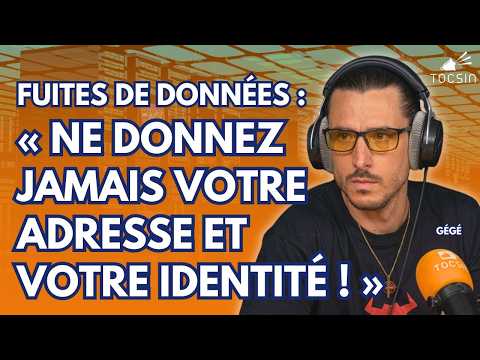
The conversation is an anti-surveillance, anti-EU-regulation interview centered on MiCA and DAC on crypto. GG du bunker argues these rules will raise compliance costs, force mass reporting of crypto transactions, and enlarge data-privacy and kidnapping risks in France and Europe.
Watch on YouTube ›Get the market thesis, key claims, assets, contradictions, and follow-up questions from any financial video — then unlock a version personalized to your portfolio, watchlist, and favorite speakers.
This is a highly polemical interview about European crypto regulation, not a market forecast in the usual price-action sense. The main thesis from GG du bunker is that the EU’s crypto framework—especially MiCA and the DAC reporting regime—will crush competitiveness, expand surveillance, and create major privacy and physical-safety risks for ordinary crypto holders. The host frames the discussion around the June 30 compliance deadline and says only a small fraction of firms have received approval, suggesting a regulatory “earthquake” across Europe. GG argues that MiCA is essentially a costly bureaucratic overlay that forces crypto firms to spend heavily on lawyers and compliance, which will push businesses out of Europe and make them less competitive than US or global peers. …
Immediate setup is defensive: if you hold or run crypto exposure in Europe, the urgent risk is compliance disruption and data exposure, not upside catalysts. The interview argues for reducing identifiable footprint now, because regulatory deadlines and enforcement are the near-term shock.
Over the next few months, the likely path in the speaker’s view is fewer regulated crypto firms in Europe, higher costs for the survivors, and greater migration toward offshore or self-custody solutions. The view would weaken if firms adapt smoothly and the feared reporting burden proves less invasive than described.
Structurally, the interview implies Europe is moving toward a more centralized financial-surveillance regime that is hostile to privacy-preserving crypto use. If that regime persists, the durable result would be capital and talent shifting away from regulated EU venues and toward jurisdictions with lighter oversight.
MiCA is a highly restrictive EU crypto regulation that will force firms into extensive legal and compliance work.
The speaker says crypto companies will need lawyers and months of work to comply.
DAC will require crypto firms and payment processors to report all client transactions to tax authorities across Europe.
This is the central technical-policy claim driving his privacy warning.
Europe is building a massive crypto transaction database that could be accessed by many countries and millions of users.
The speaker argues the reporting rules create a Europe-wide surveillance database.
En quoi consiste le règlement MICA et quelles difficultés pose-t-il aux entreprises du secteur des cryptomonnaies ?
GG explique que MICA est une surcouche bureaucratique qui oblige chaque entreprise crypto à faire appel à des cabinets d'avocats pendant plusieurs mois, ce qui rend les entreprises européennes beaucoup moins compétitives face aux États-Unis et au reste du monde.
En quoi la directive DAC est-elle encore plus grave que le règlement MICA ?
GG explique que la directive DAC va forcer toutes les entreprises crypto et tous les processeurs de paiement en Europe à déclarer systématiquement toutes les transactions de leurs clients aux autorités fiscales, créant une énorme base de données européenne accessible à 58 pays de l'OCDE, ce qui va au-delà du système bancaire et renie le principe fondamental de la vie privée dans la crypto.
Existe-t-il encore des solutions pour détenir de la cryptomonnaie en France sans être dans le viseur de l'État ?
GG conseille de ne jamais utiliser son vrai nom et son adresse principale dans des bases de données, recommande d'acheter une boîte aux lettres à 5-10€ par mois pour domicilier son entreprise et ses impôts, et de partir du principe que si on donne ses données à l'État ou à des bases privées, il y a de grandes chances qu'elles fuient.
Unlock the full claims, asset map, scores, related transcripts, follow-up questions, and AI chat — shaped around your portfolio, watchlist, favorite speakers, and risks.
