TranscriptAgent
Try it free
TRANSCRIPTAGENT.AI · transcript analysis

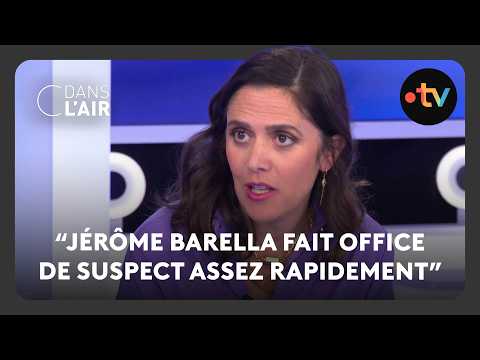
Disparition Lyhanna : les derniers éléments de l'enquête

Channel: C dans l'air - France Télévisions Published: 2026-06-03 15:00
C dans l'air - France Télévisions

This episode of C dans l'air is a legal-analysis discussion of the disappearance of Lyhanna, focused on how investigators build a case in the first days after a missing-child report, what the suspect's rapid custody and indictment may imply, and how families are supported during an unresolved and traumatic inquiry.

Watch on YouTube ›

Get the market thesis, key claims, assets, contradictions, and follow-up questions from any financial video — then unlock a version personalized to your portfolio, watchlist, and favorite speakers.

Detailed summary

The core of the discussion is procedural rather than sensational: the guests explain, step by step, how a missing-child investigation unfolds once Lyhanna is reported absent after school and why the early hours matter so much. The narrative given is that she was last seen around 3 p.m. outside her collège, got into the car of a man she knew — the father of one of her best friends — and then vanished from view. From there, the panel emphasizes the split between field searches and judicial work: one team canvasses the terrain and reconstructs who saw what, while another explores the child’s environment, the suspect’s profile, and possible motives or links. A major part of the segment is devoted to investigative tools and what can be learned quickly. General F. …

🔒 The full detailed summary continues — read all of it free with an account. Read the full summary →

Main takeaways

  1. The episode centers on the mechanics of the investigation, not on a resolved factual conclusion about Lyhanna’s fate.
  2. Investigators are described as working simultaneously on terrain searches and on the suspect’s digital, vehicle, and phone evidence.
  3. The suspect’s quick custody and indictment are treated as evidence that the case already contains incriminating elements.
  4. The panel repeatedly stresses that DNA is quicker to obtain than full digital reconstruction, so some clues arrive faster than others.
  5. The speakers acknowledge uncertainty: Lyhanna could still be alive, but the panel considers that less likely as time passes.
  6. Family support is framed as essential and ongoing, not just a short-term intervention.

Market read by horizon

Short term

Near term, the actionable setup is the evidence chain: vehicle, phone, CCTV, and custody material are the first catalysts that can sharpen or weaken the case.

  • The immediate focus is the first wave of evidence: vehicle data, phone records, DNA, CCTV, and custody statements.
Show more
  • The speed of the procedure matters now because investigators are trying to preserve and reconstruct evidence before it degrades or gets overwritten.
  • The suspect’s silence or “declarations imprécises et incohérentes” may shape the next procedural step, but it is not proof by itself.
Mid term

Over the coming weeks, the case should become more coherent if forensic and digital reconstruction align with witness timelines; if they do not, the file may stay circumstantial and contested.

  • Over the next several weeks, the case will hinge on whether investigators can connect the suspect’s movements, devices, and vehicle to a coherent timeline.
Show more
  • A stronger case would be confirmed if the phone, geolocation, vehicle data, or search results line up with witness statements and physical traces.
  • If the digital reconstruction is incomplete or contradictory, the narrative may remain more circumstantial than definitive.
Long term

Longer term, the episode reinforces a durable regime in which fast digital forensics and coordinated judicial procedure are central to violent-crime investigations, alongside sustained support for victims’ families.

  • Structurally, the segment argues for a model of missing-person investigations where forensic and digital evidence are central and must be assembled quickly.
Show more
  • It also highlights the lasting importance of trauma support for families in unresolved violent cases.
  • The broader implication is that investigative quality depends not just on arrest speed, but on how well early clues are preserved, correlated, and interpreted within judicial procedure.
Unlock the full horizon read See the full short-term, mid-term, and long-term implications with confirmation and invalidation signals. Unlock horizon read

Key claims (7)

NEUTRAL criminal investigation Lyhanna

Lyhanna was last seen around 3 p.m. outside her collège, though she was supposed to be in class until 5 p.m.

This sets the basic timeline of disappearance and the mismatch with her expected schedule.

NEUTRAL investigative procedure Lyhanna

The investigation splits into two parallel tracks: field search and judicial inquiry.

General Daoust describes separate teams working the terrain and the suspect/environment evidence.

NEUTRAL forensics J. Barella

Investigators can work on the vehicle, phone, and digital data to reconstruct movements and stops.

Daoust explains the use of vehicle records, SIM data, and phone data to build a timeline.

Unlock 4 more claims See the full bullish, bearish, and counter-consensus argument map extracted from the transcript. Unlock all claims

Assets discussed (2)

Lyhanna
NEUTRAL other

The missing child at the center of the investigation.

J. Barella
NEUTRAL other

Identified as the man who drove away with Lyhanna and later became the suspect.

Speakers

HOST Christophe Roux GUEST François Daoust GUEST N.Schulz GUEST C.Durrieu Diebolt GUEST R.Brisard GUEST F.Gathérias

Interview (4 Q&A)

search organization

Comment les choses s'organisent depuis vendredi, de ce que vous avez pu comprendre de l'organisation des recherches?

Daoust explains that searches are organized in two tracks: field searches on the ground and judicial work on the child’s and suspect’s environments.

digital and vehicle evidence

On travaille déjà sur son véhicule. Parfois, certains véhicules sont équipés d'un système qui permet de localiser leur trajet. On travaille sur le bornage de son téléphone et les caméras de vidéosurveillance?

Daoust confirms that investigators can use vehicle data, phone geolocation, and surveillance footage, along with digital extraction from the vehicle itself.

forensic timeline

Ca fait 6 jours. Tous les éléments dont vous nous parlez, les éléments d'ADN, le bornage, les éléments liés au véhicule... Ca va vite de récupérer ces informations?

DNA is relatively quick to obtain, while digital and geolocation data take longer because they must be extracted and reconstructed into usable information.

Unlock the full interview (1 more Q&A) Every question, answer summary, and YouTube timestamp. Unlock full Q&A

Where this transcript pushes against consensus

  • The panel suggests the suspect’s indictment implies incriminating evidence, but that inference is stronger than the transcript itself proves.
  • F. Daoust’s discussion of likely victim outcomes in predation cases is presented as a generalization, not evidence specific to this case.
  • The conversation assumes a great deal about the suspect’s prior history without detailing the underlying facts in the transcript.
  • The discussion of how quickly evidence can be extracted mixes certainty (DNA) with much more conditional digital reconstruction, but the practical timeline remains vague.

Topics

missing child investigationjudicial procedureforensic evidencedigital evidencevehicle tracingcustody and indictmentfamily supportinvestigative timelines

Create your free research agent

Unlock the full claims, asset map, scores, related transcripts, follow-up questions, and AI chat — shaped around your portfolio, watchlist, favorite speakers, and risks.

  • Full claims and asset map
  • Personalized relevance to your watchlist
  • Follow-up questions you can track
  • Related transcripts from your workspace
  • AI chat about this video
Create your free research agent
TRANSCRIPTAGENT.AI