TranscriptAgent
Try it free
TRANSCRIPTAGENT.AI · transcript analysis

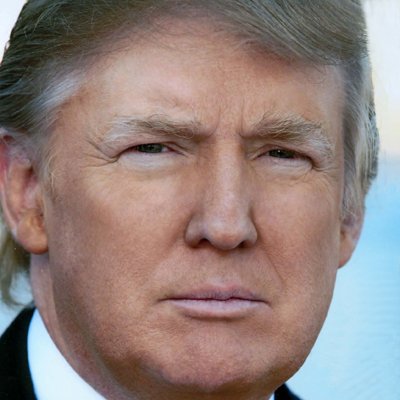
Trump unveils $700M plan for coal industry

Channel: LiveNOW from FOX Published: 2026-06-04 15:52
LiveNOW from FOX

This is a long, highly repetitive on-camera presidential announcement about a $700 million coal-support plan, framed as an energy-security and industrial-policy move. Trump and administration officials argue the plan will protect coal plants and mines, preserve grid reliability, lower electricity costs, and support manufacturing and jobs, while also linking it to broader deregulatory and pro-fossil-fuel policy.

Watch on YouTube ›

Get the market thesis, key claims, assets, contradictions, and follow-up questions from any financial video — then unlock a version personalized to your portfolio, watchlist, and favorite speakers.

Detailed summary

The core thesis of the segment is straightforward: the Trump administration is using emergency authority and a mix of public and private funding to keep coal infrastructure alive, expand coal-related investment, and treat coal as strategically essential to U.S. energy security. Trump presents coal as a necessary backbone for electricity, steel, and industrial competitiveness, and the officials around him reinforce that view by tying the announcement to reliability, affordability, and domestic manufacturing. Trump says the administration is “taking historic action to bring down the price of energy and the cost of living” and argues that coal remains indispensable because there is “really nothing like it” for power. …

🔒 The full detailed summary continues — read all of it free with an account. Read the full summary →

Main takeaways

  1. The administration is actively intervening to support coal plants, mines, and exports with a stated $700 million package plus private capital.
  2. Trump frames coal as essential for grid reliability, low electricity prices, and industrial competitiveness.
  3. The message is not just about coal — it is part of a broader anti-regulation, pro-energy-dominance policy agenda.
  4. Officials argue coal is still necessary for steel, cement, manufacturing, and AI-era power demand.
  5. The transcript is heavy on political framing and light on balanced cost-benefit analysis.

Market read by horizon

Short term

Tactically, this is bullish for coal-linked names and coal infrastructure sentiment because the White House is actively backstopping the sector with money, permits, and political support. The main risk near term is that the announcement outpaces execution, so watch for headlines on specific projects, funding details, and pushback.

  • The immediate catalyst is the formal announcement of the $700 million coal-support package and Defense Production Act invocation.
Show more
  • Watch for follow-through on permits, leasing, and any named plant/mine support actions that were promised in the speech.
  • The market implication is supportive for coal-linked equities and service names in the near term, but the speech itself does not provide a tradeable catalyst calendar beyond policy execution.
Mid term

Over the next few months, the base case is that coal capacity gets extended rather than abruptly retired, especially where reliability, exports, and industrial demand matter. That view holds only if permitting, leasing, and private investment keep moving; otherwise the policy risks becoming a symbolic support package.

  • Over the next several weeks to months, the key question is whether the announced funding, private capital, and permitting translate into real plant life extensions and mine throughput.
Show more
  • The base case in the transcript is that coal survives longer than expected because policy support, grid concerns, and industrial load growth outweigh decarbonization pressure.
  • Confirmation would come from concrete lease sales, permit approvals, export terminal progress, and utility commitments; invalidation would come if projects stall or if markets ignore the policy and continue to retire coal capacity.
Long term

Structurally, the transcript argues for a durability of dispatchable fossil fuels inside an energy-security regime, with coal remaining relevant for grid stability and steel even if long-run demand trends stay challenged. The lasting implication is that U.S. energy policy may continue shifting from climate-first to reliability- and industrial-first priorities.

  • Structurally, the transcript argues that the U.S. energy regime is shifting toward a reliability-first framework rather than a pure decarbonization framework.
Show more
  • If the administration’s view holds, coal remains part of a durable industrial stack: baseload electricity, metallurgical coal for steel, and export capacity for allies.
  • The deeper implication is that energy policy is becoming explicitly geopolitical and industrial-policy oriented, not just environmental or utility-regulated.
Unlock the full horizon read See the full short-term, mid-term, and long-term implications with confirmation and invalidation signals. Unlock horizon read

Key claims (9)

BULLISH U.S. energy policy coal

The administration is using emergency authority and new funding to support coal plants, mines, and exports.

Trump explicitly frames the announcement as historic action and ties it to the Defense Production Act and funding.

BULLISH energy security coal

Coal is essential for low electricity prices, grid reliability, and American industrial strength.

This is the central justification repeated by Trump and the officials around him.

BEARISH energy mix wind

Wind is too expensive and too intermittent to be a reliable substitute for coal.

Trump attacks wind multiple times as subsidy-dependent and unreliable.

Unlock 6 more claims See the full bullish, bearish, and counter-consensus argument map extracted from the transcript. Unlock all claims

Assets discussed (10)

coal
BULLISH commodity

The entire announcement is designed to support coal plants, mines, exports, and long-term coal demand.

Defense Production Act
BULLISH other

Used as the legal mechanism to support coal plants and mining projects.

Unlock the full asset map (8 more) See all assets mentioned, their directional bias, and the exact reasoning. Unlock asset map

Interview (1 Q&A)

Hunter Biden 2028

Could Hunter Biden run for president in 2028 and how would he do?

The speaker compares Hunter Biden to other political figures, suggesting that if the guy from Maine (likely a reference to another candidate) can do well, Hunter could too. He doesn't give a direct serious assessment.

Where this transcript pushes against consensus

  • The claim that wind is uniformly the most expensive form of energy is asserted without context, and it ignores site-specific and system-level comparisons.
  • The transcript treats coal as clearly cleaner and more environmentally sound, but does not provide emissions or lifecycle evidence.
  • Claims that coal saved lives during storms are plausible in spirit but unsupported with quantified counterfactual analysis.
  • The announcement mixes policy details with broad political attacks, which reduces analytical clarity and makes several claims hard to verify.
  • Some operational numbers appear rhetorically framed rather than carefully reconciled, such as plant counts, gigawatts, and cost-savings figures.

Topics

coal industry supportDefense Production Actgrid reliabilityelectricity pricesmetallurgical coalenergy dominanceregulatory rollbackmanufacturing reshoringcoal exportsgeopolitics and energy

Create your free research agent

Unlock the full claims, asset map, scores, related transcripts, follow-up questions, and AI chat — shaped around your portfolio, watchlist, favorite speakers, and risks.
  • Full claims and asset map
  • Personalized relevance to your watchlist
  • Follow-up questions you can track
  • Related transcripts from your workspace
  • AI chat about this video
Create your free research agent
TRANSCRIPTAGENT.AI