TranscriptAgent
Try it free
TRANSCRIPTAGENT.AI · transcript analysis

$112 Oil, Crashing Wages, and the War Nobody Can Afford

Channel: Peter Schiff Published: 2026-04-03 21:30
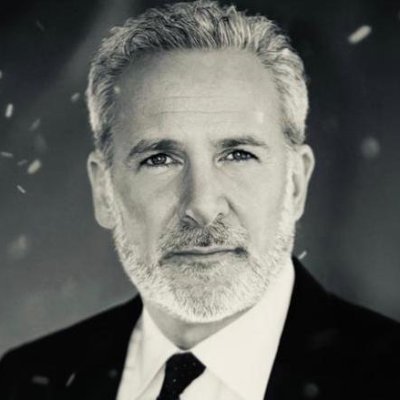
Peter Schiff

Peter Schiff argues that the March jobs report, weak PMI/services data, and rising oil prices point to stagflation and an economy that is already softening before the war's full effects show up. He uses Trump's Iran rhetoric and tariff politics to argue that inflation, deficits, and global distrust of the U.S. will push gold/silver higher and the dollar lower.

Watch on YouTube ›

Get the market thesis, key claims, assets, contradictions, and follow-up questions from any financial video — then unlock a version personalized to your portfolio, watchlist, and favorite speakers.

Detailed summary

This episode is a market-and-politics monologue centered on Schiff's view that the U.S. is sliding into stagflation. He starts with the March jobs report, calling it superficially strong but likely to be revised down, and argues the labor market is weaker than headlines suggest because labor force participation fell to a five-year low and wage growth is slowing. He says the PMI/services data confirm weakness in the service economy while prices paid remain elevated, which he interprets as classic stagflation. He then shifts to the war and oil. Schiff says West Texas crude ended the week around $112 a barrel and argues the move will ripple through gasoline, diesel, transport, food, and the broader economy. …

🔒 The full detailed summary continues — read all of it free with an account. Read the full summary →

Main takeaways

  1. Schiff sees the latest labor and service-sector data as evidence that the economy is already weakening and that stagflation is taking hold.
  2. He expects higher oil prices from the war to feed into inflation, pressure the Fed, and ultimately reinforce his bullish view on gold and silver.
  3. He thinks Trump's Iran rhetoric, tariffs, and economic messaging will worsen both domestic conditions and global confidence in the U.S.
  4. He frames gold as the cleaner expression of falling real rates, weaker confidence in the dollar, and mounting policy damage.
  5. He views redemption freezes and other liquidity stress signals as a warning that financial markets may be more fragile than headline prices suggest.

Market read by horizon

Short term

Near term, the setup is oil-led volatility: if crude stays near triple digits or pushes higher, risk assets and bonds remain vulnerable while gold/silver can keep catching a bid. The key tactical risk is that any surprise de-escalation in Iran could trigger a fast reversal across the energy complex and related inflation trades.

  • Oil has become the immediate catalyst: Schiff says WTI finished the week around $112, and he expects gasoline, diesel, jet fuel, and transport-sensitive prices to react quickly.
Show more
  • The next few weeks depend heavily on the war's trajectory and Trump's language; he thinks escalation risk is still high and markets may remain volatile around Iran headlines.
  • Gold and silver have already repriced sharply off March lows, and he thinks the metals and mining stocks can keep running if the war stays unresolved and real rates keep falling.
Mid term

Over the next several weeks to months, Schiff expects the market to rotate from fearing inflation to fearing slowdown, with weaker labor data and higher energy costs reinforcing stagflation. If that path holds, the Fed likely stays constrained at first, then market participants begin pricing renewed stimulus and lower real rates, which he thinks favors precious metals.

  • Over weeks to months, Schiff's base case is that stagflation becomes more obvious: weaker growth data combine with rising commodity-driven inflation.
Show more
  • He expects the market to eventually shift from pricing a Fed hold to pricing the next round of stimulus and accommodation once the economy visibly softens.
  • Gold should benefit as nominal policy stays restrictive but inflation rises faster, driving real rates lower than investors expect.
Long term

The structural read is that persistent deficits, war spending, and repeated intervention are eroding confidence in the dollar and in U.S. policy credibility. Schiff's long-run thesis is that this regime shift should keep supporting gold and silver while making paper assets and U.S. reserve-currency privilege more fragile.

  • Schiff's structural thesis is that years of low rates, repeated Fed interventions, and deficit financing have damaged the price system and created recurring instability.
Show more
  • He believes the war accelerates a pre-existing de-dollarization trend by making the U.S. look more unilateral and less reliable to the rest of the world.
  • In his view, gold and silver are the main long-run beneficiaries of declining trust in paper assets, central-bank policy, and reserve-currency status.
Unlock the full horizon read See the full short-term, mid-term, and long-term implications with confirmation and invalidation signals. Unlock horizon read

Key claims (8)

BEARISH US growth US labor market

The March jobs report was superficially strong but likely to be revised down and does not show a healthy labor market.

He says the 178,000 headline will probably be revised lower and points to weak participation and wage growth.

BEARISH stagflation US economy

The service sector is contracting while prices paid are still rising, which is evidence of stagflation.

He cites the PMI composite and services PMI below 50 with elevated prices paid.

BULLISH inflation West Texas crude

Oil at about $112 a barrel will feed through the economy and worsen inflation.

He says higher energy costs affect transport, food, and production broadly.

Unlock 5 more claims See the full bullish, bearish, and counter-consensus argument map extracted from the transcript. Unlock all claims

Assets discussed (15)

West Texas crude
BULLISH commodity

Schiff says oil surged to about $112 a barrel and believes prices are headed higher, with broad inflationary spillovers.

Gold — XAU
BULLISH commodity

He says gold bottomed near 4100, rallied sharply, and should be considerably higher as real rates fall and confidence weakens.

Unlock the full asset map (13 more) See all assets mentioned, their directional bias, and the exact reasoning. Unlock asset map

Where this transcript pushes against consensus

  • He treats the March jobs beat as probably unreliable and likely to be revised, but that remains an assertion rather than evidence within the episode.
  • He assumes rising oil will keep inflation elevated enough to constrain the Fed, but he does not seriously engage with the possibility of growth damage offsetting price pressure faster than expected.
  • His claim that the war and tariffs are primary drivers of near-term market pricing is plausible but presented with more certainty than the transcript supports.
  • He argues gold should rise despite higher oil and a firmer dollar, but the exact timing of that decoupling is not demonstrated here.
  • He states fund redemption freezes signal a broad financial problem, but he does not identify the funds, assets, or scale, so the evidence is thin.
  • His constitutional critique of tariffs is strongly stated, but the episode does not provide legal detail beyond his conclusion.

Topics

jobs reportstagflationoil pricesIran wargold and silvermining stocksFed policydollar weaknesstariffsfinancial stress

Create your free research agent

Unlock the full claims, asset map, scores, related transcripts, follow-up questions, and AI chat — shaped around your portfolio, watchlist, favorite speakers, and risks.
  • Full claims and asset map
  • Personalized relevance to your watchlist
  • Follow-up questions you can track
  • Related transcripts from your workspace
  • AI chat about this video
Create your free research agent
TRANSCRIPTAGENT.AI