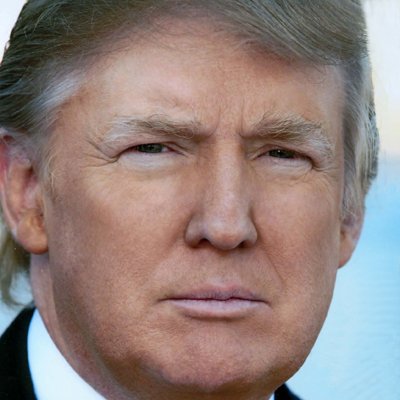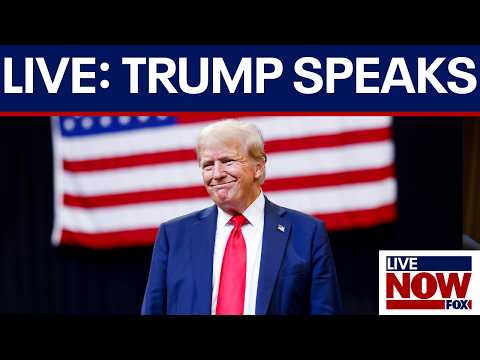
This is a live Trump rally-style speech at Kuster Farms in Wisconsin centered on farming, trade, taxes, energy, and the Iran conflict. Trump mixes campaign praise, policy claims, and attacks on Democrats while insisting his administration is helping farmers through lower taxes, better trade access, border control, and reduced regulation.
Watch on YouTube ›Get the market thesis, key claims, assets, contradictions, and follow-up questions from any financial video — then unlock a version personalized to your portfolio, watchlist, and favorite speakers.
This transcript is a long rally speech with multiple speakers introducing President Trump at a Wisconsin farm event, followed by Trump’s main remarks and brief comments from several guests and local figures. The event’s immediate setting is strongly agricultural and political: the speakers frame Trump as the farmer-friendly candidate, highlight Wisconsin dairy, and connect the visit to the broader 2026 political fight. The transcript is not a market interview in the usual sense, but it contains many economic and policy claims that matter for agriculture, energy, trade, inflation, and risk assets. Trump’s core thesis is that his administration is restoring prosperity for farmers and the broader U.S. economy by combining tariffs/trade deals, deregulation, tax cuts, border enforcement, and support for fossil fuels and biofuels. …
Tactically, the market-sensitive part of this event is the Iran-driven energy/input-cost backdrop: any flare-up supports oil and fertilizer volatility, while de-escalation should ease it. Watch the next headlines on conflict intensity and any moves in crude, ags, and defensives.
Over the next few months, the base case in the speech is lower farm input costs and better export access if trade deals hold and the conflict cools. That view is only credible if fuel, fertilizer, and rates actually trend lower and farm margins improve.
The structural message is a more interventionist U.S. model where farm economics are tied to trade leverage, energy policy, and national security. That regime tends to favor domestic production, subsidies/tax relief, and strategic supply-chain control over pure market liberalism.
Trump says his administration is fixing the Iran conflict and that it is already largely over or will be resolved soon.
He presents the conflict as a completed or nearly completed mission, linking it to broader policy success.
Energy and fertilizer prices should fall as the Iran situation and military tensions ease.
He directly ties lower input costs to the conflict’s resolution.
The administration’s trade and policy agenda is improving farm incomes and export access.
Trump and Rollins both cite better trade access, higher incomes, and more markets for U.S. farm goods.
Unlock the full claims, asset map, scores, related transcripts, follow-up questions, and AI chat — shaped around your portfolio, watchlist, favorite speakers, and risks.