
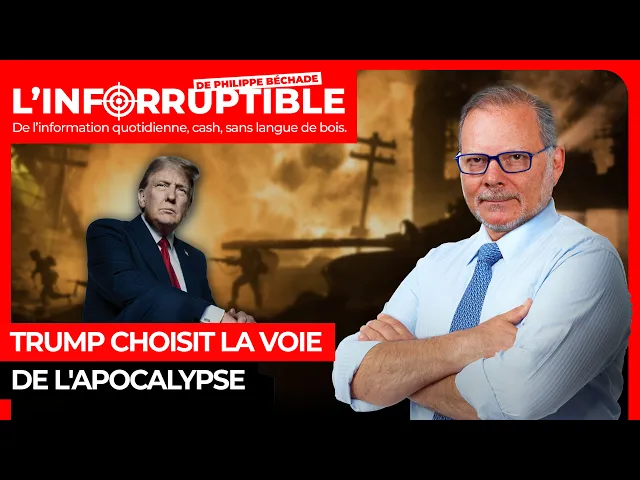
A French market commentary argues that Trump’s April 3 speech effectively kills hopes of peace and pushes the world toward escalation around Iran, with immediate consequences for oil, rates, and risk assets.
Watch on YouTube ›Get the market thesis, key claims, assets, contradictions, and follow-up questions from any financial video — then unlock a version personalized to your portfolio, watchlist, and favorite speakers.
The speaker opens by framing the segment as an economic, geopolitical, energy, and equity market roundup, then focuses almost entirely on the Middle East. He argues that Trump has embraced an apocalyptic, millenarian political posture and that his Wednesday night speech eliminated remaining hopes for a diplomatic path with Iran. In the speaker’s view, a strike that badly injured one of Iran’s key negotiators will likely harden Iranian Revolutionary Guard beliefs that U.S. negotiations are a cover for assassination, which makes continued fighting more likely. He says violence has already escalated further, citing the heaviest bombardment of Tel Aviv in more than four weeks and a new step up the ladder through bombing of Iranian ports. …
Near term, the setup is dominated by headline risk in the Middle East, with oil the fastest market to reprice if retaliation expands. Traders should treat elevated energy and rate volatility as the immediate threat to bonds and stretched equities.
Over the next few weeks, the key question is whether escalation turns into a sustained supply shock or whether diplomacy cools the move. If oil stays firm and Gulf infrastructure remains threatened, the market likely shifts toward a broader inflation-and-growth scare.
The structural message is that geopolitical chokepoints can still override conventional macro models and create recurring inflation shocks. Portfolio construction should assume periodic energy-driven regime breaks rather than stable disinflation.
Trump’s Wednesday night speech destroyed remaining hopes for peace with Iran.
The speaker directly says the speech buried hopes for a peaceful path.
A strike badly wounded a key Iranian negotiator, making negotiations less likely and hardening the Revolutionary Guard’s distrust of the U.S.
He links the strike to reduced negotiating ability and increased suspicion.
Iranian retaliation could target Gulf ports and choke oil exports, especially if infrastructure like the Jumeirah port or pipeline is damaged.
The speaker outlines a retaliation sequence centered on ports and oil logistics.
Unlock the full claims, asset map, scores, related transcripts, follow-up questions, and AI chat — shaped around your portfolio, watchlist, favorite speakers, and risks.
