
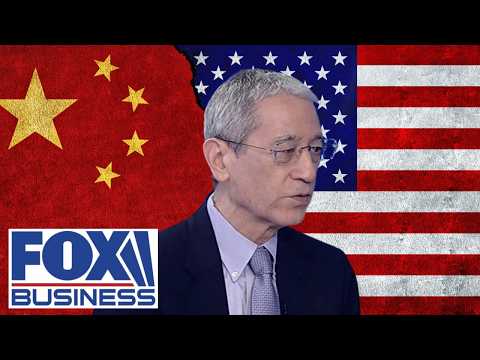
Gordon Chang argues the China threat is broader than many realize: he says Beijing is not just opposing U.S. data centers and AI development, but is also supporting anti-data-center protests, using LinkedIn for espionage recruitment, and pressuring Americans and institutions across multiple fronts. The segment mixes national-security warnings with a broader anti-China political message, while the host and panelists emphasize the Trump administration’s balancing act with trade and diplomacy.
Watch on YouTube ›Get the market thesis, key claims, assets, contradictions, and follow-up questions from any financial video — then unlock a version personalized to your portfolio, watchlist, and favorite speakers.
Gordon Chang’s core thesis is that China’s influence campaign is wider, more coordinated, and more dangerous than the public understands. In this short Fox Business segment, he says the anti-data-center protests in the U.S. are “not entirely organic” and claims they are funded by China as part of a larger effort to slow or stop AI development. He frames this as one piece of a broader Chinese strategy that also includes online espionage recruitment, pressure campaigns against Americans of Chinese descent, and influence operations aimed at institutions like the Olympic movement, the United Nations, and the Catholic Church. On the data-center issue, Chang argues that locals may genuinely have concerns, but says the protests themselves are being backed by China. …
Tactically, this is a China-risk headline setup: stay alert for new accusations, sanctions talk, or AI/data-center policy noise that could hit China-exposed sentiment quickly.
Over the next few weeks or months, the market likely trades the theme as an escalating U.S.-China friction story unless there is policy follow-through or a diplomatic de-escalation. Confirmation would come from concrete regulatory or political action; without that, it stays a narrative trade.
The structural read is a continuing de-risking regime around China, where tech infrastructure, capital access, and influence channels are treated as strategic vulnerabilities. That supports a durable geopolitical discount on China-linked exposure.
The anti-data-center protests are not entirely organic and are funded by China as part of a broader effort to oppose AI development.
Central thesis of Chang’s response to the host’s question about protests.
Chinese scientists participated in a Capitol Hill event supporting a Sanders/AOC bill that would impose a moratorium on data-center construction and AI enhancements.
Used to connect protest activity to a broader anti-AI political push.
China has been using LinkedIn and other sites to recruit spies, and the U.S. is failing to stop it.
Direct answer to the host’s question about Chinese recruitment on LinkedIn.
Is there any evidence that Chinese money is going to fund the anti-AI data center protests?
Gordon Chang states that there is evidence showing a billionaire who works in coordination with the Chinese Communist Party's department on narratives is funding opposition through Code Pink, which was co-founded by his wife.
China is reportedly using LinkedIn to lure spy recruits. How are they getting away with it?
Chang says China is getting away with it because society has known about it for a long time and hasn't done anything. He states we have the means to stop it but aren't stopping it, and that is on us.
What can we do at this point to stop China from using LinkedIn to recruit spies?
Chang says the most important thing is to employ asymmetric tools, such as denying China access to the American market and other things they need from the US, to impose costs greater than the benefits they perceive from using LinkedIn and other sites.
Unlock the full claims, asset map, scores, related transcripts, follow-up questions, and AI chat — shaped around your portfolio, watchlist, favorite speakers, and risks.
