
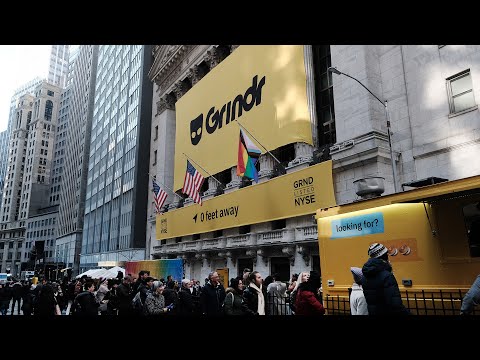
Bloomberg interviews Grindr CEO George Arison about how the app is trying to expand beyond dating into a broader social platform, with AI features, live events, and Washington engagement. His core message is that Grindr’s business is growing strongly even after the stock fell, and that AI plus politics are new product and influence layers on top of a still-fast-growing core.
Watch on YouTube ›Get the market thesis, key claims, assets, contradictions, and follow-up questions from any financial video — then unlock a version personalized to your portfolio, watchlist, and favorite speakers.
The interview centers on Grindr’s evolution from a dating app into what George Arison describes as a broader “global gay neighborhood,” with the company adding AI features, premium AI products, live events, and political advocacy. Arison’s main thesis is that the underlying business is healthy and still growing quickly, even if the share price has been volatile and, in his view, partially disconnected from fundamentals. He says the company has grown “25 plus percent every year over the last four years,” generated more EBITDA last year than revenue in 2022, and does not see anything in the next three to four years that would slow it down. He spends considerable time reframing Grindr’s usage pattern and audience. Rather than a narrow hookup app, he argues the product already supports a wide range of relationship outcomes, including long-term relationships and marriage. …
Tactically, the setup is about whether the market starts to reward Grindr’s growth story again as AI features and the premium tier roll out. Near-term risk is that the stock stays under pressure until the company proves the new initiatives are monetizing, not just sounding ambitious.
Over the next few months, the key question is whether Grindr can sustain fast growth while showing that AI improves user value and internal efficiency. If those benefits show up in engagement, monetization, and margins, the broader re-rating case strengthens; if not, the current story may look overstated.
Structurally, the interview argues that Grindr is becoming infrastructure for LGBTQ social life, not just a dating utility. If that shift is real, the company may have a more durable brand and policy role than traditional consumer apps, but it also means execution has to support a much broader mission.
Grindr is evolving from a dating app into a broader global LGBTQ social platform with AI and events.
The CEO and host frame the company as a 'global gay neighborhood' and mention live events plus AI integration.
Grindr has grown 25%+ annually for four years and last year produced more EBITDA than 2022 revenue.
Arison uses these figures to argue the business is strong and improving.
The share price decline was partly driven by a shareholder-related squeeze last fall, and some recovery is still needed.
He attributes the stock drop to a specific shareholder issue and says it will take time to recover.
How do you view engagement with politics and Washington?
Harrison says a CEO must engage with regulators and lawmakers. He recounts discovering Grindr had zero Washington relationships when Egyptian police were arresting gay men using phones as honeytraps, which he found unacceptable. He argues for bipartisanship, and says Grindr advocates on issues like decriminalization of homosexuality, marriage equality, IVF access for gay couples, and preventative healthcare — all of which have overwhelming support among users.
Unlock the full claims, asset map, scores, related transcripts, follow-up questions, and AI chat — shaped around your portfolio, watchlist, favorite speakers, and risks.
