
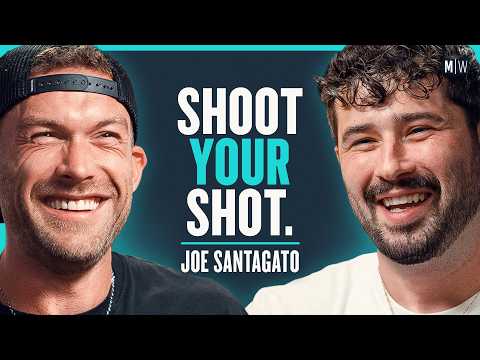
This is an interview focused on Joe Santagato’s self-belief, authenticity, and the way he has built a successful media career by following intuition, staying humble, and taking risks. The discussion is less about markets or assets and more about a mindset for creative work: choose conviction over hesitation, learn from failure, and avoid becoming trapped by money, obligation, or imitation.
Watch on YouTube ›Get the market thesis, key claims, assets, contradictions, and follow-up questions from any financial video — then unlock a version personalized to your portfolio, watchlist, and favorite speakers.
This transcript is a long-form interview between Chris Williamson and Joe Santagato, centered on why Santagato thinks his career has worked: intense self-belief, a strong internal voice, and a preference for authenticity over imitation. The core thesis is that he doesn’t see himself as simply “confident”; he sees himself as someone who is compelled to act when something feels right, even if he is scared, wrong, or early. He repeatedly says he wants to “earn it,” wants to do things “my way,” and values being able to look back and know he put everything into the work. That applies to touring, live shows, YouTube, creative projects, and the way he runs his company. A lot of the reasoning comes from his personal history. He describes dropping out of college, having no clear plan, and still believing he could eventually find a path that fit him. …
Immediate setup is not market-related; tactically, the interview’s near-term message is to act on conviction quickly and avoid overplanning or waiting for perfect clarity. The practical risk is getting stuck in hesitation or taking misaligned opportunities just because they are available.
Over the next few weeks and months, the implied base case is iterative progress through action, feedback, and selective risk-taking rather than a rigid long-range plan. The view is validated if Santagato keeps turning instinct into output without losing authenticity; it weakens if intuition turns into repeated impulsive mistakes.
The structural thesis is that durable success comes from authenticity, self-trust, and willingness to learn, not from imitation or status chasing. Longer term, the message is that a sustainable life or career should preserve freedom, relationships, and personal meaning alongside ambition.
His career is built on authenticity and doing things his own way rather than copying other creators.
He repeatedly says the key was staying true to his voice and not making videos like everyone else.
He believes ambition without direction can still be useful if you eventually find something to plug it into.
He describes dropping out and having strong drive before he knew what to do with it.
High-conviction failure is better than low-conviction drift because it creates real learning and better decisions.
He and Chris explicitly contrast conviction with hesitation and say failure is useful if you actually chose the path.
What does the line 'be realistic about where you stand, but not where you can go' mean to you?
The guest explains that being realistic with yourself about where you currently stand is very important because it humbles you and helps you know yourself so you can't be hurt by others' comments. But he says he is extremely unrealistic about where he can go — he genuinely believes he can accomplish anything, including winning an Oscar for best screenplay like Ben Affleck and Matt Damon, if he applies himself. He believes letting yourself know something is possible goes a long way.
Have you always felt like that or have you trained yourself into feeling like this?
The guest says they always kind of felt that way partially. They always felt they'd be fine even if they weren't going to be financially fine. Their only goal was to entertain people on their own terms, as authentically as possible, and they haven't veered from that mindset. They also love criticism because it means progress, citing working with Greg who sent eight pages on why his script sucked.
What's the gender split of your audience?
The guest estimates it's around 70/30 female, possibly a little lower. At the live shows it's overwhelmingly female — realistically around 85%.
Unlock the full claims, asset map, scores, related transcripts, follow-up questions, and AI chat — shaped around your portfolio, watchlist, favorite speakers, and risks.
