TranscriptAgent
Try it free
TRANSCRIPTAGENT.AI · transcript analysis

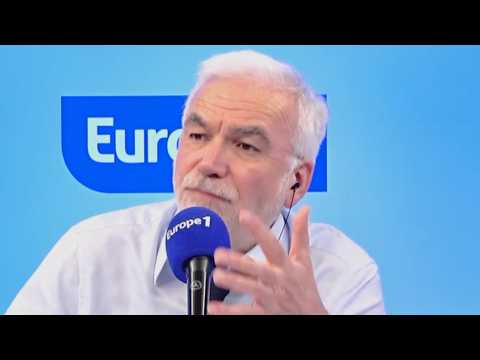
Affaire Lyhanna : "Ce qu’on admet pas c’est que c’était évitable !" (Pascal Praud)

Channel: Europe 1 Published: 2026-06-08 10:15
Europe 1

This Europe 1 segment is a heated roundtable reacting to the Lyhanna/Lola-style child-crime case and broader questions about child protection, justice, immigration enforcement, and political responsibility. The speakers argue that while child violence has always existed, what is intolerable now is that some of it was preventable and that the state failed to stop it.

Watch on YouTube ›

Get the market thesis, key claims, assets, contradictions, and follow-up questions from any financial video — then unlock a version personalized to your portfolio, watchlist, and favorite speakers.

Detailed summary

This transcript is not a market transcript in the financial sense; it is a radio talk segment focused on a criminal case involving a child and the broader political and institutional fallout. The main thesis expressed by the speakers is that the tragedy is not only the existence of evil or child violence in general, but that this specific case should have been preventable. One speaker explicitly frames the situation as the failure of the state and of the justice/immigration apparatus, while another broadens it into a wider indictment of the whole child-protection system in France. A large part of the discussion centers on Emmanuel Macron’s prior comments after other child tragedies and whether political promises were fulfilled. …

🔒 The full detailed summary continues — read all of it free with an account. Read the full summary →

Main takeaways

  1. The speakers argue the case was not just tragic but preventable, which they see as the key moral issue.
  2. They portray the episode as evidence of a broader state failure: justice, immigration enforcement, and child protection.
  3. Macron’s earlier speeches about protecting children are used as a benchmark the speakers say has not been met.
  4. The discussion repeatedly widens from one case to a systemic critique of child abuse, youth vulnerability, and institutional mistrust.
  5. A late segment becomes conversational and lighter, suggesting the show mixes hard-news reaction with informal radio banter.

Market read by horizon

Short term

Near term, the setup is mostly a political outrage cycle: officials and media will be pressed to respond, and the immediate risk is overstatement without new facts. The actionable signal is the intensity of blame directed at state institutions rather than any tradable market catalyst.

  • Immediate focus is public outrage around the child-case and the political blame game attached to it.
Show more
  • The near-term rhetorical battle is over whether this is framed mainly as a justice failure, an immigration failure, or a broader state failure.
  • The clip suggests a likely continuation of media and political pressure on Macron-era child-protection promises.
Mid term

Over weeks to months, the issue may turn into a broader reform narrative around child protection, justice efficiency, and enforcement credibility. The view holds if policymakers answer with concrete changes; it fades if the case remains treated as an isolated tragedy.

  • Over the coming weeks, the debate may consolidate around child-protection reform, sentencing policy, and administrative coordination failures.
Show more
  • If the speakers’ framing gains traction, the issue becomes less about one defendant and more about systemic breakdown across justice and welfare services.
  • The argument would be validated if officials respond with concrete policy changes rather than symbolic statements.
Long term

The long-run implication is a durable erosion-or-repair story about state capacity and public trust. The transcript frames child safety as a test of whether institutions can still prevent foreseeable harm, not merely punish it after the fact.

  • Structurally, the transcript reflects a durable French debate about the credibility of state protection for children and the legitimacy of institutions.
Show more
  • The speakers’ long-run thesis is that moral outrage alone is insufficient unless matched by enforcement, coordination, and accountability.
  • A lasting implication is that child-safety issues may continue to be used as a proxy for wider concerns about justice, immigration, and state capacity.
Unlock the full horizon read See the full short-term, mid-term, and long-term implications with confirmation and invalidation signals. Unlock horizon read

Key claims (6)

BEARISH

The crucial problem in the case is not that evil exists, but that the tragedy was preventable.

A speaker explicitly says people do not accept that 'it was avoidable.'

BEARISH

The case reflects a failure of the state, especially around immigration enforcement and justice.

The speaker ties the case to OQTF status, Algeria, and state responsibility.

BEARISH

France’s child-protection problem is much broader than one case and should be treated as a major national plan.

The speaker expands the issue to abuse, prostitution, narcotrafficking, school bullying, and child welfare.

Unlock 3 more claims See the full bullish, bearish, and counter-consensus argument map extracted from the transcript. Unlock all claims

Assets discussed (3)

Emmanuel Macron
NEUTRAL other

Mentioned as the political figure whose past remarks are being evaluated, not as a market asset.

Roland Garros
NEUTRAL other

Referenced in a tennis anecdote, not as an investable asset.

Unlock the full asset map (1 more) See all assets mentioned, their directional bias, and the exact reasoning. Unlock asset map

Speakers

HOST Pascal Praud SPEAKER Christophe Bordet SPEAKER Gautier Lebrette SPEAKER Sabrina Mjabert SPEAKER Olivier Genec

Interview (1 Q&A)

légèreté weekend

Qu'avez-vous retenu ce weekend qui puisse nous donner un peu de légèreté, de beau motque-cœur ?

Plusieurs participants répondent : l'un mentionne le tennis et les polémiques autour d'Alexandre Zverev, un autre parle du film 'Le Match du Kremlin' qu'il a regardé, et un autre raconte sa visite au Puy du Fou, mentionnant le spectacle de la Cinéscénie avec 3500 acteurs bénévoles, un weekend hors du temps.

Where this transcript pushes against consensus

  • The speakers leap from a specific case to sweeping conclusions about the state and society without offering much supporting evidence.
  • The claim that the case was preventable is asserted strongly, but the transcript does not provide detailed operational proof of where intervention failed.
  • The immigration-focused blame is politically charged and not substantiated in the clip with procedural detail.
  • The discussion treats broader child-abuse statistics as explanatory context, but no sourcing beyond an institution name is provided.
  • The lighter banter section undercuts the seriousness of the first half and shows the segment is more opinion-driven than evidence-driven.

Topics

child protectionpolitical accountabilityjustice systemimmigration enforcementinstitutional failurepublic trustMacronCIVISEjuvenile exploitationradio banter

Create your free research agent

Unlock the full claims, asset map, scores, related transcripts, follow-up questions, and AI chat — shaped around your portfolio, watchlist, favorite speakers, and risks.

  • Full claims and asset map
  • Personalized relevance to your watchlist
  • Follow-up questions you can track
  • Related transcripts from your workspace
  • AI chat about this video
Create your free research agent
TRANSCRIPTAGENT.AI