
TranscriptAgent
Try it free
TRANSCRIPTAGENT.AI · transcript analysis

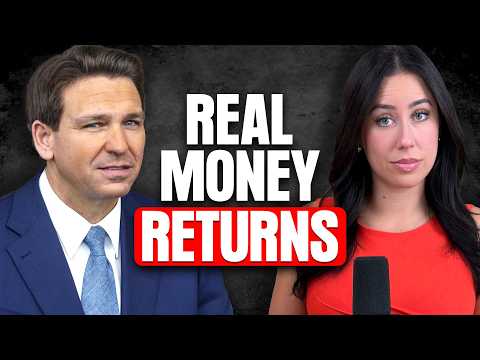
Why You’ll Buy $500 Silver — Gold to Go Parabolic in One Day: Michael Oliver, Clive Thompson

Channel: ITM TRADING, INC. Published: 2026-06-08 16:55
ITM TRADING, INC.

This live ITM Trading panel argues that gold and silver are in the early stages of a major monetary revaluation, not a bubble. Clive Thompson focuses on fiat-currency erosion, central-bank gold accumulation, debt and real-rate pressures, while Michael Oliver makes the technical case that silver is entering a breakout phase with much higher upside than gold, potentially toward $300–$500 and beyond. Both dismiss headline-driven reactions to war, oil, or short-term Fed talk as secondary to the larger shift out of paper assets and into monetary metals.

Watch on YouTube ›

Get the market thesis, key claims, assets, contradictions, and follow-up questions from any financial video — then unlock a version personalized to your portfolio, watchlist, and favorite speakers.

Detailed summary

This is a long-form live interview/panel centered on gold, silver, and the fragility of fiat currency and credit markets. The core thesis from both guests is that precious metals are not just in a normal bull market; they are part of a larger monetary regime shift. Clive Thompson argues that confidence in paper currencies is slowly eroding, central banks are accumulating gold, and real rates/debt burdens are moving in a direction that should support higher precious-metal prices. Michael Oliver’s core point is technical and structural: long-term momentum in silver remains intact, short-term dips are noise, and the setup is now close to a phase change where silver can move sharply higher while gold also revalues. Thompson repeatedly emphasizes that gold is not “in a bubble” because it remains underowned in portfolios and by institutions. …

🔒 The full detailed summary continues — read all of it free with an account. Read the full summary →

Main takeaways

  1. The panel’s central message is that gold and silver are part of a broader exit from fiat money and paper claims, not a short-lived trade.
  2. Clive Thompson’s key macro filter is real rates, debt service, and currency debasement; he argues these are becoming increasingly metal-supportive.
  3. Michael Oliver’s key edge is momentum structure: silver’s long-term trend remains bullish and may be entering the steepest phase of the move.
  4. Both speakers treat headlines about war, oil, and hawkish Fed talk as secondary noise relative to the larger credit and monetary backdrop.
  5. The financial sector’s weakness versus the S&P is presented as an important warning sign, similar to the pre-2008 setup.
  6. They repeatedly argue gold is underowned, not overowned, and that central banks are still accumulating it.
  7. The discussion strongly favors physical metals and patience over trading around every macro headline.
  8. The host’s “global vaulting” announcement and QR-code CTA are part of the commercial framing of the video.

Market read by horizon

Short term

Tactically, metals look constructive and silver seems closest to the next upside trigger, but the move could still be noisy and headline-driven in the near term. The immediate risk is chasing a breakout before momentum confirms; the immediate opportunity is watching for the financials to keep underperforming as the canary.

  • Watch whether silver and mining stocks confirm the next momentum breakout level Oliver says is close; he suggested it could happen within days to a week.
Show more
  • Near-term risk is a shakeout if traders chase the move before the intermediate trend confirms; Oliver repeatedly warned not every pullback is meaningful, but false breakouts can still happen.
  • Financials remain the tactical canary: continued XLF weakness versus the S&P would reinforce the stress narrative and raise recession/liquidity risk.
Mid term

Over the next several weeks to months, the panel expects a rotation into gold, silver, and miners if real rates stay weak and credit stress broadens. Confirmation would come from a sustained silver breakout, continued XLF weakness, and more stress in debt-sensitive sectors; a durable bounce in banks or yields would challenge the thesis.

  • Over the next several weeks to months, the base case in the discussion is that metals continue higher if real rates stay near zero or slip negative and inflation stays sticky.
Show more
  • Oliver expects silver to outperform gold in percentage terms once the intermediate momentum breakout is triggered, with miners and commodity-related equities also benefiting.
  • Thompson’s macro path assumes debt-service pressure and refinancing costs keep rising, which would sustain stress in banks, private credit, and commercial real estate.
Long term

The long-term view is a structural move away from fiat claims and toward monetary metals as reserve assets and portfolio anchors. If the regime shift thesis is right, gold and silver are not just cyclical trades but the beneficiaries of a lasting reset in how wealth is stored and measured.

  • Structurally, the panel’s view is that the fiat-money experiment is nearing its end after decades of paper-based reserve management.
Show more
  • Long term, they argue gold should be treated as a monetary asset and a portfolio reserve, not a speculative commodity.
  • Silver’s thesis is that years of suppression/underownership leave it with asymmetrically large upside once the market fully reprices it.
Unlock the full horizon read See the full short-term, mid-term, and long-term implications with confirmation and invalidation signals. Unlock horizon read

Key claims (9)

BULLISH precious metals adoption Gold

Gold is not in a bubble because it remains extremely underowned by portfolios and institutions.

Thompson argues a bubble requires broad ownership, which he says does not exist in gold today.

BEARISH debt sustainability U.S. Treasuries

Rising debt-service burdens and refinancing at higher rates are making the U.S. debt situation increasingly unsustainable.

He says older debt issued near zero must now roll over at much higher rates, pushing interest burden higher.

BULLISH portfolio construction Gold

Replacing 20% bond allocation with 20% gold improves returns, risk-adjusted returns, and drawdowns in backtests.

Thompson says his portfolio simulator shows better CAGR, Sharpe ratio, and lower drawdowns versus traditional 60/40.

Unlock 6 more claims See the full bullish, bearish, and counter-consensus argument map extracted from the transcript. Unlock all claims

Assets discussed (14)

Gold — XAU
BULLISH commodity

Both guests argue gold is underowned, supported by central-bank buying, low real rates, and the possibility of revaluation or monetary stress.

Silver — XAG
BULLISH commodity

Michael Oliver says silver is in a breakout phase with asymmetric upside and could reprice far higher than current levels.

Unlock the full asset map (12 more) See all assets mentioned, their directional bias, and the exact reasoning. Unlock asset map

Speakers

GUEST Clive Thompson GUEST Michael Oliver HOST Daniela

Interview (18 Q&A)

gold reserves

How significant is the ECB report that gold has overtaken U.S. Treasuries as the top global reserve asset?

Clive says the trend is part of central banks gradually increasing gold's share of reserves, especially among countries less aligned with the United States. Michael says the news is not surprising and mainly confirms a broader shift away from fiat currencies.

central banks

Are central banks really dumping gold, and does that help their currencies?

Clive says Turkey sold gold to support its currency during high inflation, similar to Britain's gold sales under Gordon Brown. He doubts those sales will ultimately work to stabilize the currency.

gold thesis

Should investors ignore bearish headlines about central bank gold sales?

Michael says the headlines are actually bullish because they reflect gold's return as money and the pressure on governments and central banks to raise capital. He points to bond-market stress and the Fed's liquidity support as part of the same underlying crisis.

Unlock the full interview (15 more Q&A) Every question, answer summary, and YouTube timestamp. Unlock full Q&A

Where this transcript pushes against consensus

  • The gold revaluation scenario is highly speculative; the panel presents it as plausible/necessary but not as an evidence-based near-term policy plan.
  • The $10,000–$15,000 gold and $300–$500 silver discussions rely heavily on historical analogies and momentum logic rather than a precise causal path.
  • Claims about India selling large amounts of gold and Turkey’s sales are used as supportive headlines, but the transcript provides limited verification or detail.
  • Oliver’s timing language is aggressive but still vague; saying a breakout is near does not define a reliable timing window.
  • The assertion that oil is not a negative for miners may be directionally reasonable, but it is asserted more than demonstrated with current cost data.
  • The idea that a sovereign gold revaluation could happen in a single day is conceptually possible but presented without policy confirmation or procedural detail.

Topics

gold reserve statuscentral bank buyingfiat currency declinereal rates and inflationsilver breakout thesisfinancial sector weaknesscommercial real estate stressgovernment debt burdenportfolio allocationphysical metals storage

Create your free research agent

Unlock the full claims, asset map, scores, related transcripts, follow-up questions, and AI chat — shaped around your portfolio, watchlist, favorite speakers, and risks.
  • Full claims and asset map
  • Personalized relevance to your watchlist
  • Follow-up questions you can track
  • Related transcripts from your workspace
  • AI chat about this video
Create your free research agent
TRANSCRIPTAGENT.AI