
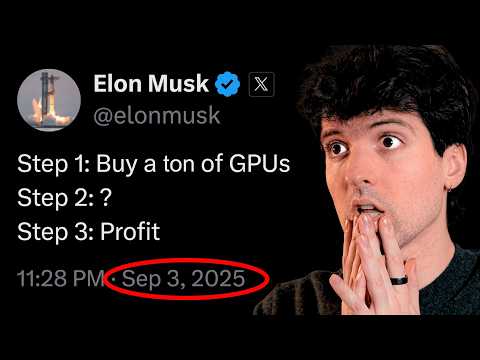
The speaker argues that AI compute is constrained by a multi-layer supply chain bottleneck—chips, memory, storage, and power—and that this scarcity is already shaping behavior at Microsoft, Google, Anthropic, OpenAI, Nvidia, TSMC, and xAI/SpaceX. The main takeaway is that companies with secured compute are winning, prices for hardware are likely to stay elevated, and Nvidia remains the clearest beneficiary of the entire bottleneck stack.
Watch on YouTube ›Get the market thesis, key claims, assets, contradictions, and follow-up questions from any financial video — then unlock a version personalized to your portfolio, watchlist, and favorite speakers.
The core thesis is that the AI boom is no longer just a demand story; it is a supply-chain and infrastructure story. The speaker says Microsoft, Google, and Anthropic are all “massively constrained by compute,” and uses that as the frame for the whole video: even if firms want to spend more, they cannot easily scale because capacity is constrained across several layers at once. He walks through those layers from top to bottom. First is chip fabrication, centered on TSMC, which he describes as the key foundry that all the major chip designers rely on. He argues that TSMC capacity takes years to add and that allocation is already spoken for far in advance. Next is high-bandwidth memory, where he says only a few manufacturers matter and that more of their output is being pulled toward GPUs rather than consumer electronics. …
Tactically, the setup stays pro-scarcity: AI capacity remains tight and any company with secured compute still has leverage. Near term, the risk is chasing headlines without verifying whether the bottleneck is truly deepening or just being amplified by big one-off deals.
Over the next few months, the base case is continued reallocation of capital toward compute, memory, storage, and power rather than a clean easing in any one part of the chain. The view weakens if capacity additions start landing faster than demand or if leasing prices and lead times begin to roll over.
Structurally, the transcript argues that AI is becoming an infrastructure-constrained industry where physical energy and manufacturing capacity define the winners. The lasting implication is a more centralized cloud-compute regime, with durable advantage accruing to firms that secured capacity early and at scale.
Microsoft, Google, and Anthropic are all constrained by compute, which limits how much revenue they can convert from demand.
The speaker frames the entire video around compute scarcity and explicitly says Microsoft and Google are capacity constrained.
Google is supply constrained even though it builds its own chips, so vertical integration has not solved the bottleneck.
He cites Sundar saying Google is constrained and notes they still lack enough compute.
Anthropic is now renting compute from SpaceX despite competing in AI, showing how scarce external capacity has become.
The speaker says Anthropic paid SpaceX for spare compute after being cautious earlier.
Unlock the full claims, asset map, scores, related transcripts, follow-up questions, and AI chat — shaped around your portfolio, watchlist, favorite speakers, and risks.
