TranscriptAgent
Try it free
TRANSCRIPTAGENT.AI · transcript analysis

Trita Parsi Breaks Down The Iran - Israel Strikes

Channel: The Young Turks Published: 2026-06-09 00:45
The Young Turks

Trita Parsi argues that the Iran-Israel escalation over Lebanon represents a serious but still fragile shift in regional deterrence: Iran is now signaling it will respond not only to direct attacks on itself, but also to Israeli strikes on Beirut/Lebanon. He says this is tied to the broader U.S.-Iran negotiation because Tehran wants any deal to constrain Israel too, while Washington is trying to prove it can restrain Israel without spending full political capital unless a deal is in hand.

Watch on YouTube ›

Get the market thesis, key claims, assets, contradictions, and follow-up questions from any financial video — then unlock a version personalized to your portfolio, watchlist, and favorite speakers.

Detailed summary

The core thesis is that the recent Iran-Israel exchange is not just another flare-up; it may be the start of a new regional equation in which Iran extends deterrence to Lebanon. Parsi says Iran had warned that strikes on Beirut would cross a red line, and for the first time that red line was tested. In his view, if that deterrent holds, Israel will no longer be able to act with complete impunity in Lebanon without factoring in the risk of Iranian retaliation. He also rejects the idea that Trump and Netanyahu are secretly coordinating a staged conflict. Parsi says the split between the U.S. and Israel is real, because the level of trust required for a sophisticated deception is absent and the strategic purpose is unclear. He argues Trump likely gave Israel room to act, then distanced himself until it appeared successful, after which he tried to claim it as a coordinated move. …

🔒 The full detailed summary continues — read all of it free with an account. Read the full summary →

Main takeaways

  1. Parsi thinks the Iran-Israel exchange may be creating a new deterrence pattern around Lebanon.
  2. He считает the U.S.-Israel split is real, not a staged deception.
  3. Tehran wants any U.S.-Iran deal to constrain Israeli action in Lebanon too.
  4. The biggest near-term blocker is the frozen-assets / sanctions-relief question, not just the military situation.
  5. He believes Israeli censorship is hiding the true scale of damage and retaliation.
  6. He sees Lebanon’s internal politics as shaped by competing foreign patrons and weak state capacity.

Market read by horizon

Short term

The immediate setup is fragile: if Israel refrains from another Lebanon strike, the current pause can hold; if not, the new deterrence test may fail fast. The tradeable risk is renewed escalation, while the near-term catalyst is any new hit on Beirut or the south.

  • Watch whether the current pause holds or a fresh Israeli strike reopens the cycle.
Show more
  • The immediate catalyst is whether Israel hits Lebanon again, especially Beirut or the south.
  • The exact scale of damage from the strikes remains obscured by Israeli censorship.
Mid term

Over the next several weeks, the base case is a tense but negotiable standoff in which both sides test limits while diplomacy circles the frozen-assets issue. The setup improves only if Washington can show real leverage over Israel and if Iran sees meaningful sanctions relief.

  • Over the next several weeks, the key question is whether Iran’s extended deterrence over Lebanon becomes credible in practice.
Show more
  • If Israel prices in Iranian retaliation, its freedom of action in Lebanon should narrow even if attacks do not stop entirely.
  • A deal is more likely if Washington can prove it can restrain Israel enough for Tehran to view concessions as meaningful.
Long term

Structurally, the transcript argues for a Middle East where Israeli military freedom is no longer costless and where regional deterrence is more multipolar. If that regime shift sticks, any durable U.S.-Iran understanding will have to account for Israeli behavior, not just Iran’s nuclear program.

  • If this pattern holds, it implies a broader shift away from Israeli impunity in the Levant.
Show more
  • A durable settlement would likely require any U.S.-Iran agreement to include some effective limitation on Israeli action, not just Iranian nuclear constraints.
  • Lebanon’s structural weakness means foreign intervention will keep shaping its security order unless a regional balance becomes more stable.
Unlock the full horizon read See the full short-term, mid-term, and long-term implications with confirmation and invalidation signals. Unlock horizon read

Key claims (9)

MIXED U.S.-Israel relations Israel

The U.S.-Israel split over the Iran/Lebanon escalation is real, not a coordinated fake disagreement.

Parsi says the trust and competence required for a staged split are absent, and there was no reason for deception in this episode.

BULLISH deterrence Iran

Iran has extended deterrence so that attacks on Beirut/Lebanon can trigger direct Iranian retaliation.

This is the central strategic claim of the interview and the basis for the 'new equation' framing.

BEARISH U.S.-Iran negotiations Lebanon

Any U.S.-Iran deal must account for Israeli behavior in Lebanon or it will be structurally unstable.

Parsi argues ignoring Israeli strikes would create a loophole that could re-trigger war and collapse the deal.

Unlock 6 more claims See the full bullish, bearish, and counter-consensus argument map extracted from the transcript. Unlock all claims

Assets discussed (10)

Iran
MIXED other

Used as the central state actor in the escalation and diplomacy; the speaker argues Iran is responding and trying to enforce deterrence, but also wants a deal.

Israel
MIXED other

Core counterpart in the conflict; described as striking Beirut, retaliating, and trying to preserve impunity.

Unlock the full asset map (8 more) See all assets mentioned, their directional bias, and the exact reasoning. Unlock asset map

Speakers

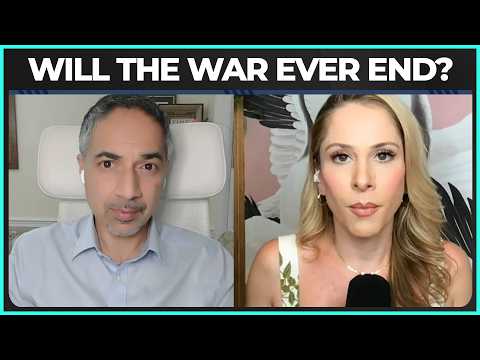
HOST Anna Kasparian GUEST Trita Parsi

Interview (9 Q&A)

Trump-Netanyahu rift

Do you think the reported Trump-Netanyahu conflict is real or just theater?

He says he is convinced the rift is real, though perhaps not exactly as severe as some reporting suggests. He rejects the idea that the two sides are staging a coordinated deception, arguing that it would require too much competence and trust and that there is no clear reason for such a strategy.

Lebanon war

Why does Iran want the war in Lebanon to end before moving ahead with a deal?

He gives three reasons: Iran does not want to validate the narrative that it abandoned Lebanon; any deal that leaves Israeli strikes on Lebanon would contain a fatal loophole; and Iran wants to test whether the United States can actually restrain Israel before trusting Washington in a broader agreement.

trust test

Why would Iran trust the Trump administration after the U.S. struck Iran twice?

No direct answer from Parcy is captured in this chunk before it cuts off; the interviewer is making the point that Iran has little reason to trust Washington after repeated strikes.

Unlock the full interview (6 more Q&A) Every question, answer summary, and YouTube timestamp. Unlock full Q&A

Where this transcript pushes against consensus

  • Parsi’s claim that the Trump-Netanyahu rift is definitely real relies heavily on private conversations and inference rather than public evidence.
  • He suggests Iran’s deterrence against Lebanon is established, but also acknowledges it is too early to know whether the new equation will really hold.
  • His view that the U.S. imposed meaningful restraint on Israel this time is plausible but not independently demonstrated in the transcript.
  • The discussion of Lebanese politics is explicitly cautious, but some broader claims about internal factions and motives are necessarily simplified.
  • The claim that Israeli strikes amount to ethnic cleansing is rhetorically strong and not substantiated with evidence in the exchange.

Topics

Iran-Israel escalationLebanon and HezbollahU.S.-Iran negotiationsTrump-Netanyahu relationsdeterrence and regional balancefrozen Iranian assetsIsraeli military strategyIsraeli censorshipLebanese politicsJCPOA comparison

Create your free research agent

Unlock the full claims, asset map, scores, related transcripts, follow-up questions, and AI chat — shaped around your portfolio, watchlist, favorite speakers, and risks.

  • Full claims and asset map
  • Personalized relevance to your watchlist
  • Follow-up questions you can track
  • Related transcripts from your workspace
  • AI chat about this video
Create your free research agent
TRANSCRIPTAGENT.AI