
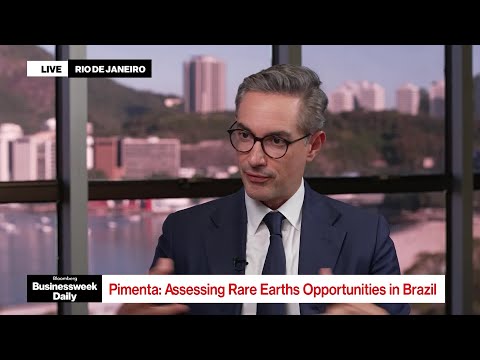
Vale CEO argues demand for critical minerals, iron ore, copper and nickel remains robust despite the Iran conflict, with growth now broadening beyond China into the U.S., Europe and Southeast Asia. He says Vale’s integrated infrastructure lets it grow mainly through brownfield expansion rather than M&A, and that the Oman pellet plant can restart once the conflict risk eases.
Watch on YouTube ›Get the market thesis, key claims, assets, contradictions, and follow-up questions from any financial video — then unlock a version personalized to your portfolio, watchlist, and favorite speakers.
The core message is straightforward: Vale’s CEO says the company is seeing exceptionally strong demand across its mining portfolio, and the Middle East conflict has not caused meaningful demand destruction. He framed the current environment as a “historical” surge in interest for critical minerals, driven by security-of-supply concerns and infrastructure buildouts, while also stressing that iron ore remains solid and copper and nickel demand are strong as well. A major part of the thesis is that demand is broadening geographically. He said China remains “very relevant” and still the key market, but the growth story is increasingly outside China, specifically in Southeast Asia, the U.S. and Europe. On iron ore, he acknowledged China may have plateaued and said India is a major offset, expecting Indian crude steel production to double over the next decade. …
Tactically constructive for Vale and miners if metals prices stay firm; the immediate overhang is freight disruption and the Oman shutdown, not weak end-demand. Watch for any conflict escalation or de-escalation because it directly affects logistics and near-term margins.
Over the next several months, the base case is continued strength in critical-mineral demand with growth increasingly driven by non-China markets. The setup improves if copper brownfield projects advance and India/U.S./Europe demand stays firm; it weakens if China softens materially or logistics costs eat into margins.
Structurally, the interview points to a durable supply-security and electrification regime that should support large diversified miners with infrastructure and reserve depth. If this regime persists, Vale’s advantage comes from existing ports, logistics and large Brazilian endowment rather than from aggressive M&A.
Demand for critical minerals is historically strong and supported by customers and countries seeking supply security.
Central thesis of the interview.
China remains important, but growth is now emerging in Southeast Asia, the U.S. and Europe.
Shows geographic diversification of demand.
India could double crude steel production in the next ten years, supporting iron ore demand.
Specific growth driver for iron ore.
Have you seen more interest recently from the United States, given that the bulk of your customers typically come from China?
The guest says China continues to be a strong market but they are seeing growth outside China — in Southeast Asia, the US, and Europe. There is a diversification underway with other markets looking to amplify their access to critical minerals.
Where are the growth opportunities specifically when it comes to iron ore, given that iron ore hasn't participated as much in price gains and demand from China has plateaued?
The guest remains optimistic about iron ore. China has plateaued at over a billion tonnes of crude steel annually, but growth is coming from Southeast Asia, India (expected to double crude steel production in 10 years), and even the US. Greater demand exists outside China.
Are you planning to expand into rare earths, given Brazil's position as having the biggest reserve behind China?
The guest says they are studying it and assessing opportunities in Brazil, but have questions about scale and whether they can compete with international players like the Chinese. Their biggest bet remains on what they are good at: copper and nickel.
Unlock the full claims, asset map, scores, related transcripts, follow-up questions, and AI chat — shaped around your portfolio, watchlist, favorite speakers, and risks.
